

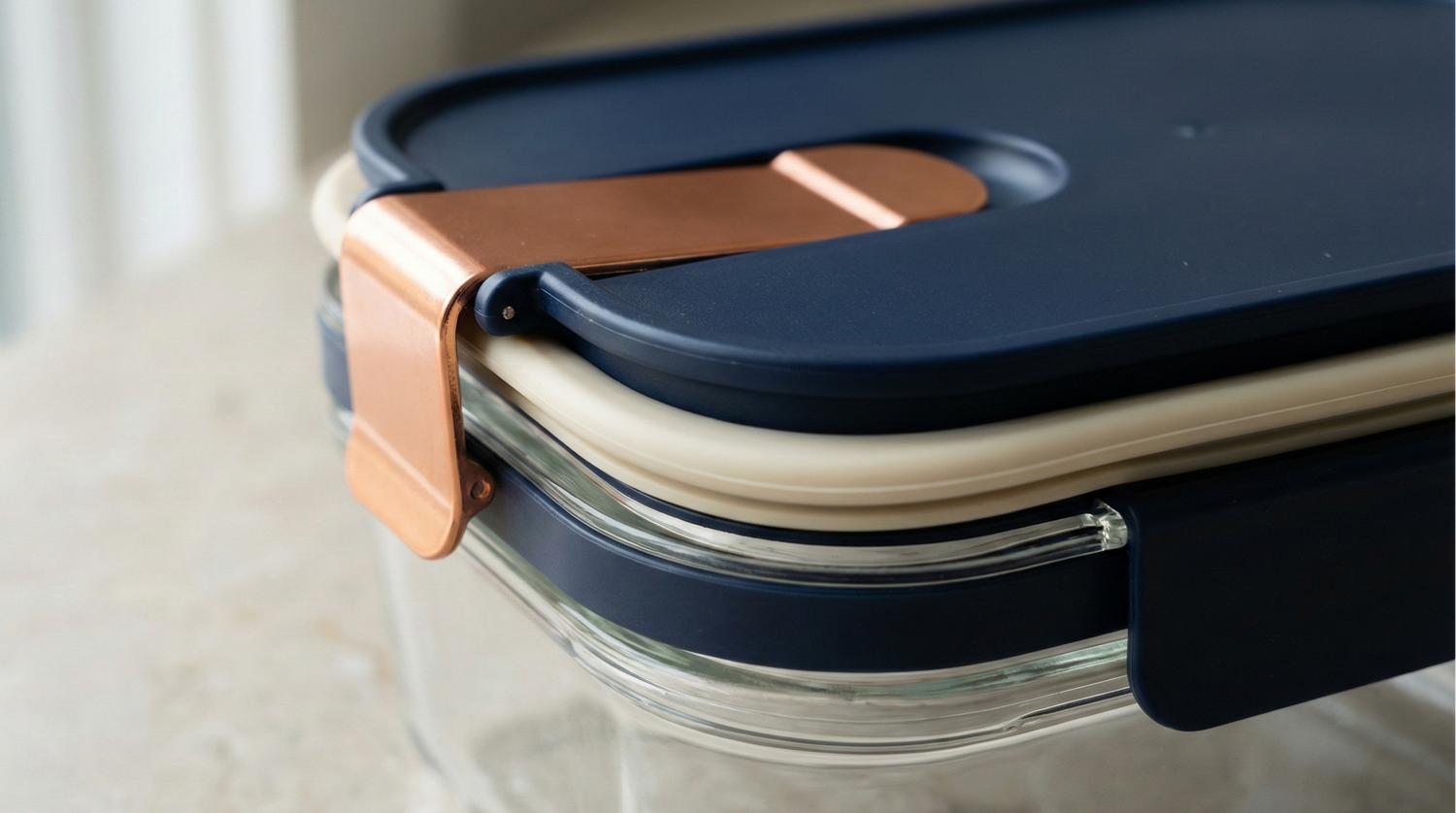
“Airtight” is one of the most-used labels in kitchen storage—and one of the most misunderstood. Some containers are great at keeping dry goods crisp in the pantry, but still leak in a lunch bag. Others are leak-resistant for travel, but not truly airtight for long-term pantry storage.
This guide explains what airtight really means, how seals work, and how to choose airtight food storage containers that match your pantry, leftovers, and meal prep routines.
What does “airtight” mean for food containers?
In everyday kitchen terms, airtight containers are designed to reduce air exchange between the inside of the container and your environment. That helps protect dry foods from humidity (which causes clumping and staleness) and can help keep snacks crisp longer.
But “airtight” doesn’t always mean “leakproof.” A container can be airtight when sitting upright on a shelf, and still leak if it’s tipped in a bag.
Airtight vs leakproof (they’re not the same)
Use this simple rule:
- Airtight = best for pantry freshness and humidity control
- Leakproof/leak-resistant = best for transport, soups, sauces, and lunch bags
When airtight containers actually matter
Airtight performance matters most for dry goods that change texture with air/humidity.
Best pantry items for airtight containers
- Flour, sugar, oats, baking ingredients
- Cereal and granola
- Crackers, chips, crunchy snacks
- Rice and pasta (especially if you want a clean pantry system)
- Nuts and seeds (if you store them in the pantry)
- For foods you use quickly (or items that stay in their original packaging for convenience), airtight containers may be less important than stackability and an easy-to-maintain pantry layout.
How airtight seals work (without getting technical)
Most airtight containers rely on a lid that compresses against the container rim. Some designs add a gasket (often silicone) to improve the seal. Performance comes down to how consistently the lid closes and how well the seal stays clean and aligned.
Common airtight lid styles
You’ll usually see one of these approaches:
- Snap-on lids: quick, simple, varies by design quality and rim fit
- Latch/clip lids: stronger closure feel, often used for better sealing
- Twist/lock lids: common on canisters, can be strong but varies by design
- Push-button/vacuum-style designs: can feel very secure, but make sure they’re easy to clean and maintain
The gasket factor (why cleaning matters)
If your container uses a gasket, it can improve sealing—but only if it stays clean. Crumbs, flour dust, and sticky residue can break the seal. The best designs let you remove and clean the gasket easily, then re-seat it without hassle.
The airtight buyer checklist (what to look for)
Use this checklist to avoid buying containers that look great but underperform:
- Closure confidence: you can tell when it’s sealed (no guessing)
- Easy cleaning: lid corners and gasket areas are accessible
- Wide enough opening (for flour/sugar): scooping should feel effortless
- Stable base: doesn’t tip when you scoop
- Consistent footprints: stackable or modular sizing saves shelf space
- Clear sides: easier inventory checks and fewer duplicates
- Replacement parts: lids/gaskets available (big long-term advantage)
Choosing airtight containers by use case
1) Pantry organization (airtight pantry containers)
For the pantry, prioritize airtight seals and modular footprints. Square/rectangular shapes typically maximize shelf space and stack cleanly. Measure shelf height before buying tall canisters—this is the most common pantry mistake.
Recommended approach: start with one shelf zone (baking or breakfast), then expand once you confirm your most-used sizes.
2) Leftovers and fridge storage
For leftovers, airtight can help reduce odor transfer and keep foods fresher between meals. But ease of opening matters. If a lid is frustrating, you’ll avoid using it.
3) Meal prep and lunches (airtight vs leak-resistant)
If meals travel, prioritize leak resistance first—especially for sauces and dressings. Airtight performance on a pantry shelf doesn’t guarantee a spill-proof lunch.
- Choose containers designed for transport (strong closure feel)
- Avoid overfilling (leave headroom)
- Pack liquids upright when possible
- Use smaller containers for dressings/sauces to reduce spill risk
4) Freezer storage
For freezer use, airtight helps reduce freezer odors and minimize frost exposure. Choose freezer-rated containers, leave expansion space, and avoid sudden temperature swings.
How to test an airtight container at home (quick checks)
These simple checks help you spot weak seals early:
- Close test: does it seal with a consistent “click/lock” feel every time?
- Paper strip test (dry): gently close the lid on a thin strip of paper—if it slides out easily, the seal may be weak (not perfect, but useful)
- Smell test: store a strong-smelling dry good (coffee/tea) and see if odors transfer to nearby items over time
- Crumb test: after washing, check gasket areas—if residue stays trapped, performance may degrade quickly
Common mistakes (and how to avoid them)
- Mistake: Buying a giant set before knowing your pantry sizes. Fix: start with one zone and expand.
- Mistake: Choosing tall canisters without measuring shelf height. Fix: measure first, then buy.
- Mistake: Confusing airtight with leakproof. Fix: travel meals need leak-resistant lids.
- Mistake: Ignoring lid cleaning. Fix: choose lids that are easy to clean (especially gaskets).
- Mistake: Mixing too many lid styles. Fix: standardize one lid system when possible.
A simple airtight starter kit (most kitchens)
If you’re building a pantry and fridge system from scratch, this is a practical place to start:
- 4–6 medium airtight containers (oats, pasta, rice, cereal refills)
- 4–8 small airtight containers (snacks, nuts, baking add-ins)
- 2–3 tall airtight containers (flour/sugar/cereal—only if shelf height allows)
- Optional: 2 leak-resistant containers for sauces and lunch transport
Next step: shop airtight-friendly options
If your goal is pantry freshness and clean shelves, prioritize airtight seals and modular footprints. If your goal is commuting lunches, prioritize leak resistance and portability.
Shop now: Food Storage Containers collection
Explore related collections and guides above to build your setup.
Note: This guide may contain affiliate links. If you buy through links, Grifglo may earn a commission at no extra cost to you.
