

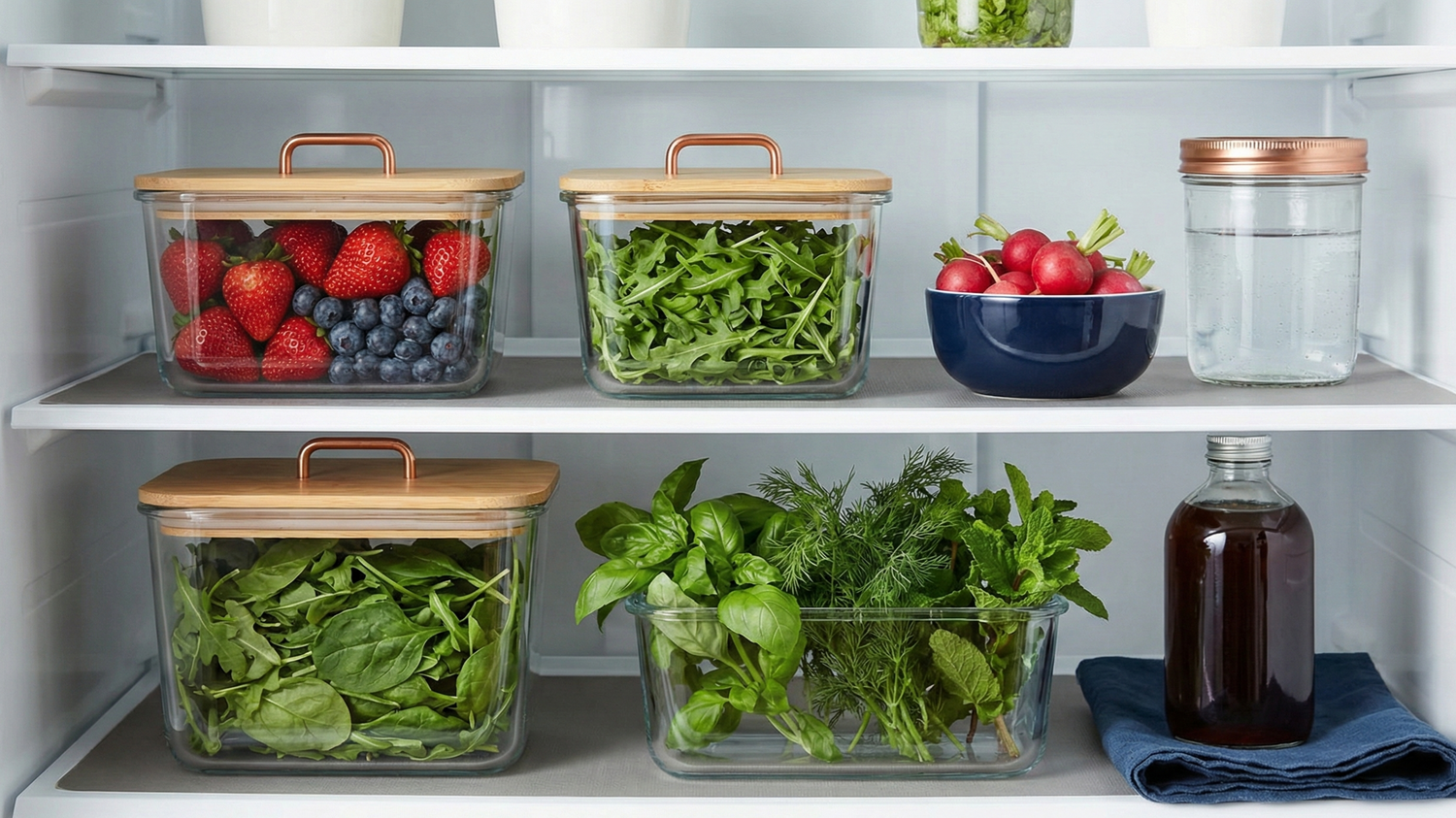
Produce goes bad faster when it gets crushed, forgotten, or stored with the wrong amount of moisture. The right produce storage containers don’t “magically” change food—but they can make a huge difference in your routine: you can see what you have, stack it neatly, and manage moisture so produce stays usable longer.
This guide helps you choose the right produce containers for your fridge, based on what you buy most often—berries, leafy greens, herbs, and prepped produce—plus a simple starter set.
1) What Actually Makes Produce Spoil Faster
Most produce problems come down to three things: moisture, airflow, and damage. Containers help mainly by protecting produce and making your storage routine consistent.
- Too much moisture: wet produce sealed in a container can break down faster and get slimy.
- Too little moisture: some produce dries out and loses texture when exposed to dry fridge air.
- Crushing and bruising: berries and greens break down when packed too tightly or stacked poorly.
- Out of sight = wasted: produce that disappears into the back of the fridge often gets thrown away.
2) Features That Matter (and What to Ignore)
Choose containers that support your routine first. Fancy features don’t matter if you won’t use them.
Features that usually matter:
- Stackable footprint (stable stacking prevents crushing and keeps the fridge tidy)
- Easy-to-clean design (smooth corners and lids you can wash thoroughly)
- Right size for what you buy (a container should fit a typical purchase, not half of it)
- Visibility (clear sides help you remember what you have)
Features that are optional (nice, not required):
- Vented lids or airflow controls (useful for some routines, but not essential)
- Insert baskets/colanders (helpful if you wash and store frequently)
- Labels/date windows (helpful if you prep multiple items at once)
What to ignore:
Overly complicated systems with too many shapes and parts (they often end up unused)
A huge variety of sizes on day one (start small and standardize)
3) Best Containers by Produce Type
Berries (strawberries, blueberries, raspberries)
- Choose containers that prevent crushing: stable base, single-purchase sizing
- Manage moisture: dry berries gently before sealing whenever possible
- Avoid overfilling: berries bruise easily when packed tight
Leafy greens (lettuce, spinach, salad mixes)
- Use larger containers that don’t compress leaves
- If washing first, dry greens well before storing to reduce excess moisture
- Store realistic portions (2–3 days worth) if you notice greens break down quickly
Herbs (cilantro, parsley, dill, basil)
- Use a dedicated small container so herbs don’t get lost
- Protect delicate leaves from crushing by avoiding tight stacks on top
- If herbs are damp, dry them gently before sealing
Chopped/prepped produce (ready-to-eat fruit + vegetables)
- Medium containers are the workhorse for weekly prep
- Choose shapes that stack so prep doesn’t take over your fridge
- Label if you prep multiple items at once
4) Size + Shape: Build a Stackable System
A produce system only works if it stacks cleanly. The easiest fridge setup is a few standardized footprints that fit your shelves.
A practical rule:
- Buy more medium containers than large (medium gets used most)
- Add one large container for greens (don’t compress leaves)
- Use small containers for herbs and toppings so they stay visible
- Keep footprints consistent so stacking is stable and predictable
5) The “Wash and Store” Routine (Without Making It Hard)
The best produce containers are the ones that make your weekly routine easier. Here’s a simple approach that works for most households:
- Choose 2–3 items you always prep (for most people: berries, greens, and one chopped veggie).
- Wash what you plan to eat soon, and dry it well before sealing when possible.
- Store “use first” items at eye level so they don’t get forgotten.
- Keep one container empty for leftovers or overflow so you don’t revert to bags.
Small habit that makes a big difference:
When you bring produce home, move it from bags to containers the same day. Visibility reduces waste.
6) The Simple Starter Set (Buy Once, Use Weekly)
If you want the most efficient first purchase, start here:
- 2–3 medium containers (prepped produce + grab-and-go fruit)
- 1–2 large containers (leafy greens and salad prep)
- 1–2 small containers (herbs, berries, toppings)
Once you use this setup for a couple of weeks, you’ll know exactly what to add—without buying random pieces that don’t fit your fridge.
