

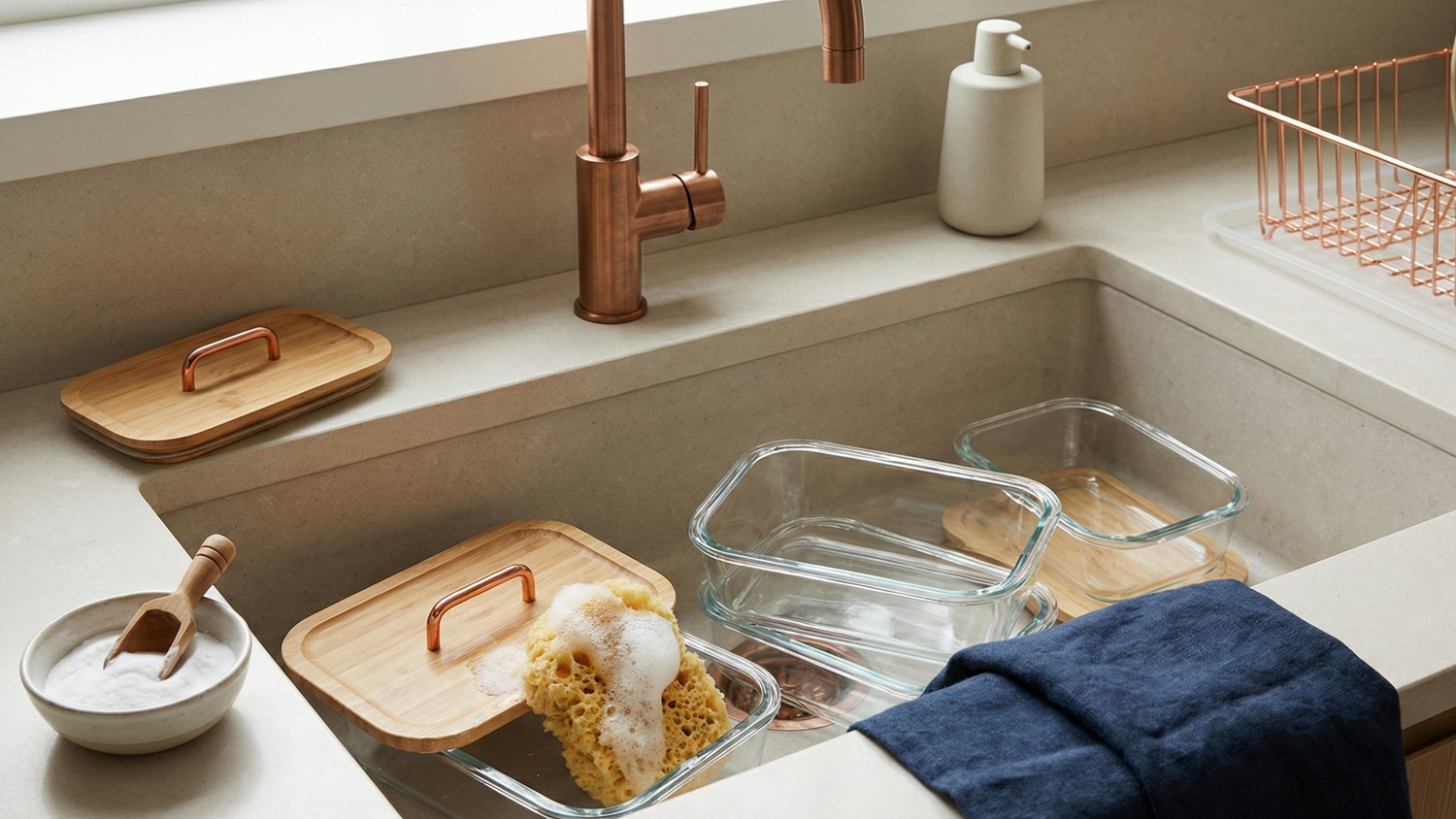
Food storage containers should make life easier—but stains, smells, and greasy residue can make even a “good” set feel old fast. The good news: most container problems are fixable with a simple routine and the right method for your material (plastic, glass, or silicone lids).
This guide walks you through the best way to clean food storage containers, how to remove tomato stains and lingering odors, and how to keep lids sealing properly over time.
Before you start: check your container material
Use the right method for the right material:
- Plastic: easiest to stain and hold odors, but simple to restore with the right routine.
- Glass: cleans easiest and resists stains/odors, but lids still need care.
- Silicone lids/gaskets: can trap oils—needs a degreasing wash and full dry time.
The best everyday cleaning routine (works for most containers)
- Use this routine 90% of the time:
- Rinse right away (even if you can’t wash immediately).
- Wash with warm water + dish soap using a soft sponge.
- Wash lids separately and scrub the sealing edge and grooves.
- Rinse thoroughly (soap film can trap odors).
- Air-dry fully before stacking or sealing.
How to remove grease from food storage containers
Grease clings to plastics and silicone. Try this sequence:
Method 1: Hot soak (the simplest)
- Fill the container with very warm water + dish soap.
- Let it soak 15–30 minutes.
- Wash normally and rinse well.
Method 2: “Paper towel + soap” wipe (for oily film)
- If there’s a slippery film, wipe it first.
- Add a drop of dish soap.
- Use a paper towel to wipe the inside (it grabs oil better than a sponge).
- Then wash and rinse.
Method 3: Baking soda scrub (for stubborn residue)
Make a paste with baking soda + a little water, gently scrub, then rinse and wash again.
How to remove odors from food storage containers
Odors usually live in lid grooves and invisible residue. Try these in order:
Method 1: Baking soda rest (easy + effective)
- Wash and dry the container.
- Add 1–2 tablespoons of baking soda (dry) and close the lid.
- Leave overnight.
- Rinse and dry again.
Method 2: Vinegar soak (great for lingering smells)
- Fill with a 1:1 mix of warm water and white vinegar.
- Soak 15–30 minutes.
- Wash with dish soap and rinse thoroughly.
Method 3: Fresh air + time (underrated)
After washing, leave containers and lids open to air-dry completely. A few hours of airflow can make a big difference—especially for lids.
How to remove tomato stains from plastic containers
Tomato and curry stains are common in plastic. The goal is to remove the oily pigment layer—not just “wash harder.”
Method 1: Baking soda paste + rest
- Make a thick paste of baking soda + water.
- Spread it on the stained area.
- Leave 30–60 minutes.
- Wash and rinse.
Method 2: Soap + sunlight (for light staining)
After washing, leave the container in bright indirect sunlight for a few hours. This can help fade stains without harsh chemicals.
Prevention tip
If you regularly store tomato-based meals, consider using glass for those dishes and saving plastic for dry snacks and non-staining foods.
How to clean silicone lids and gaskets (so they keep sealing)
- Silicone is great, but it can hold onto oils. Use this routine:
- Remove gasket/seal if your lid design allows it.
- Wash with hot water + dish soap, focusing on grooves and edges.
- For stubborn odor/film: soak silicone parts in warm water + baking soda for 30 minutes, then rinse.
- Air-dry completely before reassembling (moisture + oil = smells).
Dishwasher tips (what to do and what to avoid)
- Dishwashers can be convenient, but they can also warp some plastics and shorten lid life if heat is too high.
- Top rack is safest for most plastic containers and lids.
- Avoid high-heat dry cycles if you notice warping over time.
- Place lids so water drains easily (standing at an angle is better than flat).
- Don’t stack items inside each other in the dishwasher—water won’t clean the contact points.
- Let everything fully dry before sealing or nesting.
Quick troubleshooting (symptom → fix)
Container smells clean, but lid smells
- Wash lid separately, scrub grooves, and do a baking soda rest overnight.
Greasy film won’t come off
- Do a hot soapy soak, then wipe with paper towel + soap before washing again.
Tomato stain won’t budge
- Try baking soda paste + rest, then give it airflow/bright light after washing.
Lid won’t seal well anymore
- Check for residue on the rim, clean gasket grooves, and ensure everything is fully dry.
White haze or film
- Rinse thoroughly and avoid too much detergent; try a quick vinegar rinse then wash again.
How to keep containers looking new longer
- Rinse quickly after use (even a 10-second rinse helps).
- Let hot food cool slightly before sealing (reduces odor absorption).
- Use glass for high-stain meals (tomato, curry) when possible.
- Store containers fully dry to prevent musty smells.
- Organize lids so seals don’t get crushed in a pile.
Next step: choose containers that match your routine
If stains and odors keep happening, it may be a sign your materials don’t match what you store most. A small, matching set—especially with the right material mix—stays cleaner, stacks better, and feels better to use.
