

In 2025, 68% of Canadian households reported using an air conditioner or similar cooling equipment, including heat pumps, to offset summer heat, according to Statistics Canada. Cooling without that equipment takes more than pointing a fan at an open window. You need to prevent heat from entering, remove it when outdoor conditions allow, and recognise when staying put isn't safe.
The practical answer to how to cool a room without AC starts with a distinction: lowering the room's temperature isn't the same as making your body feel cooler. Both help, but only if you choose the right method for the weather.
Table of Contents
- Cooling Methods Without AC and When Each Works
- Block Sunlight Before It Heats the Room
- How to Purge Heat with Night Ventilation
- When to Stop Ventilating and Relocate
- Make Fans and Heat Sources Work for You
- Cool Your Body When the Room Will Not Cool
- Build Your Heat Plan Before the Next Hot Spell
Cooling Methods Without AC and When Each Works
Start with the constraint: sun gain, trapped heat, still air, indoor moisture and heat generated indoors each call for a different response.
Cooling methods and the conditions where each works
| Method | What it does | Works best when | Main limit |
|---|---|---|---|
| Block sun with shades and blinds | Stops solar gain before it spreads through the room | Exposed east and west glass | Only helps if closed before direct sun arrives |
| Night purge ventilation | Exhausts heat stored during the day | Outdoor air is cooler and dry enough | Hot, humid or smoky outdoor air cancels the benefit |
| Cross-ventilation | Gives indoor air a path in and out | Openings on opposite or adjacent walls | One-sided rooms have weak pressure drive |
| Fans for airflow | Speeds sweat evaporation at skin level | Dry air and occupied rooms | Room air stays warm |
| Cutting internal heat sources | Lowers heat added by cooking, laundry and electronics | Heat-producing tasks can shift to cooler hours | Small effect unless shading and airflow already help |
Night purge is the goal; cross-ventilation is one route for reaching it.
Choose by the limiting condition
| Limiting condition | First move | Change course when |
|---|---|---|
| Direct sun is heating surfaces | Shade exposed glass before peak sun | The room still holds heat after sundown |
| Outdoor air is cooler but indoor air stays stale | Open a route through the room | Outdoor heat, humidity or smoke rises |
| Air moves but comfort does not improve | Cut internal heat and cool the person | Conditions point toward unsafe heat; relocate |
Humidity can mimic heat stress and also limits evaporation. If moisture control and particle removal are being weighed together, this air purifier versus dehumidifier guide separates the two jobs; neither one lowers room temperature on its own.
Practical rule: Fix the source of unwanted heat before trying to make stronger airflow compensate for it.
Before choosing where to start, note window exposure, available openings, overnight weather and indoor humidity.
Block Sunlight Before It Heats the Room
Passive cooling works best when outdoor air cools below the indoor temperature overnight. During sustained heat, plan ahead for access to an air-conditioned space.
Set the shade before direct sun arrives
Use a morning routine that follows the sun rather than waiting until the room feels uncomfortable.
- Start with exposed glass. Close east-facing blinds before morning sun reaches the room, and prepare west-facing coverings before afternoon exposure.
- Cover the whole opening. Adjust slats and curtains so sunlight isn't pouring through gaps onto the floor, bed or sofa.
- Use exterior shade where permitted. Exterior blinds, shutters and awnings intercept sunlight before it reaches the glass.
- Plan permanent shade carefully. Trees can help over time, but placement must account for mature growth, building clearance and seasonal light.
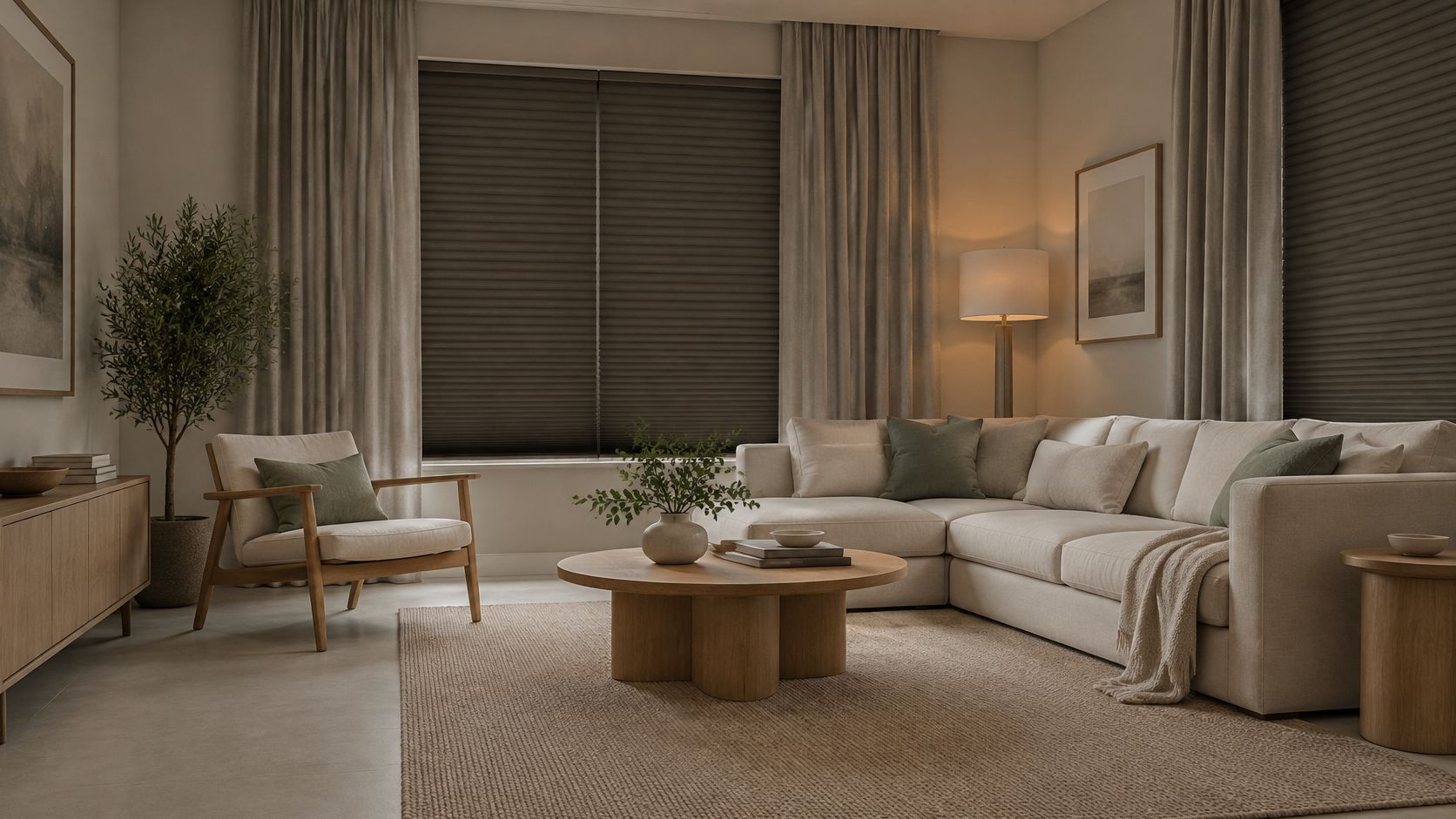
Interior blinds and curtains are accessible options, especially for renters. A light-coloured surface facing the window can reflect some incoming sunlight, but the heat has already reached the glazing. Exterior shade tackles the problem earlier, which is why it's generally the better starting point when installation is practical.
Look at the window exposure, not just the room's appearance.
Address hot draughts separately
Shading doesn't stop warm air entering around a poorly sealed exterior door. If you can feel a draught when the door is shut, use this guide to weatherstripping for doors to identify the seal that needs attention. Don't obstruct required ventilation or make an exit difficult to open.
Low-angle morning and evening sunlight can slip beneath ordinary horizontal overhangs. Adjustable vertical shading is often more useful on those exposures than extending a shallow canopy.
On a sunny afternoon, check where direct light lands and which window areas feel hottest without touching hot glass. Prioritise those openings for shade rather than treating every window alike.
How to Purge Heat with Night Ventilation
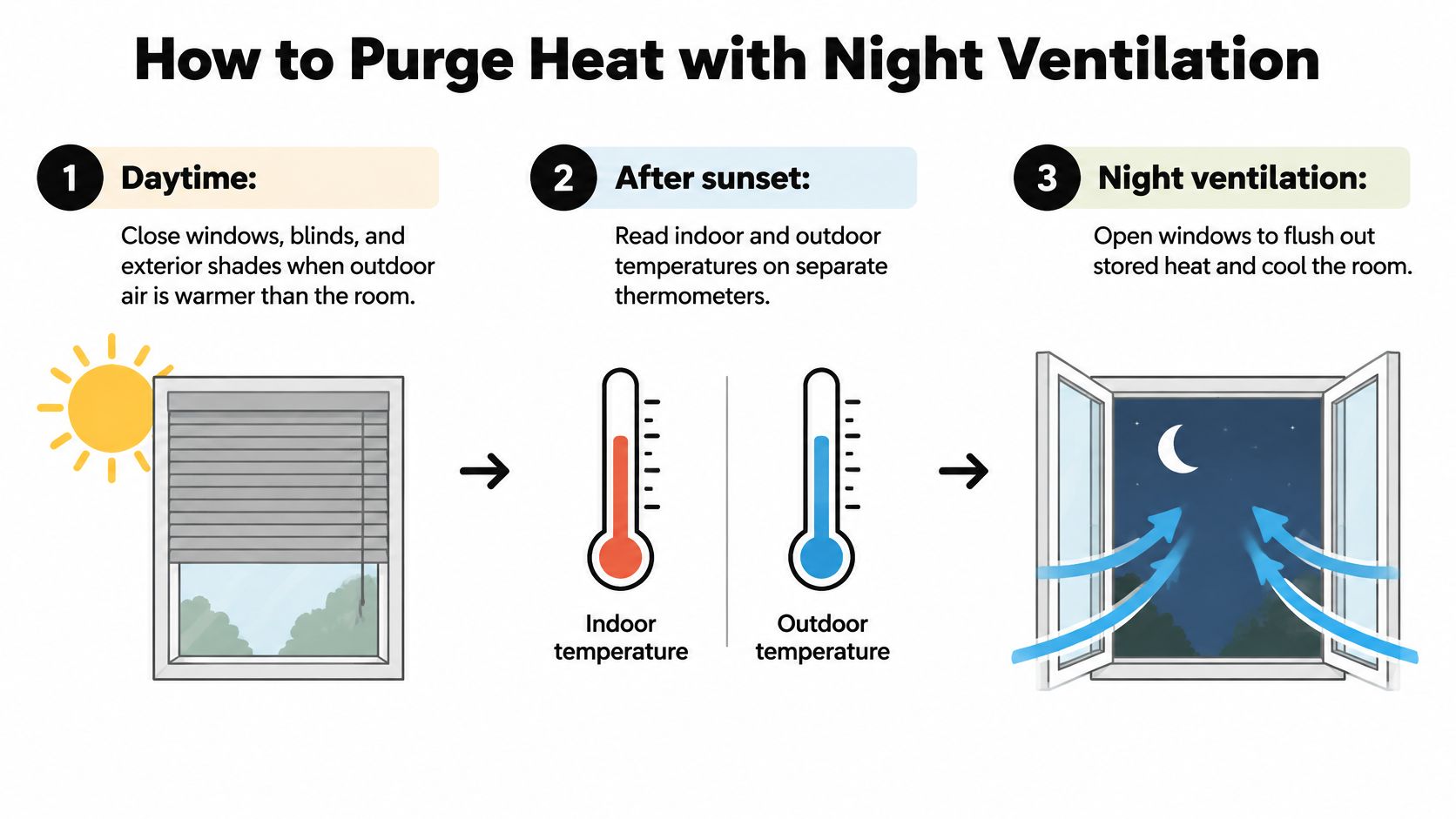
Night ventilation should follow temperature, not the clock. Sunset doesn't guarantee that outdoor air is cooler, especially after a prolonged hot spell.
Use this sequence as a reminder, then check actual conditions before opening anything.
Establish an inlet and an outlet
- Keep daytime heat out. Close windows whenever outdoor air is warmer than the room, and keep sun-exposed coverings shut. Opening a window isn't helpful merely because the room feels stuffy.
- Compare separate thermometers after sunset. Put the outdoor thermometer in shade, away from hot masonry and exhaust outlets. Keep the indoor thermometer away from direct sun and appliance heat so the comparison reflects room conditions.
- Open a route across the space. Use windows on opposite sides of the dwelling where possible, with internal doors open along the route. Don't prop open fire doors or compromise security to create a breeze.
- Exhaust warm air. Secure a suitable window fan at the outlet, blowing outdoors, and leave an unobstructed inlet on the other side. Keep curtains clear of the fan and follow its mounting instructions.
- Reset before outdoor air warms. Close the openings and restore shading before the temperature advantage disappears. Reposition the fan for personal airflow rather than leaving it pulling increasingly warm outdoor air inside.
The main mistake is ventilating through hot afternoons or smoke. A powerful fan brings unwanted heat or pollutants in faster. Stronger airflow doesn't make the incoming air suitable.
Check whether the openings are adequate
Check whether your windows can be opened safely and whether air can move between openings. If the outdoor air is hotter or smoky, keep the windows closed and use another cooling option.
Measure the part that opens, not the entire glazed area. A large window with a narrow opening may provide less useful airflow than its appearance suggests.
The following video offers another visual reference for ventilation setup.
Manual control still matters. The approach described by the commission didn't include automated window optimisation, so the openings respond only as quickly as you adjust them when conditions change.
When to Stop Ventilating and Relocate
Ventilation can make a room hotter. The BC Centre for Disease Control's heat-event guidance recommends bringing outdoor air in when it's cooler and monitoring indoor temperature rather than treating fan movement as proof of safety.
Track indoor and outdoor temperature separately, add a humidity reading if you have one, and check local air-quality information for smoke. A thermometer can tell you when the air stops helping; it cannot tell you whether that air is clean.
Decision rule for ventilating or stopping
| Condition | Action | Next step |
|---|---|---|
| Outdoor air cooler than indoors, dry, no smoke | Purge ventilate with opposite windows and a fan | Keep checking temperatures; close when outdoor air warms |
| Outdoor air no cooler than indoors | Close windows and blinds and shade the glass | Stop ventilating |
| Outdoor air cooler but humid | Trial brief ventilation; don't rely on a fan for relief | Monitor comfort and temperature; close once outdoor air warms |
| Smoke or poor outdoor air quality | Keep windows closed and shade the room | Resume only when air quality improves and outdoor air is cooler |
| Indoor temperature keeps rising, high-risk occupant | Passive methods aren't enough | Move to a public cooling centre or a relative's cooler home |
Set a stop rule before discomfort becomes illness
The stop line in the table governs airflow only; it does not indicate when indoor heat becomes medically dangerous. Indoor conditions can remain dangerous after windows close, so watch the trend indoors: if the room keeps warming after ventilation and shading are shut down, relocation is the safer decision.
Older adults, infants, and people with chronic illness need to move sooner to a reliably cooler place when the room isn't cooling down. Don't wait for obvious distress. Before the heat peaks, confirm transport, opening hours, accessibility, and whether the destination has cooling.
A breeze can feel reassuring while the room is still getting hotter.
If smoke prevents ventilation while indoor heat keeps increasing, leaving may be safer than choosing between hot indoor air and polluted outdoor air. For households weighing mechanical cooling later, window air conditioner sizing is a separate planning question and not a substitute for relocating during a heat event.
Make Fans and Heat Sources Work for You
A fan speeds evaporation from skin, so you can feel cooler without a lower thermometer reading. Aim it across the body of a seated or resting person rather than at an empty corner.
Humidity reduces that evaporative benefit. In an already-hot, closed room, a fan also adds motor heat, so don't leave it running in an empty room expecting it to chill the space.
Match the fan to the task
Keep a bedside unit stable, clear of bedding and positioned so its airflow reaches you.
Remove avoidable indoor heat
Work from the easiest changes towards the ones that require scheduling.
- Switch off unused electronics. Shut down idle computers, monitors and entertainment equipment instead of leaving them operating throughout the afternoon.
- Change hot lighting. Replace incandescent bulbs with suitable LEDs, and turn off unnecessary lights.
- Reschedule appliance cycles. Run laundry and the dishwasher during cooler periods when their heat won't add to the afternoon peak.
- Simplify cooking. Prepare cold meals or cook earlier, and avoid prolonged oven use during the hottest part of the day.
- Choose equipment for the meal. This toaster oven versus regular oven comparison can help you assess whether heating a full-size oven is necessary.
Don't move an indoor electrical cooker outside unless it's rated for that use and the location is safe. Reducing appliance heat is useful, but it won't overcome sustained outdoor heat on its own.
Cool Your Body When the Room Will Not Cool
If you're renting and can't alter the windows or add exterior shade, body cooling is a fallback, not a failure. Make yourself more comfortable while you arrange a cooler place if the room remains unsafe.
Use simple, repeatable measures
- Drink water regularly. Keep it within reach through the day and before bed. If you've been given medical fluid restrictions, follow your clinician's advice.
- Apply a cool, damp cloth to your neck, forehead or wrists. Re-wet it when it warms.
- Wash before bed. A cool, comfortable shower can provide relief; it doesn't need to be ice-cold.
- Choose loose, lightweight clothing and lighter bedding. Remove layers that trap heat unnecessarily.
- Reduce exertion. Move chores and necessary activity to cooler periods rather than trying to maintain a strenuous routine during peak heat.
A cool damp cloth can help cool your skin. If your home stays hot, move to a cooler space and follow local heat alerts.
Recognise when comfort measures aren't enough
Dizziness, nausea, unusual weakness, confusion, fainting or very hot skin can signal heat illness. Don't wait for dry skin, because a seriously overheated person may still be sweating.
Move the person to a cooler place and start cooling them immediately. Call emergency services for confusion, collapse, fainting or suspected heat stroke; persistent dizziness or nausea also needs prompt medical advice.
Don't give drinks to someone who's confused, unconscious or unable to swallow safely. Stay with them while help is coming.
Build Your Heat Plan Before the Next Hot Spell
A useful heat plan connects the room's weaknesses with actions you can carry out. Equipment matters less if nobody knows when to use it or where to go when it isn't enough.
Prepare the room and the backup
- Map your windows. Note which receive morning and afternoon sun, then prioritise shading where direct sunlight reaches occupied areas.
- Set up your tools. Position indoor and outdoor thermometers, and choose a securely mounted window fan if your openings allow it.
- Test the airflow route. On a cool, clear evening, open the intended inlet and outlet. Watch whether indoor temperature falls and check that doors, curtains and furniture aren't blocking the route.
- Write down the stop condition. Close up when outdoor air is no cooler than indoor air, or sooner if smoke, security or weather makes ventilation unsuitable.
- Name the backup destination. Identify who needs earlier help and confirm a cooling centre, friend or relative's home before a heat warning leaves you arranging transport under pressure.
Keep the plan somewhere visible, especially if different people handle mornings and evenings. Include who closes the windows, who checks on vulnerable household members and how you'll reach the backup location.
Buy for the constraint: Sun exposure calls for shade; a poor airflow route calls for better ventilation planning; unsafe heat calls for a cooler destination.
Tonight, compare indoor and outdoor temperatures before opening the windows, then choose your next improvement based on the conditions you find.
GrifGlo offers curated home essentials and practical comparisons to help you choose cooling, kitchen and household equipment for its intended job. Visit GrifGlo to compare options around your room's layout and daily routine, rather than expecting a personal fan to solve whole-room overheating.


Leave a comment
This site is protected by hCaptcha and the hCaptcha Privacy Policy and Terms of Service apply.