

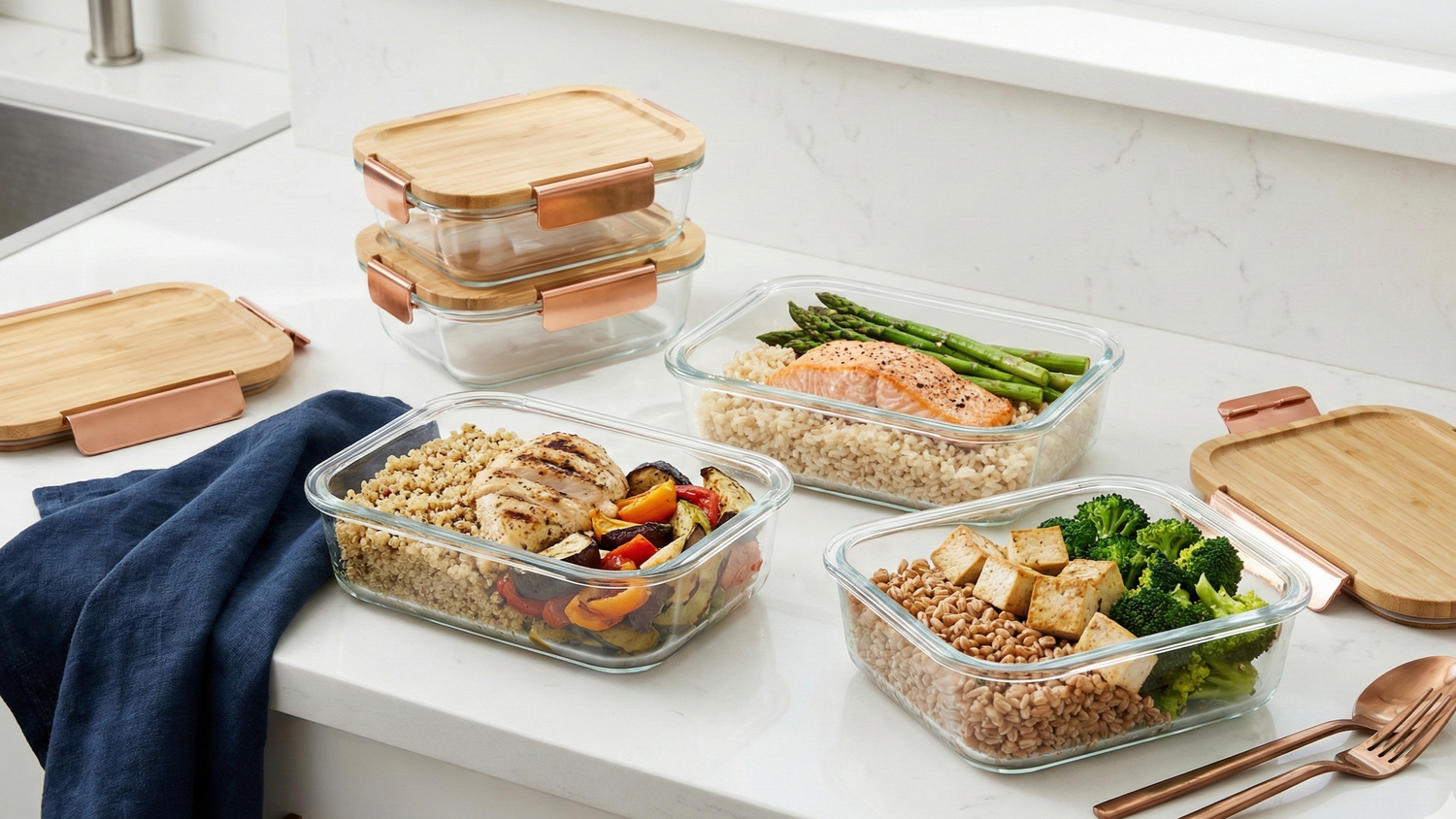
Meal prep works best when your containers match your routine. If your lids leak, your stacks wobble, or your portions never fit, meal prep turns into a mess—and you stop doing it.
This guide shows how to choose meal prep containers by size, shape, and lid design, plus a simple starter kit you can build without overbuying.
Start here: what kind of meal prep are you doing?
Most meal prep routines fall into one of these styles:
- Batch cooking (cook once, eat 3–5 times)
- Ingredient prep (chop, cook grains, prep proteins, assemble later)
- Grab-and-go lunches (meals travel in a bag)
- Portion control (consistent meal sizes week to week)
- Family prep (multiple meals stored and stacked in the fridge)
- Your container choices should match the style you do most often.
Meal prep container sizes: what to buy first
Instead of guessing by ounces or cups, choose sizes based on how you actually eat. Most households use small and medium sizes far more than oversized containers.
The 3 sizes that cover most weekly meal prep
- Small: sauces, dressings, snacks, toppings, cut fruit
- Medium: single-meal portions and leftovers (the workhorse size)
- Large: batch meals, big salads, bulk ingredients (buy fewer of these)
Simple sizing tip
If you’re unsure, start with more medium containers than anything else. That’s the size most people reach for daily.
Shapes and compartments: what actually works
Rectangular vs round
Rectangular containers usually pack more efficiently in the fridge and stack more neatly. Round containers can be great for soups, salads, and snacks—but they often waste shelf space when you have multiples.
Single compartment vs divided
Choose based on your meals:
- Single compartment: best for bowls, stir-fries, pasta, leftovers
- Divided: best for lunches where you want foods separated (but they’re harder to clean and usually hold less)
- If you only buy one style, single-compartment containers are usually the most versatile.
Lids and leak resistance: how to avoid spills
For meal prep, lids are the difference between containers you love and containers you stop using. Leak resistance depends on closure feel, gasket design (if included), and how consistently the lid seals.
What to look for in a leak-resistant lid
- A closure you can feel (snaps, latches, or a firm press-fit that doesn’t pop open easily)
- A gasket that sits flush and can be removed/cleaned (if included)
- A lid shape that doesn’t flex or warp easily
- Easy-to-clean corners (if it traps residue, performance drops)
Packing tips to reduce leaks (even with good lids)
- Don’t overfill—leave headroom, especially for soups and saucy foods
- Keep liquids upright in a lunch bag when possible
- Use small containers for sauces/dressings instead of filling a big container with liquid
- Let hot food cool slightly before sealing to reduce pressure and condensation
Glass vs plastic for meal prep: the practical choice
Both can work well. Choose based on your routine.
Choose glass if you…
- Reheat meals often and want a clean, premium feel
- Dislike staining and lingering odors
- Store a lot of saucy foods
- Meal prep mostly stays at home (less carrying)
Choose plastic if you…
- Commute daily and need lightweight containers
- Meal prep for kids and want drop-friendly options
- Want a bigger set at a lower upfront cost
- Prefer ultra-light grab-and-go lunches
The hybrid setup many people prefer
- Glass: leftovers + dinners stored in the fridge
- Plastic: lunches and snacks that travel
- Small sauce containers: for dressings, dips, and condiments
Stackability: how to keep your fridge from turning into chaos
Meal prep gets harder when containers don’t stack cleanly. If you want consistency, choose a system with:
- Uniform footprints (small/medium/large that align)
- Flat lids and stable bases (no wobble)
- Clear sides for easy inventory checks
- A dedicated lid-storage bin (prevents lost-lid problems)
A meal prep starter kit (10–14 containers that actually get used)
Here’s a practical kit that works for most weekly routines:
- 6–8 medium containers (the main meal portions)
- 2–4 small containers (sauces, snacks, toppings)
- 2 large containers (batch meals or bulk ingredients)
- Optional: 1–2 divided containers if you pack separated lunches
Common mistakes (and how to avoid them)
- Buying too many large containers (most go unused)
- Choosing containers with complicated lids (you stop using them)
- Mixing too many shapes and lid types (creates clutter and lost lids)
- Assuming “airtight” means leakproof for lunches
- Not leaving headroom for liquids (causes spills)
Next step: build a meal prep system that fits your week
Start with medium containers first, then add small sauce containers and a couple of large pieces for batches. If meals travel, prioritize leak-resistant lids and portability.
Explore related collections and guides above to build your setup.
