

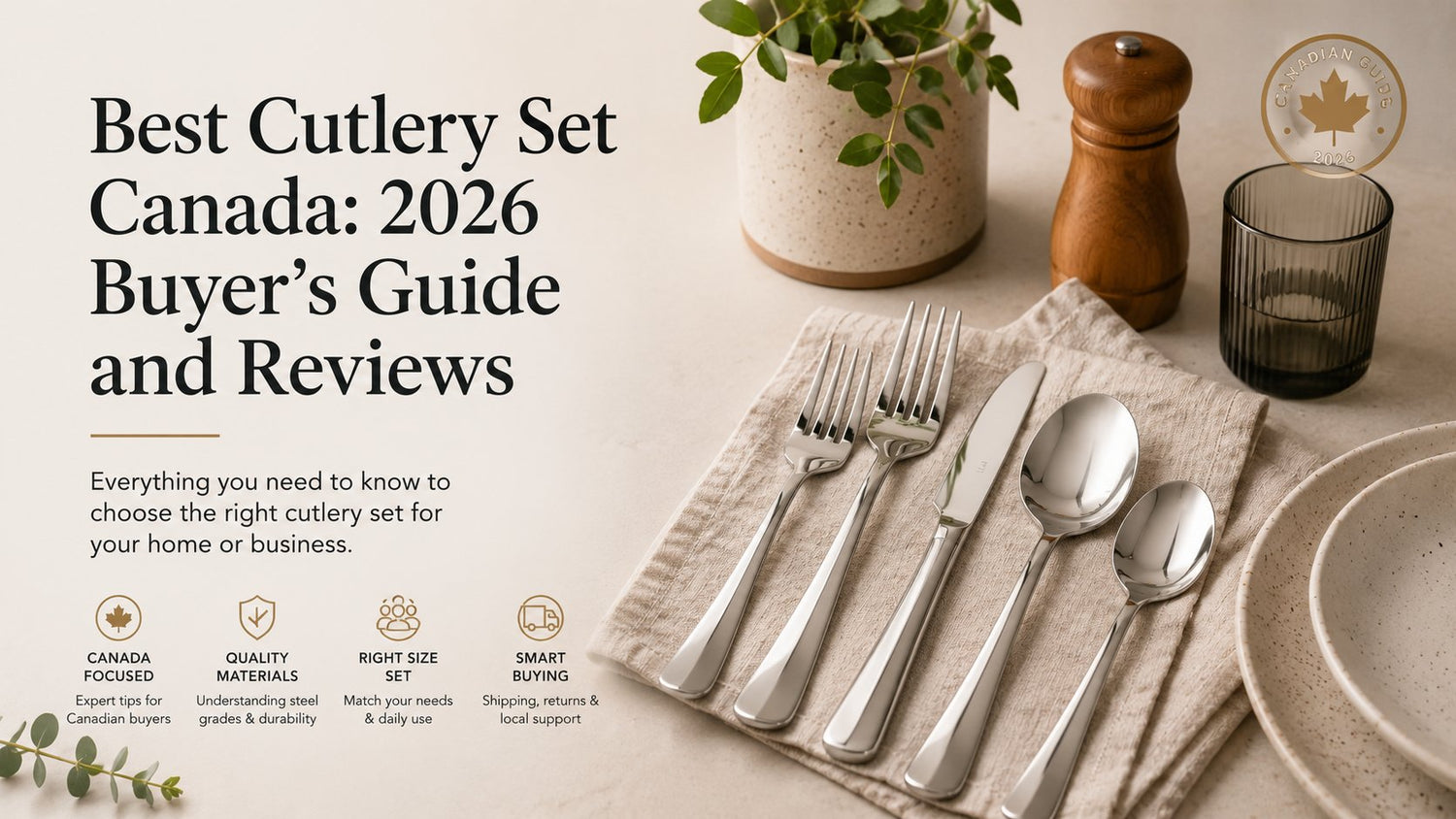
Your cutlery drawer usually tells the story before you do. A few forks from a starter set. Two heavy spoons that somehow outlasted everything else. Knives with loose handles, teaspoons that vanished, and a couple of pieces that already look tired after too many dishwasher cycles.
That is the point when many shoppers start searching cutlery set canada. Sometimes it is a first home purchase. Sometimes it is replacing a wedding set that never really suited daily use. Sometimes it is a café owner realising that mismatched flatware makes the table look less organised than the menu deserves. The purchase sounds simple until you start comparing finishes, steel grades, place settings, return policies, and whether a set that looks polished online will still feel good six months later.
Canadian buyers have a few extra practical concerns. Shipping can change the value equation fast. Returns matter more when the set arrives and feels too light in the hand. Local warranty support matters if you're buying for a business, rental property, or busy household. That's one reason this market keeps getting more attention. Canada is projected to hold an 11.29% share of the North American cutlery market in 2025, within a regional market valued at 1877.6 million USD, according to Cognitive Market Research's cutlery market report.
Table of Contents
- Time for an Upgrade? Why a Good Cutlery Set Matters
- Decoding Materials Forged vs Stamped and Steel Grades
- How to Choose the Right Set Size and Composition
- Price Tiers and Recognizing Lasting Value
- Proper Care to Keep Your Cutlery Looking New
- Buying in Canada Navigating Retailers and Shipping
- Top Picks for Canadian Households and Small Businesses
- Your Final Checklist and Frequently Asked Questions
Time for an Upgrade? Why a Good Cutlery Set Matters
A proper cutlery set changes small routines more than people expect. Breakfast feels easier when the spoon is balanced, lunch prep is smoother when every knife in the drawer belongs to the same set, and dinner looks more pulled together when the table doesn't look like it was assembled from leftovers.
For a first-time homebuyer, this is often one of those purchases that moves the kitchen from temporary to settled. For a small café or short-term rental host, it's even more visible. Guests notice bent forks, rough edges, and worn finishes because those details sit directly in their hands. Flatware gets judged differently from cookware. People may forgive a plain pot, but they won't miss a flimsy dinner knife.
Daily use reveals quality fast
The biggest difference between cheap and well-chosen cutlery isn't branding. It's what happens after repeated use. Lower-quality pieces tend to feel light in the wrong way, not refined. The bowl of the spoon can be shallow. Fork tines may feel blunt or uneven. Knives can look fine in product photos but feel awkward at the table.
A stronger set earns its keep:
- Better balance: pieces don't tip awkwardly in the hand
- Cleaner finish: fewer rough edges and less visual wear
- More consistent sizing: forks, knives, and spoons feel like a family, not a random mix
- Less replacement hassle: you're not topping up teaspoons every few months
Good flatware doesn't need to look flashy. It needs to feel right every single day.
Why the Canadian context matters
Buying cutlery in Canada isn't just about style. It's also about local availability, practical returns, and whether the set suits real household use through frequent dishwashing and seasonal humidity shifts. A guide written for Canadian buyers has to care about those details, not just rank attractive product photos.
That's why the best choice usually isn't the trendiest one. It's the set that survives weekday dinners, holiday hosting, dishwasher use, and the occasional dropped piece without making you regret the purchase.
Decoding Materials Forged vs Stamped and Steel Grades
Construction and steel grade shape almost everything you notice in use. Weight. Balance. Edge smoothness. Resistance to staining. Whether a polished finish stays polished. Most product listings bury this under decorative language, but these are the details worth reading first.

Why construction changes the feel
Forged cutlery is shaped from a solid piece of metal. In hand, it usually feels denser and more settled. The transition from handle to head tends to feel smoother, and the piece often has better balance at the centre.
Stamped cutlery is cut from a sheet of metal. That doesn't make it bad. Many stamped sets are perfectly serviceable, especially for starter homes, offices, and high-turnover settings. But stamped pieces usually feel lighter and simpler. Think of forged as something sculpted, and stamped as something cut to shape.
What works best depends on use:
- For households that want long-term daily use: forged or heavier-gauge pieces usually feel better year after year.
- For casual setups or backup sets: stamped can be sensible if the finish is clean and the steel quality is still solid.
- For cafés and rentals: consistency matters more than prestige. A sturdy stamped set can outperform a flashy but poorly finished forged-looking set.
A good comparison sits right beside table accessories too. Something like the LUCIANO Salt and Pepper Stainless Steel Set - 80973 shows the practical side of stainless steel well. It's described as a durable stainless steel shaker set for salt, pepper, sugar, and spices, with each shaker holding up to 100ml. That kind of straightforward stainless utility is what you want in flatware too. Functional first, decorative second.
Steel grades that matter in daily use
In Canadian buying guides, the most useful term to recognise is 18/10 stainless steel. It means 18% chromium and 10% nickel, and it's the quality benchmark in this market. According to Fable Wholesale's flatware specification page, 18/10 stainless steel offers superior corrosion resistance and can endure over 1,000 dishwasher cycles before visible wear, which is why it's commonly treated as the dependable standard for home and commercial dining.
Here's the practical version of that spec.
| Grade | Composition (Chromium/Nickel) | Best For | Key Feature |
|---|---|---|---|
| 18/10 | 18% chromium / 10% nickel | Daily household use, hospitality, long-term ownership | Strong corrosion resistance and better finish retention |
| 18/8 | 18% chromium / 8% nickel | Buyers who want a similar look with slightly less premium feel | Good durability with a polished appearance |
| 18/0 | 18% chromium / 0% nickel | Budget sets, utility use, some commercial environments | Lower cost and simpler composition |
Practical rule: If a listing avoids naming the steel grade at all, treat that as a warning sign, not a minor omission.
Steel grades at a glance
The numbers matter because they show what you're paying for. Chromium helps with corrosion resistance. Nickel helps with shine and resilience. In day-to-day use, that often means an 18/10 set keeps its finish and looks composed longer, especially in homes that rely heavily on the dishwasher.
Sustainable alternatives deserve a more critical look than they usually get. Some shoppers want bamboo or plant-based pieces for environmental reasons, and that instinct makes sense. But material choice has to match use conditions. Reusable products that degrade quickly aren't always the practical win they first appear to be.
How to Choose the Right Set Size and Composition
Most buying mistakes happen because people focus on style before they do the basic household maths. A set can be beautifully finished and still be wrong for your kitchen if you're running out of spoons by noon or storing half the box in a closet.

What a place setting actually includes
A 5-piece place setting usually means:
- Dinner fork
- Salad fork
- Dinner knife
- Soup spoon
- Teaspoon
That's the baseline language used across most cutlery listings. Once you know that, the bigger set names become easier to decode. A 20-piece set usually serves four people. A larger family set often serves eight and may add serving utensils. Some sets include steak knives. Some don't.
If you cook often and load the dishwasher once a day, the number of teaspoons and smaller spoons matters more than many people expect. They're usually the first pieces to run short.
Match the set to your routine
A smaller condo household doesn't need the same composition as a detached home that hosts often. The best choice depends on how you live.
Consider these scenarios:
-
Couple in a condo
A compact set often makes the most sense. You want enough pieces to get through a day or two without cramming the drawer or overbuying serving pieces you won't use. -
Family household
Go larger than your exact headcount suggests. Extra teaspoons and dinner forks save annoyance. If children are constantly unloading or misplacing pieces, a slightly bigger core set reduces replacement stress. -
Frequent hosts
Look for service that covers your regular guest count comfortably. Matching flatware changes the whole table, even when the dishes are simple. -
Short-term rental or office kitchen
Choose standard shapes, not intricate patterns. Replacing one lost fork in a simple modern set is much easier than trying to match ornate detailing later.
If the set includes steak knives, ask whether you'd choose those knives on their own. If the answer is no, they may be padding the piece count.
Serving utensils are nice when they fit the way you entertain. They're not automatically valuable. A clean, durable core set often matters more than bonus pieces that stay in the box.
Price Tiers and Recognizing Lasting Value
Price tells part of the story, but not enough. Two sets can sit in the same range and feel completely different once you hold them. One will seem balanced and calm in the hand. The other will feel like it was designed for a product page rather than a dinner table.
What changes as price goes up
At the lower end, cutlery sets tend to prioritise affordability and appearance. That can work for students, backup kitchens, or furnished rentals. But this is also where you'll see the biggest spread in quality. Some budget sets are decent utility buys. Others look polished online and feel thin, sharp-edged, or inconsistent in person.
In the middle tier, you usually start to see better finishing, better balance, and more dependable steel disclosures. This is often the sweet spot for households that want one set to handle daily use without fuss.
Higher-end sets typically justify their cost only if the fundamentals are there. Better steel grade, cleaner finishing, pleasing weight, and a shape you'll still like years from now. If a premium set has unusual styling but mediocre feel, it's not better value. It's just more expensive.
Value signals that matter more than marketing
Three signals tell you more than a lifestyle photo ever will:
-
Heft and balance
A good piece should feel intentional, not heavy for the sake of being heavy. Dinner knives are the quickest giveaway. If the handle drags the piece backward or the blade feels too light, the set often feels cheap in use. -
Finish quality
Mirror finishes show fingerprints and water spots more readily. Satin finishes hide wear better. Neither is universally better. It depends on whether you want shine or lower-maintenance appearance. -
Material honesty
Sustainability claims need a closer look. According to Made in Canada Gifts' serving utensils collection notes, green claims in kitchenware have risen 22% since 2024, but buyers still get little practical guidance. The same source notes that bamboo can warp 30% faster in Canada's high-humidity regions than recycled stainless alternatives. For real long-term use, recycled stainless often makes more sense than a material that sounds greener but ages poorly in a damp kitchen.
A lasting set isn't the one with the loudest eco language or the glossiest box. It's the one that still looks respectable after regular meals, regular washing, and ordinary handling.
Proper Care to Keep Your Cutlery Looking New
Even a strong set can age badly if it's treated carelessly. Most wear doesn't come from dramatic damage. It comes from daily habits. Leaving pieces wet in the dishwasher. Tossing knives and forks into one drawer without dividers. Letting acidic residue sit too long.

Dishwasher habits that help
Most modern stainless cutlery is built for dishwasher use, but technique still matters.
A few habits make a visible difference:
- Rinse off heavy residue early if the set won't be washed right away.
- Avoid long soaking in the sink. It's unnecessary and often rougher on finishes than people think.
- Separate tightly nested spoons so water can circulate.
- Unload or dry promptly after the cycle ends, especially if your dishwasher tends to trap moisture.
If your kitchen setup already includes sharper prep tools, keep maintenance habits consistent across categories. GrifGlo's knives and sharpening collection groups cutting tools and related care items in one place, which is useful if you're trying to standardise how you handle stainless tools in the same kitchen.
Drying by hand after washing may feel old-fashioned, but it's still one of the easiest ways to reduce spotting on polished finishes.
Storage and handling
Storage affects appearance more than most buyers expect. Tossing cutlery loosely into a drawer creates constant metal-on-metal contact. Over time, that dulls the finish and creates small scratches that make even good flatware look older than it is.
Use one of these approaches:
- Drawer organiser: best for most homes because pieces stay separated and easy to count
- Upright caddy: useful in casual kitchens or office lunch areas, though pieces may knock together more
- Dedicated service tray: practical for hosts who keep entertaining pieces separate from daily cutlery
For special finishes, don't mix old rough-edged pieces with a new set. The older pieces will often mark the newer ones. That's one reason partial upgrades can disappoint. The set itself may be fine. The storage routine isn't.
Buying in Canada Navigating Retailers and Shipping
The product is only half the purchase. The other half is where you buy it from, how it arrives, and what happens if the finish, weight, or pattern isn't right when you open the box.
Where local buying helps
Canadian retailers often win on predictability. If you buy from a domestic department store, home retailer, or kitchen specialist, returns are usually simpler and warranty conversations are easier. You're less likely to run into customs surprises, cross-border delays, or awkward return shipping costs that make sending the set back impractical.
That matters with cutlery because feel is subjective. A pattern can look refined online and feel slippery in hand. A set can arrive brighter, colder, or lighter than expected. If the seller has local returns, you can correct the mistake without turning the purchase into a project.
For shoppers comparing broader kitchen categories at the same time, GrifGlo's kitchen tools and gadgets collection is structured around practical product grouping rather than giant catalogue browsing. That's useful when you're standardising multiple kitchen basics for a home, office, or rental.
What to check before you click buy
Before buying any cutlery set in Canada, check the retailer's practical terms, not just the product photos.
Use this quick screening list:
-
Return window
Make sure you have enough time to open the box, wash a piece or two if permitted, and judge how the set feels in use. -
Return method
In-store returns are easier than packaging a heavy set for shipment. If it's online-only, read who pays return shipping. -
Shipping origin
A Canadian warehouse often means fewer surprises. If the item ships internationally, check whether duties or extra fees may apply. -
Warranty handling
A warranty sounds reassuring until you learn claims must be handled abroad. Local support is often worth more than a longer but cumbersome policy. -
Replacement availability
Some sellers carry open stock or can reorder individual pieces. That matters for households with kids and for hospitality teams.
Buying domestic doesn't guarantee better quality. It often does guarantee fewer headaches if something goes wrong.
For businesses and property managers, consistency is part of the equation too. If you're outfitting multiple units, buying from a source that can replenish the same pattern later is usually more important than chasing a one-time deal.
Top Picks for Canadian Households and Small Businesses
A good recommendation starts with the user, not the trend. The right cutlery set for a downtown condo isn't always right for a busy family kitchen, and neither is ideal for a café, office, or short-term rental turning over guests regularly.

Household recommendations by buyer type
Busy family household
Choose an 18/10 stainless set with a simple silhouette, dishwasher-friendly finish, and enough extra teaspoons and forks to absorb daily churn. Avoid trendy handles or unusual shapes that children struggle to stack and organise.
Couple furnishing a first home
A compact set with clean lines usually works best. Look for balance and comfort over sheer piece count. If drawer space is limited, skip oversized serving pieces unless you know you'll use them.
Student or starter kitchen
Keep it plain, sturdy, and easy to replace. This is one category where a well-made simple set beats decorative detailing. You want pieces that can handle shared sinks, inconsistent washing habits, and moving day.
Gift buyer
Choose a finish and profile that won't date quickly. Neutral modern shapes tend to suit more kitchens than ornate patterns.
Small business and bulk buying guidance
Most cutlery content gets thin at this point. Small cafés, offices, event spaces, and rental hosts need repeatable sourcing, not just a pretty 20-piece box.
According to Eagle Global's bulk cutlery collection, businesses ordering 50+ units can access discounts of 20-35%, and operations replacing more than 200 units annually can reduce costs by 25-40% through wholesale channels instead of retail. That changes the buying strategy completely.
For business buyers, the better approach is usually:
- Standardise one pattern across locations or units
- Choose durability over novelty so replacements blend in
- Open a wholesale account if your replacement cycle is regular
- Buy for loss and damage, not just ideal occupancy
If you're also refreshing kitchen prep tools alongside flatware, the Zwilling 7-piece knife block set with sharpening function is one example of a separate but relevant kitchen standardisation purchase. It's useful for buyers equipping a more complete kitchen setup rather than only replacing table service.
For rentals and offices, avoid highly distinctive patterns unless you can reliably reorder them later. In practice, clean commercial-friendly designs win because they simplify replacement and keep the setting looking organised.
Your Final Checklist and Frequently Asked Questions
Buying a cutlery set gets easier once you stop treating every feature as equal. Material quality, comfort in hand, sensible set size, and easy replacement matter far more than elaborate packaging.
Final checklist
Run through this before you buy:
- Steel grade: Prefer disclosed stainless specifications, especially if long-term dishwasher use matters.
- Construction: Decide whether you want the heavier feel of forged pieces or the simpler value of stamped.
- Set size: Buy for your actual routine, not just your household headcount.
- Finish: Choose mirror if you like shine, satin if you'd rather hide wear.
- Retail logistics: Check shipping origin, return process, and warranty support in Canada.
- Replacement plan: Make sure lost pieces won't force a full reset.
Frequently asked questions
Should you buy a separate steak knife set?
Usually yes, if you care about steak knives at all. Many bundled steak knives feel like extras added to inflate piece count.
What's the best way to clean tarnished silverware?
For stainless cutlery, start gently. Wash with mild detergent, dry well, and avoid abrasive pads. If the issue is spotting rather than true tarnish, drying immediately often helps more than stronger cleaners.
Are expensive cutlery sets worth it?
Sometimes. They're worth it when the steel, finishing, comfort, and long-term replacement support justify the price. They're not worth it when you're paying mainly for branding or decorative styling.
If you're comparing kitchen essentials beyond flatware, GrifGlo offers decision-focused guides and curated product categories for households, offices, rentals, and hospitality teams that want practical buying help without digging through oversized catalogues.


Laisser un commentaire
Ce site est protégé par hCaptcha, et la Politique de confidentialité et les Conditions de service de hCaptcha s’appliquent.