

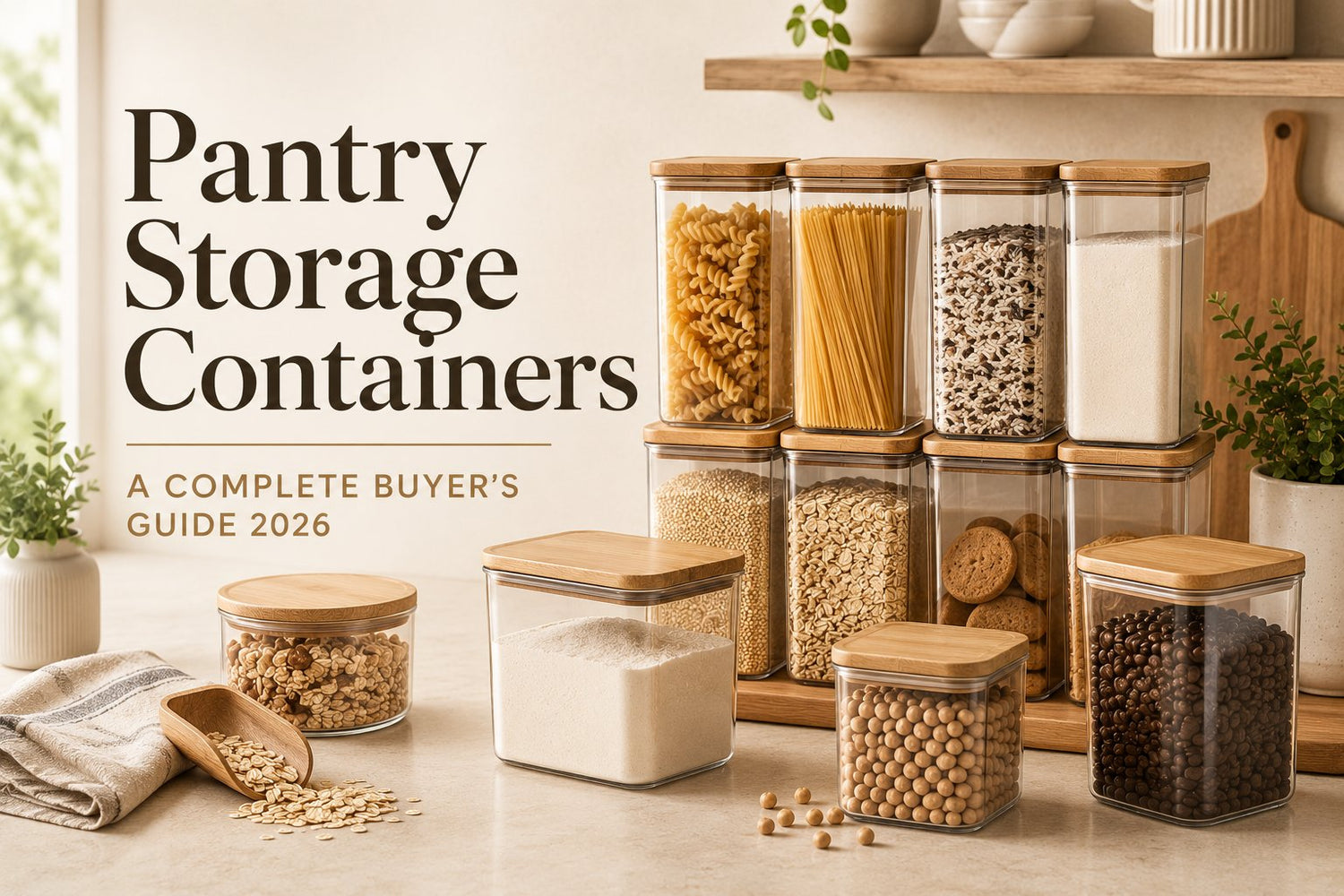
You open the pantry to grab rice, and a bag of pasta slides forward. Behind it, there's a half-used packet of lentils, two open bags of flour, snacks shoved in sideways, and a container set that looked tidy for about a week before real life took over.
At that point, it's often believed that better pantry storage containers are necessary. Sometimes they do. More often, they need a better system.
Good pantry organisation doesn't start with matching lids. It starts with how you cook, how much you buy, what your shelves can hold, and what happens to the awkward leftovers after you decant dry goods. That's why so many neat pantries fall apart. The containers are fine, but the workflow is weak.
Interest in this category isn't going away. The US food storage container market is projected to add USD 2.51 billion from 2026 to 2030 at a 3.4% CAGR, driven in part by demand for durable, reusable containers that improve food preservation and shelf efficiency, according to Technavio's US food storage container market analysis. People are investing in better storage because they want kitchens that work better, not just shelves that photograph well.
If you need a starting point for layout logic, this guide to organising your pantry with bins and zones pairs well with the container decisions below.
Table of Contents
- Reclaim Your Pantry From Chaos
- Decoding Container Materials From Glass to Plastic
- Choosing the Right Size and Shape for Your Space
- How to Plan Your Complete Storage System
- Smart Organization and Labelling Strategies
- Bulk Purchasing for Homes and Businesses
- Your Pantry Storage Decision Checklist
Reclaim Your Pantry From Chaos
A messy pantry usually isn't a storage problem alone. It's a decision problem.
People mix unopened backstock with open packages, put daily-use items on the highest shelf, buy deep bins for shallow shelves, and decant some foods while leaving others in crumpled bags. The result looks random because it is random. Pantry storage containers can help, but only when each one has a job inside a larger routine.
Three outcomes matter more than appearance:
- Faster access: you can find ingredients without moving five other things first.
- Lower waste: open items stay visible, and duplicates stop piling up.
- Simpler restocking: every category has a home, including overflow.
Practical rule: If a container system doesn't tell you where the extra half bag goes, the system isn't finished.
Organised pantries differ from styled ones. A styled pantry looks uniform on day one. An organised pantry still works after a grocery run, a rushed school morning, and a weekend bulk shop.
Most households do better with a combination of tools: sealed containers for staples, open bins for packets, a backstock area for refills, and labels that are clear enough for everyone in the home to follow. You don't need every item to match. You need the pantry to be easy to use correctly.
That shift in thinking matters. Once you stop asking, “Which container set should I buy?” and start asking, “How should flour, snacks, breakfast items, and overflow move through this space?”, the right choices become much easier.
Decoding Container Materials From Glass to Plastic
Material changes how a pantry feels to use every day. Weight, cleaning, visibility, durability, and lid performance all matter more than the trend cycle.

What each material does well
Glass works well for ingredients you use often and want to see clearly, such as flour, oats, pasta, and baking sugar. It doesn't hold odours easily and feels stable on the shelf. The trade-off is obvious. It's heavy, breakable, and less forgiving on high shelves or in homes with children.
Plastic is usually the most practical option for busy pantries. It's lighter, easier to lift, and better for upper shelves and snack zones. The key is choosing the right plastic. According to this commercial food storage materials guide, common food-grade plastics such as polypropylene are rated from roughly -40°C to 70°C, while polycarbonate can handle up to 99°C. That matters if you wash containers in hot water or store warm ingredients. Higher heat tolerance reduces the chance of lid warping or seal damage over time.
Ceramic looks good and blocks light, which can be useful for a few ingredients. In practice, it's usually less efficient for full pantry systems because you can't see contents quickly, and matching replacement pieces can be awkward.
Metal, especially stainless options, can be durable and low-fuss for some dry storage uses. But for most households, it's harder to monitor inventory when you can't see what's inside.
If you're comparing everyday trade-offs, this breakdown of glass versus plastic food storage containers is useful for narrowing the decision.
Glass suits calm, visible storage. Plastic suits high-use, high-movement storage.
A practical side note on maintenance: if you're washing and drying a large batch of containers after a pantry reset, a separate drying setup helps prevent lids and seals from getting scattered across the counter. Something like the HOME AESTHETICS HA-4403 Dishrack 2 Tier With Rubbermaid is a two-tier space-saving drainer with a built-in drainboard system, cutlery and glass holders, and a durable steel frame. That matters more during setup and cleaning than in storage itself.
Pantry Container Material Comparison
| Material | Pros | Cons | Best For |
|---|---|---|---|
| Glass | Clear, easy to clean, doesn't stain easily, feels solid | Heavy, breakable, less suitable for high shelves | Baking staples, visible everyday dry goods |
| Polypropylene plastic | Cost-effective, lightweight, practical for frequent handling | Can be less rigid than heavier materials | Snacks, cereals, kid-access shelves, everyday staples |
| Polycarbonate plastic | Stronger heat tolerance, durable, clear | Often costs more than basic plastic | High-turnover pantry systems, frequent hot washing |
| Ceramic | Attractive, protects contents from light | Heavy, opaque, harder to stack efficiently | Countertop storage, small curated categories |
| Metal | Durable, long-lasting, low visual clutter | Opaque, harder to track inventory at a glance | Specialty storage, lower-light dry goods |
Choosing the Right Size and Shape for Your Space
Uniform sets get too much credit. They look tidy in product photos, but they often waste real pantry space.

Measure before you buy
For renters and people working with narrow cupboards, deep shelves, odd corners, or fixed cabinetry, fit comes first. Generic advice often misses that. This article on small pantry design and fit-first organisation highlights the practical issue clearly: measuring shelf depth, door clearance, and vertical gaps is the most critical step, and forcing uniform containers into awkward spaces can reduce real-world efficiency.
Measure four things before you shop:
-
Shelf depth
Deep shelves can hold large bins, but only if you can still reach the back. In many kitchens, a shallower front row with a pull-out bin or tray behind it works better than one oversized container. -
Usable height
Measure between shelves, not the overall pantry height. Lids need finger space. If a container technically fits but can't be removed without tilting, it doesn't fit. -
Door swing and clearance
This catches people out in small kitchens. A container can fit the shelf and still collide with the door frame or the shelf above when you try to remove it. -
Width by category
Don't assign equal space to every food type. Give more width to the categories you purchase most.
For practical sizing options, this guide to food storage container sizes helps translate shelf dimensions into more realistic container choices.
Why mixed shapes often work better
Square and rectangular containers usually make the best use of shelf space. They sit tightly together and leave fewer dead gaps. They're the default choice for flour, sugar, grains, cereal, and pasta.
Round containers still have a place. They're easier to pour from, easier to clean in some cases, and useful for scoop-heavy ingredients. But they give away shelf efficiency, especially in smaller pantries.
A simple shape strategy works well:
- Use square or rectangular containers for staple dry goods and anything you store side by side.
- Use narrow tall containers for spaghetti, wraps, or slim shelves.
- Use round containers only where hand access matters more than tight packing.
- Use low bins instead of lidded containers for pouches, seasoning packets, and irregular snack bags.
The best pantry storage containers aren't the ones that match each other. They're the ones that fit the shelf and the food at the same time.
If you live in a rental, this matters even more. You may not be able to add pull-outs or drill organisers into the wall. In that case, shape choice does the work that built-in hardware would normally do.
How to Plan Your Complete Storage System
Most pantry projects fail at the refill stage, not the setup stage.

Build around zones and backstock
The usual problem goes like this: you pour oats into a neat container, then the rest of the bag gets folded badly, shoved behind a basket, and forgotten. A week later, you buy another bag because the decanted container looked low.
That's why backstock management matters. In the source material on practical pantry workflow, the pain point is direct: people struggle with the leftover partial bag after decanting, and a dedicated single backstock bin is the simple fix. This video on pantry backstock and system design is one of the few resources that addresses that issue directly.
Create zones first, then assign containers inside them:
- Baking zone: flour, sugar, raising agents, chocolate chips, decorating items
- Breakfast zone: oats, cereal, granola, nut butter packets
- Dinner staples: pasta, rice, grains, pulses
- Snacks zone: bars, crackers, dried fruit, lunchbox items
- Backstock bin: unopened duplicates, partial refill bags, bulk extras
The backstock bin should be singular, not scattered. One bin forces visibility. Three hidden overflow spots create confusion.
A simple pantry workflow that holds up
Use a repeatable process:
- Empty the shelves completely.
- Group food by how you use it, not by package type.
- Decant only the items that benefit from it.
- Store refill bags and extras in the backstock bin.
- Put daily-use categories between waist and eye level.
- Rotate older items to the front.
If you're adding vertical support around the containers, pantry storage racks can help define zones without forcing every item into a sealed bin.
Another practical rule comes from commercial dry-storage thinking. For larger pantry layouts or converted storage areas, this guidance on dry-storage layout using shipping-container principles recommends shelves at least 15 cm off the floor and 60 cm below the ceiling, along with FIFO rotation and date labelling. Even in a standard home pantry, the logic is useful: keep food off the floor, leave room for airflow and cleaning, and make older stock easier to use first.
A pantry works when the refill, the backup, and the daily-use item all have separate homes.
Don't decant everything. That's another common mistake. Some items do better in their original packaging inside a bin, especially individually wrapped snacks, speciality ingredients, and products you finish quickly. Containers should solve friction, not create extra steps.
Smart Organization and Labelling Strategies
A pantry can be technically organised and still feel annoying to use. That usually comes down to visibility.

Make the pantry easy to read
Think of labels as navigation, not decoration. If every container looks clean but nobody can tell plain flour from icing sugar at a glance, the system is doing half the job.
In homes with changing inventory, erasable labels work well for bins and temporary goods. For staples that rarely change, printed labels are easier to keep consistent. The important part is placement. Put labels where your eye lands when you open the pantry, not on the lid where they disappear in a stack.
Good label categories tend to be broader than people expect. Instead of labelling a bin “almonds, cashews, pistachios”, label it Nuts & Seeds if that mix changes often. Save item-level labels for true staples.
A pantry that stays organised usually follows a few usability rules:
- Keep category labels larger than item labels so the shelf reads quickly.
- Face text the same direction across a row. Mixed orientation looks messy and slows people down.
- Label bins, not just containers when multiple loose items live together.
- Add dates only where they change decisions, such as bulk flours or decanted grains.
Use organisers where containers fall short
Containers aren't the answer to everything. Cans disappear in deep shelves. Small pouches slump over. Narrow condiment bottles migrate.
That's where support tools matter: turntables for corners, tiered risers for tins, under-shelf baskets for packets, and slim side racks for overflow. If you need a way to compare these kinds of solutions without digging through broad catalogues, GrifGlo groups practical home and kitchen organisers into decision-oriented categories and buying guides, which is useful when you're choosing between bins, racks, and accessory storage rather than buying one more random container.
A few examples from real pantry use:
- Breakfast shelf: decanted oats in a lidded container, cereal in a taller bin, bars in an open basket.
- Baking shelf: sealed containers for flour and sugar, a shallow bin for sachets and decorations.
- Overflow area: one labelled backstock bin, never loose refill bags on separate shelves.
If someone else in the household can't put groceries away without asking questions, the labels still need work.
Specialised organisers can also support nearby storage zones outside the pantry itself, such as the fridge side, utility shelf, or breakfast station. That's often what makes a pantry system feel complete instead of crowded.
Bulk Purchasing for Homes and Businesses
Buying in bulk changes the job of pantry storage containers. The goal isn't just neatness. It's durability, turnover control, and simpler replenishment.
Here's a quick visual on bulk-oriented storage and workflow decisions:
What changes when volume goes up
A household that buys one bag of rice at a time can get away with almost any decent container. A family that buys warehouse-size staples, an office snack station, or a small hospitality setup needs a tougher system.
The broader category supports that demand. The North American food storage market is projected to grow from USD 34.00 million in 2024 to USD 46.54 million by 2032, according to Data Bridge Market Research's North America food storage container market outlook. That steady growth suggests sustained use across homes and commercial settings, not a short-lived organising trend.
High-turnover environments should prioritise:
- Durability over appearance: repeated opening, washing, and restocking expose weak hinges and poor seals quickly.
- Scalable sizes: choose a size ladder, not random capacities, so staff or family members know where refills go.
- Readable labelling: larger text and simpler categories reduce restocking errors.
- Easy replacement: avoid obscure formats that are hard to reorder later.
Buy for replacement and routine use
Bulk buyers often make one mistake early. They buy a complete set in one go without checking how the system will be maintained. Lids crack, one container gets lost, usage patterns change, and suddenly the whole setup becomes mismatched in the wrong way.
A better approach is to standardise where standardisation matters:
- Keep one or two container styles for heavy-use staples.
- Use bins for irregular packaging and secondary stock.
- Maintain a clear backstock area separate from working inventory.
- Reorder from a source that supports structured purchasing.
For teams sourcing at scale, this guide to wholesale kitchen supplies is relevant because pantry organisation at volume is partly a purchasing problem, not only an organising one. Homes that buy in bulk can borrow the same logic. If replacement is easy and the format is repeatable, the system lasts longer.
Your Pantry Storage Decision Checklist
A good pantry doesn't depend on motivation. It depends on decisions that are easy to repeat.

Use this before you buy anything
Run through this list in order. It prevents most expensive mistakes.
- Measure the space first. Record shelf width, depth, usable height, and door clearance. Don't rely on visual estimates.
- Sort by routine, not by packaging. Group foods by how you cook and shop. Baking, breakfast, snacks, grains, and backstock usually make more sense than “boxes” versus “bags”.
- Declutter before assigning space. Expired, stale, duplicate, and never-used items distort what your pantry really needs to hold.
- Choose material by shelf position and handling. Heavy glass can work well for lower shelves. Lightweight plastic often works better for high shelves, children's snacks, and frequent access.
- Choose shape by fit. Square and rectangular containers usually maximise shelf space. Round options work when pouring and hand access matter more.
- Plan for backstock. If there's no home for the extra half bag after decanting, stop and solve that before buying more containers.
- Use labels that match how often contents change. Permanent labels for staples, erasable ones for flexible bins.
- Keep daily-use items accessible. Waist to eye level is prime pantry space. Reserve awkward shelves for backup stock or low-use items.
- Add organisers only where they remove friction. Turntables, risers, and bins should solve a specific access problem.
- Build for maintenance. Everyone in the home should be able to restock and put things away without guessing.
The right pantry storage containers make a visible difference, but the lasting improvement comes from the structure behind them. Once the space fits your shelves, your shopping habits, and your refill routine, the pantry stops drifting back into chaos.
If you're comparing organisers, racks, bins, and pantry storage containers without wanting to sort through an oversized catalogue, GrifGlo is a practical place to start. It organises home and kitchen essentials into clear categories with decision-friendly guides, which is useful when you're building a pantry system around fit, workflow, and everyday use rather than chasing a matching set.

Leave a comment
This site is protected by hCaptcha and the hCaptcha Privacy Policy and Terms of Service apply.