

You're probably standing in a kitchen that feels half empty and half expensive. Maybe you've just moved, opened a few boxes, and realised you own three water bottles, one mug, and nothing to make dinner in. Or maybe your drawers are already full, but they're full of mismatched gadgets that never seem to help when you need to cook.
That's where most kitchen setup advice goes wrong. It hands you one giant shopping list, as if a renter in a studio flat needs the same setup as a family cooking every night. In real kitchens, priorities matter more than totals. A functional kitchen isn't built by buying everything. It's built by buying the right things in the right order.
I've seen the same pattern in first flats, shared homes, family kitchens, and rental properties. People overspend on novelty, underspend on core tools, and forget the systems that make a kitchen usable day to day. Good lighting helps too, especially if your prep area is dim and you're trying to judge knife work or doneness by shadow. If that sounds familiar, this guide to better kitchen lighting is worth reading alongside your setup plan.
Table of Contents
- Setting Up Your First Kitchen Without the Stress
- The Five Foundational Kitchen Categories
- Your Core Cookware and Bakeware
- Essential Tools and Everyday Gadgets
- Customized Checklists for Your Household
- Smart Organization and Cleanup Systems
- Frequently Asked Questions About Kitchen Setups
Setting Up Your First Kitchen Without the Stress
The most stressful part of setting up a kitchen isn't the cost alone. It's the sequence. People don't know what to buy first, so they buy whatever looks useful in the moment. That usually leads to a drawer full of peelers, novelty slicers, and duplicate spatulas, while the basics are still missing.
A better approach starts with one question. What do you need to cook and clean up tonight, tomorrow, and this week? If you can boil pasta, sauté vegetables, chop an onion safely, measure a simple recipe, store leftovers, and wash up without frustration, your kitchen is already working.
Practical rule: Buy for your next ten meals, not your dream version of yourself.
That mindset changes everything. A first kitchen doesn't need to be complete. It needs to be functional. That means one good pan before three mediocre ones, one reliable knife before a bulky knife block, and one set of stackable containers before an entire cupboard of random tubs without lids.
I also treat kitchens as working systems, not collections of products. Cooking, prep, measuring, storage, and cleanup all depend on one another. If one part is weak, the whole kitchen feels awkward. A sharp knife with no cutting board is useless. Good cookware without a colander or oven mitts still creates friction. A kitchen essentials list should reflect how people move through the room.
The Five Foundational Kitchen Categories
Kitchen shopping often occurs by aisle. That's how clutter happens. You see a useful-looking item, toss it in the trolley, and end up with disconnected purchases that don't work together.
It's easier to build a kitchen essentials list around five foundational categories. Once you sort items this way, you can see what's missing, what overlaps, and what can wait.

Think in systems, not aisles
A useful kitchen has a few pieces from each category, not a mountain of gear in just one. That's also supported by ownership patterns. In a YouGov kitchen utensil survey, measuring cups, can openers, spatulas, and measuring spoons were present in at least 90% of Americans' kitchens, and another nine utensils, including cutting boards and whisks, were in more than 80% of kitchens. Those are the tools that keep showing up because they solve everyday tasks.
The same survey found that six of 25 utensils were owned by less than half of respondents. That split is helpful. It tells you there's a clear difference between the tools most kitchens need and the specialty items that only make sense later.
What belongs in each category
Here's the mental model I use.
| Category | What it covers | What usually belongs first |
|---|---|---|
| Cookware and bakeware | Heat, boiling, sautéing, roasting | Skillet, saucepan, larger pot, baking sheet |
| Prep and cutting | Safe ingredient prep | Chef's knife, cutting board, peeler |
| Tools and gadgets | Measuring, mixing, opening, turning | Measuring cups, measuring spoons, spatula, whisk, can opener |
| Storage and organisation | Leftovers, dry goods, layout | Food containers, a simple pantry zone, drawer order |
| Cleaning and maintenance | Daily reset and tool care | Dish towels, sponge, drying setup, mitts, sharpening tool |
A lot of shopping mistakes come from overbuilding one category. People buy cookware sets with pieces they'll never touch, or they focus on pantry containers before they own a decent saucepan. Start balanced.
For pantry and drawer planning, I prefer zones over perfection. Group by use, not by product type alone. Oils near the stove, prep tools near the board, storage near the fridge. If you need a practical framework, this guide on organising your pantry with bins and zones is a sensible companion to a first kitchen setup.
Your Core Cookware and Bakeware
If I had to strip a kitchen down to the pieces that carry the most weight, I'd keep the cookware lean. Most households don't need a huge set. They need a handful of pieces that cover everyday meals without wasting cupboard space.
The pieces that earn their shelf space
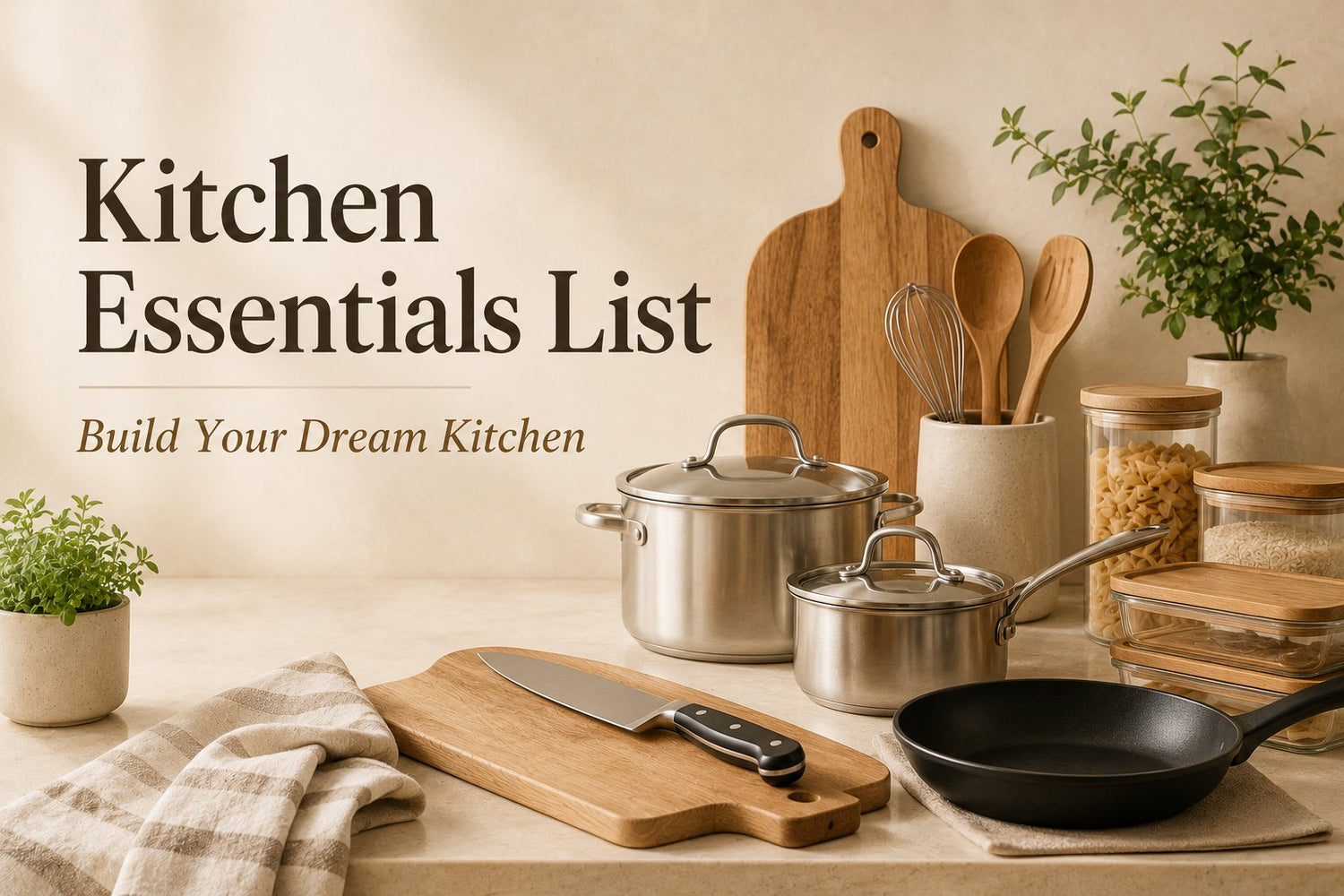
Start with a medium or large skillet, a medium saucepan, a larger pot with lid, and a baking sheet or baking dish. That combination handles eggs, vegetables, sauces, grains, soups, pasta, tray bakes, reheating, and simple roasting.
The American Heart Association's guide to essential kitchen equipment and utensils points to a compact but practical core set, including an 8-quart pot with lid, plus basics such as a cutting board, can opener, wooden spoons, slotted spoon, ladle, spatula, whisk, tongs, mixing bowls, measuring cups, measuring spoons, colander, instant-read thermometer, oven mitts, pot holders, kitchen towels, and apron. It also gets specific where a lot of lists stay vague. Mixing bowls in at least three sizes, a ladle that holds 1/2 cup or 1 cup, and measuring spoons ranging from 1 tablespoon to 1/8 teaspoon are the sort of details that prevent bad purchases.
For bakeware, keep it modest. One sturdy sheet pan and one oven-safe dish are enough for many kitchens. If you rarely bake, don't let bakeware multiply.
Where quality matters most
The single place I'd spend more is the knife setup. Mealime's kitchen essentials guidance emphasises a quality chef's knife plus at least one sharpener or honing steel, and that matches real kitchen experience. A blunt knife slips, crushes herbs, tears onions, and makes prep slower than it should be. A sharp edge gives you control and reduces cutting force.

You don't need a block full of blades. You need one chef's knife that feels balanced in your hand, one smaller utility or paring knife if you do a lot of fine prep, and a way to maintain the edge. A sharpening stone is one practical route. For example, the King Japanese Whetstone – #800/#6000 Dual Grit is a double-sided stone made in Japan with #800 grit for restoring a dull edge and #6000 grit for polishing. That's useful factual information, not a reason to buy it blindly. If you won't use a stone correctly, a simpler sharpening format may fit better.
A cheap pan can still cook dinner. A bad knife slows every single meal.
For pan materials, think by job. Non-stick is easy for eggs and delicate foods. Stainless steel is better for browning and everyday durability. Cast iron is excellent if you'll maintain it, and this guide to cast iron cookware care helps if you're deciding whether that trade-off fits your routine.
Essential Tools and Everyday Gadgets
Small tools decide whether cooking feels smooth or annoying. They're also where clutter sneaks in fastest. The fix is simple. Group gadgets by function and keep only the ones that solve a repeated task.

The tools that get used constantly
A strong basic drawer usually includes:
-
For measuring
Measuring cups and measuring spoons come first. If you bake often, add a scale. If you don't, a scale can wait. -
For mixing and turning
A silicone spatula, a whisk, tongs, a wooden spoon, and a slotted spoon cover most stovetop and bowl work. -
For opening and processing
A can opener, vegetable peeler, and box grater do more useful work than a pile of single-purpose gadgets. -
For prep support
Mixing bowls matter more than people think. The American Heart Association includes mixing bowls in at least three sizes in its core guide, and that's right. You need one for prep scraps, one for active mixing, and one for holding ingredients or leftovers.
The trap is buying specialised gadgets too early. Egg slicers, avocado tools, garlic-specific devices, and complicated choppers often save less time than people expect and take up more room than they deserve.
Why temperature control changes everything
One upgrade beats most novelty tools. Build a temperature-control stack.
According to Ambitious Kitchen's kitchen essentials guide, an instant-read thermometer for doneness and an oven thermometer to verify calibration are critical because internal temperature is the controlling variable for both food quality and safety, not recipe timing alone. That's one of the most useful buying principles in any kitchen essentials list.
If chicken is done too early or too late, timing didn't fail you. Measurement did. If cookies bake unevenly every time, your oven may be running hot or cool. These tools remove guesswork.
Here's a quick visual walkthrough of the kind of everyday tools worth keeping close at hand:
If you're building a drawer setup from scratch, I'd rank the buying order like this:
-
First tier
Measuring cups, measuring spoons, spatula, whisk, tongs, can opener, peeler -
Second tier
Instant-read thermometer, oven thermometer, box grater, kitchen shears -
Later additions
Scale for baking, microplane, specialty tools tied to foods you make often
For knife maintenance options beyond a whetstone, this guide to knife sharpening tools gives a good overview of the trade-offs.
Customized Checklists for Your Household
You unpack the boxes, open one drawer, and realize the usual kitchen checklist would fill the whole room. That is why a good kitchen essentials list has to match the way you live and cook.
A renter often needs pieces that stack well and survive the next move. A family usually needs a few larger workhorses, not twice as many tools. A small kitchen rewards anything that can handle more than one task without eating shelf space.
I set these kitchens up in tiers. That keeps the first buy focused, leaves room for upgrades, and stops the common mistake of buying a full set before you know your actual routine. As noted in Crate & Barrel's kitchen essentials checklist discussion, many lists assume fully stocked homes, even though limited storage is a common constraint.

The first apartment or renter kit
This setup works for shared cupboards, smaller kitchens, and anyone who may move again within a year or two.
Bare essentials
-
Cookware with range
One skillet, one saucepan, and one larger pot cover eggs, pasta, soup, rice, and simple one-pan dinners without locking you into a heavy set. -
Prep basics
Chef's knife, one cutting board, peeler, can opener. -
Daily-use utensils
Measuring cups, measuring spoons, spatula, whisk, tongs. -
Basic cleanup gear
Dish towels, sponge, drying rack or mat, oven mitts. -
A small container set
Enough for leftovers and lunch, not a giant bundle with shapes you will never use.
Level 2 upgrades
-
A baking sheet or baking dish
Good for sheet-pan meals, roasting vegetables, and reheating. -
Nested mixing bowls
Easier to store than random singles. -
A few better storage pieces
If you meal prep or carry lunch often, choose practical sizes instead of buying a matched set for looks. This guide to food storage container sizes is useful for figuring out what will earn space.
Nice-to-haves
-
A toaster, blender, or rice cooker
Buy the one tied to meals you make every week. -
Extra serving pieces
Add them after your cooking tools and storage are handled.
The trade-off here is simple. Portability and flexibility matter more than completeness.
The growing family kitchen
Family kitchens need more capacity in a few pressure points. They do not need duplicates in every drawer.
Bare essentials
-
Larger cookware
A roomy skillet, a larger pot, and a second pan for cooking two things at once. -
Prep tools that can take abuse
A chef's knife, a sturdy cutting board, and mixing bowls that hold up to repeated use. -
Serving and draining tools
Ladle, slotted spoon, tongs, colander. -
Leftover-ready storage
Multiple containers in useful everyday sizes matter more than decorative pantry systems.
Level 2 upgrades
-
Second cutting board
This helps meal flow when one person is chopping produce and another is handling meat or sandwiches. -
Extra sheet pans or bakeware
Worth it for batch cooking, roasting, and packing lunches ahead. -
Kitchen shears
They save time on packaging, herbs, quesadillas, and trimming chicken.
Nice-to-haves
-
Specialty appliances with a clear job
A slow cooker or air fryer can earn its place in a busy house. A gadget that solves one occasional problem usually becomes cabinet clutter.
For families, durability usually beats compactness. For renters, the reverse is often true.
The small-space solution
A cramped kitchen punishes overbuying fast. Every item has to justify the shelf space it takes.
| Tier | Priorities | What to avoid |
|---|---|---|
| Bare essentials | One skillet, one saucepan, one pot, one knife, one board, one set of measuring tools, one mixing bowl set, one container set | Large cookware sets, duplicate utensils |
| Level 2 upgrades | Nesting bowls, collapsible colander, compact storage containers, a second pan only if you cook daily | Oversized appliances with one narrow use |
| Nice-to-haves | Appliance shortcuts that replace several tasks, wall or vertical storage pieces that genuinely clear counters | Decorative storage that wastes vertical space |
The key trade-off in a small kitchen is convenience versus access. A specialty tool can be worth keeping if you use it three times a week. If you have to move six things to reach it, it probably does not belong.
If you want a practical way to sort options across kitchen, storage, and household basics, GrifGlo groups products into decision-friendly categories rather than leaving you to sift through a massive catalogue.
Smart Organization and Cleanup Systems
A kitchen can have decent cookware and still feel frustrating if the support system is weak. The daily experience depends on where things land after cooking, how leftovers get stored, and whether cleanup is quick enough that you'll reset the room.
Build the support system, not just the cooking zone
The American Heart Association's guide doesn't stop at cookware. It includes oven mitts, pot holders, kitchen towels, mixing bowls in at least three sizes, and a colander, which is a good reminder that prep and cleanup are part of the kitchen essentials list, not afterthoughts.

If I'm setting up a kitchen from scratch, I create these zones first:
-
A prep zone
Knife, board, bowl, towel nearby. -
A cooking zone
Most-used utensils and mitts close to the hob and oven. -
A storage zone
Containers and wraps near the fridge, not buried across the room. -
A wash zone
Sponge, brush, soap, drying setup, and towels where cleanup starts.
That arrangement cuts down on pointless movement. It also reveals what you use. If a tool never earns a place near the action, it probably doesn't belong.
Storage choices that reduce clutter
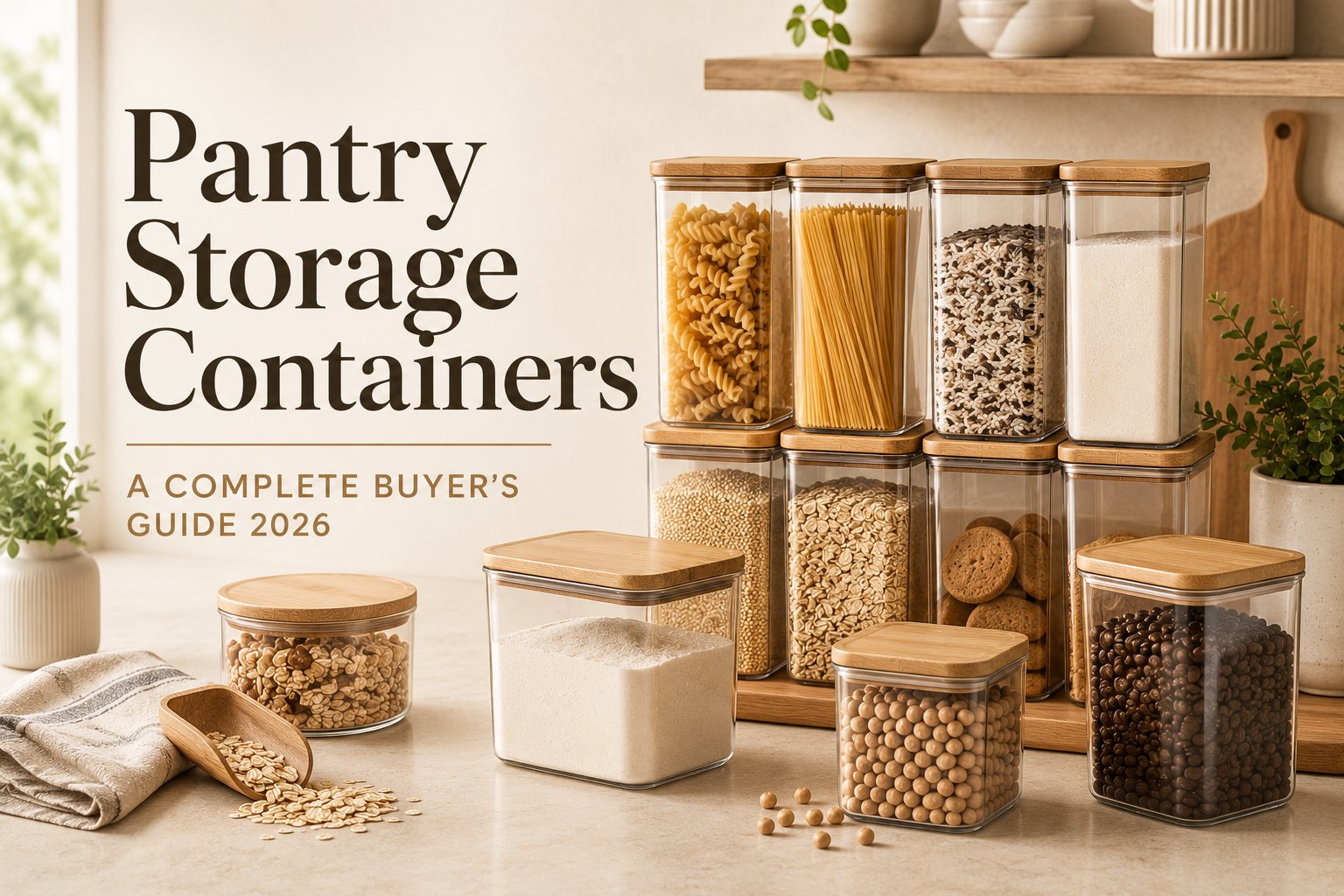
For containers, choose based on use. Glass works well for reheating and leftovers that go from fridge to table. Plastic is lighter and often easier for packed lunches or shared fridges. What matters most is stackability, lid sanity, and whether the sizes match the food you store.
A few practical habits matter more than fancy organisers:
-
Keep lids under control
A container collection fails when lids become a jumble. -
Store by frequency
Everyday pans, bowls, and tools should live at arm's reach. -
Use vertical space carefully
Shelf risers and bins help, but only if they don't make access worse. -
Reset the sink area nightly
Waking up to a clear sink changes how the whole kitchen feels.
If cleanup is awkward, cooking starts to feel expensive in time and effort.
A tidy under-sink area, a sensible bin location, and enough towels to rotate through the week do more for kitchen function than another gadget ever will.
Frequently Asked Questions About Kitchen Setups
Should I choose stainless steel, non-stick, or cast iron
Choose by task, not ideology. Stainless steel is strong and versatile for browning and everyday cooking. Non-stick is easier for eggs, pancakes, and delicate foods. Cast iron holds heat well and can last for years, but only if you're willing to maintain it. Many households do best with a mix instead of committing to one material.
What's the smartest first upgrade after the basics
Upgrade the tool you touch most. In many kitchens, that's the chef's knife or skillet. If your food is cooking unpredictably, the smarter upgrade is measurement, especially thermometers.
How do I know when to upgrade
Upgrade when an item creates repeated friction. A pan that heats poorly, a knife that won't hold an edge, or containers that never stack properly are worth replacing. Don't upgrade just because your kitchen looks uneven.
Do I need a full matching set
No. Matching sets often include weak pieces and filler sizes. A kitchen built one useful item at a time usually works better and stores more cleanly.
What should never be skipped
Don't skip the boring support pieces. Oven mitts, towels, a colander, measuring tools, and containers don't look exciting on a shopping list, but they're what make a kitchen feel complete.
GrifGlo helps households build practical systems for home, kitchen, and organisation without relying on overwhelming product dumps. If you're comparing cookware, sharpening tools, storage pieces, or setup guides for a new kitchen, GrifGlo is a straightforward place to narrow options and buy with more confidence.


Leave a comment
This site is protected by hCaptcha and the hCaptcha Privacy Policy and Terms of Service apply.