

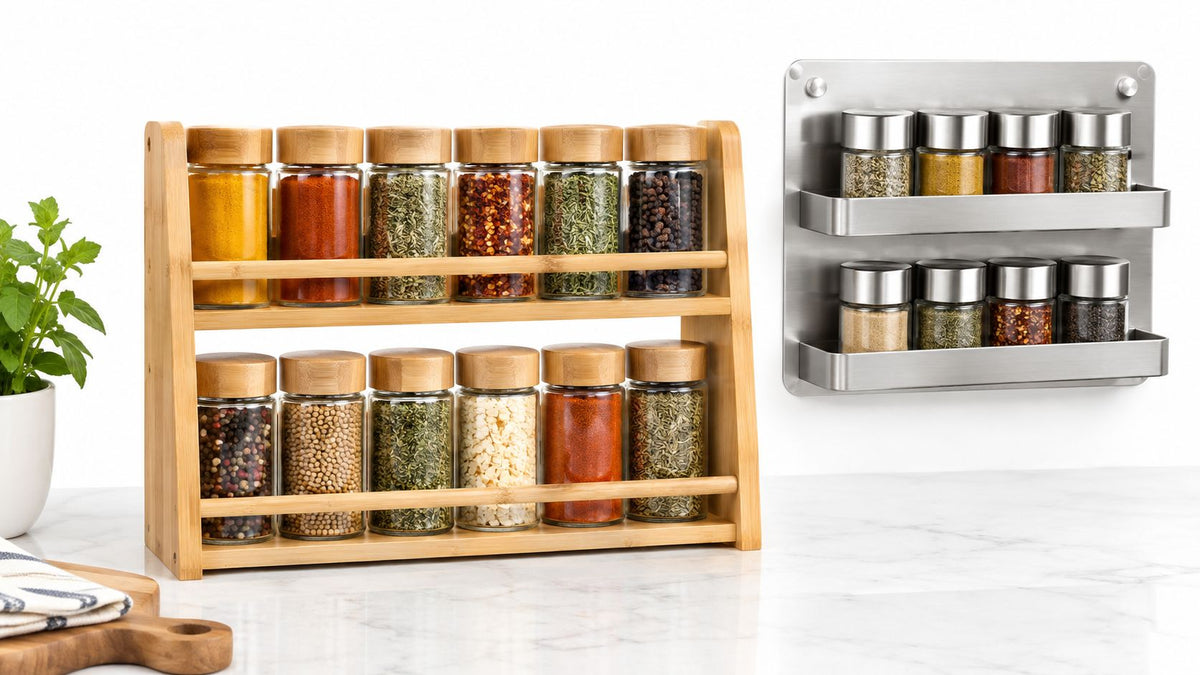
The popular advice is simple: choose the spice rack with the most jars. That pitch confuses quantity with usefulness. A pre-filled rack can look like a shortcut, but a kitchen organizer earns its place through accessible storage, replaceable containers, sensible placement, and compatibility with the way you cook.
Canadian households have access to a broad, steadily replenished spice assortment. Commodity group 0910 imports, covering products such as ginger, turmeric, thyme, bay leaves, curry, and other spices, reached about US$111 million in 2023, compared with roughly US$40.4 million in 2011 (Canada spice import data). The practical implication is clear: you don't need to preserve a fixed starter collection forever. You need a rack that makes the spices you use easy to identify, store, and replace.
Table of Contents
- Rethinking the Value of Pre-Filled Spice Sets
- Evaluating Rack Formats and Materials for Small Spaces
- Weighing the Pros and Cons of Bundled Spices
- Strategic Placement and Labelling for Daily Cooking
- Tailoring Your Choice to Renters, Homeowners, and Businesses
- Maintaining Freshness and Planning Your First Refill
Rethinking the Value of Pre-Filled Spice Sets
A rack filled with twenty or thirty jars can look like a bargain, but jar count is a weak measure of usefulness. The display creates an instant sense of order. Long-term value depends on whether the containers fit your space, the spices match your cooking, and replacements are easy to find.
More included spices doesn't automatically create more value. An unused seasoning takes up the same physical room as one you use every week. In a small kitchen, those extra jars can make the rack wider, taller, or deeper without improving access or meal preparation. A compact rack with open positions may serve you better than a larger set built around ingredients selected for shelf appeal.
Count the useful positions, not the jars
List the seasonings you regularly reach for before comparing bundled sets. Garlic powder, black pepper, cumin, paprika, oregano, and a preferred curry blend may need convenient positions. Specialist blends can wait until you know they belong in your routine.
Canadian kitchens have long treated pepper as a staple. That practical pattern matters more than a historical jar count. A rack should prioritise routine ingredients before novelty. If a set includes several similar blends but leaves too little room for pepper, herbs, or baking spices, its apparent generosity becomes a storage problem.
Standardisation determines the second year
The first fill is only the beginning. Check whether replacement jars share a common diameter, consistent height, and standard threaded opening. Attractive non-standard containers can leave you searching for proprietary replacements or decanting refills into bottles that do not match.
Inspect the label area as carefully as the shelf. A drawer rack needs labels readable from above. A wall-mounted rack needs names visible from the side. Leave enough space for a new label when you replace a blend with another ingredient.
Practical rule: Buy the rack for its refill system and footprint. Treat the included spices as a temporary starting collection.
Pre-filled sets can suit a new cook, a gift, or a household with an empty pantry. They remove the initial sorting task and give the kitchen a consistent appearance. They become poor value when they consume scarce counter space, provide small quantities, or use containers that cannot be replaced without guesswork.
Use a simple purchasing test: name the jars you expect to finish first, then confirm that the rack can hold those ingredients in compatible containers. Compare footprint, refill access, and label visibility with this decision-making framework. If you cannot plan the first refill, the set is not ready for long-term use.
Evaluating Rack Formats and Materials for Small Spaces
A rack with more jars is not automatically better value. In a small kitchen, the footprint, removal clearance, and refill compatibility determine whether the system remains useful. Measure available width, depth, and height before comparing finishes or jar counts. Then check the space above each container. A shelf may fit beneath a cabinet yet fail if you cannot lift a jar out without scraping the cabinet.
Canadian purchasing patterns increasingly favour formats that use walls, refrigerator sides, and cabinet doors. One market report estimates that vertical wall-mounted, magnetic, and cabinet-door-mounted racks account for about 40–45% of new-purchase consideration in Canada, compared with roughly 30% five years ago (Canadian small spice rack market analysis). The same source projects category growth at 6–9% CAGR through 2035, linking space-efficient storage with tighter kitchens and changing housing patterns.
Match the format to the room
Freestanding carousels suit a deep counter or pantry shelf. The rotating base brings rear jars forward, but the unit occupies continuous surface area and may interfere with a cutting board. Use one where it can stay in a dedicated prep zone, with labels visible from standing height.
Wall-mounted tiers return counter space and keep labels facing forward. Position them above a preparation area, away from stove heat and steam. Renters should check whether anchors require permission. A loaded rack needs secure fixing, not a decorative adhesive strip.
Magnetic strips and shelves suit a refrigerator side or another accessible metal surface. They preserve vertical space, but the magnets must support the filled containers securely. Arrange jars by frequency or cooking task. A crowded row of identical bottles remains slow to use even when it is easy to see.
Cabinet-door organisers make use of a surface that narrow kitchens often waste. Check door swing, shelf clearance, hinge interference, and the combined weight of the jars. Avoid this format when the door already carries heavy bins or when the rack obstructs interior shelves.
A refrigerator-side option such as the Magnet Shelf Rack for Refrigerator - Kitchen Organizer is priced at $74.99 and is currently in stock with four variants. Its usefulness depends on having a suitable refrigerator side and enough clearance for the door and surrounding traffic.
Choose materials for handling, not appearance
Bamboo adds warmth and suits a dry pantry, though standing moisture and repeated contact with wet hands can shorten its useful life. Stainless steel tolerates frequent handling and wipes clean easily, but jars may slide if the rack has no raised edge. Acrylic keeps labels visible and looks light in a compact room, while scratches and cloudy residue become more apparent with use.
Material choice should follow cleaning and stability requirements. A finish that forces you to remove every jar for routine wiping creates unnecessary work. For jar dimensions and rack compatibility, use this guide to spice jar racks. Easy maintenance is a space-saving feature because an orderly, replaceable storage system reduces the chance that duplicate bottles will spread into nearby cupboards.
Weighing the Pros and Cons of Bundled Spices
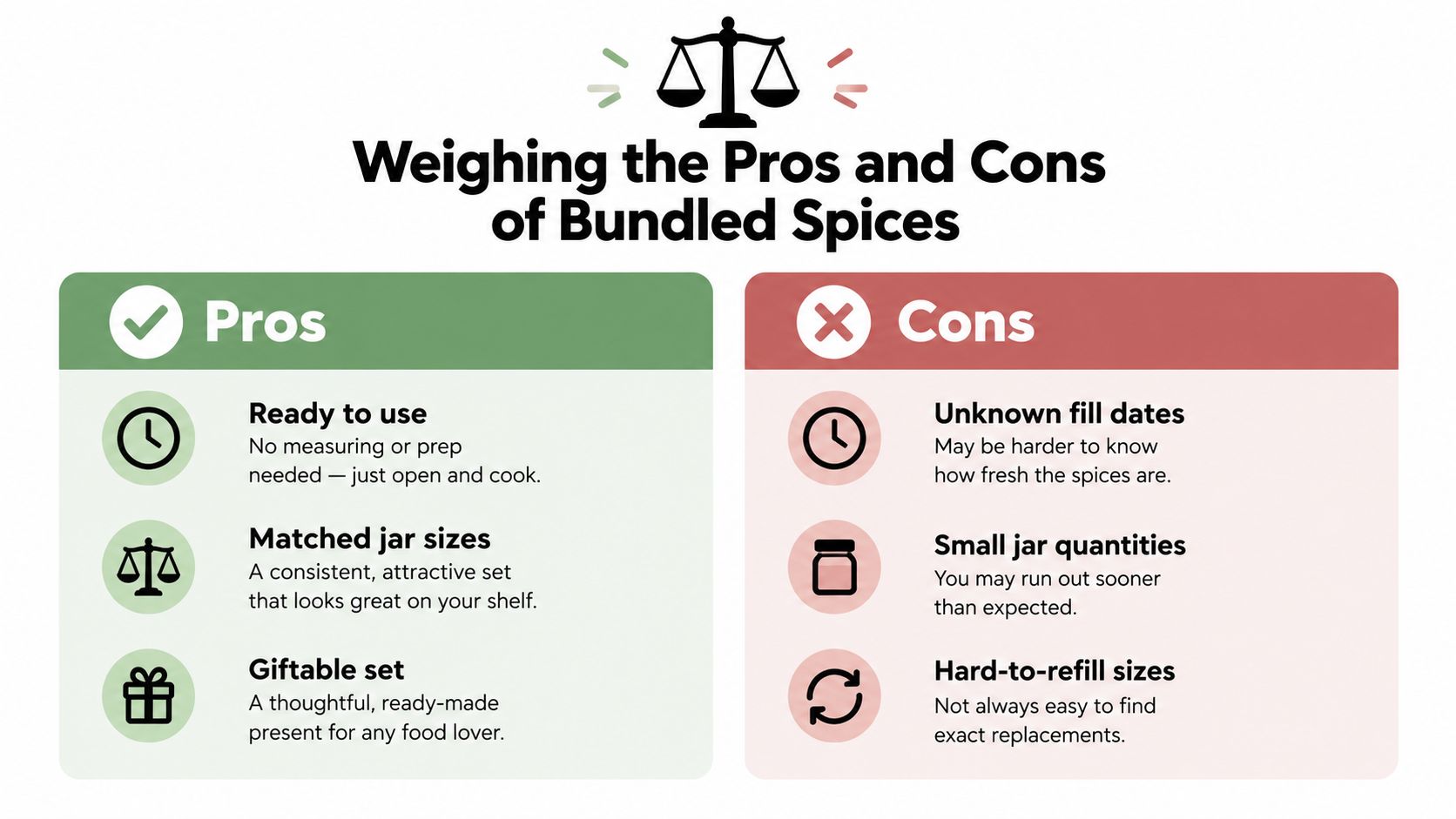
More included spices do not automatically mean better value. A bundled rack solves the first shopping trip: the jars match, the shelves look finished, and a new kitchen can start cooking immediately. Its real test comes later, when one jar is empty. A useful set should make that ingredient easy to replace without forcing you to buy the entire assortment again.
An empty rack requires more planning at the start, but it gives you control over both the menu and the storage system. Choose flavours you already use, select jar sizes that fit your consumption, and replace one ingredient without disturbing the rest. Canada's broad international spice supply also gives shoppers room to build a personal collection rather than treating one preset assortment as a permanent menu.
Where bundled sets help
A pre-filled rack makes sense when its contents match your cooking. It can suit a first apartment, a housewarming gift, or a short-term rental where immediate completeness matters more than customisation. Matching jars create a tidy baseline, and printed labels reduce the effort of identifying unfamiliar ingredients.
The main weakness is often redundancy. A set may contain several blends with similar flavour profiles while omitting a pepper, herb, or baking spice you will need to purchase separately. Small portions can create another nuisance: frequently used ingredients run out quickly, leaving you with repeated refill tasks.
A set with more compartments is not automatically better if those compartments are the wrong size for what you cook. Large jars waste space when you use spices slowly, while tiny jars create unnecessary maintenance for everyday ingredients.
Where empty racks win
An empty rack lets you test the arrangement with containers you already own. Place the jars temporarily, then open the cabinet and nearby doors. Check whether you can reach the ingredients you use most without shifting other bottles. This practical trial reveals fit and access more accurately than a product photograph.
Read every spice label before transferring contents. Check the ingredient list, note whether a blend contains salt or other fillers, and record anti-caking agents if they affect your preferences. Matching exteriors do not guarantee matching freshness or flavour. The label identifies the contents, while your cooking routine determines whether that ingredient deserves permanent space.
Inspect the jar opening and threading as well. A standard opening simplifies refills, while an unusual neck can leave you dependent on a proprietary bottle. If you decant spices, retain the original packaging until you have recorded the ingredient name and any relevant handling information.
Compare both systems by their full lifecycle, not by the appeal of opening a complete box.
| Decision point | Pre-filled rack | Empty rack with separate spices |
|---|---|---|
| Initial setup | Fast and convenient | Requires sourcing and labelling |
| Ingredient choice | Fixed assortment | Matched to your recipes |
| Replacement | May be difficult if jars are proprietary | Easier when containers are standard |
| Waste risk | Unused blends may linger | Lower if you buy selectively |
| Best fit | Gifts, first kitchens, short-term setups | Long-term kitchens and frequent cooks |
For small homes and rental kitchens, the empty-rack approach usually offers better long-term control. Buy only the spices that earn their space, choose containers you can replace locally, and leave room for the ingredients your cooking will add. A bundled set remains useful when convenience is the priority, provided its jar sizes, contents, and refill path fit your routine.
Strategic Placement and Labelling for Daily Cooking
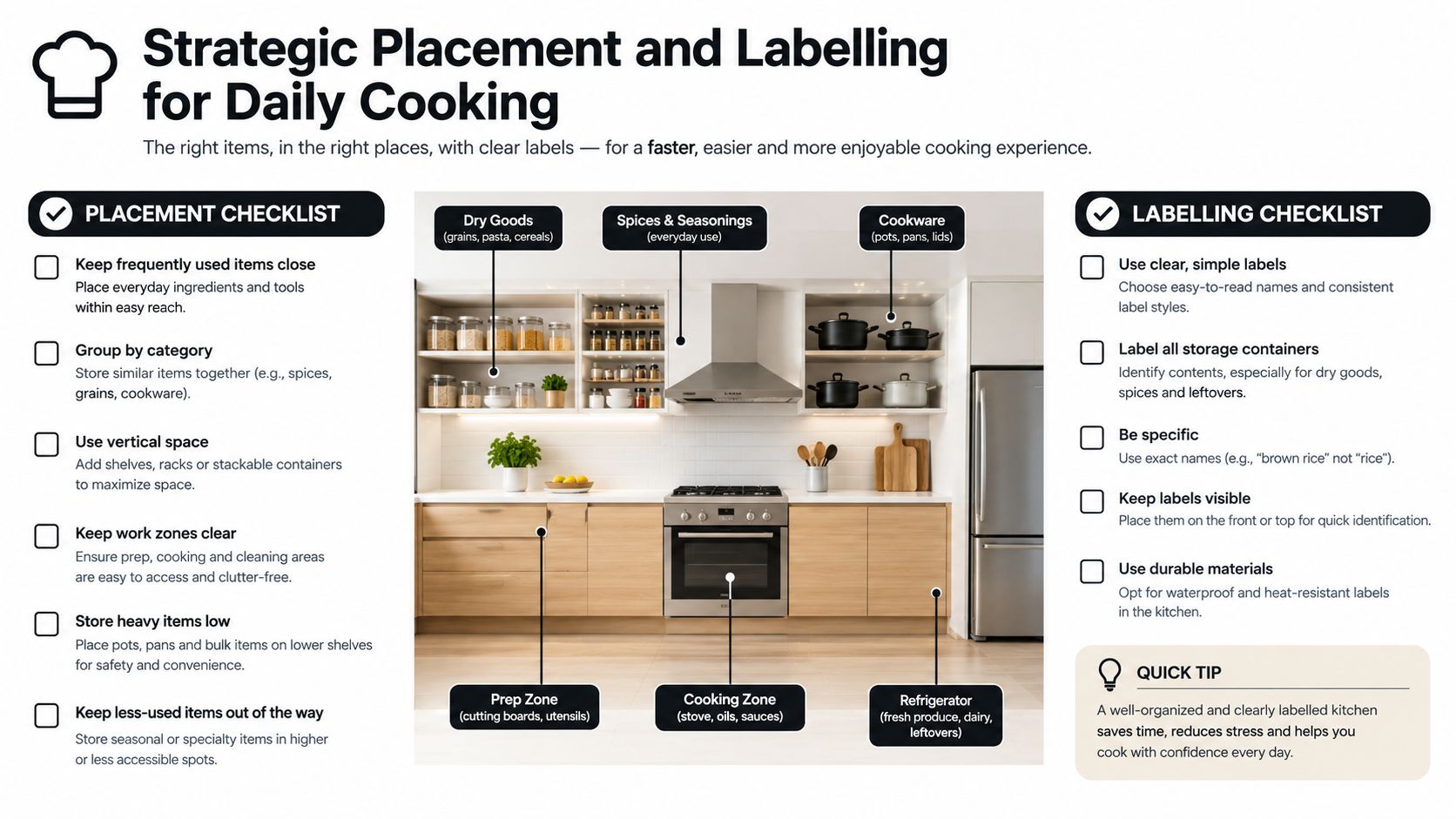
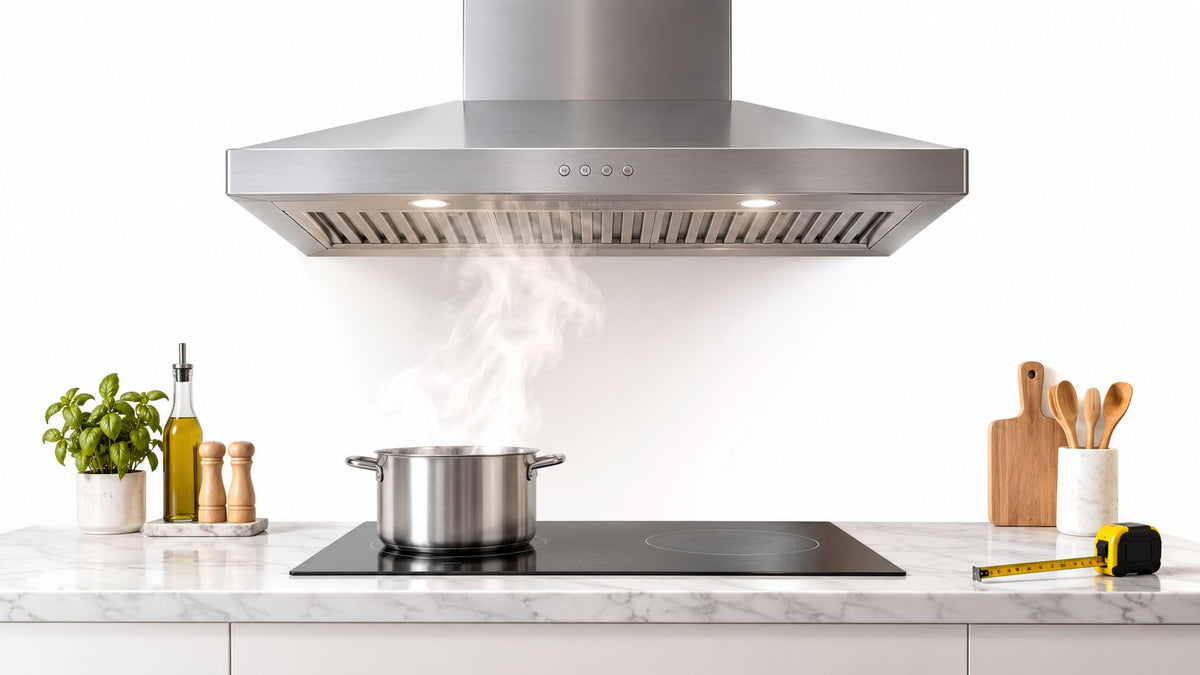
Placement affects both flavour preservation and cooking speed. The Canadian Food Inspection Agency advises storing spices in cool, dry conditions at or below 20°C and 60% relative humidity, while avoiding stoves, dishwashers, wash-down areas, and direct light because heat, moisture, and UV exposure accelerate quality loss (Canadian spice storage guidance).
That rules out the most tempting location in many kitchens: the narrow wall beside the cooktop. It feels convenient because your hand can reach it, but the rack receives repeated heat and cooking vapour. Put everyday jars in the nearest suitable cabinet, pantry zone, refrigerator side, or wall position that stays away from the hot and wet areas.
Set the rack by workflow
Organise by how you cook, not by an arbitrary alphabet. Alphabetical storage is easy to audit, but it forces you to remember the exact name and position of every ingredient. A workflow-based layout keeps related choices together:
- Weeknight core: Keep pepper, garlic, onion, paprika, and frequently used dried herbs at the easiest reach.
- Cuisine group: Place cumin, coriander, chilli, curry blends, and related seasonings together if you cook those dishes often.
- Baking group: Separate cinnamon, nutmeg, ginger, and other baking ingredients from savoury blends.
- Occasional use: Move specialty seasonings higher or farther back, but keep them visible rather than burying them in a duplicate-filled cupboard.
Leave a little room for change. A rack packed edge to edge has no space for a new favourite blend and encourages overflow storage. Empty capacity is useful capacity when it lets the collection evolve without creating a second, hidden spice zone.
Label for the view you actually have
Front labels suit a rack viewed at eye level. Lid-top labels work better in a drawer or on a low shelf. For a cabinet-door rack, use large printed vinyl labels or clear lettering that remains legible when the door is open only partway. Chalkboard-style labels can look attractive, but they need consistent writing and may become difficult to read when the surface collects powder.
Record the purchase or opening date on the underside or an inventory note, particularly for ingredients you use slowly. Keep labels short, distinguish similar blends clearly, and orient every jar the same way. A readable label prevents duplicate buying, which is one of the main reasons spice storage expands beyond its original footprint.
For a fuller approach to container choice and kitchen placement, use this guide to spice storage solutions. The rack should support your routine, not force you to rearrange your cooking around its design.
Tailoring Your Choice to Renters, Homeowners, and Businesses
The right rack depends on who controls the space, how often the kitchen is used, and who will refill the jars. A downtown rental, a family kitchen, and a short-term accommodation may all need visible spice storage, but they don't share the same installation rights or maintenance routine.
Canada's demand includes both individual spices and mixed seasonings. In 2023, Canada imported about US$17.46 million and 3,490,440 kg of spice mixtures, including supplies from India, Pakistan, the United States, the United Arab Emirates, and China (Canadian spice mixture imports). A rack therefore needs to accommodate more than a neat row of single-ingredient jars. It should leave room for the blends that reflect the household's actual cooking.
Renters need reversibility
Renters should begin with formats that can move without leaving a permanent repair project. A freestanding rack, removable cabinet organiser, or magnetic shelf may be more practical than a wall-mounted tier. Before using any adhesive, clean the surface, check the manufacturer's load guidance, and test the position with empty containers. A spice jar collection becomes heavier once it includes glass, and a failed mount can damage paint, tile, or the jars themselves.
Keep the system modular. If you move from a studio to a larger flat, you should be able to add a second compatible unit or relocate the first one without replacing the entire collection. Standard jars matter even more here because a renter may not have the storage or budget to rebuild every time the kitchen changes.
Homeowners can optimise the whole cabinet
Homeowners have more freedom to install a secure wall rack, build a recessed shelf, or add drawer inserts. The most effective upgrade isn't always a display rack. A shallow drawer with angled inserts can make labels visible from above, while a cabinet-door system can free a shelf for taller bottles.
Choose the location before selecting the hardware. Confirm stud or masonry conditions, door clearance, drawer depth, and the path from storage to prep area. A permanent installation deserves a layout that accommodates the household's future habits, not just the current collection.
Businesses need repeatable systems
A café, catering operation, property manager, or short-term rental host should favour durable, standardised containers and labels that another person can understand immediately. Mixed jar sizes slow audits and make restocking inconsistent. A business rack should also tolerate frequent wiping, repeated handling, and ingredient turnover.
Separate daily-use items from reserve stock. Store backup spices in sealed containers, label them clearly, and assign one person or one shift routine to check low levels. For broader pantry and service-area organisation, commercial food storage containers can support a consistent approach beyond the rack itself.
The common mistake across all three audiences is buying for the room shown in a listing photo. Measure your own space, identify who will use the rack, and decide who will refill it. Ownership changes the installation decision, but usage frequency determines the storage layout.
Maintaining Freshness and Planning Your First Refill
The first refill reveals whether a spice rack is a working system or a display that has reached the end of its useful life. Start by choosing one container style that fits the rack, then transfer only the amount that belongs in daily use. Keep reserve stock separate so you don't expose the entire supply to repeated opening, steam, and handling.
Ground spices can lose aroma and colour gradually, while whole seeds and larger pieces may retain character longer but still need protection from heat, light, and moisture. Don't judge freshness by appearance alone. Rub a small amount between your fingers and smell it. If the aroma is faint or flat, the ingredient may no longer justify a prime position, even if the jar looks full.
Build a simple refill routine
When a jar reaches its final portion, wash and dry it completely before refilling. Residual moisture is more damaging than a small delay, so don't pour new spice into a container that still feels damp. Use a funnel or folded paper to transfer powder cleanly, and write the ingredient name and refill date before returning the jar to the rack.
Buy quantities that match your use. Bulk purchasing can reduce packaging, but it isn't efficient if the reserve remains open for too long or occupies more space than the rack saves. A household that cooks with one spice weekly needs a different refill rhythm from a host or food business that turns through ingredients quickly.
Clean the rack without spreading flavours
Remove every jar before wiping the shelf. Glass can be washed with mild detergent and dried thoroughly, while wooden surfaces should be wiped rather than soaked. For metal or acrylic, use a soft cloth that won't leave scratches. Clean sticky residue before it attracts dust, and don't return a jar with powder around the lid threads.
A small inventory note prevents accidental duplicates. Record what you have, what is running low, and which blends you fully use. Store reserve quantities in appropriately sealed containers, and consult this guide to bulk food storage containers when your collection extends beyond the working rack.
The durable setup is deliberately unexciting: compatible jars, readable labels, a safe location, and enough empty space to refill without reshuffling everything. That combination costs less attention over time than repeatedly replacing attractive sets that can't adapt to your kitchen.
GrifGlo brings together practical kitchen organisation, pantry and fridge storage, and decision-friendly guidance for choosing products that fit real spaces. Visit GrifGlo to compare usable storage options for your home, rental property, or hospitality setup and build a spice system you can maintain.


Laisser un commentaire
Ce site est protégé par hCaptcha, et la Politique de confidentialité et les Conditions de service de hCaptcha s’appliquent.