

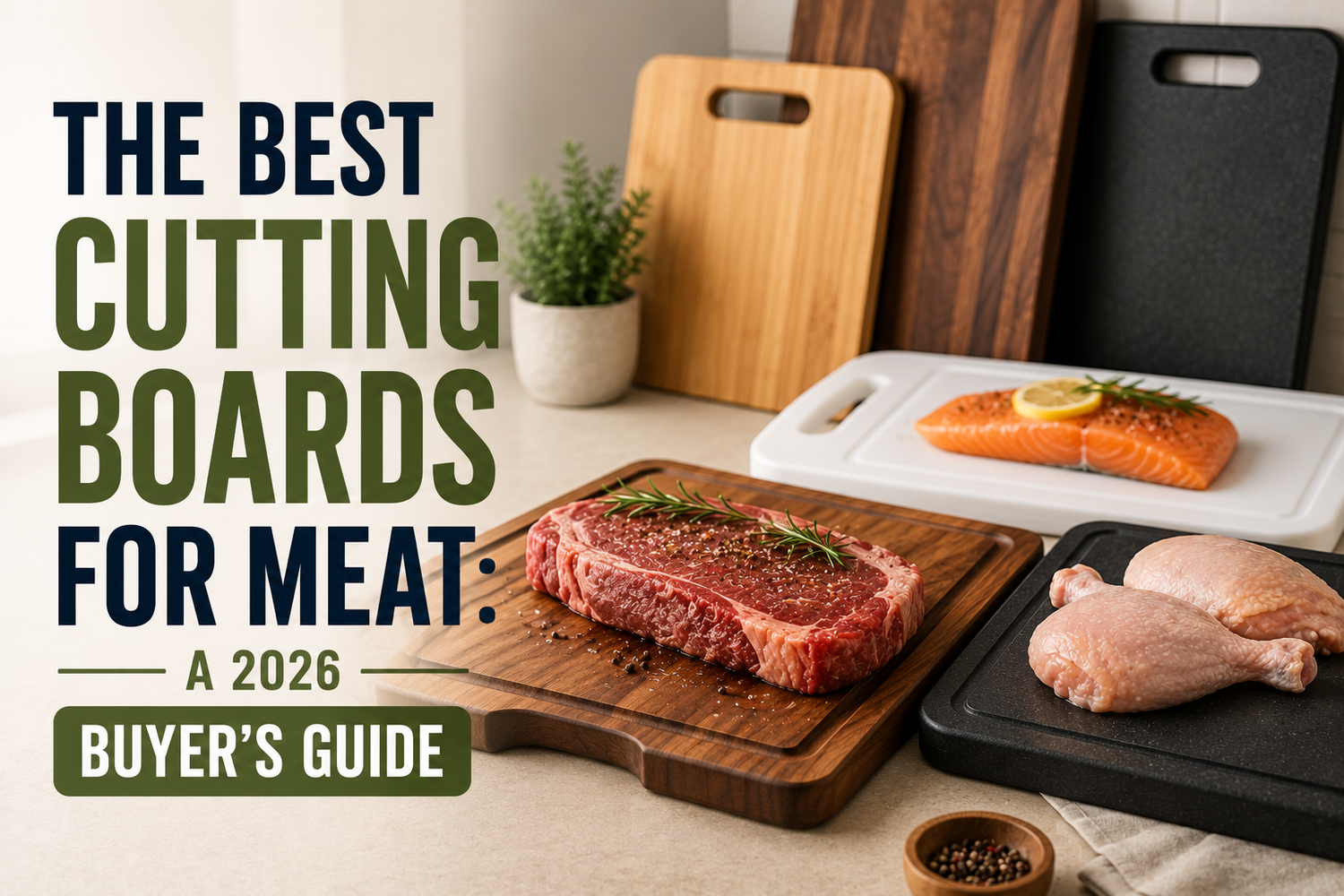
You're probably standing in the kitchen with a pack of chicken thighs, a chef's knife, and whatever board happens to be closest. Then the annoyances start. The board slides. Meat juice runs over the edge. The surface feels too small for the cut you're trimming. Or worse, you look at a scarred old plastic board and wonder whether it's still safe.
That's where you realise a meat cutting board isn't just a flat surface. It's part of your food safety routine, part of your knife care routine, and part of whether prep feels controlled or messy. The best cutting boards for meat aren't all “best” in the same way. Some are easier to sanitise. Some are gentler on knife edges. Some suit a small flat, a rental kitchen, or a busy prep line better than others.
Table of Contents
- Why Your Choice of Meat Cutting Board Matters
- Comparing Cutting Board Materials for Meat
- Essential Features Beyond Material
- Sanitation and Maintenance Protocols for Meat Boards
- Board Recommendations for Your Specific Kitchen
- Your Final Buying Checklist and Sizing Advice
- Frequently Asked Questions About Meat Cutting Boards
Why Your Choice of Meat Cutting Board Matters
Set a chicken, brisket, or rib roast on the wrong board and the problems show up fast. The surface shifts. Juice runs toward the edge. Your knife has less room to work, so cuts get awkward and cleanup gets bigger than it needed to be. For meat prep, the board is part of your safety setup, not just a slab you happen to cut on.
The right board helps control three things at once. It gives raw meat a surface you can wash and dry thoroughly. It protects your knife from unnecessary edge wear. It gives you enough stable workspace to break down meat cleanly instead of crowding the job.
Those priorities change depending on who is using the board. A home cook may want one dedicated board for raw proteins and another for produce. A renter may need something lighter that fits a small sink and stores upright. A small business, rental kitchen, or host setting up a guest space usually benefits from boards that are easy to identify, easy to sanitize, and easy to replace on schedule.
- Sanitation: Meat prep leaves protein residue and juices behind, and those have to come off fully. A board that is hard to scrub, slow to dry, or badly scarred makes that harder.
- Knife care: Board hardness and surface texture affect edge retention. The wrong surface dulls a good chef's knife faster than many cooks realize.
- Workflow: Size, grip, and juice management decide whether carving feels controlled or sloppy.
A meat board is a working tool. Judge it by how well it handles raw protein, cleanup, and repeated knife work.
Good habits stack. If you're also checking temperatures during cooking, learn how to use a meat thermometer correctly and treat board cleaning as part of the same food-safety routine. The job is not finished when the meat leaves the board. It is finished when the board is washed, dried, and ready for the next task.
Comparing Cutting Board Materials for Meat
A board can look great on the counter and still be the wrong tool for raw meat. The right choice depends on how you prep, how you clean, how much space you have, and how much edge retention matters to you.
Meat cutting board material comparison
| Material | Knife Friendliness | Sanitation | Maintenance | Best For |
|---|---|---|---|---|
| End-grain wood | Excellent | Good with proper cleaning and drying | Higher | Frequent carving, knife care, heavier prep |
| Edge-grain wood | Very good | Good with proper cleaning and drying | Moderate to higher | Home cooks who want wood without maximum bulk |
| Plastic | Fair to good | Very good, especially if dishwasher-safe | Low | Raw meat prep, quick turnover, easy sanitising |
| Composite | Good | Very good | Low to moderate | Small kitchens, lighter prep, easier storage |
A visual comparison helps if you're deciding between feel, upkeep, and sanitation priorities.

Wood boards
Wood is still the board many cooks prefer for knife work. It stays put, feels controlled under a long slicing stroke, and is gentler on a sharp edge than harder synthetic surfaces. For carving roasts, trimming larger cuts, or doing repeated prep with a good chef's knife, that matters every day.
Wood also asks more from the user. It needs prompt washing, full drying, and occasional oiling depending on the board. Leave it wet, stack it before it dries, or let deep grooves build up, and sanitation becomes harder to trust.
End-grain is usually the better performer if knife care is the priority. The cut fibers are easier on edges, and the board tends to hide wear better over time. Edge-grain costs less, weighs less, and is often the more realistic choice for a home kitchen that wants wood without the bulk of a thick butcher block. If you want a broader breakdown of the trade-offs, this guide on wood vs plastic cutting boards is a useful companion.
Trade-off: Wood gives the best cutting feel for many cooks, but only if you will keep up with cleaning and drying every single time.
Plastic boards
Plastic earns its place because the cleanup routine is simple. For raw chicken, pork, and ground meat, many cooks want a board they can scrub hard, sanitize thoroughly, and replace without regret once the surface gets too scarred. In a busy home kitchen, rental, or small food business, that is a real advantage.
The weak point is wear. Soft plastic takes knife marks quickly, and those grooves can trap residue if the board is old or badly abused. Very thin boards also slide, flex, and feel cheap under heavier cuts. A thick plastic board with good grip is a different experience from a bargain board that warps after a few hot washes.
Plastic is usually the most practical pick for users who prioritize sanitation speed over cutting feel.
Here's a quick demonstration if you want to see practical board selection and use in action.
Plastic is easy to sanitize and easy to replace. It is rarely the board people enjoy using most for long carving sessions.
Composite boards
Composite boards sit between wood and plastic in daily use. They are often thinner, lighter, and easier to store than heavy hardwood boards, but they usually feel more substantial than a flimsy plastic mat. For renters, smaller kitchens, and cooks who need one board that can handle meat prep without a lot of fuss, that middle ground can work well.
They are not all the same, so the details matter. Some composite boards are dishwasher-safe and low-maintenance. Some are harder on knife edges than wood. Some feel excellent for portioning chicken or slicing cooked meat, but too light for breaking down a large roast.
One example is the Combekk Recycled Paper Cutting Board 20x30 cm, which the product listing describes as knife-friendly and dishwasher-safe. That makes sense for a compact kitchen, a guest space, or a second board dedicated to smaller meat tasks. It is less suited to cooks who want the mass and stability of a large carving block.
The practical takeaway is simple. Wood usually wins on knife feel. Plastic usually wins on cleanup speed. Composite can be a smart compromise for cooks who need easier storage, lower maintenance, and a board that still feels more substantial than the cheapest plastic options.
Essential Features Beyond Material
A board can be made from the right material and still be a poor choice for meat. In daily use, the details that decide whether a board works are space, stiffness, liquid control, and how securely it stays put under pressure.

Size and working space
Choose based on the largest meat job you perform, not the smallest board you can store. A board that feels fine for two chicken breasts can become messy fast when you trim a pork shoulder, spatchcock a chicken, or carve a roast with juices running.
That extra room protects more than comfort. It helps keep raw meat, scraps, and your knife path contained on one surface instead of creeping onto the counter. In a home kitchen, that matters for sanitation. In a small business or heavy-use kitchen, it also helps the work move faster and with fewer wipe-downs between steps.
A practical rule works well:
- Small meat tasks: A compact board works for trimming one portion or slicing cooked meat.
- Daily family cooking: A medium to large board gives enough room to separate the meat, the knife, and the waste pile.
- Large roasts and batch prep: Buy bigger than you think you need. Large cuts always claim more space than expected.
Renters and small-kitchen cooks have a different trade-off. A huge board is safer and more comfortable, but only if you can lift it, wash it, dry it, and store it properly. If that part is unrealistic, a medium board that stays stable is the better choice.
Thickness and rigidity
Thin boards flex. Flex is a problem when you are trimming fat, cutting through joints, or applying downward pressure with a chef's knife or boning knife.
For meat prep, boards should feel solid rather than light and bendy. As a practical baseline, many cooks are better served by a board around an inch thick or more, especially in wood, if they want better stability and less warping over time. Professional butcher blocks and carving boards are often thicker still because weight helps them stay planted during harder work.
Rigidity also affects knife wear. A board that chatters, slides, or bounces makes the edge do more work than it should. If your knives seem to dull faster than expected, the board may be part of the problem. It helps to understand your knife sharpening tools and also whether the cutting surface is forcing unnecessary edge contact.
If a board feels too light for the task, it usually is.
Juice grooves and stability
Juice grooves help when you carve rested meat, portion raw poultry, or trim wetter cuts. They are not mandatory for every board, and some cooks dislike them because grooves reduce flat cutting area and take more effort to scrub clean. Still, on a carving board or a board dedicated to meat, they can keep liquid from reaching the counter and spreading into your work zone.
Stability matters even more. A board that shifts under the knife is irritating at best and unsafe at worst. Weight helps. Rubber feet can help. A damp towel under the board works well if the board itself has no grip.
Pay attention to the underside too. Some large boards are stable on stone counters but skate on stainless or laminate. Home cooks, renters, and small businesses all need the same thing here. A board that stays put during the hardest cut you make, not just during easy slicing.
Sanitation and Maintenance Protocols for Meat Boards
The board you buy matters less than the routine you follow after raw meat touches it. Many kitchens get casual about this, and that's the mistake. Meat boards need immediate cleaning, proper sanitising where appropriate, and full drying before storage.
California-specific guidance in a consumer context points out something many general buying guides skip. Cutting surfaces used for raw meat in high-risk food service settings must be sanitised at a minimum temperature of 180°F or with an EPA-approved sanitizer, according to the summary attached to Allrecipes' cutting board article. Home cooks won't always mirror commercial procedures exactly, but the mindset is the right one. Clean first. Sanitize when needed. Dry completely.

What has to happen right after meat prep
After cutting raw meat, don't let the board sit. Wash it promptly with hot, soapy water. Scrub the full surface, the groove if it has one, and the edges and underside too. Meat liquid doesn't stay neatly on the top.
Then handle drying as seriously as washing.
- For all board types: Rinse thoroughly and dry with a clean towel.
- For upright drying: Let the board air dry fully before stacking or storing flat in a damp area.
- For separate use: Keep a dedicated meat board if your kitchen flow tends to get hectic.
Drying is part of sanitation. A board left damp is a board that hasn't finished the job.
How wood and plastic care differ
Plastic wins on convenience. If the board is dishwasher-safe, use that when appropriate. But inspect it often. Once the surface becomes heavily scored, cleaning confidence drops.
Wood needs a different discipline. Never leave it soaking. Never put it away damp. Keep it conditioned so the surface stays sound instead of drying out and cracking. If you use wood regularly, a guide to wood cutting board maintenance helps keep that care routine consistent.
A few essentials apply to both:
- Don't prep salad ingredients on the same board mid-session. Wash first, then switch tasks.
- Don't ignore odours or staining plus roughness. Surface condition matters.
- Don't keep damaged boards indefinitely. If you can't clean it well, retire it.
Board Recommendations for Your Specific Kitchen
Raw chicken on a cramped counter, a good chef's knife in hand, and nowhere to set a wet board safely. That is where board choice stops being a style decision and becomes a sanitation and workflow problem.
The right pick depends on how you cook, how you clean, and how much room you have to store and dry the board properly. Knife feel matters. So does whether the board fits in your sink, whether you can dedicate it to raw meat, and whether replacing it later will be simple or annoying.
The everyday home cook
For many households, a two-board setup works best. Keep one dedicated plastic or rubber board for raw meat prep, then use a wood board for carving cooked roasts, slicing rested steaks, or serving at the table.
That split solves two different problems. Raw meat prep calls for a board you can clean fast and inspect easily. Carving cooked meat benefits from a surface that is kinder to your edge and more stable under a long slicing stroke.
Wood usually wins on knife comfort and carving control. Plastic usually wins on low-friction cleanup. Rubber sits in the middle. It is gentler on knives than glass or stone, steadier than many thin plastic boards, and well suited to cooks who want one serious prep board without moving to a thick butcher block.
If you like the feel of wood but want to keep your meat workflow strict, reserve wood for cooked meats and bread-style slicing tasks. Boards shaped for serving, including some wooden pizza boards for serving and slicing, can work well for cooked items, but they are not a substitute for a dedicated raw-meat prep board.
The renter or small-space cook
Small kitchens punish bulky gear. A board that barely fits the sink often gets cleaned badly, dried badly, or left out too long.
Choose for handling first. A medium plastic board or a thinner composite board usually makes more sense than a heavy block you dread washing. Composite can be a good compromise here because it stores easily, washes without much fuss, and is still far better for your knife than glass or marble. That matters if you own one decent chef's knife and want it to stay sharp.
A small-space cook also benefits from honest sizing. You need enough room to keep meat contained, but not so much board that lifting and scrubbing becomes the hard part. If you only have room for one main board, pick the one you will clean thoroughly, dry fully, and put away without a fight.
Small businesses offices and rental hosts
Shared kitchens need predictable systems. A board that works well for one careful cook can fail fast when ten different people use it.
For office kitchens, short-term rentals, and small food businesses, standardised plastic or commercial rubber boards are usually the practical choice. They are easy to identify, easy to replace, and easier to assign by task. That matters more than aesthetics when different users bring different cleaning habits.
Set the system up so mistakes are less likely:
- Use repeatable sizes and colours: People follow simple visual rules more reliably than written notes.
- Choose surfaces that show wear clearly: Deep scoring should be obvious so replacement happens on time.
- Match the board to the cleaning setup: If the sink is small or turnover is fast, avoid oversized boards that are hard to wash and dry properly.
- Protect knives where possible: Cheap glass or stone boards in a shared kitchen destroy edges quickly and encourage unsafe, heavy-handed cutting.
For teams buying across several kitchen categories, GrifGlo publishes buying guides that can help compare home, kitchen, organisation, and business-use products in one place.
Your Final Buying Checklist and Sizing Advice
The last step is simple. Buy the board that matches the way you cook, clean, and store things. Not the one that looks best in a styled kitchen photo.

A quick pre-purchase check
- Material fit: Do you want low-maintenance sanitising, better knife feel, or a middle ground?
- Real kitchen fit: Will it fit your sink, drying area, and storage spot?
- Stable use: Does it have enough weight or grip to stay put?
- Liquid control: Do you need a juice groove for carving and wetter cuts?
- Surface condition over time: Can you see yourself maintaining it properly?
- Task match: Is this for raw prep, carving cooked meat, or both in a two-board system?
Buy for cleanup first, then for looks.
Simple sizing advice
Use your most common task to choose size.
- Single portions and quick trimming: Small to medium works if the board still leaves clear margin around the meat.
- Routine family meals: Medium to large gives safer working room and cleaner organisation.
- Roasts, birds, and batch prep: Large boards are worth the counter space.
If you're also shopping for serving and presentation boards, don't confuse those with meat-prep boards. A guide to wooden pizza boards is useful for that separate category, because a serving board and a raw-meat board should not be doing the same job.
Frequently Asked Questions About Meat Cutting Boards
Raw chicken on the board, salad prep next, guests arriving in 20 minutes. That is when board rules either hold up or fail. Good answers here come down to two things. Can you clean the board thoroughly, and will the surface stay in good enough shape to keep cleaning well over time?
Can I use one board for meat and vegetables if I wash it
You can, if you wash, rinse, and dry it properly between tasks. In a calm kitchen, that is workable.
In real use, a separate meat board is safer and easier. It cuts down on rushed turnarounds, sink traffic, and the temptation to give the board a quick wipe instead of a full wash. For home cooks, that often means one plastic or rubber board reserved for raw meat, then another board for produce and ready-to-eat foods. For renters or small kitchens, even a simple two-board setup solves a lot of sanitation problems without taking much space.
What about glass, marble, or bamboo
Glass and marble are poor meat-prep surfaces. They dull edges quickly, feel harsh under the knife, and get slippery once meat juices hit the board.
Bamboo sits in a middle tier. It is lighter than many hardwood boards and usually easier on the budget, but it can feel harder under the knife than a good wood board, and quality varies a lot by construction. For raw meat prep, wood, plastic, and rubber are usually easier to match to your actual priorities, whether that is faster sanitising, better knife care, or lower maintenance.
When should I replace a board
Replace it when you can no longer get the surface clean.
On plastic, the usual problem is deep knife scoring that traps residue and stays rough after washing. On wood, look for cracks, separation at glue lines, warping, or staining and roughness that sanding will not correct. If a board rocks on the counter, sheds splinters, or keeps odours after proper cleaning, it is past its useful life for meat work.
Is end-grain or edge-grain better for meat
End-grain is the better choice if knife feel and edge retention matter most, especially if you break down larger cuts or carve often. It is gentler under the blade and usually quieter to work on. The trade-off is cost, weight, drying time, and more upkeep.
Edge-grain is often the better fit for cooks who want a wood board they can lift, wash, dry, and store without much fuss. It gives up some of the soft knife feel of end-grain, but it is usually more affordable and practical for everyday kitchens. Either style can work for meat if you keep the board clean, dry it properly, and retire it once the surface condition starts working against sanitation.
If you prefer the convenience of plastic or rubber for raw meat and save wood for carving cooked roasts, that is a sound system too. For many kitchens, the best answer is not one board. It is the right board for the job.
If you're comparing the best cutting boards for meat and want clearer buying criteria, sizing advice, and practical product groupings beyond a single retailer shelf, GrifGlo offers decision-focused guides for home cooks, renters, and business buyers who want tools that fit real routines.

Leave a comment
This site is protected by hCaptcha and the hCaptcha Privacy Policy and Terms of Service apply.