

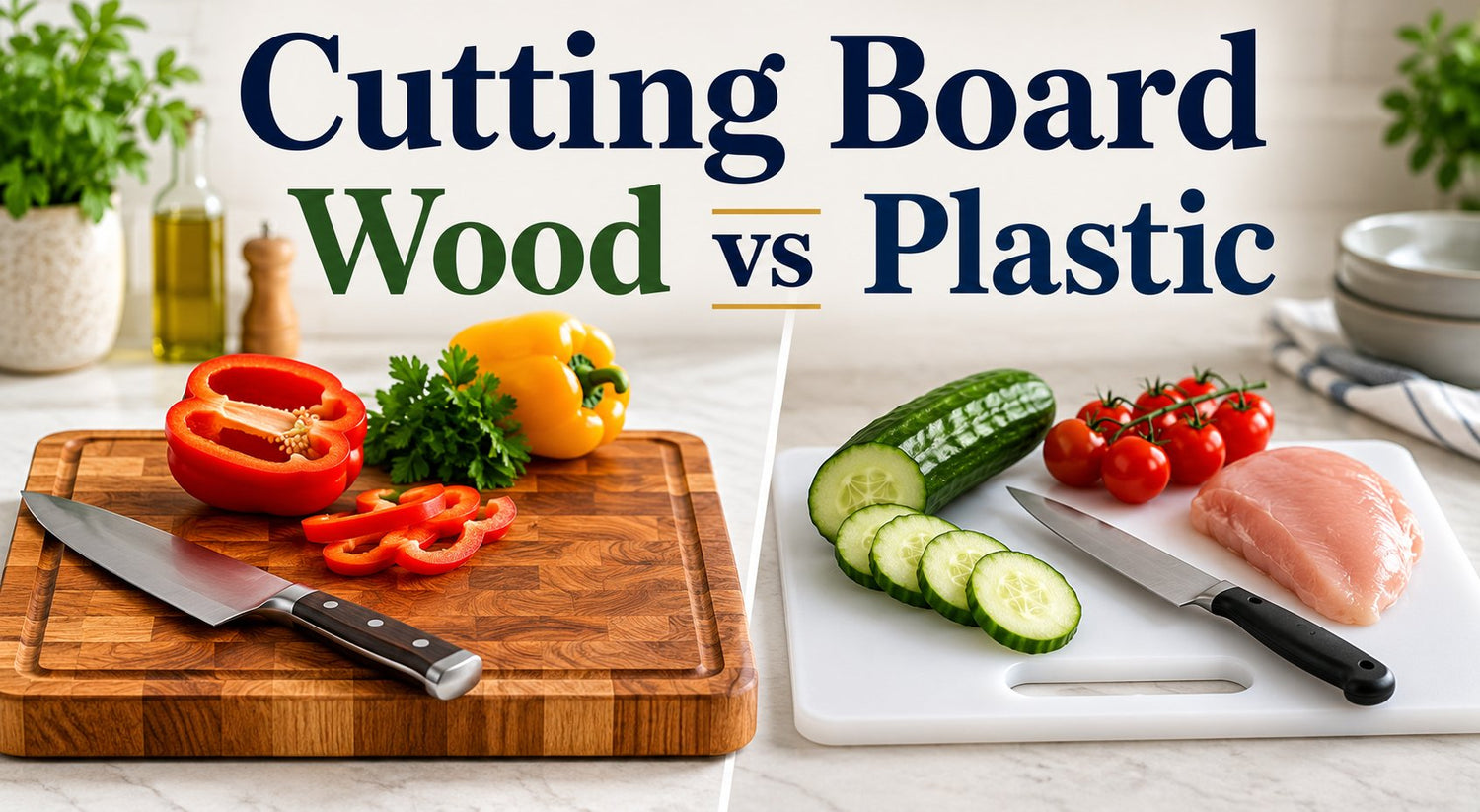
Most advice on cutting board wood vs plastic starts with the wrong question. It asks which material is safer, as if the answer lives in the label and not on the surface you're cutting on.
In real kitchens, a clean, well-kept board usually beats a neglected one, regardless of whether it's wood or plastic. A heavily scored plastic board can become a harder sanitation problem than many people expect, and a neglected wooden board can fail just as quickly if it's left wet, warped, or cracked. The more useful question is this: what are you cutting most often, how do you clean up, and how worn does the board get before you deal with it?
That changes the decision completely. If you prep raw poultry several times a week and want fast turnaround, plastic may fit that routine better. If you chop vegetables daily and care about knife edge retention, wood often earns its place. If you want one board to do everything, you need to think less about material loyalty and more about board condition, cleaning habits, and replacement discipline.
A lot of shoppers want a simple verdict. Most kitchens need a system.
Table of Contents
- The Great Cutting Board Debate
- Hygiene Durability and Maintenance Compared
- Exploring Cutting Board Materials and Grades
- The Right Board for Every Kitchen Task
- Cost Lifespan and When to Replace Your Board
- Recommendations for Your Home or Business
- Frequently Asked Questions
The Great Cutting Board Debate
Plastic isn't automatically the hygienic winner. That's the myth that keeps this debate stuck in low gear.
The practical issue is surface condition. A review-style summary of cutting board hygiene points out that bacteria retention depends heavily on how scratched the surface is, and it recommends replacing or resurfacing boards once they become heavily scored, which makes board condition more important than a simple wood-versus-plastic label for many kitchens (video summary on scratched surfaces and board replacement).
That lines up with what experienced cooks see every day. A fresh plastic board is easy to wash and easy to assign to raw meat. A worn plastic board with deep grooves is another story. A solid wood board that gets cleaned, dried, and maintained can stay pleasant to use for a long time, but if it starts splitting or staying damp, it stops being the smart choice.
Here is a more direct way to consider it:
| Priority | Wood | Plastic |
|---|---|---|
| Knife friendliness | Usually the better choice | Usually harder on the edge over time |
| Fast sanitising routine | Less convenient for high-heat wash routines | Often easier to use for raw meat tasks |
| Long-term feel and durability | Strong when maintained | Useful but tends to show wear plainly |
| Low-maintenance convenience | Needs more attention | Easier day-to-day for many households |
| Best use strategy | Main prep board for produce, bread, herbs | Dedicated board for raw meat or messy tasks |
Bottom line: The best board isn't the one with the better reputation. It's the one that still cleans up properly after months of real use.
That matters whether you're fitting out a family kitchen, stocking a rental, or setting up a small food operation. Material matters, but routine matters more. If your habits don't match the board, the wrong choice shows up fast in your knives, your cleanup time, and the board's surface.
Hygiene Durability and Maintenance Compared

A cutting board does not stay safe or useful just because the label says wood or plastic. Daily use changes the answer. The board that protects your knife and cleans up well in month one can become the wrong board six months later if the surface gets chewed up, stays wet, or starts to crack.
Hygiene
Plastic earns its clean reputation because it starts with a smooth, non-porous surface. That advantage shrinks once the face is heavily scored. Raw chicken juices and vegetable residue are much easier to wash off a board with shallow marks than one with deep channels.
Food-safety risk often comes from the condition of the board, not just the material. Deep grooves in plastic, open seams in wood, and boards that never fully dry are the problems I watch for in real kitchens.
Wood gets judged too broadly. A well-kept hardwood board used mainly for produce, herbs, bread, and cooked foods can stay perfectly serviceable for years. A neglected wood board that sits wet by the sink, or one with a split running through the middle, belongs in the bin. The same basic cleaning discipline used for cleaning food storage containers properly applies here too. Wash thoroughly, dry completely, and stop trusting surfaces you cannot inspect or clean with confidence.
Household routine matters as much as board type. If raw meat hits the board several nights a week, many cooks are better served by a plastic board they can wash aggressively and replace without hesitation. If the board handles mostly vegetables and fruit, a quality wood board often stays more pleasant to use and easier on knives over the long run.
Durability
Wood usually wins on knife feel and long-term work surface quality. Good wood boards tend to absorb repeated chopping more gracefully, so they stay less harsh under the blade. Plastic boards do the job, but they often show wear faster and in a way that is harder to ignore. The surface gets furry, ridged, and rough.
That does not mean wood lasts forever. End grain or edge grain hardwood can give years of service, but only if the owner keeps it dry and occasionally maintains the surface. Once wood warps, splits, or develops damage that catches food and moisture, durability stops being a strength.
Plastic has a different value proposition. It is practical, cheap to rotate, and easy to assign by task. For a busy household that preps raw meat often, replacing a worn plastic board on schedule can be more sensible than babying a wood board through jobs it was never going to handle well.
There are also non-wood, non-plastic options on the market, including the Combekk Recycled Paper Cutting Board 20x30 cm. For shoppers considering alternatives, the same rule applies. Judge the surface, cleaning routine, and wear pattern, not just the headline material.
Maintenance
Plastic usually asks less from the owner. Wash it well, keep an eye on scoring, and replace it once the surface becomes too rough or stained to trust for messy prep. That simplicity is hard to beat in homes that prioritize speed and separation.
Wood asks for a little discipline. Hand wash it. Dry it promptly. Oil it when it starts looking dry. None of that is difficult, but it does require follow-through.
Here is the practical split I recommend most often. Use wood for daily prep where knife comfort matters and contamination risk is lower. Use plastic for raw meat, fish, and any task where you want a board you can scrub hard, isolate, and replace without regret.
Practical rule: Buy the board that fits your cleaning habits, replacement habits, and cooking routine. A neglected premium board is worse value than a basic board you maintain properly.
Exploring Cutting Board Materials and Grades

Not all wooden boards perform the same way, and not all plastic boards deserve to be treated as one category. If you're buying with any care at all, you need to look past the headline material.
Wood construction matters
Start with how the board is built.
End-grain boards present the wood fibres differently and are often chosen by people who care a lot about knife feel. They tend to be heavier, more premium in build, and better suited to cooks who use the board constantly.
Edge-grain boards are a practical workhorse choice. They usually make more sense for everyday home use because they balance durability, usability, and easier ownership.
Then there's wood species. Maple, walnut, and cherry are common names shoppers run into. The exact species matters less to most home cooks than this broader question: is it a solid, stable hardwood board made for prep, or is it mostly decorative? That distinction matters more than clever marketing. If you're also comparing serving surfaces, this guide to wooden pizza boards and serving board styles helps separate presentation pieces from true cutting surfaces.
Plastic types and commercial habits
For plastic, density and finish matter. Flimsy boards slide, scar quickly, and become annoying fast. Denser boards tend to feel more stable and more usable.
Commercial kitchens often solve the problem with systems rather than loyalty. They use separate boards for separate tasks. That's smart because it reduces confusion. Even in a home kitchen, a dedicated board for raw meat and another for produce is easier to manage than relying on memory and perfect timing during cleanup.
A simple plastic board setup often works well when you need:
- Dedicated raw protein prep
- A lightweight board that's easy to carry to the sink
- A board you won't mind replacing once the surface gets rough
Composite and recycled paper options
There's also a category that doesn't fit neatly into wood or plastic. Composite and recycled paper boards appeal to people who want cleaner maintenance than traditional wood but a different feel from standard plastic.
Some of these boards are marketed around dishwasher compatibility and knife friendliness, which is why they've become more visible in modern kitchens. They won't replace every use case, but they can suit smaller kitchens, secondary prep stations, or households that want one easy-care board with a less disposable feel.
The lesson here is simple. The cutting board wood vs plastic question is too narrow if you ignore board grade, construction, density, and intended job.
The Right Board for Every Kitchen Task

The best cutting board is often the one that loses on paper but fits your routine. A mediocre board in good condition is safer than a premium board covered in deep cuts, and a board you clean and replace on time beats one you bought for ideals.
Weeknight meat prep
Raw chicken and mince change the decision fast. In a kitchen that handles raw protein several nights a week, a dedicated plastic board is usually the lower-friction option. It is light, easy to carry straight to the sink, and easy to separate from the rest of your prep.
Condition matters more than brand loyalty. Once a plastic board gets heavily scored, cleanup gets less convincing and replacement should happen early, not after months of second-guessing. For frequent meat prep, that replace-without-regret habit is part of the system.
Use one plastic board only for raw proteins if that is a regular task in your home. It keeps the routine clear.
Daily veg, herbs, fruit, and bread
For produce-heavy cooking, wood usually gives the better working surface. It is quieter, steadier, and easier on a good knife during long prep sessions. If you cook most days, you will feel the difference in control, especially with onions, herbs, citrus, and anything that needs repeated slicing rather than heavy hacking.
A wood board also makes more sense for households that sharpen and care about edge retention. Board choice and knife care go together, so it helps to follow a practical guide on how to sharpen kitchen knives at home instead of blaming the board for every dull edge.
Still, wood is not automatically the right call. A neglected wood board with raised grain, cracking, or lingering odors stops being a pleasure to use. If you will not hand wash it and let it dry properly, buy for your actual habits.
One-board kitchens and small spaces
Small kitchens need honest compromises. If you have one main board and very little storage, choose by your dominant pattern, not by internet prestige.
- Mostly vegetables, fruit, bread, and cooked foods. A medium or large wood board is usually the better daily driver.
- Frequent raw meat prep and fast cleanup. A plastic board is often the safer, cheaper fit, especially if you replace it as soon as the surface gets rough.
- Mixed cooking in a tight space. Keep one main board for most prep and one smaller plastic board reserved for raw proteins.
That setup is cost-effective because it puts wear where it belongs. The wood board handles the knife-heavy daily work. The plastic board handles the contamination risk and gets swapped out when its condition says it is time.
The practical answer to cutting board wood vs plastic is not one winner. Match the board to the task, watch the surface condition, and replace the problem board before it becomes a hygiene or knife issue.
Cost Lifespan and When to Replace Your Board

Cheap isn't always economical. Expensive isn't always better value. The right call depends on whether the board survives your actual routine.
Short-term price versus long-term use
Plastic usually has the easier entry point. That's part of its appeal. You can assign one to meat, one to messy prep, and not worry much about appearance. But if the board wears quickly in your kitchen, low upfront cost can turn into repeated replacement.
Wood asks for more commitment. You pay more attention to it, and in return you often get a board that stays useful and pleasant for longer. The catch is behavioural. If you won't hand wash, dry, and occasionally maintain it, then its theoretical long life doesn't matter.
A good way to judge value is to ask three questions:
- How often do I cook on this board
- Will I maintain it properly
- Will I replace it promptly once cleaning becomes questionable
If the answer to the middle question is no, don't buy for ideals. Buy for compliance. For households, rentals, or teams sourcing multiple kitchen basics at once, guides focused on wholesale kitchen supplies and standardising essentials can help build a more realistic setup instead of mixing random boards with random maintenance expectations.
Signs a board is finished
Boards rarely fail all at once. They drift out of serviceability.
Replace or retire a board when you notice any of the following:
- Deep grooves that trap residue and no longer scrub clean with confidence
- Persistent roughness that catches the knife and holds onto odours or staining
- Warping or instability that makes the board rock on the counter
- Cracks or splits in wood that create places you can't reliably clean
- A surface that feels permanently worn out even after proper washing
A cutting board doesn't need to look dramatic to be done. If you hesitate to prep food on it because it feels hard to clean, that's already your answer.
This is also where environmental value shows up in a practical way. A board that lasts, stays repairable, or remains useful for longer creates less churn than one you keep cycling through. That doesn't mean wood always wins. It means durability only counts if the board's condition stays acceptable.
Recommendations for Your Home or Business
The smartest buying advice is rarely absolute. Different kitchens need different compromises.
Home cooks and families
For most homes, a hybrid setup is the answer. Use one substantial wooden board as the main prep surface for vegetables, herbs, bread, fruit, and general cooking. Add a smaller plastic board for raw meat.
That setup respects both sides of the cutting board wood vs plastic argument. You get the nicer knife feel and daily usability of wood without forcing it into every sanitation-heavy task. If you're trying to simplify the rest of your kitchen choices as well, a structured buying guide such as this kitchen essentials list for practical home setups can help you build around how you cook.
Renters and small kitchens
If space is tight, don't collect boards you won't use. Keep one main board and one secondary board at most.
A renter who mostly cooks simple meals can do well with either a low-fuss plastic board or a manageable wood board that isn't oversized. The wrong move is buying a large, heavy board that never gets dried properly because it doesn't fit the sink or rack.
The best small-kitchen criteria are simple:
- Easy to store
- Stable on the counter
- Easy to clean within your real routine
- Easy to replace if the surface deteriorates
Cafes rentals and multi-user kitchens
Multi-user kitchens need clarity more than romance. In a cafe back prep area, a rental property, or a shared kitchen, standardisation matters. People need to know what each board is for and when to remove it from use.
For those settings, plastic often makes sense for designated tasks because it's easy to identify, rotate, and replace. Wood can still have a role, especially for presentation or lower-risk prep, but only if someone is responsible for maintenance and inspection.
Property managers and hosts should think in terms of repeatability:
- Can guests or staff tell which board to use
- Will anyone maintain a wooden board properly
- Can worn boards be spotted and swapped quickly
If the answer to that middle question is shaky, plastic may be the more responsible choice for those spaces. If a kitchen has an owner who cares for tools properly, wood becomes much more attractive.
Frequently Asked Questions
Can I put a wooden cutting board in the dishwasher
As a rule, don't. Dishwashers are hard on wood. Heat, long moisture exposure, and drying cycles can encourage warping, cracking, and a shorter working life. Hand wash and dry it promptly instead.
Is it safe to use the same board for meat and vegetables if I wash it
It can be done, but it's not the simplest or safest routine for most households. Separate boards by task if you can. That's easier to manage during busy prep and reduces the chance of mistakes.
What about glass marble bamboo or other boards
Glass and marble are poor cutting surfaces because they're tough on knife edges. Bamboo gets grouped with wood in casual conversation, but it doesn't behave exactly the same way as traditional hardwood boards. Judge any alternative by the same standards: knife feel, surface wear, cleaning routine, and whether the board stays serviceable.
How do I remove smells and stains
Start with proper washing and full drying. If odours or staining keep returning, the issue may be wear rather than surface dirt. A board that stays rough, scored, or absorbent after cleaning may be telling you it's near the end of its useful life.
For both wood and plastic, the key question isn't whether you can make it look cleaner for one more week. It's whether you trust the surface for food prep after normal washing.
GrifGlo helps shoppers compare kitchen essentials in a more usable way, with decision-focused guides for households, rentals, and business purchasing. If you're sorting out a practical board setup alongside other kitchen tools, GrifGlo is one place to narrow options by real use rather than marketing claims.



Leave a comment
This site is protected by hCaptcha and the hCaptcha Privacy Policy and Terms of Service apply.