

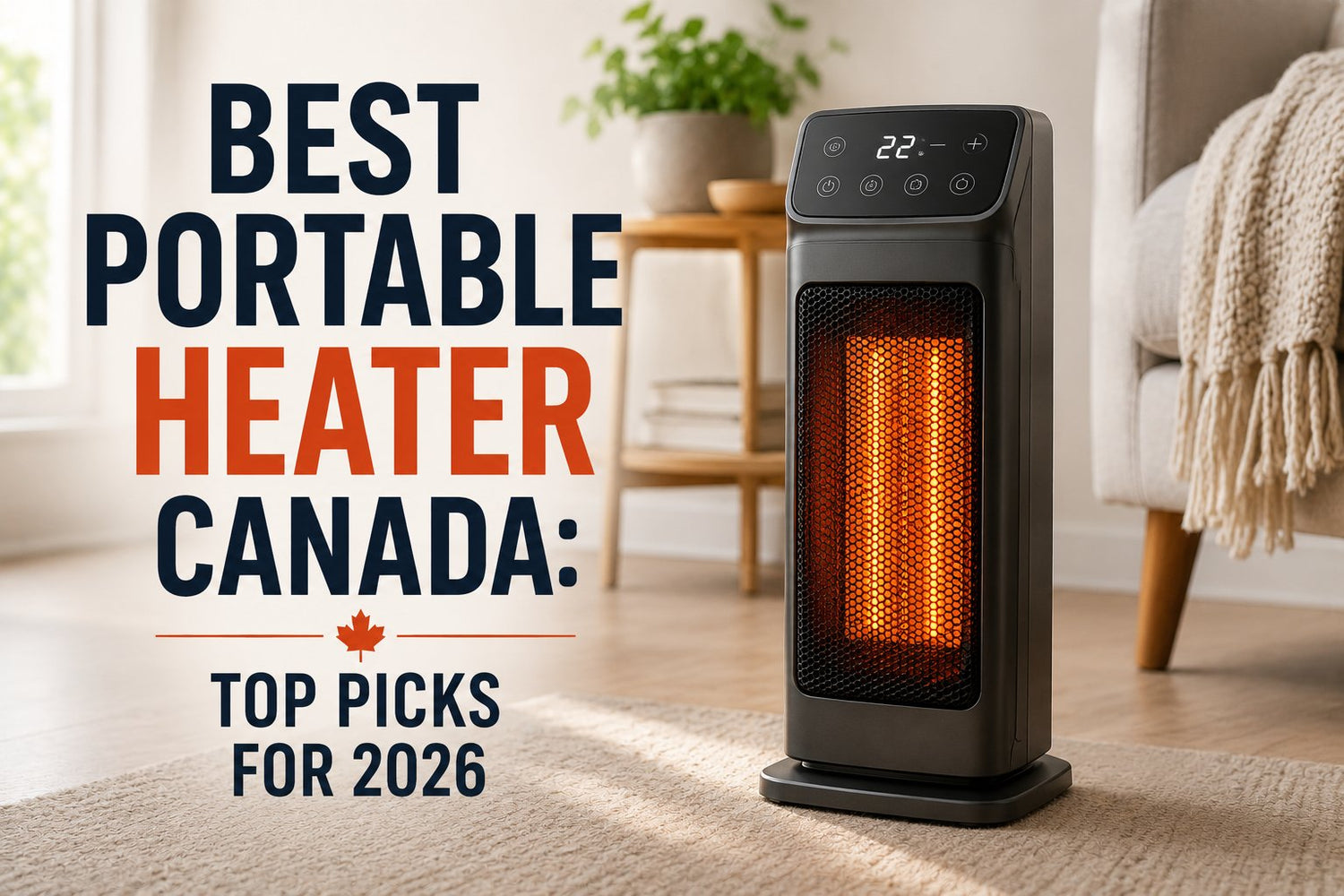
You feel it most in the room you use. The basement office that never catches up. The apartment bedroom with one old window that leaks cold air all night. The den over the garage where the furnace seems to give up every January.
That's where a portable heater earns its keep in Canada. Not as a whole-home miracle, and not as a shortcut around poor insulation, but as targeted heat where your day happens. Used properly, a good heater can make a drafty corner workable, take the chill off a rental bedroom, or keep your feet warm at a desk without forcing the whole home hotter than it needs to be.
Most roundups for the best portable heater in Canada miss the part that matters most here. Our winters expose every weak point in a home. Wattage labels don't tell you how a heater feels in a cold, older room. Safety claims don't tell you what matters in rentals. Running cost discussions often stay vague. If you're also improving your main heating controls, a smart thermostat guide like this installation overview can help you tighten the whole setup around how you live.
Table of Contents
- Finding Your Winter Warmth Solution
- Understanding Portable Heater Types
- Sizing Your Heater and Calculating Energy Costs
- Essential Safety and Canadian Certifications
- Top Portable Heaters for Canada in 2026
- Placement and Maintenance for Optimal Performance
- Frequently Asked Questions
Finding Your Winter Warmth Solution
A portable heater usually enters the conversation after frustration, not curiosity. The furnace is running, but one room is still cold. You've added socks, a blanket, maybe even weather stripping, and the space still feels uncomfortable during a real cold snap.
In Canadian homes, that pattern is common. Older rentals often have uneven heat. Finished basements stay chilly because concrete holds cold. Bedrooms at the end of the duct run can lag behind the rest of the home. A portable heater works best when you treat it as a zone-heating tool. It helps the room you're in feel livable without pretending it can fix the whole building envelope.
Practical rule: Buy for the problem you actually have. If you need fast warmth at a desk, choose differently than you would for a cold nursery or a basement TV room.
That's the lens I use when comparing heaters. Ignore flashy marketing terms. Focus on four things instead:
- Heat delivery: Does it warm the air, your body directly, or both?
- Noise: Fan noise matters in bedrooms and workspaces.
- Safety fit: Rentals, older homes, and multi-use rooms need stricter filtering.
- Control: A heater that cycles sensibly is easier to live with than one that blasts hot then cold.
A good pick feels boring in the best way. It turns on, heats the right kind of space, doesn't get in your way, and doesn't create new risks.
Understanding Portable Heater Types
Choosing the heater type matters more than chasing a louder spec sheet. In a Canadian winter, many plug-in heaters share the same top wattage. What changes is how that heat reaches you, how stable it feels in a drafty room, and whether the unit suits the space you use.

If you've been browsing options for an energy-efficient space heater, the main categories will look familiar. The useful question is simpler. Does the heater warm the air, warm you directly, or hold a steady background temperature once the room is already partly comfortable?
Ceramic heaters
Ceramic heaters are usually the fastest way to take the edge off a cold room. They use a heated ceramic element and a fan to throw warm air forward, which makes them a practical fit for home offices, kitchens, and bedrooms that need a quick boost in the morning.
That speed comes with trade-offs. Fan noise is part of the package. So is a more directional feel to the heat. In a sealed condo den, that may be fine. In an older rental with leaky windows or a cold exterior wall, the room can still feel uneven because the heater is warming moving air, not fixing the draft.
PTC ceramic models are common in this category. They tend to respond quickly and are easy to control, but they still perform best as spot or short-range room heaters, not as a substitute for central heat.
Infrared heaters
Infrared heaters warm surfaces and people first. They are often the better choice when you stay in one place, such as at a desk, beside a sofa, or near a basement workbench.
That difference matters in Canadian homes with persistent air leakage. If cold air keeps washing through the room, an infrared heater can still make your body feel warmer even when the room air stays cool. For some setups, that is more useful than trying to raise the temperature of the whole space with a small fan unit.
The limitation is just as clear. Step out of the line of heat and the comfort drops fast. If you want the whole room to feel balanced, infrared usually falls short.
Oil-filled and convection heaters
Oil-filled radiators and other convection heaters are the slowest starters, but they are often the easiest to live with over several hours. They heat the surrounding air gradually and keep releasing warmth without the constant burst-and-pause feel common with compact fan heaters.
I usually point people toward this style for bedrooms, nurseries, and quieter living spaces where noise matters and nobody needs instant heat. The surface can still get warm, the unit is often heavier, and warm-up takes patience. In return, you get a steadier temperature and less fan noise.
This type also handles closed rooms better than open layouts. In a small bedroom with the door shut, a convection heater can feel calm and consistent. In a large, open basement, it may feel underpowered because the heat has too much space to drift into.
Which type suits the room?
A quick comparison helps narrow it down:
| Heater type | Best use | What it feels like | Main compromise |
|---|---|---|---|
| Ceramic | Desk areas, bedrooms, quick warm-up | Fast, fan-driven warmth | Noise and less even heat |
| Infrared | Personal spot heating | Direct heat on body and objects | Limited range |
| Oil-filled / convection | Bedrooms, longer stays, ambient comfort | Slow, even warmth | Slower response |
For many Canadian households, the best portable heater is the one that matches the room's weakness. Ceramic suits quick relief. Infrared suits a fixed seating area in a cold room. Oil-filled or convection units suit longer, quieter use where steady comfort matters more than speed.
Sizing Your Heater and Calculating Energy Costs
A lot of Canadians buy a 1500W heater for a cold spare room, plug it in, and expect it to heat the whole space like a small baseboard system. Then January hits, the window leaks, the outside wall stays cold, and the room still feels raw. The wattage on the box is real. The comfort you get from it depends heavily on the room.

Why the label can mislead you
Portable heater packaging usually assumes a fairly ordinary room. Decent insulation, manageable air leakage, standard ceiling height, and a winter that is not pushing heat straight out through old glass and trim. That is not how many Canadian rentals, older houses, and basement rooms behave.
A 1500W portable heater has a hard ceiling because it runs on a standard household circuit. You cannot buy your way past that limit with marketing terms. In a tight condo bedroom, 1500W may feel plenty. In a drafty 200 sq. ft. room with an exterior wall, older windows, and sub-zero outdoor temperatures, it often feels modest because the room is losing heat almost as fast as the heater adds it.
That gap matters. Rated power tells you what the unit draws. It does not tell you how well the room will hold that heat in a Canadian winter.
A practical way to size a heater
Start with the area you need to feel warmer, not the biggest room size printed on the carton.
- Measure the part of the room that matters most. A desk corner, reading chair, or side of the bed is easier to heat than the full room.
- Check how the room loses heat. Old windows, exterior walls, cold floors, and rooms over garages all increase demand.
- Look at the ceiling height and layout. Tall ceilings and open doorways let warmth spread out and disappear.
- Choose for use, not just square footage. If you need direct warmth while sitting still, personal heating can work even in a colder room.
- Treat a portable heater as supplemental heat first. That is usually the right expectation in older Canadian housing.
I also tell people to pay attention to where the complaint starts. If the room is only miserable near the window or along the floor, the heater is solving a building problem, not replacing central heat. That is why two rooms with the same square footage can need very different setups.
If you want a good parallel, the same sizing mistake happens with cooling. This guide to window air conditioner sizing for real room conditions makes the same point from the other season. Labels do not account for insulation quality, sun exposure, air leakage, or room shape very well.
How to estimate running cost without guesswork
The basic math is simple:
Cost to run = heater wattage in kW × hours used × your electricity rate
A 1500W heater uses 1.5 kW at full power. Run it for 4 hours and it uses 6 kWh. Multiply that by the rate on your hydro bill.
For example, if your all-in electricity cost works out to $0.15 per kWh, 4 hours of full-power use costs about $0.90. Stretch that to 8 hours a day through a cold month and the number gets your attention fast.
Real-world cost is usually lower than the full-power math if the thermostat cycles the heater on and off. It can also stay high if the room never really catches up because cold air keeps leaking in. That is the part many buying guides skip.
In practice, the cheapest heater to own is often the one used in a smaller target zone, for fewer hours, in a room that can hold the heat.
Essential Safety and Canadian Certifications
A portable heater can feel like a quick fix on a minus-20 night. In an older apartment, basement suite, or spare bedroom with one bad window, it also puts a high-watt appliance into the weakest part of the home. That is why I care less about flashy heat claims and more about whether the unit is built, certified, and used properly for Canadian conditions.
The gap between rated power and safe real-world performance matters here. Many heaters sold online are all labeled around 1500W, but that does not mean they handle cramped layouts, worn outlets, or long evening run times equally well. In Canada, especially in rentals and older homes, safety marks and basic protections matter just as much as heat output.
The safety features to check before you buy
Start with the hardware that lowers risk in everyday use:
- Tip-over shutoff: Cuts power if the unit gets bumped or knocked over.
- Overheat protection: Stops the heater if airflow is blocked or internal temperatures climb too high.
- Cool-touch housing: Worth having in homes with kids, pets, or narrow walking paths.
- Stable base: A wide, planted base is safer than a tall unit that rocks on uneven flooring.
- Simple controls: Clear heat settings, thermostat control, and a timer reduce user error.
Problems usually come from normal household mess, not dramatic misuse. A blanket slips off a chair. Someone pushes the heater closer to the couch. A cord gets pinched behind a nightstand. Those are the situations good safety design is meant to catch.
Why Canadian certification marks matter
For a heater sold in Canada, look for CSA, cUL, or cETL certification. Those marks show the product was evaluated to a safety standard accepted for this market. If the listing, manual, and product photos do not clearly show one of those marks, skip it.
That matters even more on large marketplaces where the same heater shell may appear under several brand names. A polished product page does not tell you much. The certification label does.
If you cannot verify the certification mark before buying, do not bring that heater into your home.
This also comes up with other household appliances. A guide on safe installation standards for over-the-range microwaves points to the same rule. Electrical appliances need approved components, clear instructions, and proper placement.
Rental-specific checks
Rentals need stricter screening because space is tighter, outlets may be older, and the person using the heater may not know the limits of the room or wiring. Fire services and insurers regularly warn that portable heaters become riskier when they are placed too close to bedding, furniture, curtains, or extension cords. That is common in basement units, short-term rentals, and small bedrooms.
Use a different checklist depending on who is responsible for the space:
- Tenants: Check the lease and building rules first. Some properties restrict portable heaters or ban them in bedrooms.
- Landlords: Approve specific models with visible certification and built-in shutoffs instead of leaving each unit to choose its own.
- Short-term rental hosts: Pick heaters with simple controls, obvious warning labels, and a stable footprint.
- Basement apartment occupants: Keep extra clearance around the unit because low floor area and storage clutter raise the chance of blocked airflow.
One more practical point. Do not use a portable heater on an extension cord or bargain power bar. Plug it directly into a wall outlet, and stop using it if the plug or receptacle feels warm. In a Canadian winter, the safest heater is often not the fanciest one. It is the certified unit that fits the room, sits in the right place, and does not ask old wiring to do more than it should.
Top Portable Heaters for Canada in 2026
You get home on a January night, the central heat is technically on, and the room still feels cold at floor level. That is a telling Canadian test for a portable heater. Rated wattage matters, but in older apartments, basement rooms, and drafty offices, the better question is how the heater feels after ten minutes in your actual space.
A strong pick solves a specific cold spot. It also fits the wiring, noise tolerance, and daily use pattern of the room.

2026 Top Portable Heater Picks for Canada
| Model | Best For | Heater Type | Key Feature |
|---|---|---|---|
| Ceramic tower or compact fan heater | Drafty apartments | Ceramic | Fast warm-up and directed airflow |
| Oil-filled radiator | Bedrooms and longer stays | Convection | Quiet, even ambient heat |
| Infrared cabinet or panel heater | Basements and personal zones | Radiant | Direct warmth without waiting for whole-room air |
| FAN HEATER E68S PTC Ceramic Heater With Remote Control | Home offices | Ceramic | PTC instant heat and remote control |
Best for drafty apartments
Older Canadian apartments lose heat in predictable places. Window edges, exterior walls, and under-insulated corners make a room feel colder than its thermostat reading suggests. In that setup, a ceramic heater usually gives the most useful result because it pushes warm air where people sit.
Look for:
- A compact tower or cube shape that can target the occupied part of the room
- An adjustable thermostat with simple controls
- Tip-over protection and overheat shutoff
- A visible Canadian certification mark
Skip the usual marketing trap here. A tiny personal heater rarely keeps up with obvious drafts, and a "large room" claim means little if warm air escapes as fast as it is produced.
Ceramic works best for a sofa corner, a desk, or the spot beside the bed where cold air settles first. It is less convincing in a wide open living and dining area with constant air movement.
Best for garages and basements
Basements expose the gap between paper specs and real comfort. Cold concrete, cool foundation walls, and damp-feeling air can make a heater seem weaker than its label suggests.
For a chair, hobby bench, or one fixed work zone, infrared often feels warmer faster because it heats people and nearby surfaces instead of trying to raise the temperature of the whole room at once. For longer stretches in a finished basement room, an oil-filled radiator often delivers better comfort because the heat is quieter and steadier once the unit is up to temperature.
That trade-off matters. Infrared feels quicker. Oil-filled heat feels calmer.
If the basement also feels stale from cooking moisture or lingering odours in a compact suite, a small-space air quality plan helps too. A practical guide to choosing an air purifier for kitchen use in smaller Canadian homes can make the room feel more livable overall.
Best for home offices
Home offices need controlled heat, not brute force. The common complaint is cold hands, cold feet, and too much fan noise during calls.
A compact ceramic model usually makes the most sense in a small office because it warms the room quickly when you first sit down. PTC ceramic units are especially common in this category because they heat up fast and are easy to pair with thermostats, timers, and remotes. A model such as the FAN HEATER E68S PTC Ceramic Heater With Remote Control suits that use case on paper if you want quick warm-up, simple controls, and directed airflow near a desk.
I would still judge any office heater by three things before brand. Noise, stability, and whether the heat reaches your legs without blasting your face.
Here's a closer visual reference for this heater category before you compare final options:
Most energy-efficient approach
The lowest-cost option is usually zone heating done properly. Heat the part of the room you use, for the time you are there, instead of trying to rescue the whole home with one portable unit.
In practice, that usually means:
- Use infrared if one person stays in one spot
- Use ceramic for faster warm-up in short sessions
- Use oil-filled radiators for longer occupancy where quiet matters
- Cut drafts first so the heater is not fighting a losing battle
If you're looking for the "best portable heater Canada," I would not start with a model name. I would start with the room. A heater that looks powerful online can disappoint in a leaky apartment or an older basement. The right choice is the one that matches the cold pattern, the run time, and the limits of the space you live in.
Placement and Maintenance for Optimal Performance
A good heater can still perform badly if it's in the wrong spot. Placement changes both comfort and safety.
Placement rules that make a real difference
Use these as hard rules:
- Keep clear space around it: Follow the manufacturer's stated clearance distances and avoid crowding it with curtains, bedding, or bags.
- Place it on a firm, level surface: Avoid unstable chairs, boxes, or thick uneven rugs.
- Aim it where you are: For ceramic and infrared models, direction matters.
- Keep it away from water: Bathrooms, laundry splash zones, and wet basement corners need extra caution.
- Close off the room if possible: A shut door helps the heater work on a defined zone.
And avoid these common mistakes:
- Never block airflow: Don't drape clothing over the heater or park it against furniture.
- Never tuck the cord under rugs: Heat and friction are a bad combination.
- Never place it in a traffic path: Hallways and narrow room entrances invite bumps.
For homes where cooking moisture and odours already affect comfort, pairing heating changes with broader air-quality habits helps too. A guide to choosing an air purifier for kitchen use can complement that setup in smaller condos and basement suites.
Simple maintenance that keeps performance steady
Portable heaters don't need much upkeep, but they do need attention.
- Inspect the cord regularly: Look for wear, kinks, or looseness at the plug.
- Clean dust from intake and grille areas: Dust restricts airflow and can increase heat stress.
- Test controls before heavy winter use: Thermostat, timer, and shutoff functions should behave normally.
- Store it dry in the off-season: Keep it covered and upright where possible.
- Read the manual once: Not glamorous, but it tells you the exact placement and cleaning limits for your unit.
A heater that suddenly seems weak often isn't underpowered. It may just be dusty, badly placed, or fighting an open room.
Frequently Asked Questions
Can I use an extension cord with a portable heater
No, that's not a good idea unless the manufacturer specifically allows it and provides exact requirements. Portable heaters draw significant power, and a poor cord setup adds heat at the connection points. The safer move is plugging the heater directly into a proper wall outlet.
If the cord doesn't reach, that's usually a sign the heater belongs somewhere else.
Is it safe to leave a heater on overnight
Usually, it's better not to unless the heater is specifically designed for that kind of use and you've set it up exactly as directed. Bedrooms are where quieter convection-style heaters often make more sense than fan heaters, but even then, placement and clearance matter.
If you plan overnight use, choose a unit with a thermostat, overheat protection, tip-over shutoff, and a timer. Keep bedding, curtains, and clothing well away from it.
What does it cost to run a 1500W heater
Use the simple formula from earlier. A 1500W heater equals 1.5 kW. Multiply 1.5 kW × hours used × your electricity rate from your utility bill.
If it runs less than full-time because the thermostat cycles off, the actual cost will be lower. If the room is very cold and leaky, it may run near full output for much longer than you expect.
The biggest cost mistake isn't usually buying the wrong heater. It's trying to use a portable heater as a substitute for insulation, draft control, or an underperforming main system.
If you're comparing options and want a simpler way to sort through practical home essentials, GrifGlo publishes decision-focused guides that help households, renters, and property managers choose products based on fit, safety, and everyday usability rather than marketing noise.


Leave a comment
This site is protected by hCaptcha and the hCaptcha Privacy Policy and Terms of Service apply.