

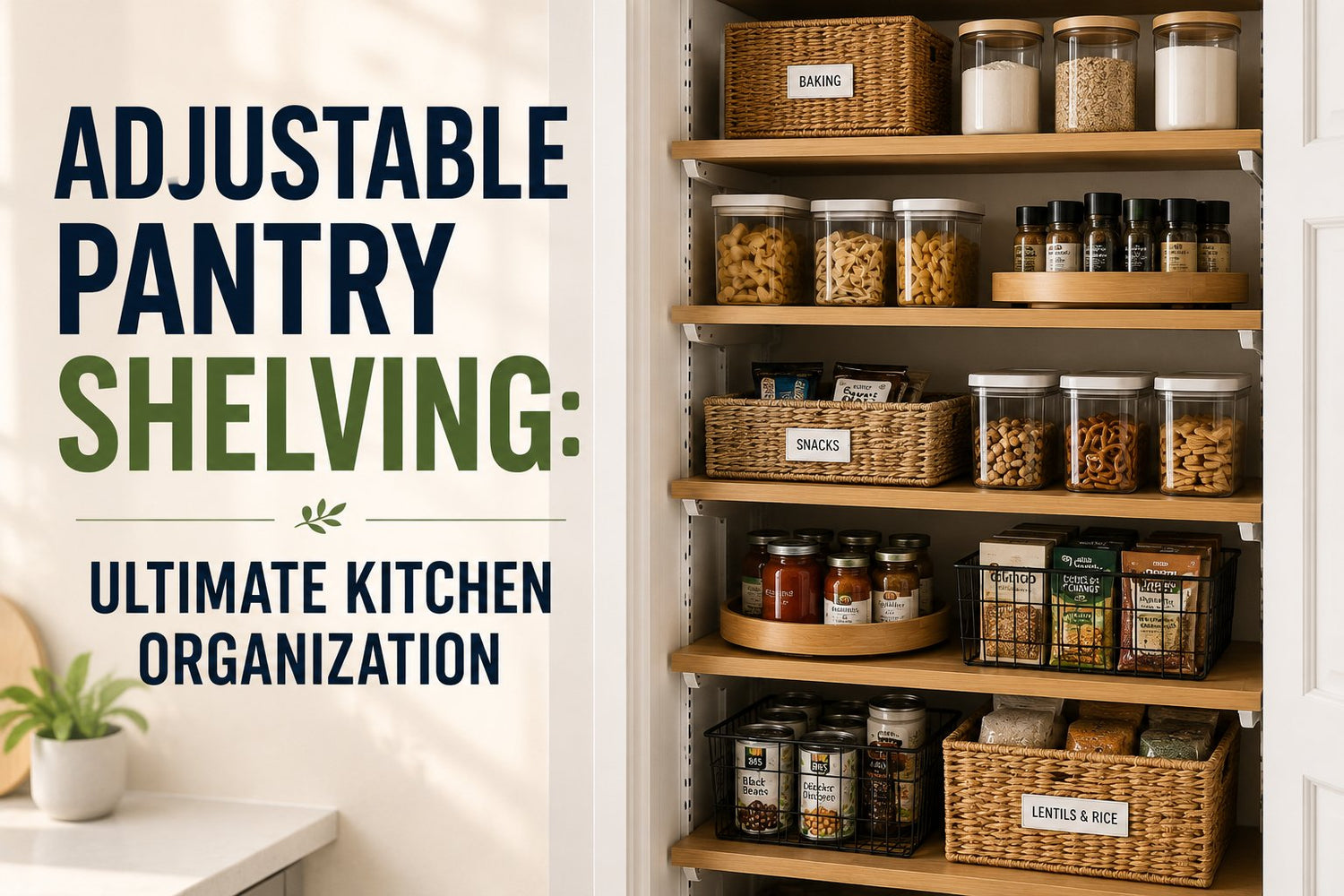
You open the pantry to grab one can of tomatoes and end up shifting three cereal boxes, a leaning tower of pasta, and a bag of rice that's been clipped shut so many times it no longer closes. The top shelf holds things nobody uses, the middle shelf is overcrowded, and the bottom has turned into a graveyard for appliances and bulk bags. That's the point where one might think they need a bigger pantry.
Usually, they need a better system.
Adjustable pantry shelving fixes a problem that fixed shelves create over time. Pantry contents change. Families change. Cooking habits change. A shelf layout that worked when you bought mostly cans won't work when you start storing taller oils, baking tubs, lunch supplies, or countertop appliances. Good shelving lets the space change with you instead of forcing you to work around old dimensions.
The difference isn't cosmetic. A pantry that fits what you store is easier to restock, easier to clean, and far less likely to hide expired food at the back. If you already use bins or want a zoning method that makes the contents easier to manage day to day, this practical guide to organizing your pantry with bins and zones pairs well with a shelf upgrade.
Table of Contents
- From Pantry Chaos to Calm Control
- Choosing Your System Materials and Types
- Planning Your Space Sizing and Weight Capacity
- Layout and Organization Strategies for Efficiency
- Installation Guide DIY Pro and Renter Friendly Solutions
- Making the Right Choice for Your Home or Business
- Your Organized Pantry Awaits
From Pantry Chaos to Calm Control
Most pantry problems don't start with laziness. They start with a shelf layout that assumes your storage needs will stay the same.
A fixed shelf might leave too much dead space above canned goods and not enough room for cereal boxes or a stand mixer. Then people stack items, double-row products, and tuck overflow onto the floor. Within a few weeks, the pantry stops being a storage system and becomes a holding area. You can still put things away, but finding them quickly is another story.
I've seen this in narrow apartment pantries, wide suburban walk-ins, and utility cupboards that do double duty for food, paper goods, and small appliances. The common issue is always the same. The shelf spacing is wrong for the products people buy.
Why adjustable shelves change the experience
Adjustable pantry shelving gives you control over vertical space, which is usually the most wasted part of a pantry. Instead of accepting one shelf height for everything, you create shorter openings for cans and jars, taller openings for bottles and cereal, and stronger lower shelves for heavy stock.
That one change improves three daily tasks:
- Putting groceries away: items fit where they belong instead of getting wedged in.
- Finding ingredients: labels stay visible because you're not forced to stack awkwardly.
- Resetting the system: when your shopping habits change, the shelving can change too.
Practical rule: A good pantry doesn't look empty. It looks readable.
Calm comes from repeatable storage
The best pantry setups aren't the ones that look perfect for one photo. They're the ones people can maintain after a rushed grocery trip, a busy school week, or a holiday cooking stretch.
That's why adjustable systems tend to hold up better in real life. They allow revision without rebuilding. If you start buying in bulk, add a taller zone. If the kids start packing their own lunches, lower a snack shelf. If a small appliance moves in, shift one shelf and keep going.
That kind of flexibility is what turns pantry control from a weekend project into a lasting routine.
Choosing Your System Materials and Types
The right system depends on two things. First, how permanent you want the installation to be. Second, what kind of load, cleaning, and daily wear the shelves need to handle.

What changes in real homes
A pantry used for dry goods only can get away with lighter-duty choices. A pantry that also stores appliances, bulk bins, pet food, or beverage supplies needs more structure and better hardware. If you're already sorting what will live on the shelves, these pantry storage container options can help you match shelf material to the size and shape of what you store.
The most common adjustable systems fall into four broad categories:
- Track and bracket systems: vertical standards mount to the wall, and brackets support movable shelves. These are the workhorses for many built-in pantry upgrades.
- Pole and clip systems: shelves attach to upright poles with clips. They're often easier to adapt and can suit renters in some setups.
- Fixed wall-mounted shelves: not adjustable, but worth mentioning because some people mix one fixed heavy-duty shelf with adjustable shelves above and below.
- Freestanding units: useful in rentals, utility rooms, garages, and business back rooms where wall drilling isn't ideal.
Material and system trade-offs
The shelf surface matters as much as the frame. Here's the practical comparison.
| Material | Durability | Cost | Airflow | Best For |
|---|---|---|---|---|
| Wire Shelving | Good when properly installed | Lower to mid | Excellent | Dry goods, flexible family pantries, utility use |
| Wood Shelving | Strong and solid | Mid to higher | Low | Built-ins, visible pantries, heavier visual style |
| Melamine/Laminate | Good for routine pantry use | Budget to mid | Low | Easy-clean family storage, value-focused upgrades |
| Stainless Steel | Very durable | Higher | Varies by design | Moisture-prone spaces, modern utility or business use |
Wire shelving is practical and forgiving. It's lighter, allows airflow, and usually costs less than custom wood. The downside is that tiny items can wobble or fall through unless you use shelf liners, trays, or bins.
Wood shelving looks finished and feels substantial. It's a strong choice when the pantry is visible from the kitchen and appearance matters. The trade-off is weight. Wood shelves and supports can be heavier to install, and poor finishing can make spills harder to clean.
Melamine or laminate works well for many households because the surface wipes clean and comes in a wide range of finishes. The weak point is edge damage. If cans or appliances regularly bang into corners, chipped edges can show wear quickly.
Stainless steel isn't necessary for every home pantry, but it's worth considering in damp utility spaces or work areas where sanitation and moisture resistance matter more than warmth of appearance.
A shelf material should match the mess it will see, not just the style you want on day one.
One overlooked detail is appliance storage. A pantry shelf may need to hold not just food but daily-use equipment such as a toaster, mixer, or Hamilton Beach Variable Temp Glass Cordless Electric Kettle - 40941C, which has 6 adjustable temperature settings, a 1.7L capacity, a 30-minute keep warm function, and auto shut-off safety protection. That kind of item often pushes people toward stronger lower shelves and more generous vertical clearance.
Planning Your Space Sizing and Weight Capacity
A pantry can look large when it is empty and feel unusable the week after move-in. I see this a lot in apartments and narrow utility rooms. Shelves get sized to the wall, not to the cereal box, stock pot, mop bucket, or bulk paper goods that need to live there.

Measure for use, not just fit
Start with the shell of the space. Measure width, depth, and full height, then mark every obstruction. Door trim, baseboards, hinges, outlets, light switches, and vent covers all steal usable inches. In older homes and city rentals, walls also run out of square more often than people expect, so measure at the top, middle, and bottom before ordering anything fixed-width.
Then measure what the pantry needs to hold. Tall oil bottles, cereal boxes, small appliances, paper towels, pet food tubs, and refill containers each create different clearance needs. A shelf plan that works on paper can fail fast once packaging changes or you start buying in larger sizes.
Depth is where many installs go wrong. Deep shelves look generous, but they turn into dead storage if you cannot see or reach the back row. For many homes, especially narrow walk-ins and reach-ins, a shallower shelf is easier to live with than a deep one that hides half your food.
Leave some air above taller items too. Tight spacing saves inches at first and costs convenience every day after.
Plan for real loads, not labeled loads
Weight capacity depends on the whole build. Material matters, but so do shelf span, bracket spacing, fastener type, wall condition, and whether the load sits evenly across the shelf. A short melamine shelf on solid supports can outperform a longer wood shelf that spans too far.
This matters even more in smaller homes where one pantry shelf may carry double duty. It might hold canned goods on one side and a stand mixer or beverage case on the other. In a home business setup, it may also need to support shipping supplies, paper stock, or back inventory, which changes the load profile fast.
The National Association of Home Builders notes in its storage planning guidance that shelving should be matched to the intended load and adjusted to the items being stored, rather than treated as one standard dimension for every pantry application, as outlined in its storage solutions recommendations.
A few practical rules keep shelves from sagging early:
- Keep heavy goods low. Bulk flour, bottled drinks, small appliances, and large pet food containers belong on lower shelves where supports are strongest and lifting is safer.
- Watch long spans. The wider the shelf, the more likely it is to bow in the middle unless you add a center support or break the run into narrower sections.
- Match hardware to the wall. Drywall anchors have limits. Stud-mounted standards or properly supported side panels hold up better under repeated loading.
- Plan for your largest buying cycle. If you shop at warehouse stores once a month, size for those loads, not for the half-empty pantry on a Sunday night.
- Reserve one adjustable zone. Packaging changes, kids grow, and small appliances migrate. One flexible section saves a full rebuild later.
If you are comparing shelf widths, add-on baskets, or upright support systems, these pantry storage rack options and hardware considerations help narrow down what works in tight spaces and higher-load setups.
A shelf that holds spices well may fail early under canned tomatoes, sparkling water, or countertop appliances. Plan by load category, not by looks alone.
Layout and Organization Strategies for Efficiency
You feel the problem when you open the pantry and have to shift three things to reach one jar. In a narrow apartment kitchen or a shallow reach-in closet, bad layout wastes more time than bad shelving. Adjustable shelves help, but only if the layout matches how the space is used.

Build around access first
Start with reach, not categories. Daily items belong between waist and eye level, where they can be grabbed and put back without shuffling other containers. Backup stock, party platters, and seasonal supplies can move higher. Heavier goods belong low, where they are safer to lift and less likely to get dropped.
A simple 3-zone layout works in almost every pantry size:
- Top third: light, occasional-use items such as paper goods, extra spices, holiday baking supplies, and serving pieces.
- Middle third: daily-use staples such as oils, canned goods, snacks, breakfast foods, and lunch-packing items.
- Bottom third: dense or bulky items such as drinks, appliances, pet food, bulk grains, and large refill containers.
Depth matters here too. Deep shelves look generous on paper, but in small homes they often create a back row that gets forgotten. In tight pantries, I usually prefer shallower shelves that keep labels visible and stop duplicates from hiding behind each other.
Turn shelves into working zones
The layouts that hold up best are organized by task. A baking shelf saves time because the flour, sugar, cocoa, liners, and measuring tools live together. A breakfast shelf works for the same reason. You are not searching for five separate items across the pantry before coffee.
That approach also works in real-world spaces that are short, narrow, or shared by several people. One shelf run can handle breakfast. Another can hold weeknight dinner ingredients. A single bin can contain school snacks so kids are not pulling from three different areas and undoing the rest of the system.
Use zones like these:
- Baking: flour, sugar, extracts, cocoa, liners, mixing add-ins, and measuring tools.
- Breakfast: cereal, oats, nut butters, tea, coffee, spreads, and grab-and-go items.
- Quick meals: pasta, rice, beans, broth, noodles, sauces, and canned tomatoes.
- Snacks and small items: bars, pouches, seasoning packets, and single-serve packs in bins or baskets.
Containers should solve a specific problem. Clear bins keep loose packets from sliding flat and disappearing. Turntables help on corner shelves or deep upper shelves where bottles collect in the back. Can risers improve visibility, but they also reduce usable height, so they work better for short cans than tall jars. If your shelves are fine but the contents still drift, these practical pantry storage tips for keeping categories contained are worth applying.
Use shelves for categories and containers for control. The shelf defines the zone. The bin keeps that zone from spreading.
One last habit keeps the system from failing after the first grocery run. Put newer items behind older ones, especially in small pantries where overbuying shows up fast. It is a simple routine, but it cuts waste and makes even a modest pantry feel orderly.
Installation Guide DIY Pro and Renter Friendly Solutions
The right installation path depends on your wall type, your lease, and your tolerance for crooked shelves. Some jobs are straightforward. Some are the kind of “weekend project” that turns into patching, repainting, and buying better anchors on Sunday afternoon.

DIY when the wall and hardware are straightforward
A wall-mounted track system is manageable if the wall is sound, you can locate studs accurately, and the shelving kit has clear hardware guidance. The work has to start with layout, not drilling.
Use this order:
- Mark the vertical lines first. Tracks or standards must be plumb before anything else matters.
- Find studs and confirm wall type. Drywall, plaster, masonry, and tile all call for different fasteners.
- Dry-fit the spacing. Hold brackets and shelf boards in place before committing to final positions.
- Check level shelf by shelf. Don't assume one straight track fixes everything.
- Load gradually after installation. Test for movement before filling the entire pantry.
The most common DIY failure isn't dramatic collapse. It's slight misalignment. That leads to wobbling shelves, uneven reveals, and a pantry that always feels a little improvised.
Hire help when precision matters more than pride
Professional installation makes sense when shelves need to fit tightly between walls, when the pantry is visible from the main kitchen, or when you're working with awkward surfaces. Tile, old plaster, and out-of-square alcoves can punish rushed measuring.
It also makes sense if the shelves will carry a lot of heavy stock or appliances. In those cases, proper anchoring and clean support placement matter more than saving an afternoon.
For a visual walkthrough of the bracket-and-track process, this installation video is a useful reference before you decide whether to tackle it yourself:
Renter friendly ways to get adjustability
Renters still have options. They're just different options.
Freestanding shelving units are usually the safest starting point. They don't depend on wall repair later, and they can move with you. Tension-pole systems can also work in some spaces, especially where a full built-in isn't practical. Over-the-door organisers help when the pantry is shallow or when the interior shelf count is fixed and you need extra capacity for lighter items. If that's your situation, these over-the-door pantry organiser ideas can help extend storage without altering the room.
For renter setups, focus on three things:
- Stability: the unit shouldn't rock when you remove one item from a lower shelf.
- Shelf reset speed: a system only helps if you can change heights easily.
- Exit plan: choose something you can disassemble, clean, and re-use in the next home.
The smartest renter pantry system is the one you can remove in one day without leaving a repair project behind.
Making the Right Choice for Your Home or Business
The right shelving system isn't the same for a homeowner, a renter, and a small business. They may all need adjustability, but they don't need it for the same reasons.
Homeowners should buy for the next pantry, not the current one
Homeowners usually get the best long-term value from a wall-mounted adjustable system with durable shelves and hardware that can handle changing loads. For this reason, it pays to think ahead. A pantry often starts as dry-food storage, then absorbs small appliances, school snacks, entertaining supplies, and bulk household goods.
Material choice matters, but layout discipline matters just as much. Many people install shelves right up to the back wall at full depth and assume more capacity means better storage. It often doesn't.
A useful reality check comes from urban housing. Many guides ignore the fact that in places like much of California, over 60% of households are in units under 1,000 sq ft, which means standard high-ceiling pantry rules often don't fit real spaces. The same source notes that deeper shelves common in custom builds often need glide-out systems to work properly and prevent food waste, as discussed in this article on fixing walk-in pantry design problems.
That's why lower ceilings and tighter rooms should change the buy decision. In a compact pantry, shallower shelves with better visibility usually outperform deeper shelves with impressive capacity on paper.
Renters and small businesses need different priorities
For renters, portability comes first. Freestanding units, clip-based systems, and removable organisers reduce risk and keep the setup flexible. Choose units that can serve a second life in a laundry room, utility cupboard, or garage if your next home has a different pantry layout.
For small businesses, the checklist changes. A staff kitchen, café back room, short-term rental supply closet, or hospitality storage area benefits from shelves that are easy to clean, easy to reset, and simple for multiple people to use consistently. Commercial spaces also tend to punish fussy systems. If a shelf layout only makes sense to the person who designed it, it won't stay organised.
For visible home kitchens, appearance may justify wood or a cleaner laminate finish. For hard-working utility pantries, practicality often points to wire or stainless steel. The better choice is the one that fits the room, the users, and the maintenance reality.
Your Organized Pantry Awaits
A good pantry doesn't come from buying more organisers at random. It comes from choosing a shelf system that fits your space, your inventory, and the way you cook and shop.
That's why adjustable pantry shelving works so well in real homes. It can adapt when your storage needs shift. It can handle the difference between a narrow apartment cupboard and a family pantry that carries appliances, lunch supplies, and bulk staples. It can also rescue awkward spaces that fixed shelves never used well in the first place.
The biggest win is usually not visual. It's operational. You stop re-buying what you already had. You stop stacking food where you can't see it. You stop treating the pantry like a place to hide overflow and start using it as part of the kitchen's daily workflow.
If you're planning a pantry refresh, keep the decision simple. Choose the right system type, match the material to your real use, keep the depth sensible, and organise by access rather than aspiration. That's what lasts.
If you want help choosing practical home and kitchen systems without sorting through an overwhelming catalogue, GrifGlo publishes decision-focused guides and curated essentials for pantry organisation, kitchen tools, and everyday storage needs.


Leave a comment
This site is protected by hCaptcha and the hCaptcha Privacy Policy and Terms of Service apply.