

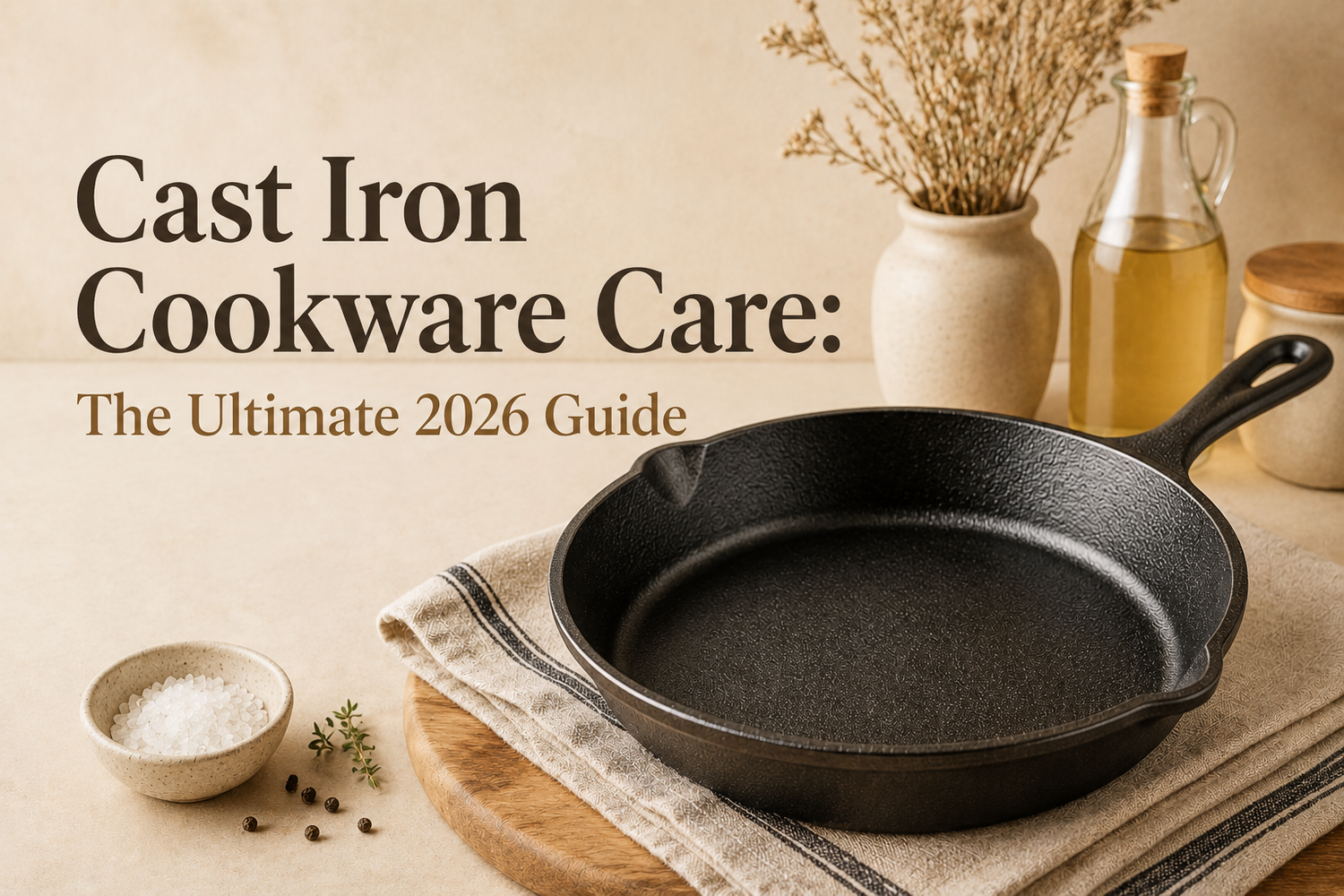
The most repeated rule in cast iron cookware care is also the one that confuses people most: “never use soap.” That advice is outdated. For everyday cooking, the primary problem usually isn't a small amount of mild soap. It's water left sitting on the pan, oil left on too thick, and a rushed cleanup that puts damp iron back in the cupboard.
That shift matters for home cooks, renters, shared kitchens, and small food businesses alike. Cast iron isn't fragile. It's one of the most repairable pieces of cookware you can own. What it wants is consistency: clean it properly, dry it thoroughly, oil it lightly when needed, and stop treating it like a museum object.
Good cast iron cookware care is less about superstition and more about understanding surfaces. Bare cast iron needs seasoning and moisture control. Enameled cast iron needs gentler handling and protection from chips. Once you know which pan you have, the routine gets much simpler.
Table of Contents
- Why Your Cast Iron Care Routine Might Be Outdated
- Bare vs Enameled Cast Iron A Quick Care Primer
- The Definitive Daily Cleaning Routine
- Building and Maintaining Perfect Seasoning
- How to Restore Rusted and Neglected Cookware
- Smart Storage and Troubleshooting Common Problems
Why Your Cast Iron Care Routine Might Be Outdated
A lot of cast iron advice was built for a different era. Older soaps were harsher, many kitchens had fewer cleaning tools, and people passed pan care down as kitchen folklore. Some of that advice still points in the right direction. A lot of it makes everyday care harder than it needs to be.

The myth that causes the most trouble is the blanket ban on soap. Mild dish soap does not strip a well-seasoned bare cast iron pan in normal use. What causes problems is leaving water on the surface, soaking the pan in the sink, or putting it away before it is fully dry. In my experience, rust shows up after lazy cleanup and damp storage far more often than after any careful wash.
That old rulebook also tends to lump every heavy pan together. Bare cast iron and enameled cast iron need different care, and confusion between the two is one reason people scratch enamel, baby bare iron too much, or avoid useful cookware they already own. The same kind of confusion shows up with other kitchen materials too. A pan-safe habit for iron is not always the right habit for ceramic baking dishes and other glazed cookware.
One practical point gets ignored in a lot of cast iron lore. Your kitchen conditions matter. Hard water, humid storage, frequent use, and high-turnover settings like rentals or small cafés all change how a pan behaves. A skillet used every day on a busy hob will need a different maintenance rhythm than one that comes out for cornbread twice a month.
Practical rule: Keep the pan clean, dry, and lightly protected if it is bare cast iron. Keep it clean and chip-free if it is enameled. That routine works better than superstition.
Seasoning is not mysterious, and it is not permanent. It is a thin, built-up layer created by heat and oil. It gets stronger with good use, wears down with rough treatment, and can be repaired. That is good news for beginners because it means very few mistakes are final.
Cast iron lasts because it is forgiving. Use soap if the pan needs soap. Dry it thoroughly. Match the care to the surface and to how hard the pan works in your kitchen. That approach is easier, more scientific, and far more useful than repeating rules that were outdated years ago.
Bare vs Enameled Cast Iron A Quick Care Primer
People damage cast iron most often when they use the wrong cleaning logic for the wrong surface. Bare cast iron and enameled cast iron share the same heavy core, but they don't want the same treatment.

How to tell them apart
Bare cast iron has a dark iron surface that depends on seasoning. It can look matte, satin, or glossy depending on use, but it doesn't have a glass-like coating. If neglected, it can rust.
Enameled cast iron has a fired coating over the iron. Sometimes the exterior is coloured and the interior is cream, black, or dark grey. It doesn't need seasoning, and it won't rust through normal use unless the enamel is badly damaged.
A simple kitchen clue helps. If you clean a pan and think, “I should wipe on a little oil before putting this away,” that's usually bare cast iron. If that sounds unnecessary, it's probably enameled.
What each pan needs
Bare cast iron rewards active maintenance. It can handle firm scrubbing when needed, but it hates long contact with water. Guidance discussed in a cast iron care explainer aligns on the key point: soap and light scouring aren't the main threat, while soaking or leaving the pan wet invites rust because moisture can reach exposed iron through weak spots in the seasoning.
Enameled cast iron is the opposite in one important way. It doesn't need oiling for protection, but it does need you to avoid chipping, harsh impact, and sudden temperature shock. It's easier in some respects and less forgiving in others.
Use this working comparison:
- Choose bare cast iron if you want a pan that can be restored repeatedly and improved through use.
- Choose enameled cast iron if you want low-maintenance cooking for stews, braises, and acidic dishes.
- Be careful with both when moving hot cookware. A practical cotton barrier such as the HOME AESTHETICS HA-4121 2pc Oven Mitt & Pot Holder Set adds forearm and hand protection, and the pot holder can also serve as a trivet for hot dishes.
Bare cast iron asks for maintenance. Enameled cast iron asks for restraint.
Acid is another dividing line. Bare cast iron with weak seasoning can react badly to strongly acidic cooking, especially early on. Enameled cast iron handles that better because the cooking surface isn't relying on a seasoning layer in the same way.
If you bake often, it helps to think of cast iron as part of a broader cookware system. A skillet, Dutch oven, and a dedicated ceramic baking dish guide each fill different jobs, and using the right vessel reduces cleanup stress across the board.
The Definitive Daily Cleaning Routine
Cast iron daily care gets overcomplicated fast. The old rulebook said no soap, never soak, and treat every pan like a museum piece. Real kitchens do not work that way. A daily routine has to survive weeknight cooking, shared sinks, rental turnover, and the occasional distracted cleanup.
For bare cast iron, the goal is simple. Remove food and grease without stripping the pan down to raw metal. For enameled cast iron, protect the surface and avoid chips, scratches, and trapped moisture. Lodge's cast iron beginner guide lines up with that practical approach.
For bare cast iron
Use this after normal cooking:
- Let the pan cool until it is safe to handle. A hot pan under cold water can warp, and it is harder on the seasoning.
- Wash with warm water and a small amount of mild soap. Modern dish soap removes grease well. It does not ruin well-built seasoning from ordinary daily washing.
- Scrub only where food is stuck. A sponge, dish brush, or other non-aggressive scrubber handles most jobs.
- Dry it right away. Start with a towel. Then set the pan over low heat for a minute or two if you want to drive off hidden moisture around the handle, rim, or pour spouts.
- Apply a whisper-thin coat of oil if the pan looks dry. Wipe until the surface no longer looks slick.
That last step is where many cooks go wrong. Too much oil after washing leaves a sticky film, attracts dust, and can turn rancid in storage. The pan should look cared for, not greasy.
For enameled cast iron
Enameled pieces need a gentler touch, but less follow-up.
- Wash with warm, soapy water.
- Use a soft sponge or nylon scrubber first.
- Dry thoroughly, especially around the rim and under the lid.
- Do not oil the cooking surface after washing.
Staining on light enamel is common. It is cosmetic unless the surface is chipped, rough, or cracked.
What to do when food is stuck
Stuck-on food is where myth and good practice usually collide. Many home cooks either leave the pan soaking for hours or go after it with too much force. Neither helps much.
Use the mildest fix that works:
- For fresh residue: Wash while the pan is still a little warm, not hot.
- For stubborn bits: Add a shallow layer of water and simmer briefly, then loosen the food with a wooden spoon or scraper.
- For bare cast iron with rough residue: Use coarse salt as a short scrub, then rinse, dry, and oil lightly if needed.
- For enameled cast iron: Let warm soapy water sit for a short period, then scrub gently. Save abrasive tools for rare cases, and use them cautiously.
In busy households and small commercial setups, the biggest enemy is delay. A skillet left in the sink until tomorrow is more likely to flash-rust, pick up odors, or get knocked around by other dishes. Clean it, dry it, and put it away. The whole job usually takes less time than dealing with the mess later.
Good pan care also supports a cleaner overall kitchen workflow. Cooks who keep a dry, orderly cleanup station usually do the same with lids, leftovers, and prep containers. The same habits behind cleaning food storage containers properly tend to keep cast iron in better shape too.
If a pan needs hours in the sink, the routine is the problem, not the pan.
Building and Maintaining Perfect Seasoning
Seasoning is the engine behind bare cast iron's long life. It isn't a layer of wet oil sitting on the metal. It's a hardened film created when very thin coats of oil are heated and set over time.

What seasoning actually is
A good seasoning layer looks almost boring. It isn't wet, sticky, or patchy. It feels dry and smooth, and it improves with repeated cooking and sensible cleanup.
Historically, seasoning was often described in vague terms. Modern guidance is more precise. Contemporary care sources commonly recommend heating a lightly oiled pan at around 200°C (392°F) to 220°C (428°F) for about one hour, then letting it cool in the oven to set the coating, as outlined in this cast iron care guide. That controlled cycle makes the process repeatable.
How to season a pan in the oven
This is the method I trust for new pans, stripped pans, or skillets with large bare patches.
- Wash and dry the pan fully. Start with clean metal.
- Apply a very thin coat of oil over the entire pan. Inside, outside, handle, and rim.
- Wipe off the excess. Then wipe again. The pan should look almost dry.
- Place it in a preheated oven. Keep the heat in the range noted above.
- Bake for about one hour.
- Turn the oven off and let the pan cool inside.
The thinness of the oil matters more than people expect. Thick oil doesn't create a stronger finish. It creates sticky patches that later flake or smoke.
Kitchen note: If a seasoned pan feels tacky after cooling, the layer was too thick, not too protective.
How to keep seasoning strong
You don't need to run a full oven cycle after every use. Most skillets maintain well through ordinary cooking plus a sensible post-clean routine.
Useful habits include:
- Cook regularly. Repeated contact with fat and heat helps the surface mature.
- Use a light maintenance wipe after washing bare iron. This supports the existing layer.
- Hold off on strongly acidic dishes until the seasoning is better established.
- Fix weak areas early. A small dull patch is easy to address. A neglected patch becomes rust.
Some cooks build a stronger routine by keeping a dedicated area for hot boards, trivets, and oven-safe cookware so a just-oiled pan isn't shoved into a damp cupboard. If you're tightening the whole kitchen workflow, these wooden pizza board storage ideas fit the same mindset: dry storage, easy reach, less stacking damage.
The main thing to remember is that seasoning is cumulative. It doesn't need perfection. It needs repetition done well.
How to Restore Rusted and Neglected Cookware
A rusty cast iron pan usually looks worse than it is. In my kitchen, the pans that seem hopeless are often the easiest to bring back once you stop guessing and work in order.

The first job is diagnosis. Bare cast iron can usually be scrubbed, reset, and re-seasoned. Enameled cast iron is different. If the enamel is chipped, cracked, or lifting, seasoning will not solve it because the cooking surface is glass, not exposed iron. Rust on enameled pieces often shows up around the rim or on worn exterior edges, and those spots need gentle rust removal and careful drying, not a full bare-iron seasoning routine.
Start with the mildest restoration that will work
Light orange rust, a rough patch, or a pan that smells stale after long storage usually needs cleaning, not heroics. Use warm water, a little dish soap, and a scrubber matched to the problem. For stuck residue, nylon or a scrub brush is often enough. For light rust on bare iron, fine steel wool or a chain mail scrubber can speed things up without much fuss.
Then do the part people skip. Dry the pan fully, heat it briefly to drive off hidden moisture, and apply a very thin coat of oil before re-seasoning the worn area or the whole pan if needed.
A lot of neglected skillets got that way from one simple mistake. They were cleaned, left damp, and put off until tomorrow.
Full reset for heavy rust or failed seasoning
If the surface is flaky, severely rusted, patchy with old carbon, or sticky from repeated heavy oiling, spot repair wastes time. Strip it back and rebuild from clean metal.
For bare cast iron, the usual home methods are:
- Scrape and scrub off loose buildup first.
- Remove rust with an acid soak used carefully, or with steady abrasive scrubbing.
- Rinse well.
- Dry immediately, including a few minutes over low heat.
- Start seasoning right away while the pan is clean and dry.
Vinegar can help with rust, but it is not a soak-and-forget fix. Leave a pan in too long and the acid starts working on the iron itself. Short soaks with checks in between are safer than one long soak. For many pans, elbow grease is the better trade-off.
For enameled cast iron, skip stripping methods meant for bare iron. Do not use oven-cleaner stripping, aggressive grinding, or a seasoning rebuild. Clean off residue, treat any minor rust on exposed rim areas, and retire the piece from heavy use if the enamel surface is damaged where food cooks. That is one of the old myths worth dropping. Enamel does not need seasoning to recover.
This visual walkthrough is useful if you want to see the restoration rhythm before trying it yourself:
Speed matters once bare iron is exposed. Flash rust can show up fast, sometimes while you are still cleaning up the sink area. Set out your towel, oil, and oven plan before you start the restoration so the pan goes straight from washing to drying to seasoning.
The same principle helps with other neglected gear. A greasy basket or burned-on residue in an air fryer cleaning process that actually removes buildup usually needs a better sequence, not replacement.
Smart Storage and Troubleshooting Common Problems
Most cast iron failures happen after cleaning, not during cooking. Storage is where small mistakes pile up. A pan that goes away damp, stacked carelessly, or sealed under a lid before fully dry starts the next cooking session at a disadvantage.
Storage habits that prevent repeat problems
For bare cast iron, store it bone dry with only a very light protective oil film if that suits your routine. For enameled cast iron, store it clean and dry, and avoid rough contact that can chip the coating or lid edge.
The University of Maine Extension confirms that warm water and soap are acceptable for washing cast iron, followed by full drying and a light oiling step afterward in its home cast iron guidance. That's the point many kitchens miss. The issue isn't soap. It's leftover moisture.
Useful storage habits:
- Give pans airflow. Don't trap dampness under lids.
- Use padding when stacking enameled pieces. It protects the finish.
- Keep cast iron away from sink splash zones. Under-sink humidity is the wrong environment.
- Make the storage spot easy to use. If reaching the pan is awkward, people put it away carelessly.
That last point is often an organisation problem, not a cookware problem. A cleaner cabinet layout or better under-sink storage ideas can reduce the moisture and clutter that sabotage cookware maintenance.
Cast Iron Care Do's and Don'ts
| Do | Don't |
|---|---|
| Dry bare cast iron immediately after washing | Leave it soaking in the sink |
| Use mild soap when needed | Assume dirt protects seasoning |
| Apply only a very thin oil film to bare iron | Store a pan with pooled or tacky oil |
| Hand wash enameled cast iron carefully | Bang enameled pieces together in storage |
| Re-season when the surface looks worn | Wait for rust before taking action |
| Store cookware fully dry | Cover or stack it while moisture is still trapped |
Quick fixes for sticky, flaky, and smoky pans
Sticky surface usually means too much oil went on during seasoning or after washing. Wash it, dry it, and re-season with a much thinner coat.
Flaking seasoning usually means unstable layers built up instead of bonding properly. Scrub away the weak areas and rebuild with controlled, thin applications.
Excess smoke often points to leftover grease, not healthy seasoning. Clean the pan more thoroughly and stop leaving a visible oil film behind.
A good cast iron pan should feel ready to cook, not greasy to the touch.
GrifGlo publishes practical buying and care guides for kitchens, cookware, organisation, and everyday home systems. If you're comparing tools, storage setups, or cookware options and want decision-friendly guidance without a bloated catalogue, browse GrifGlo.



Leave a comment
This site is protected by hCaptcha and the hCaptcha Privacy Policy and Terms of Service apply.