

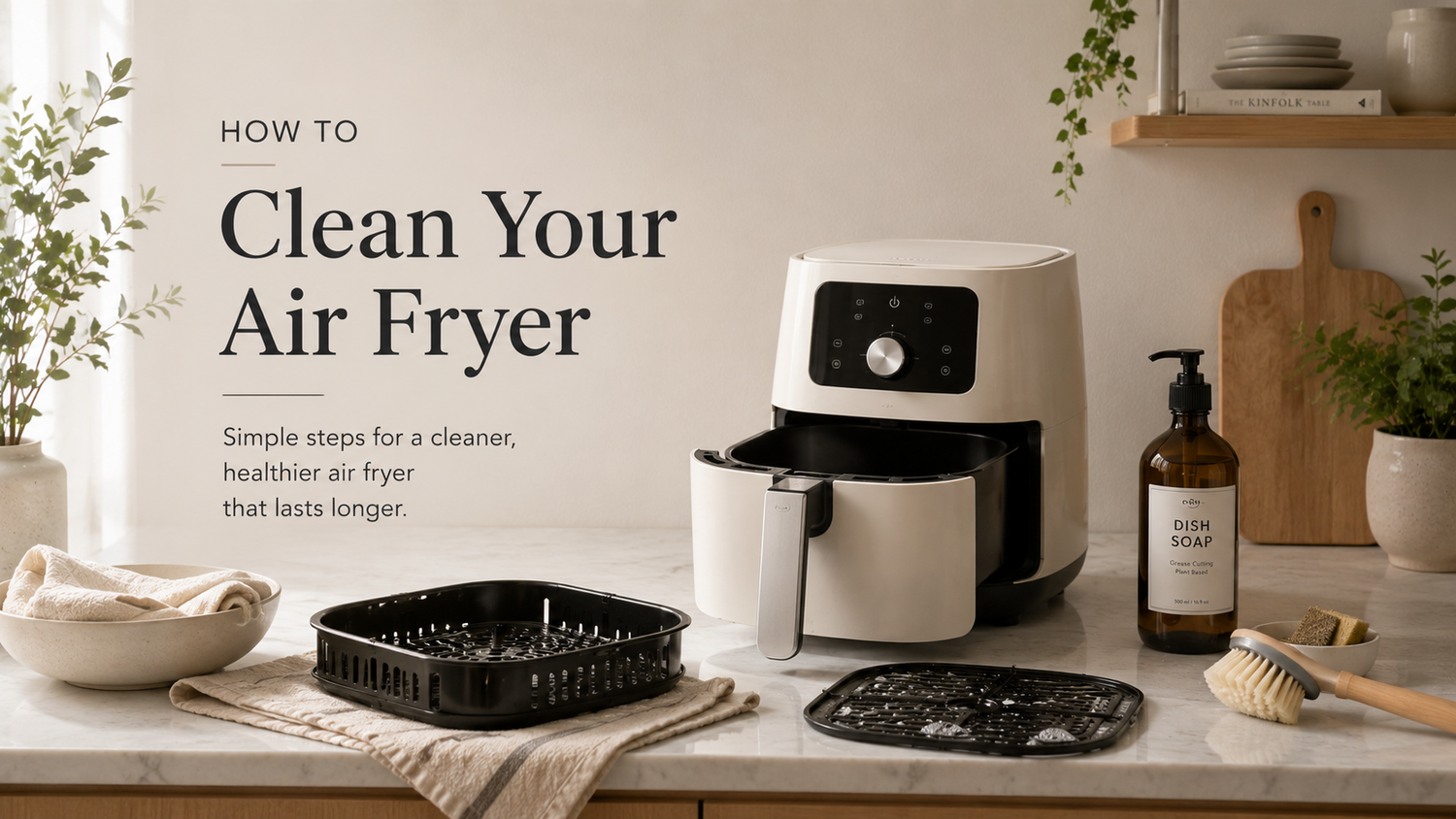
You open the air fryer to make lunch and get hit with two reminders at once. The first is the smell of last night's salmon or bacon. The second is the sight of a basket with sticky grease baked into the corners, a few dark crumbs welded to the crisper plate, and a film on the drawer that you meant to deal with “later”.
That “later” is where most air fryers get gross. Not because people are lazy, but because the appliance feels small enough to ignore and awkward enough to postpone. The good news is that a clean air fryer doesn't require a full scrub after every batch of fries. What it does require is the right rhythm: a fast daily wipe, a proper weekly wash, and a deeper reset when grease starts to harden or odours linger.
Table of Contents
- Why a Clean Air Fryer Matters More Than You Think
- The 5-Minute Routine for Everyday Cleaning
- Your Guide to a Deep Clean and Degreasing
- Cleaning Basket vs Oven-Style Air Fryers
- Removing Odours and Maintaining Performance
- Common Air Fryer Cleaning Mistakes to Avoid
Why a Clean Air Fryer Matters More Than You Think
A neglected air fryer affects more than appearance. Once grease and food bits build up, they heat again every time you cook. That changes smell, flavour, airflow, and the general feel of using the machine.
The indoor air side of this matters more than many realize. A 2024 University of Birmingham study reported by MindBodyGreen found that an air fryer used over 70 times without a deep clean emitted over twice as many ultrafine particles as a clean one. In Canadian homes, that matters even more through colder months, when windows stay shut and cooking particles hang around longer.
It's also a food-quality problem. Old grease transfers flavour fast. If you've ever cooked hash browns and wondered why they faintly tasted like fish or wings, that's usually not your imagination. It's residue on the basket, tray, heating area, or side walls reheating and settling back onto the new food.
Practical rule: If your air fryer smells warm before food even starts cooking, it isn't clean enough.
There's also the maintenance angle. Baked-on residue is harder to remove, rougher on coatings, and more likely to push people into bad cleaning habits like scraping with metal or soaking parts while they're still too hot. That's how a quick clean turns into damage.
A clean air fryer works the same way a clean food container does. The job is easier when you deal with residue before it hardens. The same logic behind cleaning food storage containers properly applies here. Fresh grease wipes off. Reheated grease fights back.
The fix isn't obsessive scrubbing. It's having separate routines for daily upkeep, weekly washing, and occasional deep cleaning. That's what keeps the appliance sanitary without wrecking the coating or wasting your time.
The 5-Minute Routine for Everyday Cleaning
The most useful clean air fryer habit is the one you'll repeat. For most homes, that means a short wipe after cooking and a more thorough wash once a week. That's enough to stop most buildup before it turns into a degreasing project.

A lot of people think they're cleaning well when they're mostly just removing visible crumbs. A 2024 Expert Reviews survey covered by UNILAD found that 32% of users don't clean their air fryers adequately, and while 68% say they clean regularly, only proper techniques mitigate risks. That tracks with what happens in real kitchens. People rinse the basket, skip the drawer, ignore the ceiling of the cavity, and call it done.
What to do right after cooking
Wait until the unit is cool enough to handle comfortably. Then do four fast things:
- Empty loose crumbs: Tip out the basket or tray over the bin or sink.
- Wipe the basket or tray: Use a soft sponge, dish soap, and warm water.
- Wipe the drawer or inner cavity: Grease often settles below where the food sits.
- Clean the handle and exterior touch points: Those collect oil from cooking hands.
If you use liners, cleanup is faster, but they don't replace washing. Grease still gets around edges, under perforations, and onto the walls. If you use them often, square non-stick air fryer disposable liners can cut down on stuck sugars and sticky marinades, but the basket still needs a real wipe.
Air Fryer Cleaning Frequency
| Task | Frequency | Why It Matters |
|---|---|---|
| Empty crumbs and wipe basket | After every use | Stops residue from baking on |
| Wipe drawer or drip area | After every use | Prevents grease smell and smoke |
| Wash removable parts with soap and warm water | Weekly | Removes the film a quick wipe leaves behind |
| Check heating area and interior walls | Weekly | Catches splatter before it carbonises |
| Full deep clean | As needed | Restores airflow and removes hardened grease |
A quick visual walkthrough helps if you've never built the habit:
A simple weekly wash
The weekly wash is where you deal with the residue that a cloth misses. I'd focus on removable parts first, then the interior.
Use this order:
- Wash the basket, crisper plate, racks, or tray in warm soapy water.
- Use a soft brush for corners, perforations, and mesh sections.
- Wipe the inside walls and base with a damp microfibre cloth.
- Check the underside of the crisper plate. That's where grease hides.
- Dry everything before reassembly.
If cleanup feels hard every single time, the routine is too late. Daily wiping is what makes weekly washing easy.
What doesn't work well? Paper towel alone, harsh degreasers meant for ovens, and “just running it hot to burn things off”. Heat hardens residue. It doesn't replace cleaning.
Your Guide to a Deep Clean and Degreasing
When the basket feels tacky after washing, the interior smells stale even when empty, or the sides have brown varnish-like splatter, you're past maintenance and into deep-clean territory. This is the point where people either restore the machine properly or damage it trying.
A useful benchmark comes from a validated 5-step cleaning protocol published via Alibaba Life Tips, which states that the method can achieve 99.7% debris removal. It also notes that a 25-minute cooldown to below 49°C is a critical first step because it helps prevent thermal shock and micro-cracks in non-stick surfaces. That cooldown step isn't fussy. It's the difference between cleaning safely and stressing the coating.

Start with cooldown and full disassembly
Unplug the unit. Let it cool fully. Remove every detachable part you can safely remove according to the manual.
For basket-style models, that usually means the basket, crisper plate, and drawer insert. For oven-style units, it may include racks, trays, crumb tray, rotisserie pieces, and sometimes a drip pan. If the air intake or vent area is dusty, a small handheld vacuum such as a cordless dustbuster-style vacuum is useful for dry debris before you introduce moisture.
Clean dry debris first. Wet crumbs turn into paste and smear into seams.
Soak, scrub, and clear the hidden grime
Deep cleaning works best when you stop trying to brute-force hardened grease off a dry surface. Soak first, then scrub.
For removable greasy parts, fill a basin or sink with warm water and dish soap. Let the pieces sit long enough for the residue to soften. If grease is stubborn, add a little more soap and use a non-abrasive sponge or a soft-bristle brush. A bamboo brush can be helpful on perforated plates because it gets into holes without scraping like metal.
Pay attention to these spots:
- Basket corners: Oil collects in the seams and lip.
- Underside of trays: This area often looks clean until you flip it over.
- Drawer rails and channels: Crumbs and grease settle where airflow pulls them.
- Interior ceiling: Splatter rises and bakes on near the heating area.
- Door edges on oven models: Grease vapour sticks to gaskets and frame edges.
For the interior cavity, use a damp cloth rather than a soaking wet one. Wipe the walls, floor, and the area beneath the heating element as far as you can reach safely. If the heating element has dry debris on it, brush or wipe gently. Don't yank, scrape, or spray cleaner directly upward into electrical areas.
If a greasy patch won't move, lay a warm damp cloth on it briefly, then wipe again. That works better than aggressive scrubbing. The goal is to soften residue, not sand it off.
Drying matters more than most people think
Once everything is clean, rinse well and dry thoroughly. Rushed cleaning causes trouble at this stage. Water left in corners, under handles, around screws, or in the body cavity can create odours, spotting, or electrical issues later.
Lay the parts out until they are fully dry to the touch. For oven-style units, leave the door open for a while after wiping the interior. For basket models, separate the crisper plate from the basket during drying so trapped moisture can evaporate.
A proper deep clean should leave the air fryer with no sticky feel, no visible film, and no warm-grease smell when it preheats empty. If you still smell old food after that, you likely missed the heating area, underside of the tray, or the drip zone below the basket.
Cleaning Basket vs Oven-Style Air Fryers
Most bad advice about how to clean air fryer units comes from treating every model the same. They're not the same. Basket machines collect grease in compact, awkward corners. Oven-style units spread mess over more surfaces and introduce extra caution around doors, rails, fans, and exposed heating elements.

This difference matters because the wrong cleaning technique can break the appliance, not just scratch it. A Canada-focused complaint summary referenced in the provided material states that 41% of the 1,247 air fryer complaints reported to Health Canada in a single year were tied to cleaning-induced electrical failures, often involving improper methods on specific models in humid regions like Vancouver. That's a strong argument for cleaning the machine you own, not the one in a generic video.
Basket-style units
Basket models are easier to wash but easier to neglect. The basket and crisper plate look like the whole mess, yet the drawer below often holds the worst grease.
What works best:
- Remove the crisper plate every time: Don't just wash the visible top.
- Use a soft brush in the perforations: Especially after breaded foods or sugary sauces.
- Wipe the outer basket wall and drawer floor: Oil splatter settles there fast.
- Clean the lip and rim: That ring often becomes sticky before you notice it.
What usually goes wrong is over-scrubbing. People attack blackened spots with steel wool or metal utensils. That can rough up the non-stick finish and make future sticking worse, not better.
Oven-style units
Oven-style air fryers need a calmer approach. You're cleaning more parts, but each part is usually simpler. Racks, trays, crumb trays, and doors all need attention, and the interior tends to collect a fine grease film rather than obvious puddles.
Focus on these areas:
| Area | Best approach | What to avoid |
|---|---|---|
| Glass door | Damp microfibre cloth, then dry cloth | Harsh sprays that streak or pool into seams |
| Racks and trays | Soak and soft scrub | Scraping baked residue with metal |
| Crumb tray | Empty often and wash fully | Leaving crumbs to carbonise |
| Heating area | Gentle wipe once fully cool | Spraying liquid directly near elements |
| Side rails and corners | Cloth wrapped around a utensil handle | Flooding the cavity with water |
Basket models trap grease in fewer places. Oven models spread it everywhere lightly. Clean accordingly.
Oven-style machines also tempt people into one of the worst shortcuts: spraying the entire interior like a conventional oven. Don't do that. Use a cloth with controlled moisture instead. If the appliance has a fan guard or top heating area that's hard to reach, patience beats saturation.
If you're unsure how far a part disassembles, stop and check the manual. Forcing panels, soaking electrical sections, or cleaning a warm unit is how simple maintenance turns into a dead appliance.
Removing Odours and Maintaining Performance
A clean-looking basket can still smell off. That's because odours usually come from thin grease film, not obvious scraps. Fish, bacon, sausages, garlic marinades, and sweet glazes are the usual culprits. They leave residue that reheats and perfumes the next batch of food.

How to deal with lingering smells
The first fix is simple. Wash the removable parts well, then wipe the interior with a cloth lightly dampened with a vinegar-and-water mixture. Follow with a plain damp cloth so you don't leave the smell of vinegar behind.
Lemon can make the appliance smell fresher, but it's better as a finishing touch than a degreaser. If the problem is old grease, you need soap and wiping first. Citrus on top of grease just gives you lemon-scented grease.
A few methods that work well in practice:
- Vinegar wipe for the interior: Good for stale savoury odours after proper washing.
- Open-air drying: Leave parts separated so trapped moisture and smell can dissipate.
- Fast post-cook cleanup after strong-smelling foods: Especially salmon, wings, and sausages.
- Check the heating zone: Warm residue above the food can hold odour longer than the basket does.
If one food keeps haunting the next meal, the smell is usually above or below the food, not on the cooking surface itself.
Maintenance that keeps cooking times steady
Performance is part of cleaning. Grease acts like insulation where you don't want it. It interferes with airflow and heat transfer, so the machine has to work harder.
According to NRCan test protocols referenced by GreenPan's cleaning guide, an unclean air fryer can experience up to a 27% increase in cook times and a 15 to 22% spike in energy consumption because of built-up grease and food residue. That's a practical reason to keep up with maintenance even if you don't care about spotless appliances.
What I'd watch for are ordinary signs:
- Fries that used to crisp quickly now need longer.
- The unit smells warm before food browns.
- Smoke appears sooner with foods that never smoked before.
- The fan sound seems strained or airflow feels weaker.
Those signs don't always mean the appliance is failing. Often it just needs a proper clean air fryer reset. Once grease is removed from trays, vents, and interior walls, cooking usually becomes more consistent again.
Common Air Fryer Cleaning Mistakes to Avoid
Most air fryer damage comes from trying to save time. The mistake isn't cleaning. It's cleaning too aggressively, too wet, or too late.
The mistakes that cause the most trouble
-
Scrubbing with steel wool or metal tools
This can scratch non-stick coatings and create rough spots that trap even more residue. Use a soft sponge, microfibre cloth, or soft brush instead. -
Cleaning while parts are still hot
Hot coatings are more vulnerable, and sudden temperature changes are hard on surfaces. Let the appliance cool fully before washing or soaking parts. -
Soaking the main unit or letting water run into electrical areas
Removable parts can be washed. The powered body cannot. Clean the interior with a damp cloth, not a soaked sponge dripping into seams. -
Spraying cleaner directly onto the heating element or fan area
Spray the cloth first, then wipe. Controlled moisture is safer and more effective. -
Ignoring the underside of trays and crisper plates
A lot of odour and grease hides in these areas. If the top looks clean but the smell stays, flip the parts over. -
Using harsh oven cleaner
Air fryers aren't built like full-size ovens. Strong chemical cleaners can damage finishes and leave residue where food cooks.
What to do instead
Use the mildest method that works. Start with warm water, dish soap, a soft cloth, and time. Escalate to a soak, not to a harsher tool.
If the appliance is always hard to clean, the answer usually isn't stronger chemicals. It's better routine. A quick wipe after use, a weekly wash, and a proper deep clean when buildup starts will keep most units in good shape for years.
The safest cleaner for an air fryer is usually the simplest one. Soap, water, a cloth, and patience beat brute force.
GrifGlo helps shoppers cut through messy product choices with practical guides and curated essentials for kitchens, homes, rentals, and everyday systems. If you're comparing air fryer accessories, storage solutions, or reliable home basics, browse GrifGlo for decision-friendly picks that focus on real use, not hype.



Leave a comment
This site is protected by hCaptcha and the hCaptcha Privacy Policy and Terms of Service apply.