

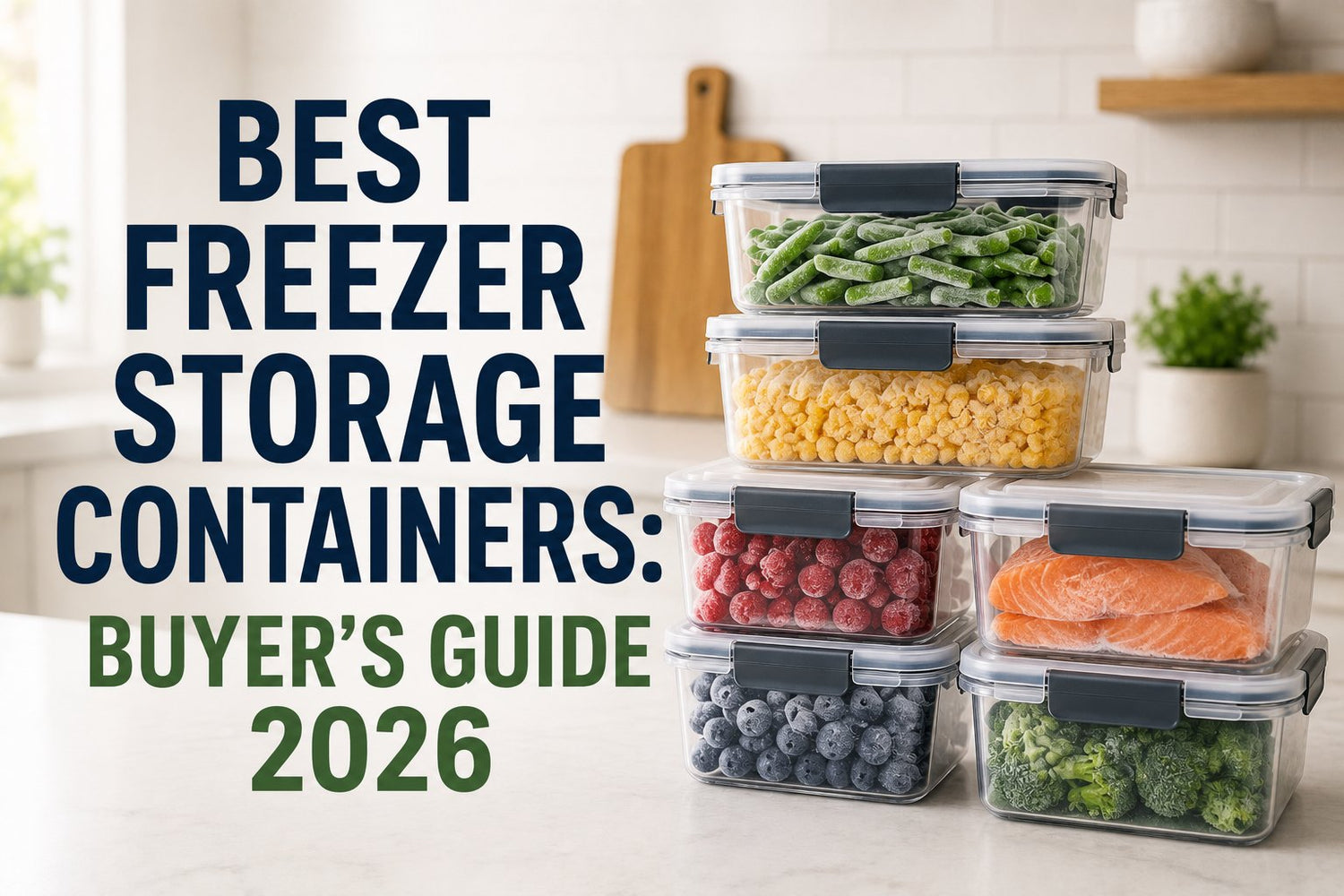
You open the freezer to pull out dinner and find three problems at once. A cracked container with frozen soup welded to the shelf, a stack of lids that don't match anything, and one mystery block wrapped so badly you can't tell whether it's chilli, curry, or something you meant to throw out months ago.
That mess usually isn't a food problem. It's a system problem.
Good freezer storage containers don't just hold leftovers. They control portion size, reduce waste, make stacking easier, and help food thaw in a way that still tastes worth eating. For busy households and small businesses, that matters more than whether a container looks tidy in a photo. If your freezer is already overfilled, start by fixing the layout before you buy anything else. A practical guide to how to organize a freezer pairs well with the container decisions below.
Table of Contents
- End Freezer Chaos Before It Starts
- Choosing Your Container Material
- Features That Matter Beyond The Box
- Sizing and Portioning For Perfect Meals
- Mastering Freezer Labelling and Organization
- Home Kitchen Needs vs Business Operations
- Your Simple Freezer Container Buying Checklist
End Freezer Chaos Before It Starts
Most freezer frustration starts with good intentions. Someone cooks a double batch of pasta sauce, scoops the extra into whatever container is clean, pushes it behind the ice cream, and promises they'll use it soon. Weeks later, the lid has popped, frost has crept in, and nobody trusts what's inside.
I've seen the same pattern in family kitchens, shared rentals, and small food businesses. The wrong container gets blamed, but the bigger issue is that people store food without deciding three things first: what portion they need, how the food will be reheated, and where it will live in the freezer.
A working freezer system is simple
A useful setup usually has only a few container roles:
- Meal containers for complete single or family portions
- Ingredient containers for chopped veg, stock, cooked grains, and proteins
- Short-term overflow containers for leftovers you'll use soon
- Flat storage for sauces, marinades, and foods that freeze better in thin layers
When those jobs are clear, buying gets easier. You stop looking for one perfect container and start building a system where each format does one job well.
Practical rule: If you don't know how you'll thaw and use the food, don't freeze it yet.
What usually fails first
The biggest mistakes are boring, but they're the ones that waste food.
- Oversized containers: A small amount of food in a big tub leaves too much air around it.
- Bad lids: A loose seal turns leftovers into freezer burn.
- Random shapes: Tall round tubs look harmless but waste shelf space.
- No labels: Unlabelled food becomes freezer archaeology.
A well-run freezer should feel more like a file drawer than a dumping ground. You should be able to see categories, pull one thing out without causing an avalanche, and know what needs using first. That's what good freezer storage containers buy you. Not prettiness. Control.
Choosing Your Container Material
Material matters, but not in the simplistic “glass good, plastic bad” way people often frame it. The right choice depends on what you freeze, how often you use it, who handles it, and whether the container has to go from freezer to microwave, oven, or sink without drama. If you want a broader side-by-side look at household food storage trade-offs, this comparison of glass vs plastic food storage containers is a useful companion.

Plastic for speed and volume
Plastic is still the easiest option for many households. It's light, usually easy to stack, and less stressful to hand to kids, guests, or staff. For weekly meal prep, that convenience is real.
The trade-off is wear. Some plastics stain, some hold odours, and some lids warp before the container does. In a busy kitchen, the failure point is almost always the lid edge or the tab, not the base.
Plastic works best for:
- Batch-cooked meals you'll rotate regularly
- Prepared ingredients like cooked rice or diced chicken
- Busy households where dropped containers are part of life
Glass for durability and clean taste
Freezer-safe tempered glass is excellent for foods that stain or carry strong aromas. Tomato sauce, curries, braises, and stock all behave well in it because the surface doesn't absorb much. It also makes leftovers visible, which sounds minor until you realise how often hidden food gets forgotten.
The limits are obvious. Glass is heavier, it takes up more weight in a packed freezer, and it punishes careless filling or sudden temperature swings.
Regular glass jars break easily at freezer temperatures. If you freeze in glass, use freezer-safe options and leave room for expansion.
Silicone for awkward shapes and liquids
Silicone has become popular because it bends, collapses, and stores neatly when empty. It can be useful for sauces, soups, smoothie packs, and odd-shaped freezer gaps where rigid containers waste space.
Its weak points are practical rather than dramatic. Some people notice lingering odours, and flexible walls can make it less pleasant to carry or stack when full.
Bags for flat storage
Freezer bags still earn their place. They're often the smartest choice for marinades, chopped fruit, stock portions, and anything you want to freeze flat. Flat packets thaw faster and file upright once frozen.
A product such as AS SEEN ON TV 8-Piece Green Fresh Food Bags - 80426 fits more into produce storage than deep freezing, but its reusable design, wide-seal zipper closure, and focus on extending produce freshness show why many households keep bag-style storage in the same overall system.
A quick side-by-side view
| Material | Where it works well | Main drawback |
|---|---|---|
| Plastic | Everyday meal prep, family use, lighter loads | Can stain, warp, or hold smells |
| Glass | Sauces, soups, reheating, non-reactive storage | Heavy and breakable |
| Silicone | Liquids, flexible storage, awkward spaces | Can be floppy and hold odours |
| Freezer bags | Flat freezing, bulk portions, marinades | Less protective than rigid containers |
The best setup usually mixes materials. Rigid containers handle structure. Bags handle flat storage. Glass handles foods you don't want sitting in plastic. Silicone fills the gaps.
Features That Matter Beyond The Box
Container material gets most of the attention. Daily usability comes from the details. A mediocre container with a secure lid and stable shape often outperforms a premium container that slides, leaks, or stacks badly.

If airtight sealing is your main concern, a guide to airtight food storage containers helps narrow what to look for in lid design.
Lids decide whether food survives
A freezer container can be thick, handsome, and expensive, then fail because the lid doesn't seal properly. That's why I test lids first.
Look for:
- A seal you can trust: Press-on lids are fine for some dry items, but liquids and long freezer storage need a firmer closure.
- Corners that stay down: If one corner pops up every time the container is full, it won't improve in the freezer.
- Lids that are easy to close properly: If sealing takes two hands and a perfect angle, people won't do it consistently.
What doesn't work well is the lid that feels secure empty and unreliable once the container is cold or packed tightly.
Shape affects more than appearance
Square and rectangular freezer storage containers usually make better use of shelf space than round ones. They sit flush, stack more predictably, and reduce dead space between containers.
Rounds still have uses. They're comfortable for soups, stocks, and leftovers that are stirred or poured. But for a crowded upright freezer, rectangular containers usually create a cleaner grid.
A freezer works better when containers make straight lines. Wasted gaps become wasted food storage.
Stackability is not a bonus feature
If a container's base doesn't sit securely on the lid below it, you'll feel that failure every week. Wobbly stacks slow you down and make people avoid using what's underneath.
A reliable freezer container should have:
- A flat, stable lid
- A base that nests without sliding
- Enough rigidity to hold weight when full
Small features that help in real kitchens
Some details sound minor but matter a lot in practice:
- Clear walls: You can identify contents without opening every lid.
- Write-on surfaces: Helpful for dates and contents.
- Consistent sizing within a set: Easier to stack and easier to store when empty.
- Lid interchangeability: Less rummaging through a drawer of mismatches.
The best freezer storage containers aren't the ones with the longest feature list. They're the ones that stay easy to use when you're tired, in a rush, and trying to get dinner put away before bedtime.
Sizing and Portioning For Perfect Meals
A freezer container should fit the food, not the other way around. That's where many systems fall apart. People buy a large, matching set, then use the same tub for stock, berries, pasta bake, chopped herbs, and one leftover portion of stew. Freezing becomes inefficient before the container ever reaches the shelf.
For fruits and vegetables, the clearest rule comes from the National Center for Home Food Preservation guidance on freezing containers. It states that foods should not be frozen in containers larger than one-half gallon because larger volumes freeze too slowly for satisfactory texture and safety. The same guidance also supports leaving 3/4 inch of headspace in freezer-safe glass containers to allow for expansion and help prevent cracking.
Why smaller portions freeze better
Freezing isn't just storage. It's a race to get food cold enough, fast enough, while preserving structure. Large masses of food cool slowly at the centre. That hurts texture, and with some foods it also raises safety concerns.
For practical home use, that means:
- Single servings are easier to thaw on busy nights
- Medium family portions work better than one giant batch
- Thin, flat portions often freeze more evenly than deep ones
If you run a small business, these same choices also improve consistency. Staff can pull one standard portion instead of hacking away at a frozen block.
Headspace is not optional with glass
Liquids expand as they freeze. That expansion needs somewhere to go. When a glass container is filled too high, pressure builds against the walls and weak points near the top.
The rule I trust is simple. In freezer-safe glass, leave 3/4 inch of headspace for liquids. Don't guess. Measure it a few times and you'll quickly learn what a safe fill line looks like.
Hot soup in a full glass jar is a common mistake. Cool it first, then fill below the safe line, then freeze.
A better way to match size to food
Use this kind of logic instead of buying by set size alone:
| Food type | Better container choice | Why it works |
|---|---|---|
| Soup or stock | Medium rigid container or bag | Easier filling and cleaner thawing |
| Pasta sauce | Small or medium rigid container | Portion control, less air exposure |
| Cooked grains | Smaller rectangular tubs | Stack neatly, easy to scoop out |
| Marinated meat | Flat freezer bag | Faster freezing, easier storage |
| Berries and chopped veg | Smaller rigid containers | Better portioning, less crushing |
If you need help matching formats to household use, this guide to food storage container sizes can help you sort out what belongs in each size range.
The result is better than a tidy shelf. Food freezes faster, stacks better, and comes out in amounts you'll use.
Mastering Freezer Labelling and Organization
Freezer failures usually happen on a rushed weeknight. You grab a container, the lid is frosted over, the label has fallen off, and now you are guessing whether it is chili, pasta sauce, or curry. A good freezer system prevents that moment. It helps you portion, find, rotate, thaw, and use what you froze.

Label for your tired future self
A freezer label should answer three questions in seconds:
- What is it
- When was it frozen
- How much is inside
That third line saves more trouble than people expect. “Soup” is vague. “Tomato soup, 2 servings” is usable. “Chicken stock, 500 mL” is better if you cook from the freezer often or run a small operation where staff need quick answers.
I stick with methods that survive cold, moisture, and repeat handling:
- Painter's tape and permanent marker for rigid containers
- Direct writing on freezer bags
- Dissolvable or wash-off labels for containers that cycle in and out constantly
Date format matters too. Use one format every time, such as 2026-06-29 or 29 Jun 2026. Mixed formats create mistakes, especially in shared freezers.
Organize by how food gets used
Ingredient-only categories sound tidy, but they often fail in real kitchens. The better system is based on access.
Set up zones such as:
- Ready-to-eat meals at eye level or near the front
- Meal components like rice, cooked beans, and sauces in one section
- Raw meat and seafood in a separate lower bin or dedicated side
- Baking items, broth cubes, and extras in the least convenient space
That layout works because it matches real behavior. The foods you reach for most stay accessible. The foods that need more care stay contained.
For a shared kitchen or higher-volume setup, standard bins and repeatable container sizes make this much easier to maintain. Buying from a reliable source of wholesale kitchen supplies also helps if you need matching containers, tape, markers, and backup lids instead of a random mix.
Here's a simple visual walkthrough that supports the same habit-building approach:
Use FIFO in a way people will actually keep doing
FIFO means first in, first out. At home, that usually means older food goes to the front and new batches go behind it. In a small business, it means the same rule, just with less room for sloppiness.
Chest freezers need extra help because food disappears under newer layers. Bins, milk crates, or upright dividers solve that problem fast. Upright freezers need shelf discipline. Give each shelf a job and resist the habit of stuffing overflow wherever it fits.
A clear label still fails if older meals get buried under this week's batch cook.
Keep an inventory short enough to survive real life
Perfect freezer inventories rarely last. Short ones do.
Track the items that cost money, time, or dinner plans if they go missing:
- Prepared meals
- Raw proteins
- Batch-cooked staples
- High-value items like stock, sauces, and specialty ingredients
A whiteboard on the freezer, a note on the fridge, or a shared phone list is enough for many households. Small businesses may need a printed sheet clipped nearby so anyone opening the freezer can update it in seconds.
The goal is not a pretty spreadsheet. The goal is fewer mystery containers, less waste, faster meal decisions, and safer handling from freezing through thawing.
Home Kitchen Needs vs Business Operations
Open a family freezer on Sunday night and the problem is usually speed. Open a prep freezer in a small catering business, rental kitchen, or café, and the problem is repeatability. Both need containers that survive freezing, stacking, and thawing. The difference is what failure costs.
At home, a cracked lid or odd container size creates irritation and wasted space. In a business setting, the same mistake turns into inconsistent portions, unclear dating, longer prep time, and food that gets thrown out because nobody trusts it.
What works in a home kitchen
Households usually need a mixed system, not a fully standardized one. A good home setup has to handle soup, stock, marinated meat, chopped fruit, lunch portions, and the occasional half-batch of leftovers without turning the freezer into a pile of mismatched lids.
The best home systems usually prioritize:
- A small range of useful sizes instead of a giant variety pack
- Containers that one hand can open and close while the other holds food or a tray
- Shapes that stack well in tight freezers and fit real portions
- Materials matched to the job, such as flexible silicone for sauces, sturdy plastic for daily use, and glass only where breakage risk is low
Glass often works well for upright freezers with stable shelves and predictable handling. It is less forgiving in crowded chest freezers, shared kitchens, or homes where containers get pulled out fast and knocked together. Plastic-free storage sounds simple until a frozen glass container chips on the rim or cracks because it was overfilled. That is why the right question is rarely "glass or plastic?" It is "what food is going in, how often will it be handled, and who is using it?"
What businesses need to standardize
Small businesses need fewer variables. If two or five people are portioning and storing food, container choice has to support speed, consistency, and cleaning without constant explanation.
I would focus on four things first:
- Uniform sizes that match your actual menu portions
- Lids and bases that are easy to pair quickly
- Surfaces that are easy to inspect after washing
- A replacement plan so worn lids do not stay in circulation too long
That last point gets ignored. In home use, people tolerate a container that seals "well enough." In business use, weak seals, warped lids, and stained gaskets create avoidable risk.
For teams buying in volume, a practical starting point is a supplier reference that covers wholesale kitchen supplies. It helps narrow choices by use case instead of buying whatever looks sturdy in a product photo.
Safety and handling standards are stricter for commercial storage
Commercial cold storage follows a higher standard because the environment is harder on both food and equipment. In California, Title 8, Section 514 of the California Code of Regulations sets requirements for refrigerated storage construction, including support and insulation details.
That regulation applies to refrigerated storage structures, not the average stack of meal prep tubs. The bigger lesson still applies. Business freezers should be set up for durability, controlled handling, and easy cleaning. Container systems should support that same discipline, especially if staff rotate, volume changes week to week, or frozen inventory directly affects service.
Your Simple Freezer Container Buying Checklist
Open a crowded freezer on a Wednesday night and the weak points show up fast. One lid has shifted, two containers will not stack, the soup is frozen into a shape that will not thaw evenly, and nobody remembers what is in the unlabelled tub at the back. A good buying checklist prevents those failures before the first batch goes in.

The shopping test that works in real life
I buy freezer containers the same way I evaluate shelving or prep tools. I look for the point where the system is likely to fail. Material matters, but it is only one part of the decision. The better question is whether the container will survive freezing, stacking, washing, reheating, and repeat handling without creating extra work.
Use this quick check before you buy:
- Match the material to the job: Glass works well for make-ahead meals that go from freezer to fridge to oven, but it needs headspace and careful handling. Silicone is flexible and useful for awkward spaces, though some styles tip or collapse when filled. Plastic is often the easiest for high-volume freezing because it is lighter and less likely to break.
- Test the lid first: If it feels awkward, loose, or overly stiff in your hand, that problem gets worse when the container is cold or wet.
- Check how the base sits: Flat, stable bases stack better and reduce sliding in a packed freezer.
- Choose sizes you will fill: Half-full containers waste freezer space and often lead to more frost and poorer texture.
- Favor square or rectangular shapes: They store more cleanly than round containers and make portion planning easier.
- Inspect the interior: Deep grooves, cloudy plastic, fixed gaskets, and tight corners are the places where residue, odors, and stains stay behind.
One more filter helps. If the container is hard to fill, hard to seal, and hard to label, it does not belong in a serious freezer system, even if it looks durable on the shelf.
Safety checks that deserve more attention
Plastic-free options get a lot of attention, but the main issue is daily handling. Glass can crack if it is overfilled, frozen too quickly, or moved from freezer to heat without thawing. Silicone avoids breakage, but some lids seal less firmly than rigid containers, which matters for liquids and long storage. For home cooks and small food businesses, the safer choice is usually the one that matches the product, the handling routine, and the people using it.
Food-safe construction and easy cleaning still matter, especially in shared kitchens or any setup with frequent reuse. As noted earlier, third-party certification can be a useful sign that a container is made for repeated food contact and thorough cleaning. It should support the buying decision, not replace a hands-on check of the seal, shape, and surface.
A short final filter
If a container passes these questions, it is usually worth considering:
| Question | If yes | If no |
|---|---|---|
| Does it seal securely? | Keep considering it | Put it back |
| Will it stack without sliding? | Good sign | Expect frustration |
| Is the size realistic for your portions? | Useful purchase | Likely wasted space |
| Is it easy to clean thoroughly? | Better for repeat use | Odours and residue may build |
| Is it clearly freezer-safe? | Suitable candidate | Don't guess |

Leave a comment
This site is protected by hCaptcha and the hCaptcha Privacy Policy and Terms of Service apply.