


Shoppers often go about buying eco friendly kitchen appliances the wrong way. They chase the ENERGY STAR sticker, compare a few shiny features, and call it a responsible purchase. That's too shallow. An eco-friendly appliance earns that label only if it uses less energy in real use, lasts long enough to justify its materials, and doesn't create a disposal problem the moment a smarter, flashier replacement appears.
That's especially true in places like California, where appliance policy and high electricity prices change the math fast. California's average residential electricity price was about 31.77 cents per kWh in 2024, so small efficiency differences matter more there than they do in cheaper-power regions (California electricity price context). In Canada, the key isn't just the badge on the door, it's the annual kWh figure on the label and how that appliance fits your actual household load (NRCan and ENERGY STAR framework overview).
Table of Contents
- What Truly Makes a Kitchen Appliance Eco Friendly
- Decoding Energy Labels and Certifications
- Calculating Real Savings and Payback Periods
- Buying and Sizing Guidance for Common Kitchen Appliances
- Maintenance Routines That Preserve Efficiency
- Incentives, Rebates, and Considerations for Renters and Property Managers
- Making Confident Decisions with GrifGlo's Guides and Tools
What Truly Makes a Kitchen Appliance Eco Friendly
An ENERGY STAR label is a good start, not the finish line. If you stop there, you can still buy an appliance that wastes resources through a short lifespan, a poor repair record, or a refrigerant choice that creates a bigger environmental burden than the electricity savings ever offset.

The six-part test I use with buyers
Think about appliance shopping like buying a car. Nobody sensible picks a vehicle only because the sticker price looks fine. You also care about fuel use, repair bills, resale value, and how long it will stay on the road. Kitchen appliances deserve the same lifecycle thinking.
The first dimension is operational energy. That's the obvious one, and it matters most when an appliance runs every day, like a refrigerator or dishwasher. The second is water use, which is just as important for dishwashers and some cooking products. The third is materials and manufacturing impact, which covers the embodied cost of making the appliance in the first place.
Practical rule: If an appliance saves a little electricity but gets replaced early because parts are hard to find, it's not a clean win.
The fourth dimension is repairability. Simple machines with accessible parts often outperform heavily electronic models over time because they stay in service longer. The fifth is refrigerant choice for cooling appliances, because refrigerants affect climate impact beyond day-to-day power use. The sixth is end-of-life disposal, including whether parts can be recycled or whether the unit becomes waste.
Why premium smart models can be the worse green choice
Smart features sound efficient, but they don't automatically reduce footprint. Extra screens, sensors, and connected functions can mean more parts to fail and more reasons for a household to replace the appliance early. In other words, a premium model can look advanced while increasing waste.
Durability beats novelty. A simpler refrigerator, dishwasher, or cooktop that lasts longer and gets repaired instead of replaced often creates a better environmental outcome than a feature-heavy model with a shorter service life. That's not theory, it's common-sense lifecycle accounting.
Use this checklist before you buy. Ask whether the unit reduces running energy, uses sensible materials, can be repaired, avoids disposal headaches, and fits your actual household use. If it fails two or more of those tests, it's probably not as eco-friendly as the marketing claims suggest.
Decoding Energy Labels and Certifications
Labels only help if you know what they're really saying. Too many shoppers treat all ratings as interchangeable, then wonder why two similar appliances perform very differently in the kitchen. The trick is to read labels as comparison tools, not as trophies.

What the major labels actually tell you
In Canada, NRCan's EnerGuide and ENERGY STAR framework lets buyers compare annual electricity use in kWh, which is the number that matters most when you want to estimate running cost (Canadian label framework overview). That same framework is used to identify refrigerator, dishwasher, and cooking products that materially reduce operating energy and water use versus standard models (Canadian label framework overview).
In the U.S., ENERGY STAR serves a similar purpose, but don't confuse certification with automatic low cost. A larger certified appliance can still use more total energy than a smaller non-certified unit if the capacity is oversized for the household. That's why the label has to be read alongside size, layout, and usage pattern.
Refrigerant codes matter too, even when shoppers overlook them. Older cooling systems may rely on more problematic refrigerants, while newer options can be better choices from a climate perspective. You don't need to memorise every code, but you do need to ask what coolant the appliance uses if you're comparing refrigerators or freezers.
How to compare labels without getting fooled
A quick comparison framework helps:
| Label or code | What it helps you compare | What to watch for |
|---|---|---|
| ENERGY STAR | Efficient operation against a federal benchmark | Capacity can still distort real-world use |
| EnerGuide | Annual electricity use in kWh | Compare models of similar size first |
| EU Energy Label | Broad efficiency class across appliance types | Class alone doesn't tell you household fit |
| Refrigerant code | Cooling system type | Lower-impact operation doesn't solve poor durability |
Buy for fit first, then for efficiency. Oversizing is one of the easiest ways to waste money and energy at the same time.
If you're shopping across regions, compare the annual kWh figure, the appliance size, and the likely household load. For Canadian shoppers focused on smaller units, this compact dishwasher guide for Canada is a useful example of how size and label reading should work together.
Calculating Real Savings and Payback Periods
An efficient appliance only makes sense if the savings justify the premium. That's the part most guides skip. They talk about greener choices in the abstract, but your bill is paid in local rates, not in labels.
The simple formula that keeps you honest
Use this formula for any appliance:
Annual kWh difference x local electricity rate = yearly savings
Then divide the upfront price premium by the yearly savings to estimate the payback period. That won't capture every variable, but it gives you a clean decision frame instead of a marketing impression.
In California, the average residential electricity price was about 31.77 cents per kWh in 2024 (California rate context). That makes efficiency upgrades easier to justify than they would be in a lower-cost market, especially for appliances that run constantly. It also means the same model can have a very different payback profile depending on where you live.
| Appliance Upgrade | Typical Annual kWh Savings | Estimated Payback Period |
|---|---|---|
| Refrigerator replacement with a more efficient, right-sized model | Varies by use and model choice | Depends on local rate and price premium |
| Switching from gas or resistance cooking to induction | Varies by cooking habits | Depends on cook frequency and purchase cost |
| Upgrading to a more efficient dishwasher | Varies by household dish volume | Depends on load size and local rate |
Why refrigerator shape and size matter more than people think
A refrigerator can account for as much as 15% of a home's total energy use, so this is the appliance category where bad sizing hurts most (refrigerator energy-use guidance). Top- or bottom-freezer models use 7% to 13% less energy than side-by-side models, which makes configuration a real efficiency decision, not just a style choice (refrigerator configuration guidance).
That also means right-sizing matters. A larger unit than you need costs more up front and usually costs more to run. If you're not sure what your current kitchen is using, a home energy monitor can help you identify which appliances deserve attention first.
Don't pay for capacity you won't fill. You're buying storage, but you're also buying ongoing electricity and future disposal.
A practical decision rule
For a premium model to be worth it, the yearly savings should be obvious enough that you'd still choose it if your household changed slightly. If the payback only works under perfect conditions, it's a weak purchase. In that case, a simpler efficient model with a lower price premium usually wins.
Buying and Sizing Guidance for Common Kitchen Appliances
Different appliances fail the eco-friendly test in different ways. A refrigerator wastes energy when it's oversized. A dishwasher wastes water when it's used badly or spec'd badly. Cooking equipment can waste either electricity or heat, depending on the technology. Buy each category for its actual job.

Refrigerators and dishwashers
For refrigerators, I recommend top-freezer or bottom-freezer layouts before side-by-side models whenever the kitchen layout allows it. The energy guidance is consistent on this point, and the configuration difference is measurable (refrigerator efficiency guidance). Match the capacity to the number of people you feed, not to a fantasy of bulk storage.
For dishwashers, focus on annual electricity use and water performance together, not one or the other. The Canadian ENERGY STAR framework is built to highlight models that reduce both operating energy and water use versus standard products (Canadian appliance label guidance). A compact model can be the right choice when a full-size unit would sit half empty most of the week.
Cooktops, ovens, and ventilation
Induction cooktops are the best choice if your goal is efficient energy transfer. They send energy directly to the pan instead of heating surrounding air, which makes them more efficient than resistance or gas cooking in normal use (induction comparison guidance). That said, the right choice still depends on your cookware and how often you cook.
Ovens deserve a more restrained approach. If a household rarely bakes, a huge dual-oven setup can be a waste of space and materials. If you do need that format, this electric stove with double oven guide shows how to think about capacity without drifting into unnecessary oversizing.
Range hoods matter too. A hood that's badly matched to the kitchen can be loud, inefficient, and useless at controlling cooking by-products. Choose one that fits the room and vents properly rather than one that just looks powerful on paper.
Small appliances and storage helpers
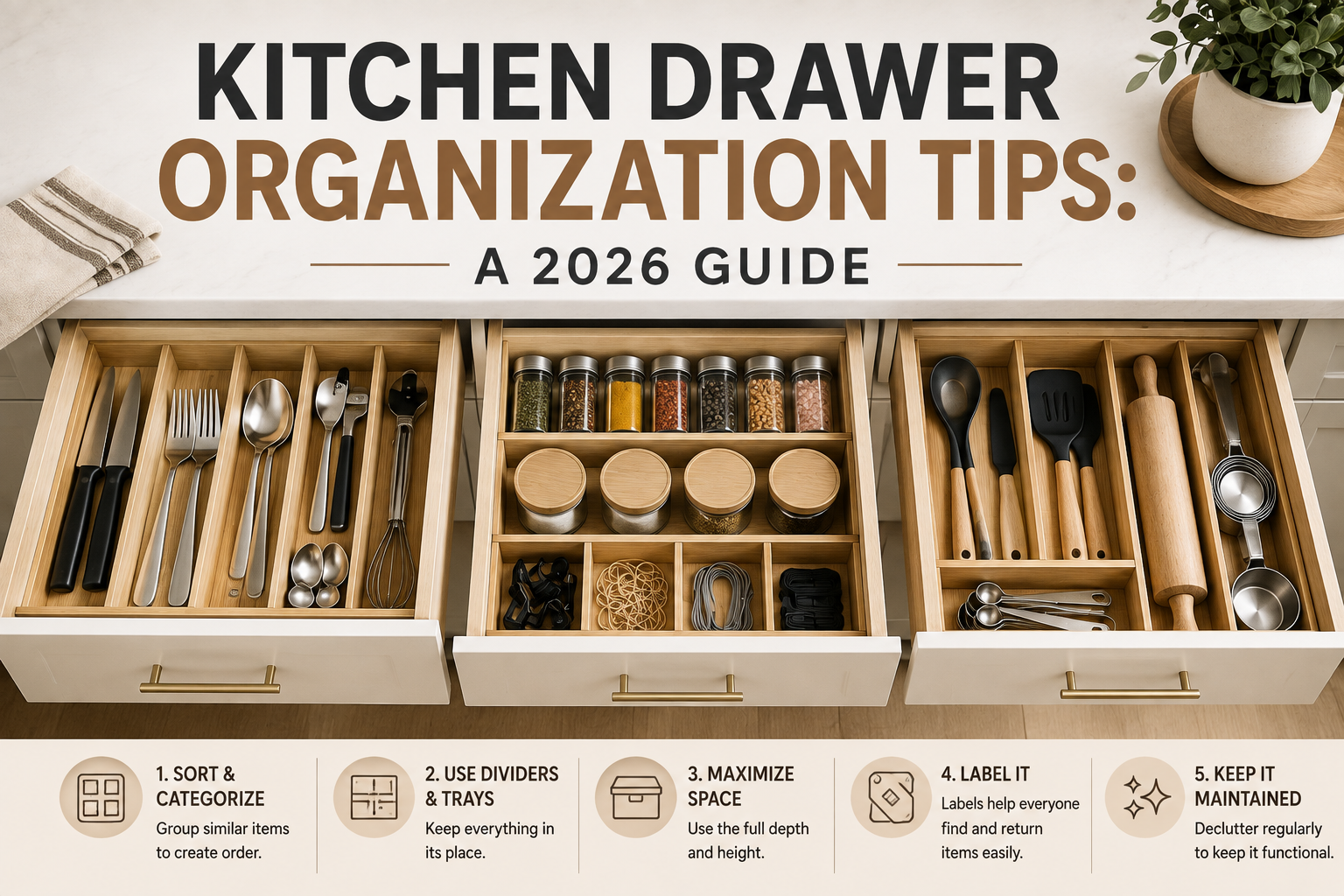
Smaller appliances often save energy by doing less. An insulated kettle, a right-sized toaster, or a compact coffee maker can beat a larger do-everything countertop unit if it matches your routine. The same logic applies to organisation. A Magnet Shelf Rack for Refrigerator - Kitchen Organizer is a storage accessory with a side hanging magnetic shelf, a stable tray for seasoning bottles, a middle hook for paper towels, and a bottom wooden rail for towels and tools, which can reduce clutter around the fridge without adding another powered device.
A tidy kitchen is part of energy efficiency. When the layout is chaotic, people default to convenience purchases and waste more in the long run.
Maintenance Routines That Preserve Efficiency
The greenest appliance is the one you keep running well. Neglected maintenance eats efficiency, shortens service life, and pushes households into premature replacement. That's bad for utility bills and bad for waste.

Refrigerator and dishwasher care
For refrigerators, clean condenser coils on a regular schedule, check the door seals, and keep temperature settings sensible. Dirty coils force the compressor to work harder, and weak seals let cold air leak out. Those are boring failures, but they're expensive over time. If your unit uses a replaceable filter, follow the manufacturer schedule rather than stretching it out; this refrigerator water filter replacement guide is a good reminder that small components affect both performance and longevity.
Dishwashers need filter cleaning and spray-arm inspection. If the filter clogs, cleaning quality falls and cycles often get repeated, which wastes water and energy. Rinse aid can also help with drying performance, which reduces the temptation to rerun loads just because dishes look damp.
Practical rule: If a cycle has to be repeated, the appliance has already failed the efficiency test.
Ovens, cooktops, and ventilation
Ovens should be calibrated if temperatures drift. A poorly calibrated oven can encourage overcooking, longer run times, and extra preheating. Gas burners need cleaning so flames stay even, while induction surfaces need simple, careful cleaning so cookware contact stays consistent.
Range hoods deserve attention too. Clean or replace filters when they're loaded with grease, and keep ducting clear if the hood vents outside. A hood that's blocked does less with the same power draw, which is a bad trade.
Maintenance habits that pay back quickly
- Refrigerator seals: Test for leaks periodically and replace worn gaskets promptly.
- Dishwasher filters: Clean them before buildup starts affecting wash performance.
- Oven calibration: Check accuracy when meals start cooking unevenly.
- Cooktop surfaces: Keep them clean so heat transfer stays direct and reliable.
- Range hood filters: Wash or replace them before airflow drops.
You do not need a complicated schedule. You need a consistent one. Ten minutes of care beats a thousand dollars of avoidable waste.
Incentives, Rebates, and Considerations for Renters and Property Managers
The sticker price isn't the whole bill. Incentives, rebates, and property-level purchasing decisions can move an appliance from “too expensive” to “obviously worth it.” Ignore those levers and you'll leave savings on the table.
Where the money help usually comes from
Look for three categories of support: federal programs, state or provincial rebates, and utility instant rebates. The exact offers change by region, so the right move is to check current local listings before you buy. If you're in California, utility rate pressure makes rebates especially useful because they shorten the payback period on efficient models. In Canada, the EnerGuide and ENERGY STAR framework already gives buyers a solid comparison base, so rebates often become the final nudge rather than the main decision driver (Canadian label framework overview).
Renters, landlords, and portfolio buyers
Renters usually can't replace major appliances without permission, so the smart play is to make a case around operating cost, maintenance, and replacement risk. Property managers should think in portfolios, not individual units. Standardising on reliable, efficient appliances lowers the number of service calls and makes parts management simpler.
Short-term rental hosts face a different problem. Guests expect convenience, but complicated smart appliances are often the first thing to get misused. Simpler efficient models usually create fewer headaches because they're easier to explain and harder to break.
For landlords and hosts, repairability often matters more than the latest feature set.
If you're organising a multi-unit purchase, GrifGlo also supports business and bulk purchasing, which helps teams structure sourcing through reliable channels instead of scattering orders across random storefronts. That matters when you need consistency more than novelty.
Making Confident Decisions with GrifGlo's Guides and Tools
A good purchase comes from a clear sequence, not from scrolling until you feel tired. Start with the six-part eco-friendliness test, check the label, estimate local running cost, and then ask whether the appliance fits the kitchen and the household. That's the decision path that avoids regret.
GrifGlo groups home and kitchen purchases into clearer categories, so you can compare options without wading through an endless catalogue. Its kitchen essentials list is useful when you want to organise a purchase around real use, not hype. The same logic applies to appliances, especially when you're trying to balance efficiency, durability, and everyday convenience.
If you're comparing models, use the product specs to check three things first. Annual energy use, size fit, and repair-minded design tell you more about real eco performance than glossy feature names ever will.
If you want a cleaner, lower-waste kitchen without making a bad premium purchase, use GrifGlo as a starting point and compare appliances the hard way, by fit, durability, and running cost. Visit GrifGlo to review practical guides, organise your shortlist, and make your next kitchen purchase with fewer surprises.


Laisser un commentaire
Ce site est protégé par hCaptcha, et la Politique de confidentialité et les Conditions de service de hCaptcha s’appliquent.