

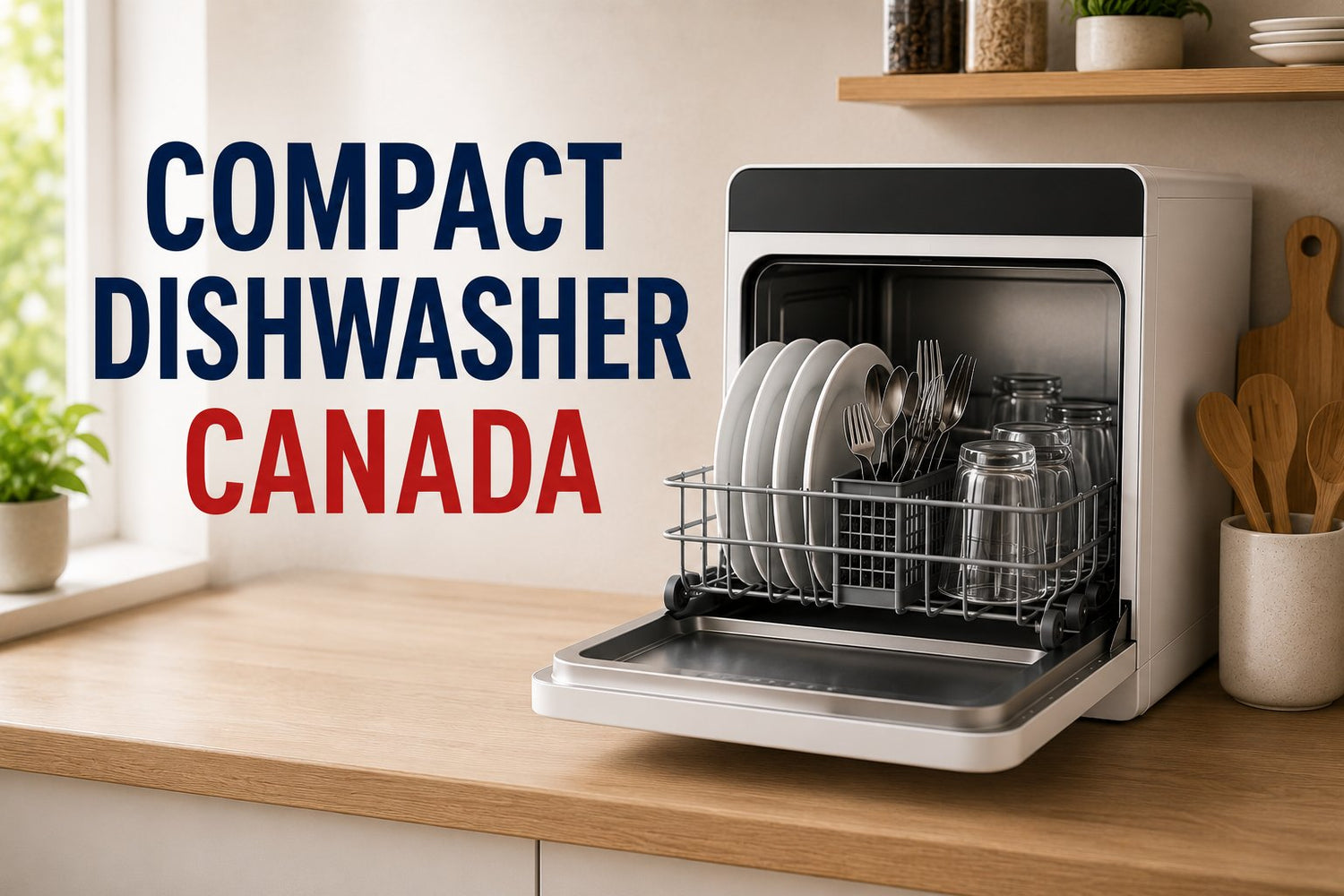
You're probably here because your kitchen is doing too much with too little space. The sink fills up fast, the drying rack takes over the counter, and a full-size dishwasher feels unrealistic in a condo, apartment, basement suite, or older Canadian home with tight cabinetry.
A compact dishwasher can solve that. But in Canada, the right choice depends on more than width. You need to think about EnerGuide labels, faucet compatibility, condo rules, electrical access, and where Canadian retailers stock these models. A unit that looks perfect online can still be the wrong fit if your tap won't accept an adapter or your cabinet opening is off by even a small margin.
This guide is built for practical buying decisions, not brochure language. It's for renters who need a non-permanent setup, owners trying to fit an 18-inch machine into an older kitchen, and anyone comparing whether a smaller dishwasher is worth it in daily use. If you're also reworking the rest of a tight kitchen, this kitchen essentials list for compact, functional setups is a useful companion.
Table of Contents
Your Guide to a Cleaner Small Kitchen
Small kitchens create a specific kind of friction. You can cook just fine, but cleanup becomes the bottleneck. That's especially true when the sink doubles as prep space and there's nowhere to leave dishes without making the whole kitchen feel crowded.
A good compact dishwasher fixes more than washing. It can free the counter, reduce visual clutter, and make a one-wall or galley kitchen easier to use every day. In practice, that matters as much as the cleaning itself.
What trips people up is assuming all compact models solve the same problem. They don't. Some are best for renters because they connect temporarily to the faucet. Some make sense only if you already have the right cabinet opening and plumbing. Others look convenient on paper but are frustrating if your household generates more dishes than the machine can handle comfortably.
Practical rule: Buy for your actual dish volume and installation limits, not for the smallest footprint alone.
The strongest compact dishwasher Canada purchase is usually the one that matches your kitchen routine. A person living alone in a downtown condo may do well with a countertop unit. A couple in a small house may outgrow that quickly and be happier with an 18-inch built-in. A renter who moves often may want a rolling portable model because it avoids permanent changes.
Three questions usually decide the direction:
- How much room do you really have. Counter space, floor space, and door swing all matter.
- Can you make a permanent connection. Renters often can't, and many shouldn't try.
- Do you need daily convenience or occasional relief. Some units are ideal for steady use. Others work better as a small-load solution.
The Three Types of Compact Dishwashers
Small kitchens force clearer choices. In Canada, compact dishwasher shopping usually comes down to three formats: countertop, portable rolling, and 18-inch built-in. Each solves a different space problem, and each creates a different compromise in capacity, setup, and daily convenience.
Countertop models
Countertop units are the easiest entry point. They sit on the counter, connect temporarily to the sink, and make sense for renters, condo owners, or anyone without a dedicated dishwasher opening.
Their limit is not just capacity. It is also the space they take from food prep. In many Canadian condo kitchens, that trade-off matters more than the purchase price. A compact unit that cleans a few plates well can still become annoying if it blocks the only clear section of counter beside the sink.
These models fit light dish volume best. One person, a couple who prepare straightforward meals, or a household that runs small loads regularly can make them work. If you are already short on storage below the sink, it also helps to review under-sink storage ideas for small kitchens before choosing a faucet-connected model, because hoses, adapters, and cleaning supplies compete for the same space.
Portable rolling models
Portable rolling dishwashers give you more room inside than a countertop model and avoid permanent installation. They stay on casters, park against a wall or cabinet, and connect to the faucet when you need them.
For many renters, this is the most workable middle option. You get stronger day-to-day capacity without opening cabinets or changing plumbing. The trade-off is floor space. In a galley kitchen or older apartment layout, a portable unit can make the room feel tighter, especially if the door is open while unloading.
They also ask more from the kitchen tap. Some Canadian buyers discover too late that their pull-down faucet or specialty aerator does not pair well with common portable adapters. That is not a deal-breaker, but it is a reason to check the tap style before shopping.
18-inch built-in models
An 18-inch built-in is usually the best long-term fit for homeowners and for condo kitchens that already have the right opening and connections. It sits under the counter like a full-size dishwasher, uses less width, and keeps the kitchen looking finished.
This style usually makes the most sense for households that want dishwasher convenience to feel permanent, not improvised. You do not give up counter space. You do not wheel the machine around. You load it, run it, and move on.
The compromise is upfront planning. Even in a small kitchen, built-in models need a proper cabinet opening, water supply, drain connection, and electrical access. Capacity is still lower than a standard 24-inch machine, so buyers with heavier cooking routines should be realistic about load size and cycle frequency.
If your kitchen is already handling food scraps poorly, a small-space appliance like the GE Kitchen Composter can also fit the same compact-living logic. It's a 3L-capacity kitchen composter with a smart panel and three composting modes, aimed at reducing food-waste volume in modern kitchens.
Sizing Plumbing and Installation in Canada
Installation is where many compact dishwasher plans fall apart. The machine may be compact, but the connection requirements still have to match the kitchen.

Measure the space before you shop
Start with the physical envelope, not the product page headline. In a small Canadian kitchen, the machine has to fit the room, the path into the room, and the way the door opens.
Check these first:
- Width and depth at the final location. Don't assume a “compact” unit will clear trim, baseboards, or neighbouring cabinet pulls.
- Door swing and walking clearance. A machine that blocks the only route through the kitchen becomes annoying fast.
- Sink and tap position. This matters most for countertop and portable units that need temporary water access.
If you're working with a tight sink base area too, these under-sink storage ideas for small kitchens can help you think through hose routing, cleaning supplies, and how much usable space you'll lose.
Know your connection style
Canadian buyers usually land in one of two installation camps.
A temporary faucet connection is the renter-friendly route. Countertop and rolling portable models typically rely on a compatible kitchen tap plus a nearby outlet. This is the low-risk option when you can't modify cabinets or plumbing.
A permanent connection is the owner-style route. An 18-inch built-in needs a dedicated place in the kitchen layout and the right service connections. That setup feels cleaner in daily life, but it's not a casual weekend decision if the kitchen wasn't designed for it.
A dishwasher that “should fit” is not the same as one that will install cleanly.
Portable units are getting more attention partly because they avoid those permanent changes. One market outlook in the supplied planning data projects Canada's portable-dishwasher segment to roughly US$236.1 million by 2033, with 3.6% CAGR, which lines up with what many retailers already see in renter-heavy urban markets.
What renters and condo owners should check
Lease and condo rules matter as much as plumbing. A landlord may allow a temporary faucet-connected model but reject cabinet cuts, hard plumbing, or electrical changes. Condo boards can also be stricter than buyers expect, especially when water-related appliances are involved.
Run through this short checklist before ordering:
- Ask about permanent modifications. Get clear permission if any cabinet or plumbing work is involved.
- Confirm your faucet style. Some taps are easy to adapt. Others aren't.
- Check outlet access. You don't want cords stretched across the sink zone.
- Plan storage for hoses or the whole unit. Portable doesn't mean invisible.
- Think about moving day. A portable unit is easier to take with you than a built-in.
A quick visual can help if you're planning the physical setup and handoff to an installer:
Decoding EnerGuide and Performance for Canadians
A compact dishwasher that fits the kitchen still has to make sense on your utility bill.
In Canada, the starting point is the federal efficiency standard. Compact household dishwashers sold here must meet limits of no more than 155 kWh per year and no more than 7.57 litres of water per cycle, according to Natural Resources Canada's dishwasher efficiency regulations. That matters because it sets a minimum performance threshold for products sold across provinces, whether you are shopping in a big city condo market or a smaller regional store.

Compact Dishwasher Type Comparison for Canada 2026
| Feature | Countertop Dishwasher | Portable Dishwasher (Rolling) | 18-Inch Built-in Dishwasher |
|---|---|---|---|
| Best fit | Studio, apartment, very small household | Renter, condo, no built-in opening | Owner, remodel, permanent compact kitchen |
| Installation style | Temporary connection | Temporary faucet connection | Permanent plumbing and electrical |
| Space impact | Uses counter space | Uses floor space | Uses cabinet opening |
| Daily convenience | Good for light loads | Better for regular use | Best for smooth daily use |
| Moving friendliness | High | High | Low |
| Kitchen look | Functional, visible | Functional, visible | Integrated, cleaner appearance |
| Main drawback | Gives up prep area | Takes up parking space in kitchen | Harder and riskier to install if the kitchen isn't ready |
What the EnerGuide label tells you
Every new compliant unit sold in Canada should carry an EnerGuide label and the required third-party verification marking. For shoppers, that label is useful because it gives a common basis for comparing machines that may look similar online but perform differently in a real kitchen.
Focus on three things:
- Annual energy use shows the expected electricity consumption under standardized testing.
- Water per cycle helps compare operating efficiency across compact models.
- The label narrows the field. It does not tell you whether the racks fit dinner plates, baby bottles, reusable containers, or cookware you use every day.
That last point matters more than many buyers expect. I have seen shoppers choose the lowest-use model on paper, then run it more often because the capacity or rack design does not match the household.
Practical Trade-offs in Daily Use
Compact models usually save some water compared with a standard 24-inch dishwasher, but the gap is smaller than many people assume. The bigger question is load efficiency. A compact unit works well when it handles the household's normal dish volume in one cycle. If it forces a second run several times a week, the paper efficiency starts to matter less.
Capacity drives the result. Many compact dishwashers suit one or two people well. They can also work for a small family that runs disciplined loads and does not expect to wash large pots, mixing bowls, or oversized dinner plates every night.
Energy use per place setting can also be less favourable on smaller machines. Heating water, drying dishes, and running the controls all carry some fixed overhead. Shrink the tub without shrinking those demands by the same amount, and the efficiency advantage can narrow.
The practical buying rule is simple.
Choose the dishwasher size that matches how many dishes your home creates between runs.
For Canadian shoppers comparing models across retailers, that means reading more than the marketing summary. Check the EnerGuide information, then check the rack layout, cycle times, noise rating, and loading photos if the store provides them. A good product page should let you judge whether the machine saves money because it is efficient, or costs more in practice because it is too small for the job.
If you are comparing compact appliances as part of a broader small-kitchen plan, GrifGlo's guide to wholesale kitchen supplies is a useful reference for seeing how dishwashers fit alongside sinks, fixtures, and other space-limited kitchen decisions.
Where to Shop for Compact Dishwashers in Canada
Finding a compact dishwasher in Canada isn't as simple as opening one retailer site and choosing from a huge, uniform catalogue. Selection varies by region, by season, and by whether you want countertop, portable, or 18-inch built-in.
The biggest shopping mistake is picking the retailer before you pick the installation type. A store may have plenty of dishwashers overall and still carry very few compact units that fit your actual situation.
What the main retail channels are good at
Big-box appliance chains are usually the first stop for built-in models and better-known brands. They're useful if you want delivery coordination, haul-away options, or installation services. The trade-off is that compact inventory can be narrower than standard 24-inch machines.
Home improvement retailers make sense when your purchase is tied to a renovation, cabinet work, or plumbing changes. If you're pairing the dishwasher with a kitchen refresh, these stores can be practical because the rest of the install materials are already in the same buying path.
Canadian marketplace sellers and online-only appliance shops can surface more niche portable or countertop options. They're useful for renters and small-space shoppers, but you have to read return policies carefully. Appliances are harder to send back than a small kitchen tool.
For broader kitchen buying research beyond dishwashers, GrifGlo's wholesale kitchen supplies guide is relevant if you're sourcing for an office, rental unit, or multiple properties rather than a single household.
How to shop without getting stuck with the wrong unit
A retailer is only as helpful as the product detail page is accurate. Before paying, confirm these points with the seller:
- Connection method. Don't infer faucet hookup or built-in readiness from photos.
- Delivery format. Some units arrive ready for straightforward placement, while others still need extra parts or booking.
- Return terms for installed appliances. Many buyers are often surprised by these.
- Who handles service. Manufacturer service networks and store support aren't always the same thing.
A practical approach is to shortlist by type first, then compare sellers based on logistics. In compact-appliance shopping, delivery, return clarity, and installation support often matter more than shaving a small amount off the purchase price.
Our Recommendations for Every Canadian Household
A compact dishwasher that works well in a Halifax condo can be the wrong pick for a Calgary rental or a Toronto kitchen with older plumbing. The right choice depends less on the label and more on how you live, who controls the space, and how much installation you want to deal with in Canada.

For the renter in a small apartment
Choose a countertop model if your dish load is light and you have reliable counter space beside the sink. Choose a portable rolling model if you cook more often and need extra rack room without changing the kitchen permanently.
For renters, reversibility usually matters more than appearance. A unit that connects temporarily and can leave with you at move-out is easier to live with than a built-in project that needs approval, parts, and a plan for patching the space later.
I usually steer tenants away from built-ins unless the landlord is arranging the install and accepting responsibility for the unit. Even then, confirm who owns it after the lease ends.
For the condo or small-home owner
An 18-inch built-in is usually the strongest long-term fit when the kitchen already has the right opening, water access, drain point, and electrical setup. It gives you a cleaner finished look and avoids the daily routine of rolling a machine out or hooking it to the faucet.
This category suits singles, couples, and smaller households that want a permanent dishwasher without sacrificing as much cabinet space as a full-size model. The trade-off is upfront cost. In Canada, that can include delivery, installation, condo booking rules, and occasional electrical or plumbing adjustments if the suite was not set up for a dishwasher from the start.
If you are also refining how the kitchen serves and stores everyday items, this cutlery set buying guide for Canada is a useful companion for keeping a small-space setup practical.
For a small office or shared kitchen
A portable rolling dishwasher is usually the safest recommendation.
Shared kitchens are hard on appliances. People load mugs, food containers, and odd-sized items without much consistency, so a little extra capacity helps. Portable models also make more sense if the room layout changes, the office moves, or the machine needs replacement without reworking cabinetry.
The weakest fit in this setting is often the smallest countertop unit. It can work for a very light dish volume, but in a shared space it fills quickly and tends to create overflow in the sink by midday.
For the buyer focused on lower utility costs
Start with the smallest model type that still matches your real dish volume. That is usually the point where Canadians save the most over time. A machine that is too small gets run too often. A machine that is too large wastes water and power on half loads.
Built-in compact units often make the most sense for owners who will use them regularly and want quieter operation. Countertop models can still be cost-effective in smaller households, especially where buying and installing a built-in would cost far more than the savings justify.
For the buyer who wants the least hassle
Pick the model with the simplest installation your home can support.
For many renters, that means countertop or portable. For many owners, that means an 18-inch built-in sold and installed by a Canadian retailer that can also supply the connection kit, delivery, and service coordination. The best recommendation is often the one that fits the home cleanly, runs at a noise level you can tolerate, and does not turn a small-kitchen upgrade into a renovation project.
Decision Checklist and Final Shopping Tips
A compact dishwasher can solve a small-kitchen problem or create a new one. The difference usually comes down to fit, hookups, and how you live in the space.
Before you place the order, check these points:
- Measure the full route, not just the final spot. Confirm width, depth, height, door swing, and the path through condo hallways, elevators, or narrow entry doors.
- Match the unit to your plumbing reality. Countertop and portable models are often the safer choice for renters. Built-in 18-inch models usually suit owners who already have the right water and drain access.
- Read the EnerGuide label, then compare it to your usage. The better unit on paper is not always the cheaper one in practice if the capacity does not match your household.
- Buy for your real dish volume. A model that fills too fast gets run too often. A model that stays half empty wastes space and can waste utilities.
- Confirm installation responsibility before delivery day. Some Canadian retailers will deliver only. Others can arrange install, haul-away, and connection kits.
- Ask about return rules in writing. Many appliance stores tighten returns once the carton is opened or the machine has touched water.
- Check the noise rating against your layout. In a condo or studio, a few decibels can be the difference between acceptable and annoying.
One point I tell customers in store all the time: do not treat installation as a minor detail. In many Canadian condos, the buying decision is easy. Getting approval for a built-in, finding the right shutoff access, or confirming faucet compatibility is the harder part.
The best final test is simple. Pick the model that fits your kitchen, your sink setup, and your weekly dish load with the fewest compromises. If you are also trying to tighten up the rest of your cleanup routine, this guide on how to clean food storage containers is a useful companion.
If you want a simpler way to compare practical home and kitchen buys, GrifGlo organises decision-friendly guides, sizing advice, and curated essentials so you can narrow options faster and choose with more confidence.


Leave a comment
This site is protected by hCaptcha and the hCaptcha Privacy Policy and Terms of Service apply.