

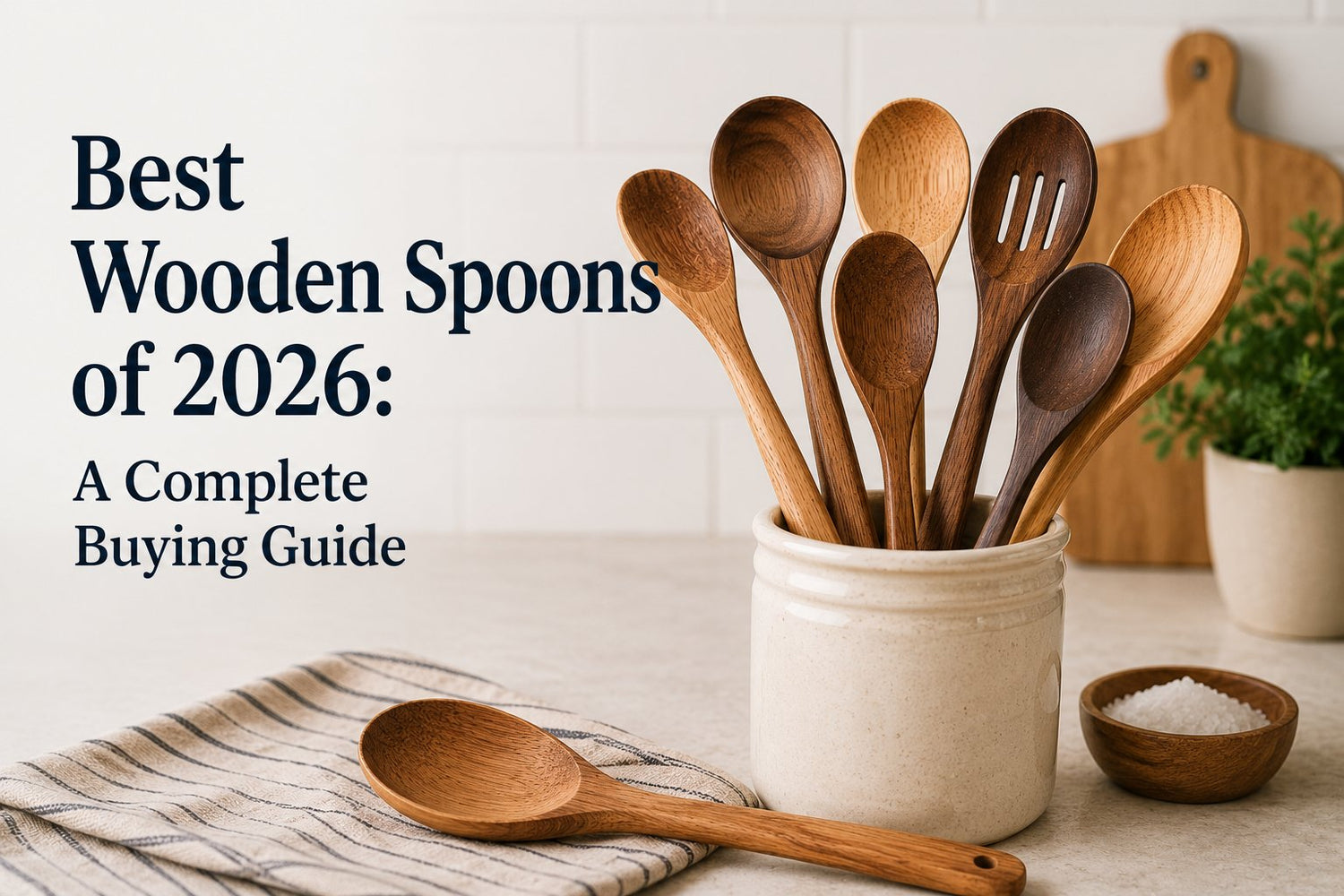
You're probably here because a wooden spoon seems too simple to get wrong, yet you've already seen the opposite in real kitchens. One spoon roughs up after a few washes, another starts holding sauce stains, and another feels clumsy every time you try to scrape the bottom of a pan. The difference usually isn't branding. It's wood choice, grain direction, bowl shape, edge profile, and how the spoon fits the job.
That's why the best wooden spoons are worth choosing carefully. A good one performs reliably for years. It stirs hot soup without heating your hand, won't bully a non-stick pan, and feels steady when you're folding risotto, scraping fond, or mixing a thick batter. A bad one turns into a fuzzy, absorbent stick that looks nice in a product photo and annoying in actual use.
Table of Contents
- Why the Humble Wooden Spoon is a Kitchen Essential
- Choosing the Right Wood for Your Spoon
- Matching Spoon Shape and Size to Your Cooking Style
- Our Top Picks for the Best Wooden Spoons in 2026
- Care and Safety for a Lifetime of Use
- Sustainability and Smart Sourcing Considerations
- Frequently Asked Questions About Wooden Spoons
Why the Humble Wooden Spoon is a Kitchen Essential
A wooden spoon usually proves itself when another utensil fails. Metal bangs and scrapes. Plastic softens at the wrong moment or feels flimsy when you're working a thick sauce. Wood sits in the middle in the best way. It's firm without being harsh, simple without being disposable.
That staying power isn't nostalgia. A broad reference on wooden spoons describes the wooden spoon as a utensil commonly used in food preparation and also notes its place in folk art and culture, which is a useful reminder that it has remained both practical and traditional. In real kitchen use, the qualities that matter most are dense, close-grained hardwood, minimal porosity, and straight grain.
Why cooks keep reaching for wood
Wood is gentle where metal can be punishing. If you cook with enamel, ceramic, or non-stick surfaces, that matters every day. A spoon doesn't need to be sharp or rigid to be effective. It needs to move food cleanly, reach the corners of a pan, and give feedback through your hand.
It also feels more stable over a long cooking session. A well-made wooden spoon has a kind of quiet grip. It doesn't feel slippery, and it doesn't feel like a tool that's fighting the pan.
Practical rule: The best kitchen tools solve small annoyances repeatedly. Wooden spoons do that better than most utensils because they reduce scratching, clatter, and heat transfer in one move.
There's also a reason these spoons still belong on a modern kitchen essentials list. They're one of the few tools that can move from sauté pan to soup pot to mixing bowl without feeling like a compromise.
Why simple design lasts
Wooden spoons have persisted because the form is forgiving and adaptable. Different regions can shape them from local hardwoods, and cooks can choose profiles that match how they cook. That flexibility matters more than trend-driven gadget design.
A spoon is “basic” only until you use the wrong one for a month. Then the details become obvious. The edge is too rounded to scrape. The bowl is too shallow for serving. The handle is too short for steam-heavy pots. A good wooden spoon earns its space because it does hard daily work without demanding attention.
Choosing the Right Wood for Your Spoon
The first question isn't light or dark wood. It isn't rustic or polished. It's how tight the grain is.
A spoon lives around moisture, steam, oil, sauces, and repeated washing. Wood that behaves well in that environment tends to be hardwood with fine, closed grain, because it resists moisture and staining better than porous wood. A woodworking source specifically recommends woods such as walnut, cherry, maple, olive, mesquite, sycamore, beech, birch, apple, and alder, while warning against red oak and softwoods because they absorb moisture and stain more easily. The same source also notes that straight grain and no knots improve spoon strength, with the grain ideally running the length of the spoon, as described in this guide to wood choices for kitchen spoons.

Closed grain beats open grain
Think of wood grain like fabric. Closed-grain wood is like a tightly woven apron. It sheds mess more easily and stays more orderly under use. Open-grain wood is closer to a loose knit. It has more visible structure, but it also gives liquids and stains more places to settle.
That's why “hardwood” by itself isn't enough. Some shoppers hear hardwood and stop there. For spoons, that shortcut misses the fundamental issue. A porous hardwood can still be a poor kitchen choice.
A spoon made from open-pored wood often tells on itself quickly. It darkens unevenly, feels rough sooner, and can seem harder to clean thoroughly after strongly coloured foods.
Which woods tend to work best
Some species win on balance. Others win on a specific trait.
- Maple often makes the best all-round workhorse. It's smooth, dependable, and suited to daily stirring.
- Cherry is a strong choice if you want a spoon that feels slightly warmer in appearance while still being practical for regular use.
- Beech and birch are sensible picks when you want durability and a clean, straightforward feel in hand.
- Walnut and olive usually attract buyers who care about appearance as much as function, but they still make sense in a working kitchen when the grain is right.
- Apple and alder fit the same broader rule. Dense, close-grained, and well shaped matters more than trend value.
A good spoon blank should look boring in the right places. Straight grain, no knots, no dramatic weak points near the neck.
The neck is where many spoons fail. If the grain swirls or breaks near the transition from handle to bowl, you've got a stress point. For bulk buyers, that's the detail to watch because breakage usually starts there.
If you keep utensils visible rather than burying them in a drawer, storage also affects wear. A tool like the Magnet Shelf Rack for Refrigerator - Kitchen Organizer is described as a versatile kitchen organiser with a stable tray for seasoning bottles, a middle hook position for paper towel storage, and a bottom wooden rail for towels or kitchen tools. That kind of setup can keep spoons dry and easy to reach instead of crowded into a damp crock.
For anyone comparing wood kitchen gear more broadly, this GrifGlo guide to wooden pizza boards helps frame the same material question from another angle. Dense, well-finished wood tends to reward regular use. Porous, decorative-first wood usually doesn't.
Matching Spoon Shape and Size to Your Cooking Style
Once the wood is right, shape decides whether the spoon feels natural or awkward. This is where many buyers miss the mark. They buy a “set” and end up using only one piece because the rest don't suit any real task.

What different spoon shapes actually do
A flat-edged spoon is one of the most useful patterns in a serious kitchen. It scrapes the base of a saucepan more cleanly, which matters for onions, roux, jam, and anything that wants to catch at the bottom. If you cook in coated pans, pair that shape with the advice in this GrifGlo guide to best non-stick cookware, because the edge profile of the utensil matters almost as much as the pan surface.
A deep-bowled spoon is better when you need to move liquid, taste soup, or portion sauce. It won't scrape as sharply, but it carries better. That makes it useful near the stove and at the table.
A pointed-tip spoon earns its keep in corners. Square pans, Dutch ovens, and smaller saucepans all have dead spots where rounded spoons leave food behind. A pointed or angled tip reaches into those places with less wrist effort.
Handle length changes control
The handle isn't an afterthought. It changes how much control and distance you get.
For common kitchen jobs, this rule works well:
- Long handle for deep pots, hot sugar work, oatmeal, and soups where steam is part of the problem.
- Medium handle for daily sautéing and sauce work.
- Shorter, thicker handle for dense mixtures like cookie dough, mashed vegetables, or stovetop batters where control matters more than reach.
A spoon can also be too thick. That sounds minor until you stir for ten minutes. Thick handles feel sturdy on the shelf, but they can tire the hand faster if the contour is blocky. The best wooden spoons usually balance stiffness with a handle that still lets your fingers settle naturally.
Match the spoon to the movement. Scraping needs an edge. Stirring needs reach. Mixing thick food needs backbone.
Most home cooks don't need a giant set. They need three profiles that cover real work: one flat-edged everyday spoon, one deeper spoon, and one sturdier mixing piece.
Our Top Picks for the Best Wooden Spoons in 2026
The strongest picks aren't defined by one label stamped on the handle. They're defined by material plus shape plus workload. A good recommendation should tell you what the spoon is for, not just what it's called.

Comparison of Top Wooden Spoons for 2026
| Spoon/Brand | Best For | Wood Type | Key Feature |
|---|---|---|---|
| Everyday workhorse spoon | Daily stovetop cooking | Maple | Balanced handle and medium bowl |
| Flat sauté spoon | Pan scraping and delicate cookware | Cherry | Flat edge and angled tip |
| Baking paddle spoon | Thick doughs and batters | Beech | Wide, sturdy blade |
| Serving spoon | Soups and table service | Walnut or olive | Deeper bowl and presentation value |
| Bulk-use utility spoon | Offices, rentals, hospitality | Birch, beech, or maple | Straight grain, simple profile, easy replacement matching |
Best picks by use case
Best everyday workhorse
Choose a maple spoon with a medium bowl and a moderate handle length. This is the one that can live beside the hob and handle soup, pasta sauce, beans, porridge, and pan work without feeling specialised. Maple is a practical answer for people who want one spoon that doesn't ask for much attention.
Best for baking
A beech spoon with a wider head makes more sense than a classic oval bowl when you're pushing through heavy batters or folding a thicker mixture. It behaves more like a hybrid of spoon and paddle. That broader face moves resistance better.
Best for non-stick pans
A cherry spoon with a flat front edge works especially well here. The wood is pan-friendly, and the flatter profile helps you scrape without introducing the harder edge you'd get from metal. The spoon should feel thin enough at the tip to be useful, but not flimsy through the neck.
Best for serving
If the spoon will go from stove to table, walnut or olive makes sense. These woods often appeal visually while still fitting the core criteria already covered above. A deeper bowl suits ladled dishes, stewed fruit, lentils, or side dishes where the spoon needs to carry rather than scrape.
Best for bulk purchasing
For property managers, office kitchens, shared housing, and hospitality setups, I'd standardise around maple, birch, or beech with simple, repeatable shapes. Decorative grain matters less than replacement consistency. You want a spoon that different users can handle without asking how to use it, and you want future orders to match the originals closely.
Bulk buyers should also avoid over-specialising. A rental kitchen doesn't need six boutique spoon profiles. It needs durable basics that survive varied habits, fast turnovers, and occasional neglect. Straight grain, no knots, modest finish, and a shape that works for both stirring and serving is usually the smartest lane.
If a spoon is going into a shared kitchen, choose the version that's easiest to replace, easiest to recognise, and least likely to chip at the neck.
This is also where a curator platform can be useful. GrifGlo groups household and kitchen essentials into decision-friendly categories, which helps teams sourcing for multiple units keep tool choices more consistent.
The same bulk-buy logic shows up in other rooms too. The ITY 4 Piece Ceramic Diamond Pattern Bathroom Set - 70081SET is a separate housewares example, described as a ceramic four-piece bathroom accessory set that includes a soap dispenser with a stainless steel pump. It's not related to cooking performance, but it reflects the same procurement habit: standardise practical items room by room so replacement and setup stay organised.
Care and Safety for a Lifetime of Use
A wooden spoon doesn't need fussy maintenance, but it does need consistent maintenance. Most spoon damage comes from a few repeat mistakes. Long soaking. Dishwasher cycles. Leaving the spoon wet in a sink or trapped in a utensil jar.
A practical advantage of wood is its low thermal conductivity. A discussion on wooden spoon heat behaviour and seasoned wood notes that wood is a poor conductor of heat, which is why a wooden spoon handle stays cooler than metal during prolonged stirring. That same source also notes that seasoned wood is preferred because it is less likely to warp or crack.
The wash dry oil routine
The simplest care routine is wash, dry, oil.

- Wash by hand: Use mild soap and warm water. Don't leave the spoon sitting in the bowl or pan after the meal.
- Dry immediately: Towel it off instead of letting it air-dry in a puddle. Standing moisture is what raises grain and stresses fibres.
- Oil periodically: When the wood looks thirsty or feels dry, a light food-safe treatment helps keep the surface from looking chalky and worn.
This is the same mindset that applies to other durable cookware. If you already look after seasoned surfaces, this GrifGlo article on cast iron cookware care follows a similar principle. Daily upkeep is simpler than trying to repair neglect.
Here's a visual walkthrough of wooden utensil upkeep:
What shortens a spoon's life
The dishwasher is rough on wood because it combines heat, water, and drying stress in one cycle. Even a strong spoon can start to fuzz, split, or lose its finish sooner under that pattern.
Long contact with heat matters too. Stirring a hot pot is fine. Resting the spoon against a scorching pan edge for long periods is harder on the wood.
Keep wood out of extremes. It handles daily cooking well, but it doesn't like being boiled, baked, or machine-dried.
If a spoon starts holding smell or colour, wash it promptly after use and let it dry fully before storing. Many spoon problems blamed on “wood” are really storage problems.
Sustainability and Smart Sourcing Considerations
A sustainable wooden spoon isn't just one made from wood. It's one that stays in service.
That's especially important in Canadian kitchen discussions, where durability often gets flattened into broad “hardwood is fine” advice. A source focused on this gap notes that Health Canada's food-contact guidance centres on safety, but doesn't identify one best utensil material for every situation, leaving buyers to judge how species and finishes hold up under real use like dishwasher exposure or acidic sauces, as discussed in this article on durability questions for wooden spoons in Canadian kitchens.
Buy for lifespan, not just material
The greener choice is often the spoon that avoids replacement. A dense, repairable, closed-grain spoon that can be sanded lightly and re-oiled has a longer useful life than a cheaper spoon that splinters early or absorbs stains so badly that people throw it out.
That changes the buying question. Don't ask only where the spoon came from. Ask how long it will stay functional.
What bulk buyers should standardise
For offices, rental properties, and hospitality settings, sustainability also means predictable replacement cycles. The more varied your utensils, the more likely staff or guests will misuse them or mix low-grade pieces into the system.
For structured sourcing, GrifGlo's page on wholesale kitchen supplies is useful because bulk purchasing works best when you standardise a few durable profiles instead of buying mismatched sets from multiple channels. For wooden spoons, that usually means one stirring spoon, one scraping spoon, and one serving spoon in species that are easy to reorder.
Frequently Asked Questions About Wooden Spoons
Are wooden spoons better than silicone or nylon
It depends on what “better” means in your kitchen.
A Canadian-focused discussion of utensil choice notes that buyers often compare wood with silicone or nylon on heat, sanitation, and maintenance, and that wood is gentle on cookware while food-safety guidance places real importance on thorough cleaning and drying. It also points out that cleanability and lifecycle cost are often underplayed in product reviews, as covered in this discussion of wood versus silicone or nylon for Canadian kitchens.
Wood is often the better stirring tool for people who value feel, pan-friendliness, and long-term use. Silicone and nylon can be more convenient if dishwasher habits dominate the household. The trade-off is straightforward. Wood asks for better care. In return, it often gives better control and a more durable working feel.
Can I put wooden spoons in the dishwasher
You can, but it's not a good habit. Repeated dishwasher exposure is one of the fastest ways to dry out, roughen, and stress the wood.
How do I remove stains or smells
Wash the spoon soon after use, dry it well, and don't store it damp. If the surface feels rough, a light refresh and proper drying routine usually helps more than aggressive scrubbing.
How often should I oil my wooden spoons
Oil them when the wood looks dry, faded, or thirsty. There isn't one schedule that fits every kitchen, because frequency depends on use, washing habits, and climate.
Are the best wooden spoons always expensive
No. Expensive doesn't guarantee the right grain, shape, or handle geometry. The best wooden spoons earn their place by doing common jobs well and surviving repeated use without becoming rough, warped, or awkward.
GrifGlo helps households, rental hosts, and bulk buyers compare practical kitchen essentials without digging through endless catalogues. If you're standardising utensils, cookware, or organisation tools across one kitchen or many, GrifGlo is a useful place to narrow options by real use case rather than guesswork.


Leave a comment
This site is protected by hCaptcha and the hCaptcha Privacy Policy and Terms of Service apply.