

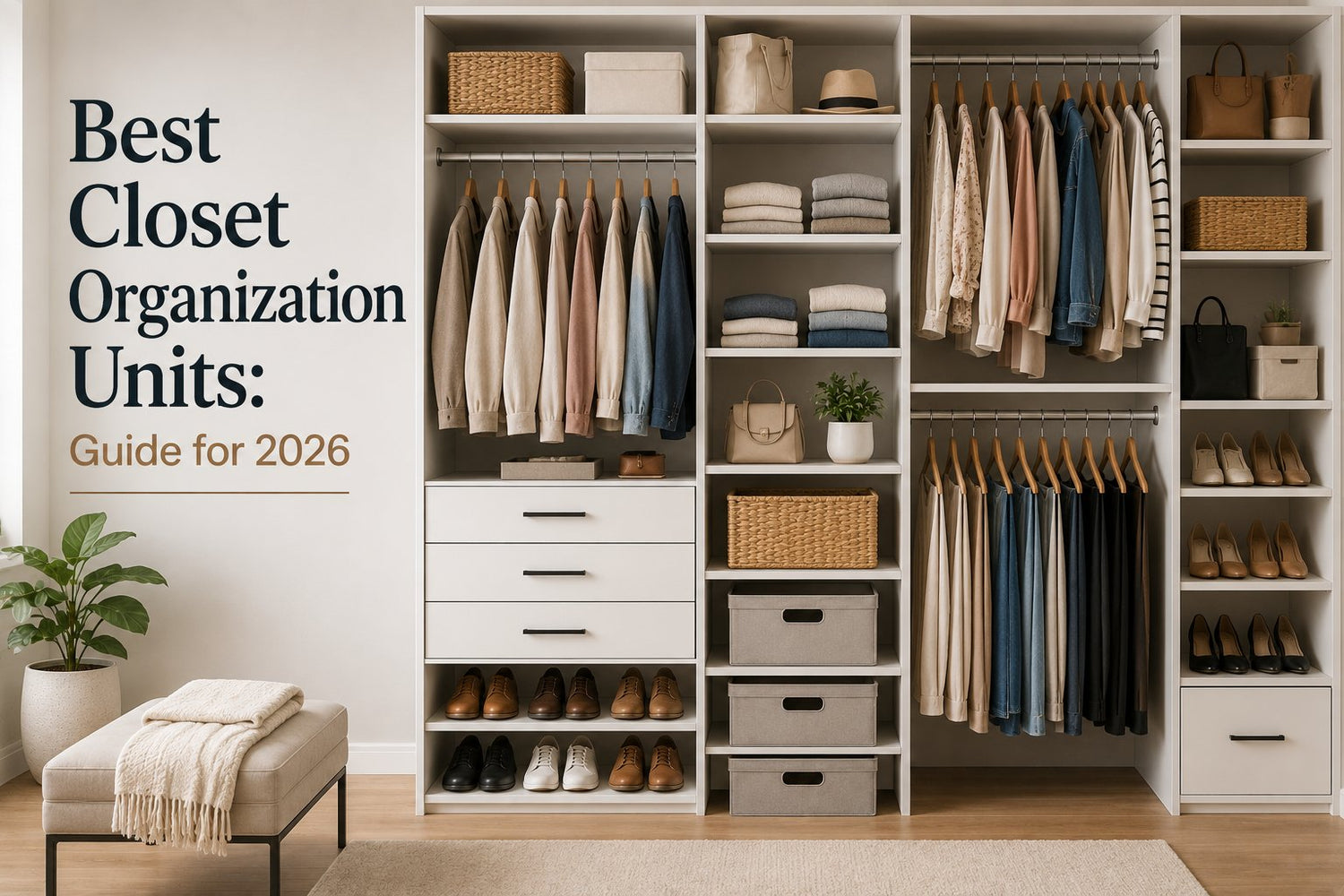
You open the closet before work, reach for one shirt, and pull half the rail with it. Shoes are buried under hanging pants. Bags are crammed onto a top shelf you can barely reach. That setup usually means the closet was built as an empty box, not as a storage system.
Closet organization units solve that problem by assigning space on purpose. Hanging clothes get the rod length they need. Folded items go where you can see and reach them. Corners, upper shelves, and narrow sections stop going to waste. The result is less daily friction and fewer one-off storage purchases that never fit the space properly.
The key choice is not just style. It is system type. A low-cost wire kit can work well in a rental, a starter home, or a utility closet where fast installation matters more than a built-in look. A wood or laminate modular system usually gives better shelf support, a cleaner finish, and more flexibility for mixed storage, but it costs more and takes longer to install. In a single family home, that trade-off often makes sense if the closet needs to hold heavier clothing, handbags, or linens for years. In a multi-unit rental property, simpler systems are often easier to replace, repair, and standardize across units.
If you have already organized another hard-working storage zone, the logic will feel familiar. The same approach behind using bins and zones to organize a pantry applies here too. Group like items, give each category a fixed home, and choose storage based on what you own, how often you use it, and how much installation effort your budget can support.
Table of Contents
- From Chaos to Calm Your Closet Transformation Starts Here
- Exploring the Types of Closet Organization Units
- Measuring and Planning Your Ideal Closet Layout
- Selecting Materials and Finishes for Durability and Style
- Installation DIY Tips vs Professional Help
- Budgeting Sourcing and Long-Term Maintenance
- Your Practical Buying Checklist and Final Thoughts
From Chaos to Calm Your Closet Transformation Starts Here
You open the closet before work and the floor is gone again. Shoes have slid under hanging clothes, bags are stacked on the top shelf, and the one thing you need is buried behind laundry. In a family home, that creates daily friction. In a rental, it turns into faster wear, more complaints, and more repair work between tenants.
Closet organization units work best when they are planned as a system with a job to do. Random add-ons rarely hold up. A second shelf here and a basket there can look productive at first, but they usually shift the mess instead of controlling it. Good systems divide the closet into clear functions so hanging clothes, folded items, shoes, and overflow each have a place.
The goal is not a showroom closet. The goal is a closet that stays usable on a busy Tuesday.
In practice, the strongest setups share a few traits:
- They calm the view. Clean lines, repeatable shelf spacing, and fewer loose items make the whole closet easier to use.
- They match real inventory. Long garments, handbags, uniforms, kids' gear, spare linens, and travel items need different storage dimensions.
- They leave room for change. A starter home, a growing family, and a multi-unit rental all need systems that can be adjusted without starting over.
Practical rule: If the storage plan does not match what you actually own, the clutter comes back fast.
As noted earlier, industry analysts expect continued demand for modular storage in U.S. home organization. That tracks with what I see on installs. Many homeowners want a cleaner, more built-in look than basic wire shelving, but they do not want the cost or permanence of full custom millwork in every closet. Property owners often reach the same conclusion for a different reason. Modular and semi-custom systems are easier to standardize across units and easier to repair when one section gets damaged.
That is the trade-off that matters at the start. Lower-cost systems are usually faster to buy and easier to swap out, but they may sag sooner, show wear earlier, or feel less finished. Better-built systems cost more up front and can take longer to install, yet they often hold alignment better and reduce replacement work over time.
The same planning logic applies in other storage projects too. If you want a simple example of assigning zones before buying containers, this guide on organizing a pantry with bins and zones shows the same principle in a smaller space.
For a single family home, the right choice usually balances appearance, daily convenience, and how long you expect to stay in the house. For a rental property, the better choice is often the system that survives repeated use, can be repaired in parts, and does not create a wall-repair project every time hardware changes. Both approaches are valid. The right one depends on who uses the closet, how hard it will be worked, and whether flexibility or finish quality matters more.
Exploring the Types of Closet Organization Units
The fastest way to choose the wrong system is to compare everything by appearance alone. Two closet setups can look similar in photos and perform very differently once they're loaded with clothes, shoes, and daily use.

What each system is really good at
Wire shelving systems are common because they're easy to source, relatively simple to install, and useful in utility closets, kids' closets, and lower-cost rentals. Airflow is good, visibility is decent, and they don't visually dominate a small reach-in. The downside is familiar. Small items tip over, shelves can feel unfinished, and the system rarely looks intentional once the closet is heavily used.
Laminate or melamine panel systems are the middle ground that often brings the most satisfaction. They provide a more built-in look, create cleaner vertical divisions, and support a mix of rods, drawers, and shelves. They're a solid option when you want closet organization units that feel finished without stepping into fully custom millwork. The trade-off is weight, more involved assembly, and less forgiveness if your walls are out of square.
Solid wood systems suit higher-end projects, period homes, and primary bedroom walk-ins where appearance matters as much as storage. They tend to feel more substantial, age better visually, and handle refinishing or touch-up work more gracefully than manufactured board. They also require the strongest budget tolerance and a realistic installation plan.
Modular and freestanding units work well when needs change often. Renters, growing families, and small multi-unit owners benefit from systems that can be reconfigured or replaced without rebuilding the closet shell. In other parts of the home, the same thinking shows up in products like the Magnet Shelf Rack for Refrigerator - Kitchen Organizer, which uses vertical side space for storage rather than relying on a permanent built-in. It's a different room and a different use case, but the organising principle is similar. Add function where the structure allows it.
If you're comparing formats across the home before buying, GrifGlo's guide to pantry storage racks is a useful example of how to think about fixed shelving versus flexible rack systems.
Closet Organization Unit Comparison
| System Type | Average Cost | Installation Difficulty | Flexibility | Best For |
|---|---|---|---|---|
| Wire | Lower | Lower | Moderate | Basic reach-ins, utility closets, budget rentals |
| Laminate or melamine panels | Mid-range | Moderate | Good | Most family homes, primary bedroom reach-ins, polished rentals |
| Solid wood | Higher | Higher | Moderate | Premium walk-ins, design-led renovations, long-term homes |
| Modular | Mid-range to higher | Lower to moderate | High | Renters, evolving households, mixed-use closets |
| Custom built-in | Higher | Higher | Lower after install | Awkward layouts, luxury finish goals, maximised wall-to-wall storage |
The best-looking closet isn't always the best-performing one. The better test is whether the system still works on a rushed weekday morning.
A few direct trade-offs matter more than marketing language:
- Choose wire when replacement cost matters more than visual finish.
- Choose laminate or melamine when you want a cleaner appearance without custom carpentry.
- Choose solid wood when the closet is part of a larger renovation and long-term finish quality matters.
- Choose modular when the contents, tenants, or room layout may change.
Measuring and Planning Your Ideal Closet Layout
Bad measurements create expensive frustration. Doors hit drawers, rods sit too close to the back wall, and shelves end up so deep that folded clothes disappear into shadow.

Measure the room before you measure the products
Start with the shell of the closet, not the shelving you want to buy. Record the width of the back wall, the side walls, the full height, the finished floor condition, door swing, baseboards, light switches, vents, and any outlets. Then measure again at more than one point. Older homes and basement closets often narrow or lean enough to matter.
For Canadian reach-ins, a 24-inch minimum depth is the practical baseline for hanging garments, and shelving generally works best at 15 to 20 inches deep so contents stay visible and reachable according to the Organized Living closet design guide. That one detail eliminates a lot of common planning mistakes. People often assume deeper is better, then end up with shelves that swallow folded items.
A simple measuring workflow keeps things clean:
- Clear the space first. You can't measure accurately around hanging clothes and shoe piles.
- Sketch the closet by hand. It doesn't need to be pretty. It needs wall lengths, heights, and obstacles.
- Mark permanent features. Door trim, attic access, sloped ceilings, heating grilles, and baseboard heaters all affect fit.
- Check depth at the floor and at shelf height. Some closets lose usable space because trim or wall irregularities steal clearance.
- Photograph the empty closet. You'll use the photo later when comparing systems online.
For smaller organising projects, the same habit applies elsewhere in the home. It's the reason sizing matters so much in tools like kitchen drawer organizers. Storage works when dimensions lead the purchase, not the other way around.
Build your layout around use zones
Once the measurements are reliable, stop thinking in terms of “how many shelves” and start thinking in terms of zones. A closet usually needs a hanging zone, a folding zone, a shoes zone, and a zone for awkward or occasional items.
Here's a practical way to map it:
- Long-hang zone: coats, dresses, long cardigans, robes
- Double-hang zone: shirts, blouses, trousers, school uniforms
- Shelf zone: denim, knitwear, handbags, bins
- Drawer or basket zone: socks, undergarments, accessories
- Top storage zone: seasonal items, keepsakes, spare bedding
The best layouts usually reserve the easiest-to-reach space for daily items. That means eye-level and waist-level shelves for what you use most. High shelves are for occasional access. Floor space should be intentional. If the floor becomes overflow by default, the system is underplanned.
Put the most-used category in the easiest zone, not the biggest zone.
Handling sloped ceilings and awkward geometry
Many standard systems fail in situations like these. Angled ceilings and under-stair cavities look charming in a listing photo, but they punish generic closet kits.
The practical issue is reachability. As ceiling pitch drops, back-wall access gets worse. Hanging rods need flat, usable depth. Shelves that run too far into low-slope areas become dead storage.
A few guidelines help:
- Pull shelves forward when the ceiling angle reduces back access.
- Use back stops or closed-backed shelving if items can slide into dead space.
- Prefer floor-based panel systems in sloped areas, because they're often more stable than wall-hung systems in these conditions.
- Place low-use storage deepest into the tightest angle.
If you're planning around a loft, attic conversion, or older upper-storey room, treat every inch of headroom as a usability question, not a raw dimension. A closet that technically fits isn't enough. You need to be able to reach it without kneeling, twisting, or forgetting what's stored there.
Selecting Materials and Finishes for Durability and Style
Material choice decides how the closet will age. It affects sagging, scuffing, cleaning, moisture resistance, and the overall feel of the room every time you open the door.

How materials behave in daily use
Wire stays relevant because it's simple and practical. It suits laundry-adjacent closets, mudroom storage, and lower-cost installs. It also shows everything, which can be good or bad depending on the contents. Small items wobble, and the closet rarely gains that finished built-in look.
Laminate and melamine are what many households choose for a reason. They offer a smooth, consistent finish and make a reach-in feel more intentional. They're easier to wipe clean than many unfinished surfaces, but edges matter. Once low-quality edging chips, wear becomes visible quickly.
Solid wood handles impact and repair better than many manufactured materials. It also carries visual warmth that works well in older homes or bedrooms where you want the closet to feel like part of the architecture. It asks more from the budget and from the installer.
If the closet will take daily knocks from baskets, shoes, luggage, or vacuum handles, edge quality matters almost as much as the panel itself.
Finishes change both look and lifespan
A good finish can make an average system feel better made. A poor finish can make a decent system look tired within months.
Use this lens when comparing options:
- Powder-coated wire: better for resisting visible wear than unfinished-feeling wire components
- Textured laminate: often hides fingerprints and minor scuffs better than very glossy surfaces
- Wood veneer: gives a warmer look than flat laminate, but it needs more care around moisture and impact
- Painted finishes: can look sharp, though touch-ups depend heavily on how the paint was applied and how the surface was prepared
Colour also changes usability. Very dark shelves can hide dust and dark clothing. Very bright white finishes reflect light well but show marks faster. In family closets, I often favour finishes that are easy to wipe and forgiving under mixed lighting.
If you already think this way in pantry planning, it's the same reasoning behind choosing easy-clean pantry storage containers. The best material isn't the fanciest one. It's the one that still looks acceptable after ordinary use.
Installation DIY Tips vs Professional Help
A closet system can be well chosen and still fail in the install. Shelves go out of level, anchors loosen, drawer fronts drift, and panel systems rack slightly because the floor wasn't assessed properly before assembly.
When DIY makes sense
DIY works best when the closet is straightforward, the system is designed for homeowner assembly, and you're comfortable reading plans, levelling components, and fastening into the right structure. A simple reach-in with one back wall is a very different job from a wall-to-wall unit with fillers, drawers, and trim details.
A realistic DIY checklist includes:
- Tools on hand: tape measure, level, drill/driver, stud finder, anchors specified by the manufacturer, screwdriver set, pencil, shims
- Time allowance: enough time to unpack, sort components, correct mistakes, and pause when walls aren't square
- Tolerance for finishing work: patching old holes, touching up paint, trimming fillers, and adjusting doors or drawers
DIY is often a smart choice if your priority is cost control and you don't mind spending your own labour to get there. It's also useful in rentals where the goal is function and durability rather than integrated millwork. If you're comparing similar decisions in other compact spaces, over-door systems raise many of the same installation questions around load, clearance, and daily access, as shown in this guide to a pantry organizer over the door.
When professional installation is the better call
Hire help when the closet has sloped ceilings, uneven walls, built-in drawer banks, electrical obstacles, or a finish standard that needs to look deliberate. Professionals usually spot fit issues earlier. They also work faster through fussy steps like scribing fillers, levelling across uneven floors, and anchoring heavy units securely.
A good installer should be able to answer practical questions clearly:
- How will they handle out-of-plumb walls
- Where will they anchor the heaviest sections
- What happens if the supplied fillers don't cover gaps
- Who is responsible for wall repair if the old system comes out first
Paying for labour makes sense when it prevents rework, damage, or a closet that never feels quite right.
For multi-unit owners, professional installation also creates consistency. If you're standardising several suites, repeatable layouts and repeatable installation quality matter more than squeezing every dollar out of one individual closet.
Budgeting Sourcing and Long-Term Maintenance
A closet budget is rarely just the system cost. The actual number usually includes removal of the old setup, wall repair, touch-up painting, delivery, hardware upgrades, installation labour if needed, and the small accessories that make the system usable.
The category is also growing quickly. The global closet organizers market is projected to rise from USD 7,642 million in 2024 to USD 14,569 million by 2032, at a CAGR of 8.4%, according to Credence Research's closet organizers market report. That projection lines up with what buyers are doing. A well-organised closet is no longer treated as a niche extra. It's becoming part of standard home function.
Where the money actually goes
Budget projects often succeed when expectations are disciplined. You can get a functional result without every accessory. Drawers, pull-outs, jewellery inserts, decorative trim, and upgraded handles improve the experience, but they also push the project upward fast.
A practical budgeting lens looks like this:
- Lowest upfront spend: wire shelving, basic shelf-and-rod kits, simpler layouts
- Balanced spend: laminate or melamine systems with a mix of shelves and hanging
- Highest spend: custom-sized built-ins, solid wood, detailed finishing, awkward-room adaptation
For rentals, I usually advise spending more on anchor points, shelf stability, and wipeable finishes before spending on decorative extras. Tenants notice usable storage far more than they notice premium trim details.
Sourcing for homes rentals and small portfolios
Homeowners can often shop retail and compare systems one closet at a time. Property managers and small landlords need a different approach. They benefit from repeatable components, consistent replacement parts, and suppliers that won't force a redesign when one bracket or shelf is damaged.
Useful sourcing questions include:
- Can you reorder matching parts later
- Will the finish still be available if one unit needs repair
- Does the system work across different suite sizes
- Can one layout standardise several properties with minor adjustments
For households, the ideal source is often the one with the clearest dimensions, hardware details, and installation instructions. For a small portfolio, the better source may be the one that supports bulk or structured purchasing without turning each order into a custom job.
Maintenance that protects the investment
Closets don't need heavy maintenance, but they do need some.
- Tighten hardware periodically. Drawer slides, shelf pins, and rod brackets loosen with use.
- Clean panels with the right products. Harsh cleaners can dull finishes or damage edge banding.
- Watch for overload. Shelf sag often starts gradually, then becomes permanent.
- Use baskets or bins for loose categories. That reduces scraping, piling, and visual clutter.
A good closet system should get easier to live with over time. If it gets messier every month, the problem usually isn't discipline. It's that the layout never matched the contents in the first place.
Your Practical Buying Checklist and Final Thoughts
Most closet mistakes happen before the order is placed. The easiest way to avoid them is to run a final check that forces you to match the unit to the room, the users, and the budget.

Use this list before you buy:
- Measurements confirmed: Check width, height, depth, baseboards, door swing, and any slope or obstruction.
- Storage needs mapped: Count what needs hanging space, shelves, drawers, bins, and floor access.
- System type chosen: Match the closet to wire, laminate, wood, modular, or custom based on actual use.
- Material and finish decided: Choose for scuff resistance, maintenance, and the look you want in that room.
- Installation plan settled: Be honest about whether this is a DIY job or a professional one.
- Future changes considered: Leave some flexibility if the closet will serve kids, tenants, guests, or changing seasons.
A closet works best when every section has a job and none of that work is accidental.
The right closet organization units don't need to be extravagant. They need to fit the room, support the routine, and hold up to real use. That's true for a single family reach-in, a primary bedroom walk-in, or a row of rental units you want to standardise sensibly. When the planning is right, the closet stops fighting you. It starts helping.
If you're comparing organisers, storage layouts, or purchase options across home and rental spaces, GrifGlo offers decision-friendly guides and product categories that help narrow choices by fit, function, and everyday usability rather than forcing you through an oversized catalogue.


Leave a comment
This site is protected by hCaptcha and the hCaptcha Privacy Policy and Terms of Service apply.