

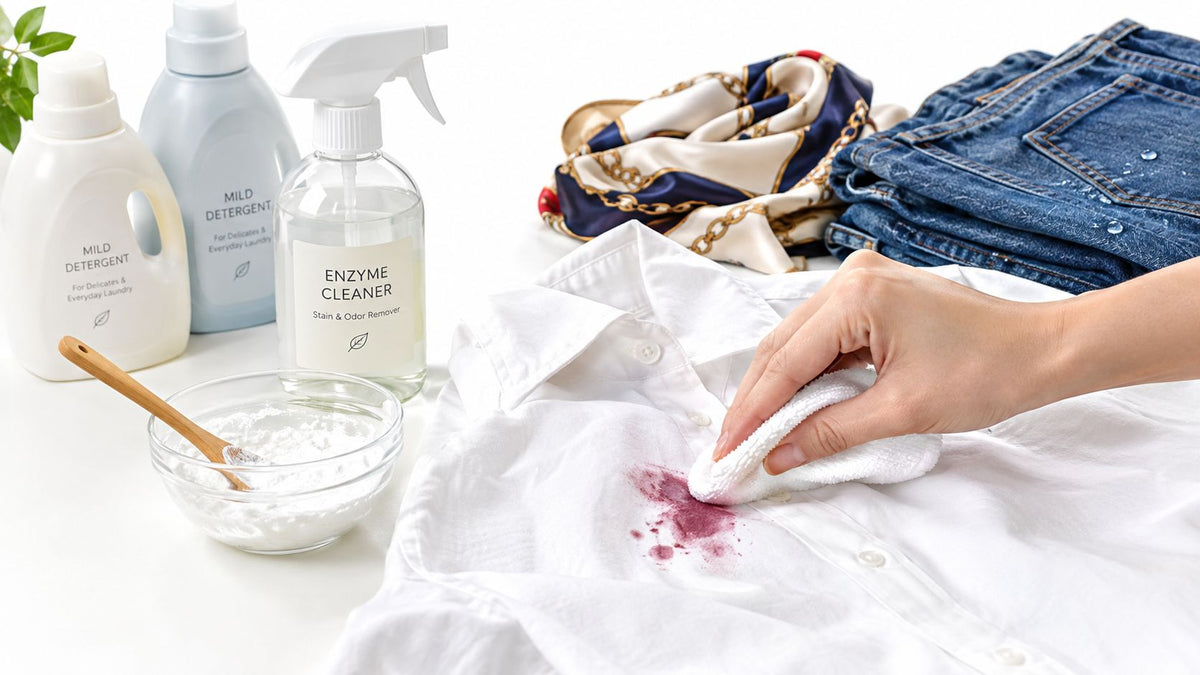
You're probably reading this with a damp paper towel in one hand and a stained shirt in the other. Maybe it's coffee down the front before work, pasta sauce on a light tee, or a grease mark that looked small until it spread. The mistake made right here isn't the spill. It's the panic treatment.
Good stain removal is rarely about force. It's about choosing the right first move for the stain and the fabric before heat, scrubbing, or a random cleaner makes the mark harder to lift. If you want to know how to remove stains from clothes without thinning fibres, dulling colour, or setting the stain for good, the safest approach is fabric-first and usually colder than people expect.
Table of Contents
- Why Quick Stain Action Saves Your Clothes
- The Fabric Safe Stain Removal Workflow That Works Every Time
- How to Treat the Most Common Stains by Type
- Matching Treatment to Fabric and Care Labels
- Household Fixes Versus Store Bought Stain Removers
- Prevention Troubleshooting and When to Call a Professional
Why Quick Stain Action Saves Your Clothes
A fresh stain gives you options. A dried or heated stain takes most of them away.
I see the same pattern over and over. Someone spills red wine on a blouse, rubs hard with hot water, tosses it in the wash, then dries it because the mark looks faint when wet. Once the fabric comes out of the dryer, the stain has bonded deeper into the fibres and the garment suddenly feels “ruined”.
That reaction is common. An Ipsos survey found that 42% of Canadians said they had thrown out a garment because of a stain, with even higher rates in Atlantic Canada, Ontario, and British Columbia, according to Ipsos research on Canadians and stain removal. The same survey found that Canadians most often named ink, blood, grass, and red wine as the hardest stains to remove.
Why guessing causes more damage
Most home stain disasters don't start with the original mess. They start with a guess.
Another Canada-focused Ipsos poll found that 41% of Canadians usually guess and try different stain-removal methods, and 32% said they had ruined a favourite outfit by guessing how to treat it, based on Ipsos polling about laundry knowledge in Canada. That lines up with what happens at the sink. People mix products, scrub delicate fabric, or use heat too soon because they want a fast result.
Practical rule: Fast action helps. Aggressive action often hurts.
A stain has two parts: what caused it, and what it landed on. Tomato oil on cotton behaves differently than tomato oil on rayon. Blood on denim gives you more room to work than blood on silk. That's why a fabric-safe method beats old blanket advice like “wash it hot” or “scrub until it's gone”.
What quick action actually means
Quick action doesn't mean rushing. It means doing the right small things before the stain dries.
- Lift off the excess first. Food, mud, makeup, and sauce should be removed from the surface before any liquid goes on.
- Keep heat out of the process. Dryer heat and sometimes hot water can lock remaining residue into the cloth.
- Choose the first treatment by stain family. Oil, protein, dye, and tannin stains don't respond the same way.
- Respect the fabric. A sturdy cotton work shirt can handle more agitation than a fine knit or blouse.
Cold-water pretreatment matters more than you might realise. It slows down setting, gives you time to work, and suits many common household stains better than warm water as a first move. That doesn't mean warm water never has a place. It means you earn the right to use it after you've identified the stain and checked the label.
The Fabric Safe Stain Removal Workflow That Works Every Time
When people ask me for one method that works across almost everything washable, I give them a sequence, not a miracle product. Follow it in order and you'll avoid most of the damage people cause during “clean-up”.
Start with this visual if you want the short version.
The five-step method
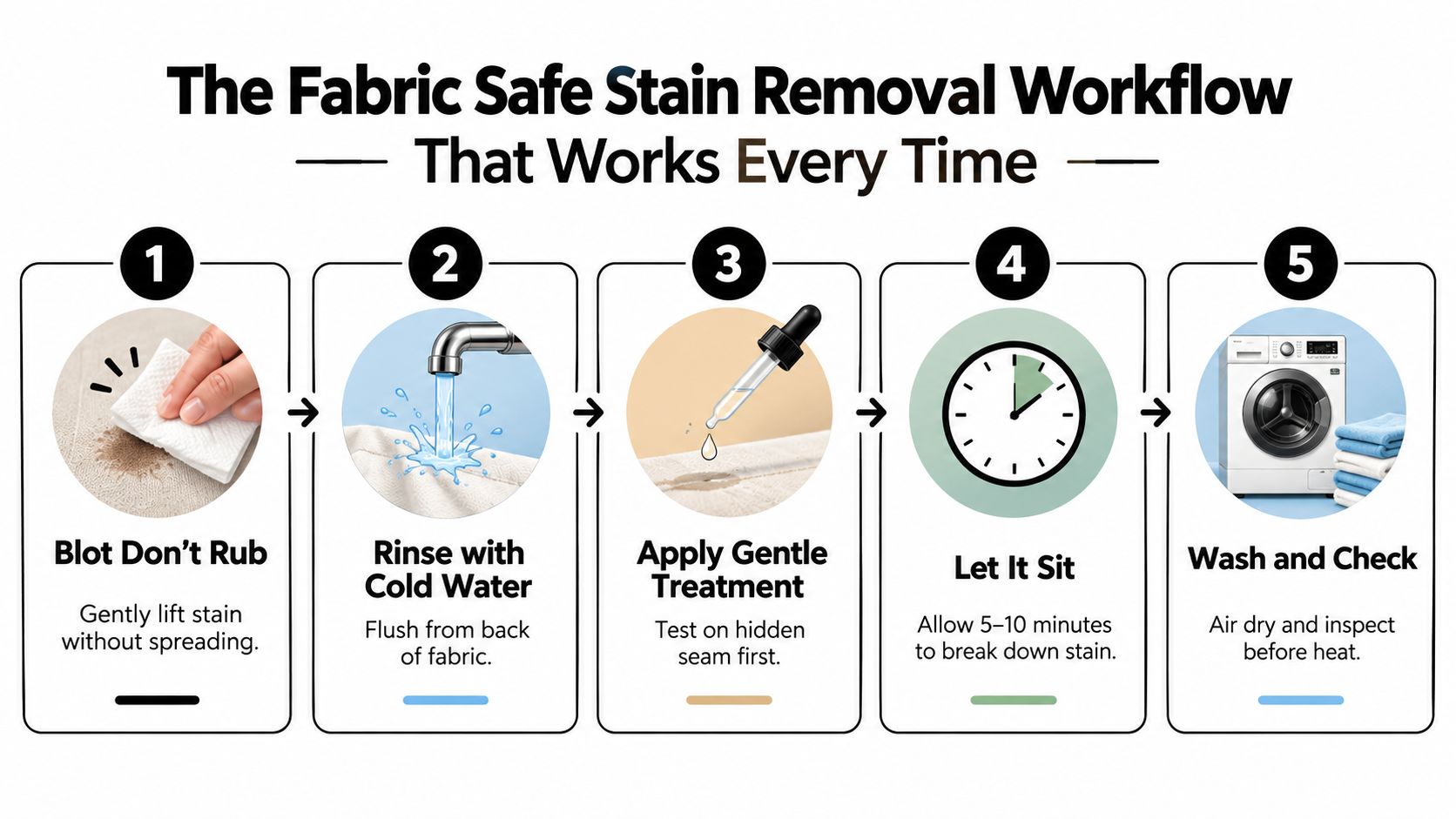
Canadian consumer guidance from Tide recommends this basic order: remove excess soil, pre-treat directly, wash using the care label's permitted temperature, and keep the item out of the dryer until the stain is fully gone. The same guidance also stresses spot-testing first, using cold water for many common stains, and avoiding product mixing. You can see that workflow in Tide Canada's guide to removing stains from clothes.
-
Remove what's sitting on top
Use a spoon, dull knife, or paper towel. Lift. Don't grind it in. If you start by rubbing, you spread the stain sideways and push it deeper. -
Flush or blot with cold water
For many everyday stains, cold water is the safest first move. If you can, run water from the back of the fabric so it pushes the stain out the way it came in. -
Spot-test before treatment
Put a tiny amount of your chosen cleaner on an inside seam or hem. Wait, blot, and check for colour change or fibre stress. -
Pre-treat the stain directly
Work in a suitable stain remover, detergent, or simple dish soap for greasy food marks. Use your fingers or a soft cloth. You're coating the stain, not sanding it off. -
Wash, then air-check before drying
Wash at the temperature allowed on the care label. Then inspect while damp or after air-drying. If any mark remains, treat again before using heat.
What not to do
A lot of ruined clothing comes from bad instinct, not bad luck.
Don't mix cleaning products because “more” feels stronger. In laundry, that usually means more residue, more fading, or more fibre damage.
Three common mistakes cause trouble fast:
- Hard scrubbing: This roughs up cotton, pills knits, and can leave a pale worn patch after the stain is gone.
- Hot first rinse: Fine for some oily kitchen messes later in the process, but risky as a first step on many stain types.
- Dryer too soon: If the stain is still there, even faintly, stop.
If you like frameworks for everyday tasks, the same logic shows up in a good decision-making framework for household choices. The order matters because each step protects your next option.
Here's a practical laundry-room note. Kitchen spills are a major source of clothing stains, especially around smoothies, sauces, and oils. If you use appliances like the HAMILTON BEACH Wavestation Express Dispensing Blender Silver Metallic - 58620CR, which has a 48-ounce durablend jar, stainless steel blades, and 9 blending functions, keeping a towel nearby and treating splashes immediately saves more shirts than any remover does later.
After the hand treatment, this quick video is useful for seeing the motions and pacing.
How to Treat the Most Common Stains by Type
Not all stains want the same chemistry. The biggest improvement one can make is matching the first move to the stain family instead of reaching for one universal spray.
A greasy splatter from the stove needs something that cuts oil. Blood needs a cooler, gentler approach. Grass often needs patience more than force. Ink can spread if you flood it too early.
Common stains and best first treatment move
| Stain Type | Best First Move | Water and Time Tip |
|---|---|---|
| Food grease or cooking oil | Blot excess, then work in a small amount of dish soap or liquid detergent | Start cool. Let it sit briefly, then wash as the label allows |
| Coffee or tea | Blot, then flush from the back with cold water | Treat quickly. Recheck before drying because faint shadows can remain |
| Red wine | Blot, don't rub. Flush with cold water and pre-treat | Keep it cold at first and repeat treatment if needed |
| Blood | Rinse with cold water first, then use an enzyme detergent if the fabric allows | Never start with heat. Give it time to loosen |
| Grass | Pre-treat with detergent or enzyme cleaner and work gently | Let the treatment sit before washing |
| Sweat and body soil | Use enzyme detergent on washable everyday fabrics | Cold pretreatment helps before a full wash |
| Ink | Blot carefully and use a targeted pre-treatment | Avoid spreading it with heavy rinsing too early |
Where enzyme detergent helps
Enzyme detergents are useful when the stain contains organic material such as blood, sweat, or food residue. They're less about brute strength and more about breaking down what's stuck in the fibre. On washable everyday fabrics, they often outperform plain detergent used by itself.
That's one reason stain-specific treatment matters. Broad advice like “wash it in the warmest safe water” can skip over the stain's behaviour. A more useful approach is deciding whether the garment needs cold pretreatment, an enzyme product, or a soak before the wash. That gap in public advice is one reason many households still feel uncertain about stain removal, as discussed in CBC's coverage of Canadian laundry habits and guessing behaviour in this CBC article on dirty laundry poll results.
Fast decisions for the sink
When you're standing over a stain, use these simple calls:
- If it's oily: Start with something that cuts grease, then wash.
- If it's protein-based: Keep the first steps cold and avoid heat.
- If it's coloured: Blot and flush carefully, because rubbing spreads dye.
- If it's unknown: Begin with the universal workflow and a mild pre-treatment.
Some of the worst results come from treating every stain like grease. Oil responds to one strategy. Dye, protein, and plant stains often need another.
For kitchen-heavy households, a cleaner work area also lowers the number of repeat stains. A practical example is keeping cooking vapour and grease under control, especially near shirts and aprons, with habits like those in this range hood cleaning guide.
A few stain-specific cautions
Ink is one of the hardest because it can travel when saturated. Blood can look gone while wet and show again once dry if you rush it. Grass often leaves a stubborn cast on knees, cuffs, and cotton blends because it combines plant matter with friction.
With all of them, the temptation is the same. Treat harder. Usually the better move is treat smarter, then repeat once before escalating.
Matching Treatment to Fabric and Care Labels
A stain method is only as good as the fabric underneath it. Cotton forgives. Silk remembers. Wool shrinks, distorts, or felts when handled too roughly. Performance fabrics can hold onto oils and odours in ways people don't expect.
That's why the care label isn't a formality. It's your damage-prevention tool.
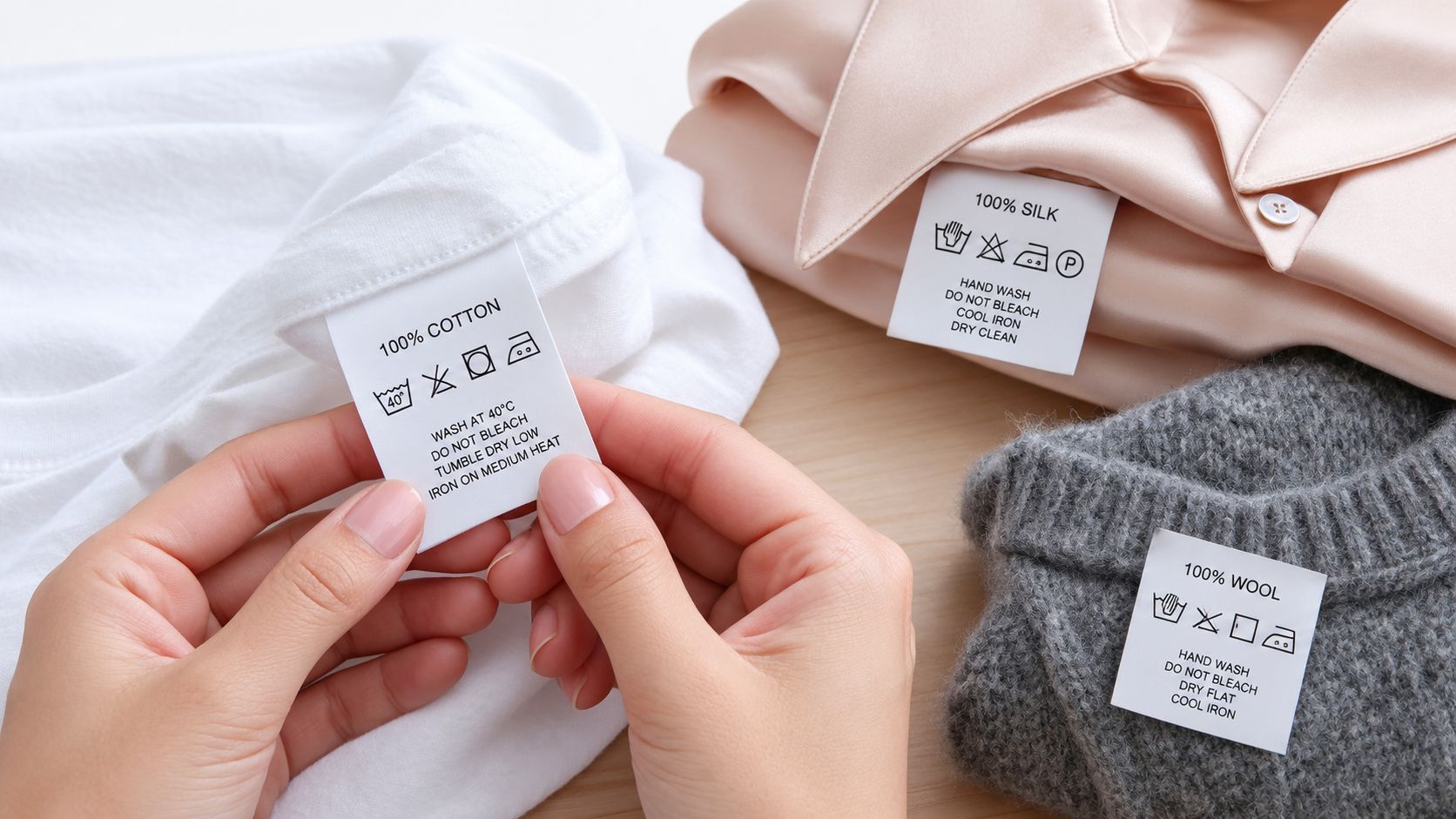
Read the label before you choose the product
A washable cotton T-shirt gives you room for direct pre-treatment and a normal wash. A rayon blouse or wool knit needs lighter handling, shorter contact time, and less rubbing. If the label says dry-clean only, home treatment should stay minimal unless you fully understand the fibre and dye stability.
Use the label to answer three questions:
- Water temperature: What can the garment safely tolerate in the wash?
- Agitation: Can the fabric handle rubbing, or should you only blot and press?
- Bleach or specialty products: Is the fabric sensitive to stronger treatments?
Adjust the same stain for different fabrics
Take one stain, like coffee. On sturdy cotton, you can flush well from the back, pre-treat, and launder normally. On silk, I'd keep moisture controlled, blot carefully, and stop early if the dye looks unstable.
The same goes for grease. Cotton and many synthetics can usually handle a small amount of dish soap at the spot. Delicates may show rings, texture change, or water marks if you overwork the area.
Fabric-first advice: Save the garment before you chase a perfect first-pass result. A faint stain on intact fabric is easier to fix than fibre damage.
Modern garments also complicate things. Stretch blends, athletic tops, and brushed performance fabrics can trap body oils while reacting badly to harsh rubbing or strong bleach. These pieces often benefit from repeated gentle treatment instead of one aggressive attempt.
For wrinkles after washing and air-drying treated garments, proper finishing matters too. If you're refreshing clothing after stain work, this guide to using a garment steamer helps avoid pressing a still-questionable spot with direct heat.
When to stop on delicate items
Stop home treatment and consider a cleaner when:
- The label says dry-clean only
- The dye moves during spot testing
- The fabric surface changes
- The stain sits on structured tailoring, lined garments, or special finishes
That pause saves clothing. Many people damage a garment not because the stain was impossible, but because they kept pushing after the fabric started saying no.
Household Fixes Versus Store Bought Stain Removers
You don't need a shelf full of removers. You do need to know which simple options are safe, and when a specialised product earns its space.
The short version is this. Household fixes are excellent for first response. Store-bought stain removers are often better when the stain has chemistry that plain rinsing can't solve, or when the mark has already started to set.
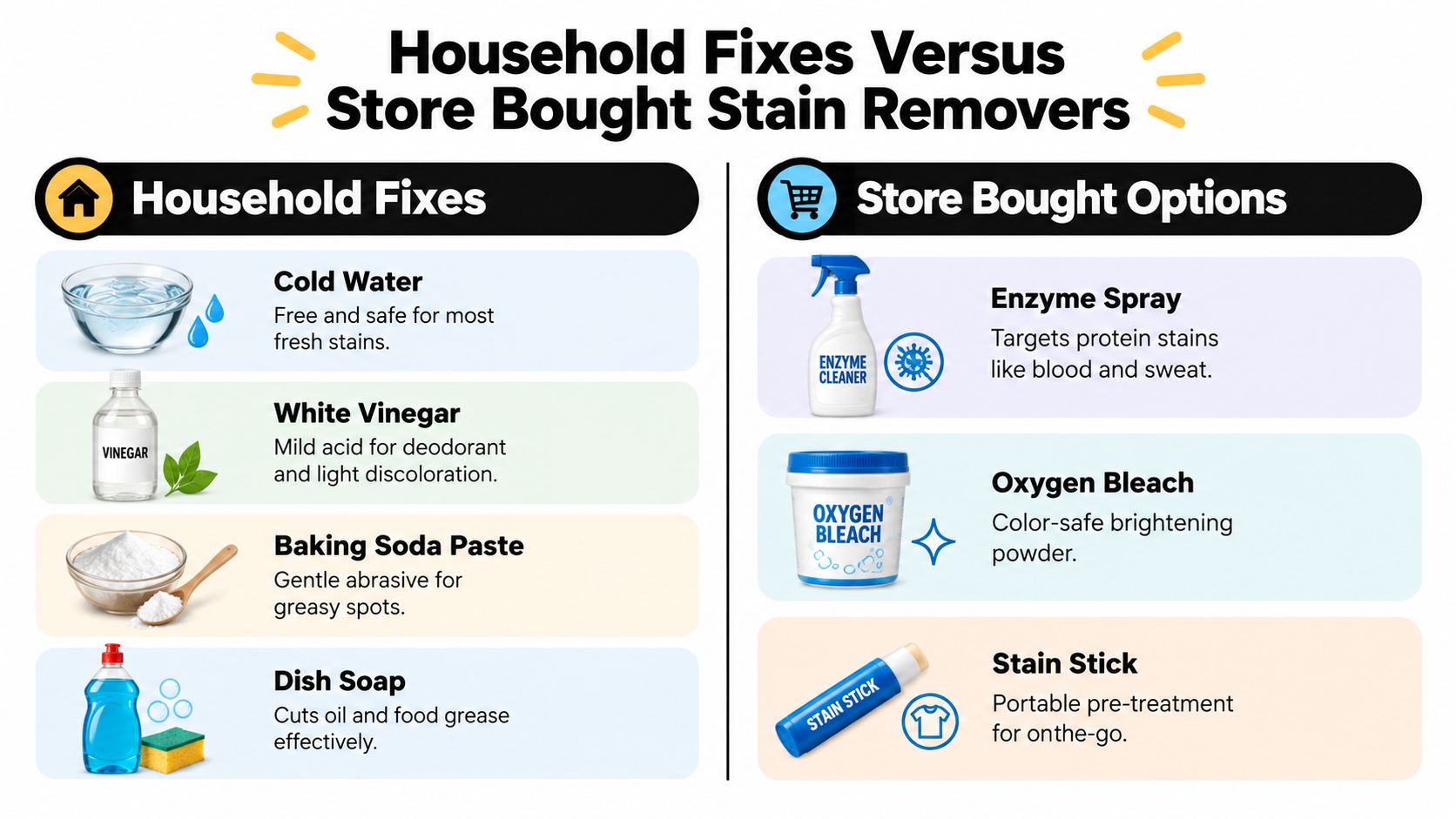
What household fixes do well
Cold water is the most useful zero-risk first step for many fresh stains. It buys time, reduces spread, and lowers the chance of setting residue.
Other common options can help, but they're not universal:
- Dish soap: Useful on oily food stains and kitchen splatter.
- White vinegar: Can help with odour or light residue on some washable items, but test first.
- Baking soda paste: Best treated as a mild helper for surface grime or greasy marks on durable fabrics, not a cure-all.
These are first-aid tools. They're not always enough for pigment-heavy stains, dried marks, or stains with protein and oil combined.
When store-bought products have the edge
For stubborn stains, product guidance from OxiClean recommends fully dissolving an oxygen-bleach solution at about line 2 to 4 per gallon of water, then soaking garments for 1 to 6 hours before washing. Tide Canada similarly recommends soaking in a detergent solution for up to 30 minutes, then washing in the warmest safe setting and re-treating any remaining stain before drying. Consumer Reports also found that its top-performing laundry stain remover outperformed everyday liquid detergent, reinforcing the practical value of specialised pre-treaters, as summarised in OxiClean Canada's stain-removal guidance.
That matters because there are times when detergent alone just isn't enough. A dedicated pre-treater or oxygen soak can lift what a normal wash leaves behind.
A simple toolkit that covers most homes
If I were setting up an under-sink stain kit, I'd keep it narrow and functional:
- Cold-water access and clean cloths for immediate response
- A basic liquid detergent for general pre-treatment
- A grease-cutting dish soap for cooking oils
- An enzyme-based remover for blood, sweat, and food proteins
- An oxygen-based soak for stubborn washable items
Never mix products to try to “boost” performance. And if you use a powder soak, dissolve it fully before the garment goes in.
For people who prefer organised product comparisons instead of a jumble of cleaners, GrifGlo's cleaning supply guides are built around fit-for-purpose decisions rather than giant catalog browsing. That's useful when you're choosing between a general laundry product and a stain-specific one.
Prevention Troubleshooting and When to Call a Professional
The best stain remover is the one you never need. A few habits prevent a surprising amount of damage, especially in homes where cooking, commuting, kids, workouts, and rushed laundry all collide.
Prevention also makes troubleshooting easier because you know what happened, what touched the fabric, and whether heat was involved.
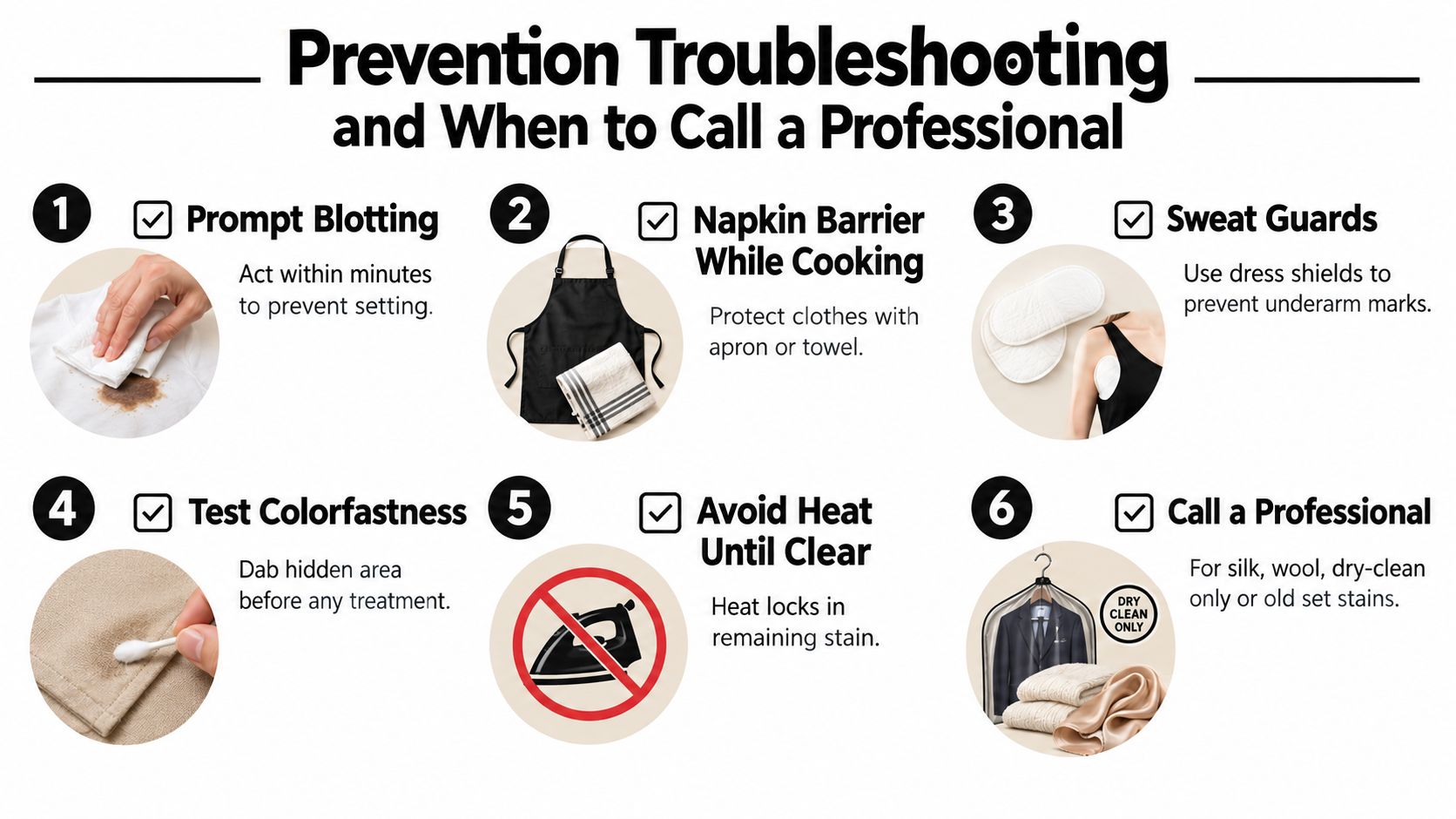
Small habits that save clothes
These are the habits that keep garments wearable longer:
- Blot early: Fresh spills come out more often than forgotten ones.
- Use a barrier while cooking: Aprons, tea towels, and quick shirt changes beat stain rescue later.
- Wash body-soil areas promptly: Underarms, collars, and cuffs respond better before residue builds up.
- Check before dryer heat: Inspect under bright light, especially on pale fabric.
A more organised laundry area also reduces missed stains, product mix-ups, and accidental drying. Simple systems like labelled bins, a soak container, and a clear pre-treatment zone make a difference, and this laundry room organization guide is useful if your current setup works against you.
How to troubleshoot a stain that didn't come out
If a stain survives the first wash, don't panic and don't dry it.
Try this:
-
Identify what likely remains
Is it oil, colour, protein, or a mix? -
Re-treat the visible area
Use the right product, not a stronger random one. -
Soak if the fabric allows
Gentle soaking often does more than extra scrubbing. -
Wash again and air-dry
Check the result before any heat.
If the stain looks lighter, you're making progress. Repeat the safe method. Don't switch to a harsh one just because the first pass didn't finish it.
When a professional cleaner is the smart move
Home treatment has limits. Send it out when the item is silk, wool, structured, lined, dry-clean-only, heavily dyed, or sentimental enough that experimentation isn't worth the risk.
I'd also stop if the fabric loses colour during testing, the stain spreads with treatment, or the surface starts to roughen. At that point, the cleaning problem has become a garment-preservation problem.
The best results usually come from patience, not force. Calm response, cold first steps, stain-specific treatment, and zero dryer heat until the mark is gone. That's the method that saves clothes.
GrifGlo helps people make practical buying decisions for home care, laundry tools, organisation, and everyday household systems without sorting through overwhelming product lists. If you want help choosing useful stain-care, garment-care, or laundry-room essentials that fit real routines, visit GrifGlo.



Leave a comment
This site is protected by hCaptcha and the hCaptcha Privacy Policy and Terms of Service apply.