

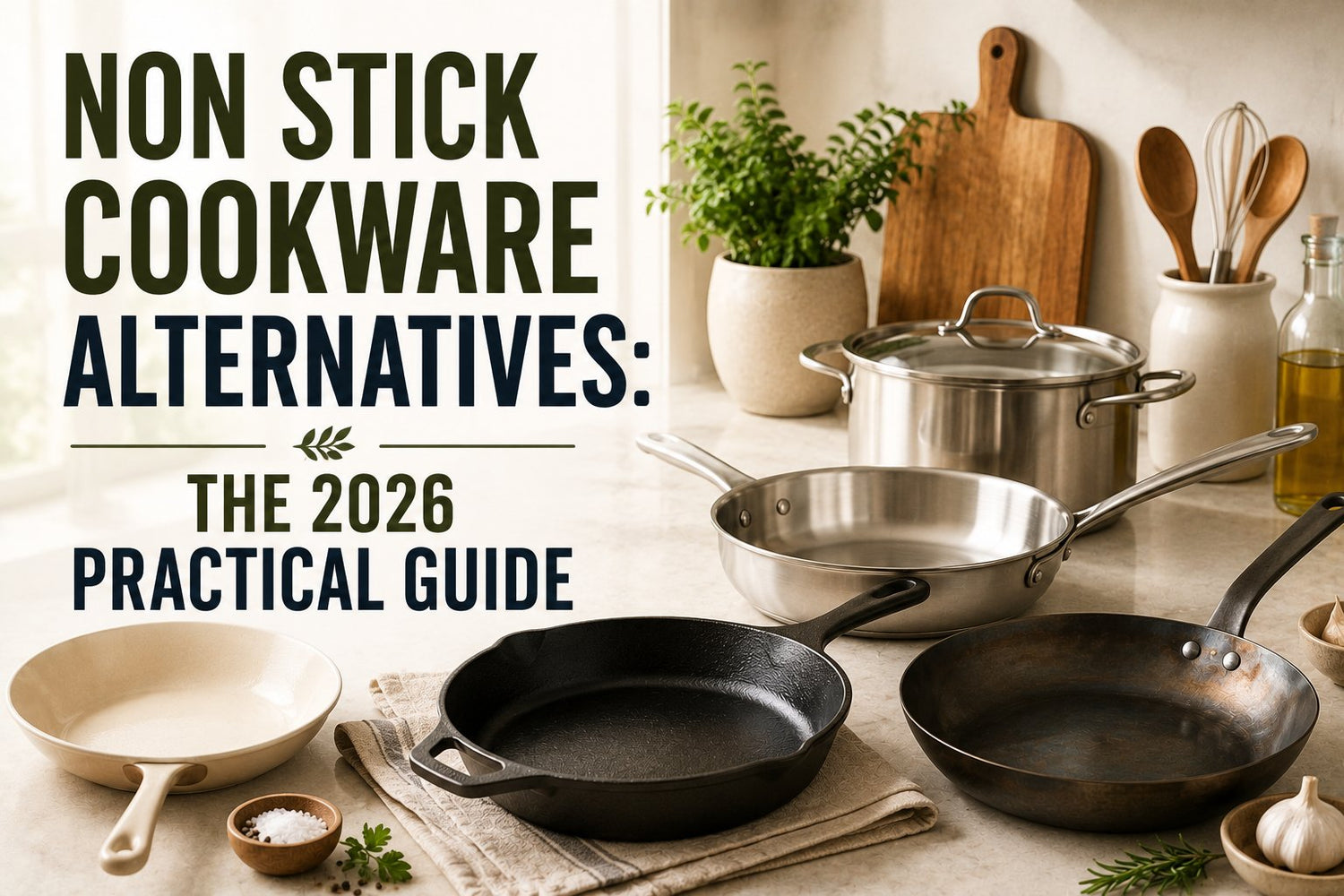
A lot of people land here at the same moment. Their everyday non-stick skillet, the one that handled rushed weekday eggs and late-night grilled cheese, starts to show the first scratches. Then the surface dulls. Then a corner peels. Suddenly the easy pan doesn't feel so easy anymore.
That moment usually triggers the same questions. What replaces it. What's safe. What will last. And what won't make breakfast harder than it needs to be.
The good news is that you don't need to hunt for one magical pan that does everything perfectly. That search usually ends in disappointment. The better approach is to think in jobs. One pan for eggs and quick frying. Another for hard searing. Another for acidic sauces or pan sauces that need precise heat.
That shift changes how you buy cookware. Instead of replacing one disposable skillet with another, you start building a kit that fits how you cook. If you're still weighing the trade-offs in coated pans, GrifGlo's guide to best non-stick cookware is a useful reference point before deciding what to keep and what to move away from.
Table of Contents
- Introduction Beyond the Peel
- Why Seek Alternatives The PFAS Problem Explained
- The Workhorses Cast Iron and Carbon Steel
- The Modern Classics Stainless Steel and Anodized Aluminum
- The So-Called Non-Sticks Ceramic and Pure Ceramic
- Making Your Choice A Buyer's Guide
- FAQ Cooking and Care for Your New Cookware
Introduction Beyond the Peel
The peeling pan is annoying, but it's also useful. It forces a decision most cooks put off for too long. Keep buying the same kind of pan every year or two, or switch to something with a different learning curve and a much longer life.
Rather than a lecture about cookware chemistry, help matching a pan to dinner is often what's sought. If you fry eggs before work, that job looks different from searing steak on a Saturday or simmering a tomato sauce for an hour. A pan that shines at one job can be mediocre at another.
That's why broad pros-and-cons lists often fall short. “Cast iron is durable” is true, but it doesn't tell you whether you'll enjoy lifting it daily. “Stainless steel is versatile” is true, but it doesn't tell you why fish sticks when the pan isn't hot enough. “Ceramic is non-stick” is only half true, because how it works on day one is not how it works after repeated use.
The right question isn't “What's the best pan?” It's “What do I cook most, and how much maintenance am I actually willing to do?”
For most kitchens, the answer is a small collection, not a single hero pan. A seasoned carbon steel skillet for eggs and fast frying. A stainless pan for sauces, sautéing, and anything acidic. Maybe cast iron for hard sears, cornbread, or oven work. Ceramic-coated can still have a place, but it helps to see it as a short-term convenience tool, not a lifetime purchase.
That's the practical route through the world of non stick cookware alternatives. Buy for the job. Accept the trade-offs. Let each pan do what it's good at.
Why Seek Alternatives The PFAS Problem Explained
The push away from traditional non-stick isn't just internet chatter anymore. In California, the 2025 passage of SB 1226, effective January 1, 2026, requires cookware sold in the state to be PFAS-free, which directly removes traditional PTFE-based non-stick from retail shelves and accelerates the shift to ceramic, cast iron, and stainless steel alternatives, according to the legislative summary in the verified data provided.

What PFAS means in plain language
PFAS is the broad chemical family. PTFE is one type used in traditional non-stick cookware. For years, the appeal was obvious. Food released easily, cleanup was simple, and cooking felt forgiving.
The problem is that convenience depends on a synthetic coating with limits. California's broader Prop 65 framework has already flagged PFAS as a carcinogen and reproductive toxin, and the state's legislative case for the cookware ban cited a 2025 peer-reviewed study estimating about 6,864 additional cancer cases annually nationwide from PFAS exposure tied to U.S. cookware and drinking water, with kidney, testicular, and liver cancers showing the strongest correlation, according to the verified data provided.
For home cooks, the issue isn't that every coated pan causes instant harm. It's that the margin for error is smaller than many people think, especially when pans are overheated, scratched, or replaced often.
Why this matters in an everyday kitchen
California's indoor air rules sharpen that concern. The state's 2020 Clean Air Act amendment, AB 2827, classifies overheated non-stick cookware above 500°F or 260°C as a source of hazardous VOCs, and CARB later issued ventilation guidance recommending 15 CFM of exhaust airflow per burner when synthetic-coated pans are used, according to the verified data provided.
A 2023 CARB-sponsored study of 1,200 California households found that 44% of homes using non-stick cookware exceeded the state's 0.01 ppm indoor VOC safety threshold during high-heat cooking, compared with 12% of homes using cast iron or stainless steel, according to the verified data provided.
That helps explain why so many cooks are rethinking the category. Some still keep a coated appliance for a specific job. For example, the HAUZ AOM8021 Non-Stick Omelet & Frittata Maker is described in the catalog as a compact omelet maker with non-stick coated cooking surfaces that makes two portions and can also be used for frittatas, pizza pockets, apple turnovers, and more. That's an appliance with a narrow use case. A stovetop skillet, by contrast, usually sees much wider heat ranges and heavier wear.
Practical rule: If a pan's main advantage is a coating, assume that coating is the part most likely to wear out first.
The big shift in non stick cookware alternatives isn't about panic. It's about durability, heat tolerance, and reducing dependence on surfaces that many cooks end up replacing again and again.
The Workhorses Cast Iron and Carbon Steel
Saturday breakfast is a good test. Two eggs need a slick surface and moderate heat. Hash browns want contact and patience. A steak later that night needs hard searing heat. Cast iron and carbon steel can cover those jobs, but they do not do them in the same way. The right choice depends less on ideology and more on what you cook most often.

What seasoning does
Seasoning is a baked-on layer of oil that bonds to the metal and helps food release more easily. The key point for home cooks is simple. These pans improve through use and care, rather than relying on a factory coating that wears away.
That matters because many first-time users try one cook, get sticking, and assume the pan failed. In practice, the usual problem is one of three things:
- Weak seasoning: The surface has not built up enough yet.
- Poor preheating: Food goes onto metal before the pan is ready.
- Wrong expectation: Cast iron and carbon steel can become very slick, but they need a short break-in period.
This short demonstration is worth watching before your first serious cook on either material.
Upkeep is simpler than the internet makes it sound. Wash the pan, dry it thoroughly, and wipe on a very thin film of oil if the surface looks dry or dull. For a practical routine, GrifGlo's guide to cast iron cookware care covers the basics clearly.
Which one suits your cooking
Cast iron is the better tool when the job is holding heat. Carbon steel is the better tool when the job is reacting quickly.
| Material | Best jobs | Main trade-off | Day-to-day feel |
|---|---|---|---|
| Cast iron | Searing steak, pan-roasting chicken, cornbread, shallow frying | Heavy and slower to respond | Stable, steady, hard to rush |
| Carbon steel | Eggs, sautéing, stir-frying, quick browning | Needs seasoning and can look patchy while building it | Faster, lighter, more nimble |
Cast iron earns its place with foods that benefit from stored heat. Steak, burgers, chops, and crisp-edged potatoes all improve when the pan stays hot after the food goes in. It also moves well from hob to oven, which makes it useful for roast chicken parts, skillet cornbread, and fruit crisps. The trade-off is weight and speed. If you overshoot the heat, cast iron does not forgive you quickly.
Carbon steel fits cooks who want one pan for everyday stovetop work. It is lighter in the hand, faster to preheat, and easier to toss or shift during cooking. I reach for it for fried eggs, omelettes, blistered green beans, and weeknight stir-fries because it responds faster when I turn the burner up or down. A seasoned carbon steel pan can get very close to the easy egg release people want from coated skillets, but it still depends on heat control and a pan with some seasoning built up.
A few limitations deserve honesty.
- Cast iron has a learning curve. It rewards patience more than speed.
- Carbon steel can warp if it is blasted empty over extreme heat. This shows up more often on powerful burners.
- Both need hand washing and prompt drying. They are poor choices for cooks who want dishwasher convenience.
- Both can react with long acidic simmers. Tomato sauce or wine-heavy reductions are better handled in another pan.
For a first purchase, match the pan to the job you do every week. Choose cast iron if your priority is high-heat searing, oven use, and durability that borders on generational. Choose carbon steel if your priority is eggs, fast vegetable cookery, and a pan that feels closer to a classic frying skillet. A lot of well-set-up kitchens end up with both, because each one solves a different problem well.
The Modern Classics Stainless Steel and Anodized Aluminum
If cast iron and carbon steel reward seasoning, stainless steel rewards technique. That's why it stays in so many serious home kitchens. It's durable, non-reactive, and excellent when you want browning without a coating.
Why stainless earns a permanent place
Stainless steel is the pan for sauces, sautéed mushrooms, chicken cutlets, and any meal where the browned bits on the pan become part of the final flavour. It also handles acidic ingredients well, so tomatoes, wine, lemon, and vinegar aren't a problem.
The sticking issue is real, but it's usually user error, not a flaw in the material. The simplest fix is the water-drop test. Heat the dry pan over medium heat. Flick in a few drops of water. If they disappear instantly, it's still too cool. If they sit and sizzle in place, it's not ready. If they gather into a bead that skates across the surface, add your oil, then add the food.
That one habit shifts how stainless steel is viewed.
Preheat first. Oil second. Food third. Reverse that order and stainless often punishes you.
Stainless also aligns well with indoor air concerns around overheated coatings. California's verified data says that under the state's AB 2827 framework, overheated non-stick above 500°F or 260°C is treated as a hazardous VOC source, and a 2023 study found 44% of homes using non-stick cookware exceeded the state threshold during high-heat cooking versus 12% of homes using cast iron or stainless steel, according to the verified data provided. For cooks who sear often, that matters.
GrifGlo's guide to the best cookware for gas stoves is also useful if you're matching pan material to a gas flame, where responsiveness and hot spots shape real-world performance.
Where anodized aluminum fits
Anodized aluminum sits in a different lane. It's usually chosen for lighter weight and quick, even heating. The anodizing process hardens the surface and makes the metal less reactive than plain aluminum, which is why many cooks find it friendlier than stainless when they want a less fussy everyday pan.
It's a good fit for:
- Weeknight sautéing: It heats quickly and doesn't feel heavy in the hand.
- General family cooking: Good when multiple people use the same pan and not everyone wants cast iron upkeep.
- Lower-stress handling: Easier to lift, tilt, and pour from than cast iron.
Still, anodized aluminum isn't one thing. Some pans are uncoated anodized aluminum. Others use anodized aluminum as the body under a non-stick layer. Those are very different products. If you're shopping specifically for non stick cookware alternatives, look past the base metal and check whether a synthetic coating is still doing the food release work.
Stainless is the better choice when you want longevity, fond, and broad versatility. Anodized aluminum makes sense when light weight and fast heating matter most. Neither is naturally non-stick in the way a seasoned pan is, but both work very well once your heat control catches up.
The So-Called Non-Sticks Ceramic and Pure Ceramic
You buy a pan to solve a cooking job. Frying two eggs before work is one job. Roasting a baked pasta or carrying a hot gratin to the table is another. “Ceramic” gets sold as if it covers both equally well, and that is where shoppers get misled.

Ceramic-coated is not the same as pure ceramic
These are two different tools.
Ceramic-coated cookware is usually a metal pan with a sol-gel style ceramic non-stick coating on the cooking surface. Pure ceramic cookware is made from ceramic throughout, with no metal body underneath. Earth911's cookware guide draws that distinction clearly, and it matters because the cooking experience is very different.
Ceramic-coated pans are bought for one reason. Easy release with less fuss than stainless, cast iron, or carbon steel. For soft scrambled eggs, delicate fish, and sticky reheats, that can be useful. I've found them most convincing in homes where someone wants a familiar non-stick feel but does not want to maintain seasoning or learn stainless heat control right away.
The trade-off is durability. Ceramic coatings tend to lose their slickness faster than shoppers expect, especially with high heat, stacked storage, rough cleaning, or a household where different people treat the pan differently. Even good ones are usually better thought of as convenience pans than lifetime pans.
Pure ceramic sits in a different lane. It is usually heavier, slower to heat, and more fragile if knocked or dropped. It is also far less suitable for anyone expecting skillet-like non-stick performance for eggs every morning. Where it makes sense is oven work, gentle baking, casseroles, and dishes that benefit from an inert cooking surface rather than a slick one.
Match the material to the job
If the job is breakfast release, ceramic-coated is the better fit.
If the job is oven-to-table baking, pure ceramic often makes more sense.
If the job is one pan for hard searing, sauce work, and daily abuse, neither is the strongest answer.
That last point matters. A lot of disappointment with ceramic starts when buyers ask it to replace every other pan in the kitchen. Ceramic-coated can handle moderate sautéing and low to medium-heat frying well enough, but it is a poor choice for ripping-hot steak sears or years of heavy nightly use. Pure ceramic can be excellent for lasagna, cobblers, baked dips, and roast vegetables, but it is not the pan I would hand someone who wants fast stovetop responsiveness.
Who should buy which
Choose based on your cooking habits, not the label on the box.
- Choose ceramic-coated if: you want a lower-maintenance bridge away from traditional non-stick, cook mostly at moderate heat, and are comfortable replacing the pan sooner than stainless or cast iron.
- Choose pure ceramic if: you care more about inert material and oven use than slippery food release, and you will handle the piece with some care.
- Skip both if: your real goal is a daily driver for searing, browning, deglazing, and long service life.
One more shopping note. “Ceramic non-stick” and “100% ceramic” are not interchangeable product descriptions. Read the construction details before you buy, especially if material purity is the reason you are shopping this category in the first place.
For baking dishes, casseroles, and oven-focused cooking, ceramic often earns its keep better than it does on the stovetop. If that is your use case, GrifGlo's guide to the ceramic baking dish is the more relevant comparison.
Making Your Choice A Buyer's Guide
Buying cookware gets easier when you stop ranking materials and start assigning jobs.

Match the pan to the job
Start with what you cook on an ordinary week.
If breakfast means fried or scrambled eggs most mornings, a seasoned carbon steel skillet is often the strongest replacement for a traditional non-stick frying pan. It's lighter than cast iron and more comfortable for frequent use.
If dinner often starts with a hard sear on steak, chicken thighs, or chops, buy cast iron first. It's slower, heavier, and better at holding heat through the moment food hits the pan.
If you make pan sauces, simmer acidic ingredients, or want one pan that can sauté, brown, and deglaze without special maintenance, choose stainless steel. It asks for better preheating, but it repays that effort with range.
If you want a familiar non-stick feel while leaving PFAS behind, ceramic-coated can work as a bridge option. Just don't buy it expecting heirloom performance.
A useful kitchen usually has one pan for convenience, one for heat, and one for versatility. Those roles don't need to live in the same material.
A smart starter set
Most households don't need a full battery of pans right away. A practical starting point is:
- One 10- or 12-inch carbon steel or cast iron skillet for frying, searing, and everyday stovetop work.
- One stainless steel sauté pan or skillet for sauces, vegetables, and acidic cooking.
- An optional ceramic-coated pan only if you know you value easy egg release more than long lifespan.
If you're trying to build out a kitchen more deliberately, GrifGlo works as a curated essentials platform that groups home and kitchen tools into decision-friendly categories, which is useful when you're assembling a cookware setup alongside the rest of your kitchen essentials list.
The best non stick cookware alternatives aren't about replacing one pan with a clone. They're about giving each common cooking task a better surface.
FAQ Cooking and Care for Your New Cookware
How do I cook eggs without sticking on stainless steel or cast iron
The verified data notes that recent 2025–2026 lab tests found seasoned carbon steel can achieve egg release comparable to traditional non-stick, but most guides still don't give clear enough instructions, according to Prudent Reviews.
Use this method:
- Heat the pan over medium, not high.
- For stainless, wait until a drop of water beads and moves. For cast iron or carbon steel, wait until the surface is evenly heated.
- Add a small amount of fat and let it heat briefly.
- Crack in the egg and leave it alone for the first moments.
- Use a thin spatula only after the egg naturally releases.
Most sticking happens because the pan is either too cool or the cook tries to move the egg too soon.
How often do I need to season cast iron or carbon steel
Not after every single use. Cook, wash, dry, and watch the surface. If it looks dull, dry, or patchy, wipe on a very thin coat of oil after drying. A full oven seasoning session is more of a reset than a daily task.
Can I rescue a pan with burnt-on food
Yes. For stainless, soak and scrub. For cast iron or carbon steel, use hot water and a non-aggressive scrubber, dry thoroughly, then apply a thin oil film before storing. One messy meal doesn't ruin a good pan.
Which pan is easiest for most people to learn
Ceramic-coated feels easiest on day one. Stainless has the biggest technique payoff. Carbon steel is often the best balance once you get through the first stretch of seasoning and heat control.
GrifGlo helps shoppers sort through practical kitchen decisions without wading through endless catalog pages. If you're comparing materials, appliances, or everyday cooking tools, GrifGlo organises those choices into straightforward guides so you can buy for how you cook.

Leave a comment
This site is protected by hCaptcha and the hCaptcha Privacy Policy and Terms of Service apply.