

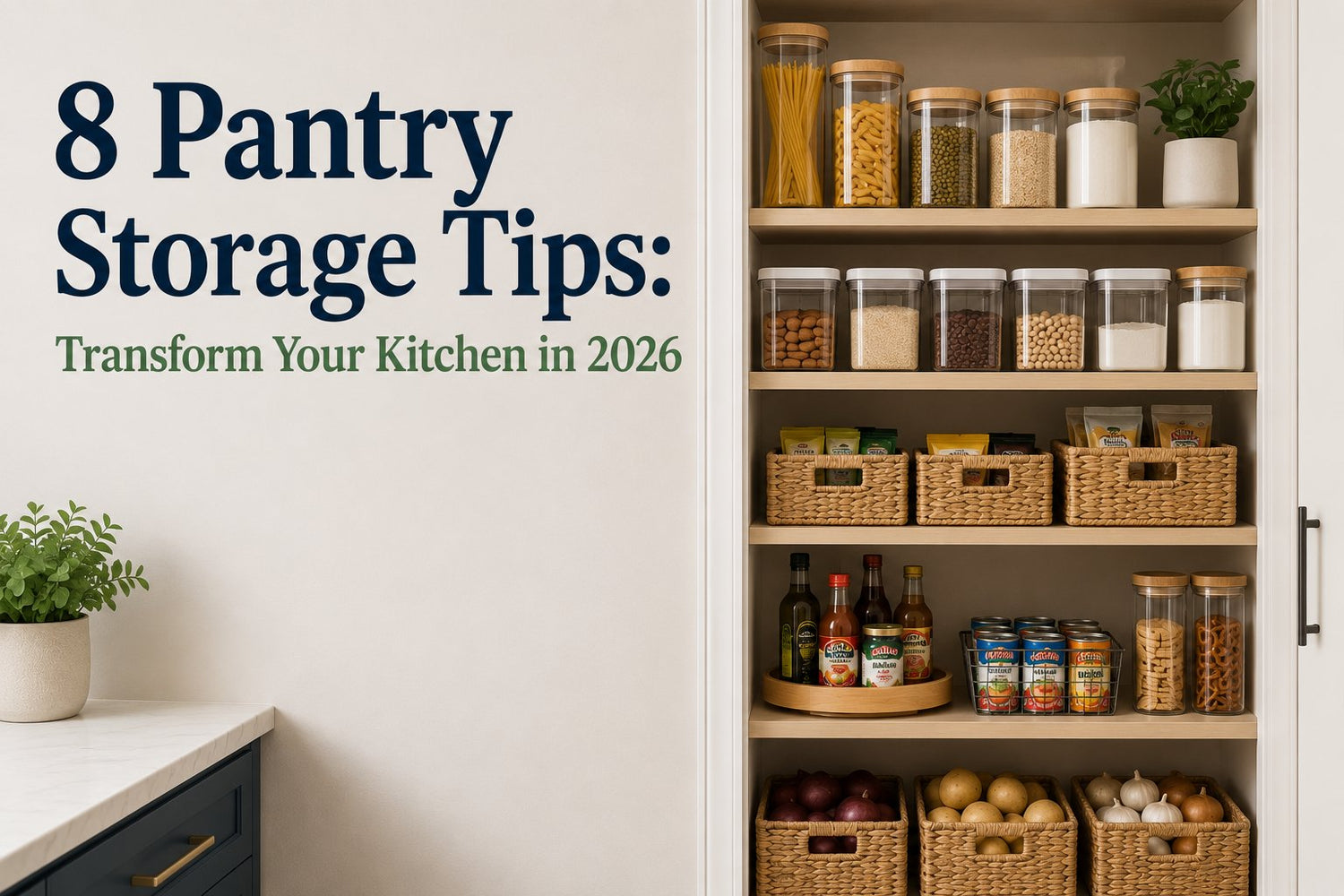
Open your pantry. If you have to move three bags to reach one box of pasta, if cans disappear behind cereal, or if duplicates keep showing up because nobody knew what was already there, the problem usually isn't laziness. It's a weak system. Pantry clutter creates daily friction, and it gets worse when you're working with a small apartment kitchen, a busy family setup, an office snack station, or several rental units that need to stay functional without constant resetting.
Good pantry storage tips aren't about making shelves look styled for one photo. They're about making food visible, reachable, and easy to rotate. That matters even more in places where storage is tight. California had a 2020 Census population of 39,538,223, and many residents live in apartments or other multi-unit housing where pantry space is limited, which makes vertical storage, clear bins, and shelf zoning especially practical, not just decorative, according to ShelfGenie pantry storage guidance.
This guide is built for real use. It works for renters who can't install much, households trying to waste less food, property managers standardising multiple kitchens, and small businesses that need pantry supplies to stay orderly without taking up staff time. Start simple, fix the flow, and your pantry starts helping instead of fighting you.
Table of Contents
- 1. Container Standardization and Clear Labeling
- 2. FIFO First In First Out Rotation System
- 3. Zone-Based Organization by Frequency of Use
- 4. Vertical Space Maximization with Shelf Dividers and Risers
- 5. Bulk Purchasing Organization and Rotation Schedules
- 6. Seasonal Rotation and Deep Pantry Management
- 7. Smart Shelving Solutions for Different Item Types
- 8. Digital Inventory Management and Shopping List Integration
- Pantry Storage: 8 Strategies Compared
- Your Pantry A System, Not Just a Space
1. Container Standardization and Clear Labeling
Mismatched packaging wastes more shelf space than is commonly recognized. Tall cereal boxes lean, flour bags slump, and half-open pouches hide behind sturdier items. When I reset a pantry, one of the fastest improvements comes from reducing visual noise and physical inconsistency at the same time.

Use clear, stackable containers for dry goods you reach for often: flour, rice, oats, pasta, cereal, sugar, snacks, and baking staples. Uniform formats sit cleanly, waste less air space, and let you see inventory before you buy more. If you want a deeper breakdown of container types, this pantry storage containers guide is a useful starting point.
Choose fewer container styles
You don't need a showroom wall of matching bins. You need a short list that solves most of your pantry.
- Use one family for staples: Pick one container line for dry goods so lids, footprints, and stacking behaviour stay consistent.
- Keep original packaging when it helps: Tea bags, seasoning packets, and some speciality grains are often easier to manage in their boxes inside a bin.
- Size up intelligently: Consumer Reports recommends sizing containers to roughly double the volume of the original package so there's room to pour and scoop easily, as noted in Consumer Reports pantry organising advice.
Practical rule: Standardise the container, not every single ingredient. The goal is easier use, not more decanting work.
Label for use, not decoration
A pretty label that only says “flour” isn't enough in a working pantry. Better labels include the item name and a date. For households, that might mean opened-on or best-before notes. For offices, rental properties, or hospitality setups, it can also include refill notes or par levels.
Removable labels make sense for renters who reuse containers often. Waterproof labels work better in humid kitchens. A label maker is tidy, but painter's tape and a marker still beat no label at all.
A related example outside the pantry is the Automatic Egg Dispenser Rack – Rolling Storage Holder, which uses a gravity-fed, 2-tier format to keep eggs organised in the fridge with a small footprint. It's not a pantry tool, but it shows the same principle: consistent containment reduces clutter and makes one-at-a-time access easier.
A quick visual can help if you're rebuilding from scratch.
2. FIFO First In First Out Rotation System
You unload groceries after a busy day, slide the new pasta sauce in front, and the older jar disappears into the back corner for another month. That is how pantry waste happens in real homes, office kitchens, and rental units. FIFO fixes the problem by making the next item to use the easiest one to reach.

Commercial kitchens use FIFO because it reduces waste and makes restocking predictable. The same method works in a one-bedroom apartment pantry, a staff break room with shared snacks, or a multi-unit property where cleaners and managers restock between stays. The trade-off is simple. FIFO adds a minute or two when you put groceries away, but it saves money and cuts cleanout time later.
Set the shelf up for rotation
FIFO fails when it depends on memory. It works when the shelf layout does the reminding for you.
Start with duplicates and short-window items: canned soup, pasta, breakfast bars, crackers, sauces, coffee pods, rice, and baking supplies. Put the older item in front every time you restock. New stock goes behind it, or in a separate back-up area if the shelf is deep.
A few small adjustments make that habit stick:
- Load from back to front where possible: On a deep shelf, place new items at the rear so the older ones stay visible.
- Keep dates readable: Turn labels or stamped dates outward on cans, jars, and boxes.
- Mark opened or purchase dates: A quick note on the lid or side helps with flour, cereal, nuts, and decanted dry goods.
- Use bins for loose packets and pouches: Rotation breaks down fastest with unstable items. A simple bin lets you pull older stock forward without reworking the whole shelf.
- Separate working stock from reserve stock: In small businesses, rentals, or larger households, keep one open-use section and one back-up section so staff or family members do not mix the two.
If you already use bins, these pantry bin and zone setup ideas make FIFO easier to maintain because items stay contained instead of drifting across shelves.
Older stock should sit in the lowest-effort position. If you have to move three newer items to reach it, the system needs adjusting.
FIFO also needs different rules for different spaces. Renters often have shallow shelves and limited room for back stock, so a small quantity on hand works better than overbuying. Property managers and office admins usually need clearer handoff rules, such as “new supplies go in the labeled reserve bin” or “restock from the left, pull from the right.” Small businesses with frequent deliveries benefit from a quick weekly date check, especially for snacks, beverages, and individually packed items that expire unnoticed.
Seasonal goods deserve the same treatment. Holiday baking items, summer grilling staples, and school-lunch snacks should be rotated before the season starts, not discovered after it passes. That one habit keeps a deep pantry usable instead of turning it into storage for forgotten backups.
3. Zone-Based Organization by Frequency of Use
A pantry works best when it reflects how you cook, not how a store arranges inventory. The right zone for coffee isn't the same as the right zone for holiday sprinkles, backup broth, or bulk rice.
National consumer guidance consistently points to the same principle. Keep frequently used items at eye level, place less-used items higher or lower, and group bulk or duplicate items together so food is easier to see and use. In smaller kitchens, especially in apartments and multi-unit homes, that approach matters because every front-facing inch counts.
Build zones around actual routines
Start with use frequency, then assign shelf position.

- Eye level: Breakfast foods, lunchbox staples, coffee, tea, everyday snacks, cooking grains, and weeknight dinner basics.
- Upper shelves: Baking supplies, speciality ingredients, entertaining items, and items you use less often.
- Lower shelves: Heavy goods like flour, oil, bottled drinks, canned cases, and large appliances.
- Deep or secondary space: Overflow, duplicates, seasonal stock, and bulk reserve.
If you use baskets and shelf sections, these pantry bins and zones ideas fit this approach well.
A useful test is whether someone else could put groceries away correctly without asking you where things go. If the answer is no, the zones aren't clear enough. This matters in family homes, but it's even more important in vacation rentals and shared offices where multiple people restock.
A good pantry zone answers one question fast: “Where would I look first?”
Don't over-zone a small pantry. Too many categories create friction. “Breakfast,” “baking,” “snacks,” “dinner staples,” and “backstock” is usually more durable than splitting every shelf into micro-categories that nobody maintains.
4. Vertical Space Maximization with Shelf Dividers and Risers
Most pantry shelves waste height. You see it everywhere: a single row of jars sitting under a big pocket of empty air, or cans stacked in a shaky tower because the shelf itself isn't doing enough work.
Before buying more containers, add levels. A riser, divider, or under-shelf basket can turn one shelf into two usable layers while keeping items visible.
Add levels before adding products

Tiered risers work well for canned goods, spices, jars, and sauces because you can see what's in the back row. Shelf dividers help with baking sheets, cutting boards, boxed wraps, and snack trays that tend to flop sideways. Under-shelf baskets are useful for pouches, napkins, and light packets.
If you're comparing structures, these pantry storage racks examples show the kinds of formats that help in tight cabinets.
A few trade-offs matter here:
- Measure clearance first: Risers can make a shelf feel smaller if tall bottles no longer fit.
- Keep heavier items low: Don't raise dense jars or bulk cans onto flimsy inserts.
- Use vertical tools for visibility, not just capacity: Packing more onto a shelf is useless if the back row disappears again.
I often tell clients to resist stacking until they test reach. If you have to unload the front half of a shelf to access the back half, you didn't gain storage. You just moved the mess upward.
This is especially effective in apartments and rental units where permanent upgrades aren't possible. Freestanding risers, tension shelves, and removable dividers increase capacity without drilling or changing cabinetry.
5. Bulk Purchasing Organization and Rotation Schedules
Buying in bulk only saves effort when the storage side is handled properly. Otherwise, it creates a second problem: overflow. Big bags and duplicate packs crowd the daily-use pantry, and soon the items you need are trapped behind backup stock.
The fix is simple. Separate working stock from reserve stock.
Separate working stock from backup stock
Think of your pantry in two layers. The first is the active shelf where you grab daily items. The second is the reserve area where unopened extras wait their turn. For a household, that reserve might be a high shelf, a hall cupboard, or labelled bins in a utility closet. For an office or rental portfolio, it may be a clearly logged cabinet or storage room.
- Decant only what you need now: Keep one active container of rice, oats, or flour in the kitchen. Store the rest in backup.
- Date the reserve stock: Purchase month or a simple restock note is enough.
- Assign one person to review it: Bulk systems fail when everyone assumes someone else is watching inventory.
- Store duplicates together: Scattered extras create false shortages.
This isn't just a household issue. Small businesses with coffee, tea, condiments, or packaged snacks run into the same problem. So do property managers who supply starter staples across multiple units. A standardised reserve shelf cuts duplicate ordering and makes turnover easier to spot.
In Canada, a useful market proxy is the broader food storage container category. Future Market Insights projects that market at about USD 170.9 billion in 2025, rising to USD 265.3 billion by 2035 at a 4.5% CAGR, according to its food storage container market forecast. The practical takeaway isn't hype. It suggests ongoing demand for modular bins, canisters, and airtight formats that make repeat replenishment easier.
Bulk buying works best for shelf-stable items you already use steadily. It doesn't work well for aspirational purchases. If you rarely bake, a large reserve of speciality flour isn't savings. It's storage pressure.
6. Seasonal Rotation and Deep Pantry Management
Some pantries don't have a clutter problem. They have a depth problem. The shelves are so deep that everyday items end up in front, backstock gets buried behind them, and seasonal supplies vanish until they're expired or irrelevant.
Many standard pantry storage tips often fall short. Bins and labels help, but they don't solve poor flow on their own.
Treat deep shelves like a flow system
Guidance for deep pantry shelves emphasises pullout drawers, clear bins, and a separate overstock area so everyday items don't get buried behind duplicates, as outlined in Neat House Sweet Home's deep-shelf pantry advice. That's the right mindset. A deep shelf should function like staged inventory, not a cave.
Use the front portion for active items only. Use the rear for labelled backup, or don't use the rear at all unless you can pull it forward easily.
Deep shelves punish mixed use. If daily items and overstock share the same row, the back will disappear.
Seasonal rotation makes this more manageable. Move high-use seasonal goods into the active zone before their season starts. Shift them out when demand drops. That can mean baking ingredients in late autumn, grilling supplies in summer, or hot drink extras in colder months.
A few practical habits keep this sustainable:
- Use one bin per season or event type: Holiday baking, summer entertaining, school lunches, guest supplies.
- Set calendar reminders: Quarterly rotation is enough for most homes.
- Review what was used: If a seasonal bin stays full year after year, stop giving it prime space.
If you also manage frozen overflow, this freezer organisation guide pairs well with deep-pantry planning because backup food systems usually fail at the handoff between pantry, fridge, and freezer.
7. Smart Shelving Solutions for Different Item Types
Not every pantry item wants the same environment. That's where many tidy-looking pantries break down in daily use. They group by appearance instead of storage need.
Flour and grains need protection from air and pests. Oils and spices do better away from direct light and heat. Cans need stability. Onions, potatoes, and similar goods need airflow if you store them in a pantry-compatible area.
Match the shelf to the product
The simplest smart-shelving upgrade is to stop forcing every item onto a flat shelf with no support.
- Use airtight containers for dry staples: Flour, rice, oats, cereal, sugar, and grains stay cleaner and easier to portion.
- Use bins for packets and soft bags: Gelatin, gravy mixes, taco seasoning, dried fruit pouches, and snack sachets collapse into clutter without containment.
- Use risers or dispensers for cans and jars: Visibility matters more than stacking height.
- Use open or wire formats where airflow helps: This works for certain produce and utility items, but not for everything.
For narrow doors and compact kitchens, over-the-door pantry organisers can solve a surprisingly common problem: where to put smaller packaged items without stealing shelf depth from bulkier staples.
One practical mistake I see often is storing heavy canned goods on high shelves because the lower shelves are reserved for prettier containers. That looks good for a week and feels bad every time someone reaches overhead for beans or tomatoes. Put heavy, dense items low. Put fragile or frequently handled items where the handoff is easiest.
If you're standardising multiple units, build repeatable shelf logic. Snacks in one spot, breakfast basics in one spot, cans low, cleaning products separate, guest-facing items easy to find. Consistency reduces restocking errors and guest confusion.
8. Digital Inventory Management and Shopping List Integration
You open the pantry, see three half-used bags of rice, and still buy another one because nobody knew what was already in the apartment. The same thing happens in office break rooms, short-term rentals, and multi-unit properties. A light digital system fixes that fast.
Digital tracking works best where more than one person shops, storage is split between a pantry and an overflow closet, or supplies move across several units. It gives households, small businesses, and property managers one shared view of what is on hand and what needs replacing.
The catch is maintenance. If the system asks people to log every snack bar or scan every item, it usually dies within a week.
Build a simple list people will actually use
Use a shared notes app, a basic spreadsheet, or the inventory feature inside a grocery app. The right tool is the one your household, staff, or tenants can update in under a minute.
A workable setup usually includes:
- Core categories only: grains, canned goods, breakfast items, baking supplies, snacks, beverages, cleaning backups
- A low-stock list: add items as soon as they are nearly out
- A quick location note: pantry, hall closet, garage shelf, unit A, unit B
- A date field for key staples: useful for deep pantry items, backup stock, and anything bought in bulk
For renters in small apartments, this prevents duplicate buying when overflow stock lives under a bed or on a high closet shelf. For small businesses and property managers, location notes matter even more. They reduce handoff mistakes and make restocking faster when one person shops and another puts supplies away.
Photos help too. A shelf photo on shopping day is often enough to catch obvious gaps without turning the pantry into an admin project.
Pair the digital list with a short physical review. Check dates, confirm what is low, and update the list on a set schedule. Weekly works for busy family kitchens and office pantries. Every two weeks is often enough for a low-use rental unit. Monthly can work for backup inventory, but only if someone owns the task.
Keep the rules tight:
- Log replacements when you put them away, not later
- Remove items from the list once they are purchased
- Review slow-moving stock before placing bulk orders
- Use the same item names every time so the list stays searchable
I usually tell clients to start with ten to fifteen repeat-purchase items, not the whole pantry. Coffee, pasta, rice, canned tomatoes, cereal, oil, flour, paper goods, and cleaning refills cover most of the waste. Once that is working, add freezer backups, seasonal supplies, or unit-specific stock.
Done well, digital inventory supports the rest of the pantry system. It reinforces zoning, makes FIFO easier to maintain, and helps different users share one process without constant texting, guesswork, or overbuying.
Pantry Storage: 8 Strategies Compared
| Item | 🔄 Implementation Complexity | ⚡ Resource Requirements | ⭐ Expected Outcomes | 📊 Ideal Use Cases | 💡 Key Advantages |
|---|---|---|---|---|---|
| Container Standardization and Clear Labeling | Moderate, upfront sorting and labeling effort; low ongoing maintenance | Medium, cost for matching airtight containers, labeler, storage space | High, better freshness, reduced waste, improved visibility | Households, rental/hospitality, bulk storage | Consistent inventory tracking, pest protection, cohesive aesthetics |
| FIFO (First In, First Out) Rotation System | Low–Moderate, simple process but requires discipline at restocking | Low, basic shelf organization tools (risers, labels) | High, minimizes spoilage and replacement costs | Commercial kitchens, families, property managers | Simple, scalable, effective waste reduction |
| Zone-Based Organization by Frequency of Use | Moderate, requires assessment of habits and occasional reconfiguration | Low, bins, dividers, pull-out baskets | High, faster prep, ergonomic flow, easier checks | Families, renters, meal planners, multi-unit properties | Prioritizes daily items for accessibility and safety for heavy items |
| Vertical Space Maximization with Shelf Dividers and Risers | Low, easy to install and reconfigure; measure before purchase | Low–Medium, risers, dividers; affordable options available | Moderate–High, increases usable capacity without renovations | Apartments, small kitchens, rentals, offices | Maximizes shelf capacity, renter-friendly, improves visibility |
| Bulk Purchasing Organization and Rotation Schedules | Moderate–High, planning, tracking, and rotation discipline required | Medium, significant storage space plus tracking tools (spreadsheets/apps) | High, lower per-unit cost, reliable supply when managed | Large families, offices, property managers, bulk buyers | Cost savings, fewer shopping trips, scalable for volume |
| Seasonal Rotation and Deep Pantry Management | High, quarterly planning and deliberate seasonal rotation | High, dedicated deep storage space and labeled containers | Moderate–High, seasonal readiness, reduced last-minute shopping | Holiday hosts, meal planners, property managers | Preparedness for seasonal needs, timing purchases to sales |
| Smart Shelving Solutions for Different Item Types | Moderate–High, research and customization for item-specific storage | Medium–High, specialized racks, adjustable shelving, possible installation | High, extends shelf life, protects fragile or sensitive items | Kitchens with mixed item types, hospitality setups, property managers | Optimizes storage by item type, improves safety and longevity |
| Digital Inventory Management & Shopping List Integration | Moderate, initial setup and ongoing data entry needed | Low–Medium, smartphone/app subscriptions, cloud sync | High, reduces waste, automates shopping lists, provides analytics | Busy households, multi-unit managers, small businesses | Automated alerts, barcode scanning, synced lists and reports |
Your Pantry A System, Not Just a Space
The best pantry storage tips don't start with matching labels or a shopping spree. They start with one decision: your pantry needs to support use. That means the everyday items should be easy to reach, duplicates should be easy to spot, and older food should be easier to use before newer food.
If your pantry is small, focus on zoning and vertical gain first. Clear bins, shelf risers, and a defined backup area usually solve more than people expect. If your pantry is deep, stop treating it like one open shelf. Treat it like active stock in front, reserve stock behind, and give overstock a separate home whenever possible. If multiple people use the space, make the system readable enough that they can follow it without asking.
For renters, the smartest upgrades are usually removable and portable. Freestanding risers, bins, labels, and baskets can move with you. For homeowners, you may eventually add pullouts or built-ins, but the underlying logic stays the same. For offices, short-term rentals, and property managers, repeatability matters more than aesthetics. A pantry that different people can restock correctly is a strong pantry.
A few habits make the biggest long-term difference. Put new items behind old ones. Group duplicates together. Keep heavy items low. Give deep shelves containers that pull forward. Review seasonal goods before the season starts, not after it ends. And if your inventory lives in more than one place, use a shared digital list so purchases match reality.
You also don't need to do everything at once. In fact, full decant-and-label resets often fail because they ask too much effort up front. Start with the shelves that create the most frustration. Usually that's breakfast, snacks, baking, canned goods, or bulk overflow. Fix one zone, test it for a week, then keep going.
If you're comparing tools and layouts as you build the system, GrifGlo is one relevant option for organisation guides and product category comparisons tied to practical kitchen use. That's useful when you want help narrowing choices without turning pantry setup into a research project of its own.
A calm pantry isn't about perfection. It's about fewer hidden items, fewer duplicates, less waste, and less friction at the exact moment you need to make dinner, restock a rental, or pack tomorrow's lunch. That's a system worth building.
If you're refining your pantry setup and want decision-friendly guidance on bins, racks, kitchen tools, and organisation essentials, browse GrifGlo for practical comparisons and buying guides built around real home, rental, and small-business use.



Leave a comment
This site is protected by hCaptcha and the hCaptcha Privacy Policy and Terms of Service apply.