

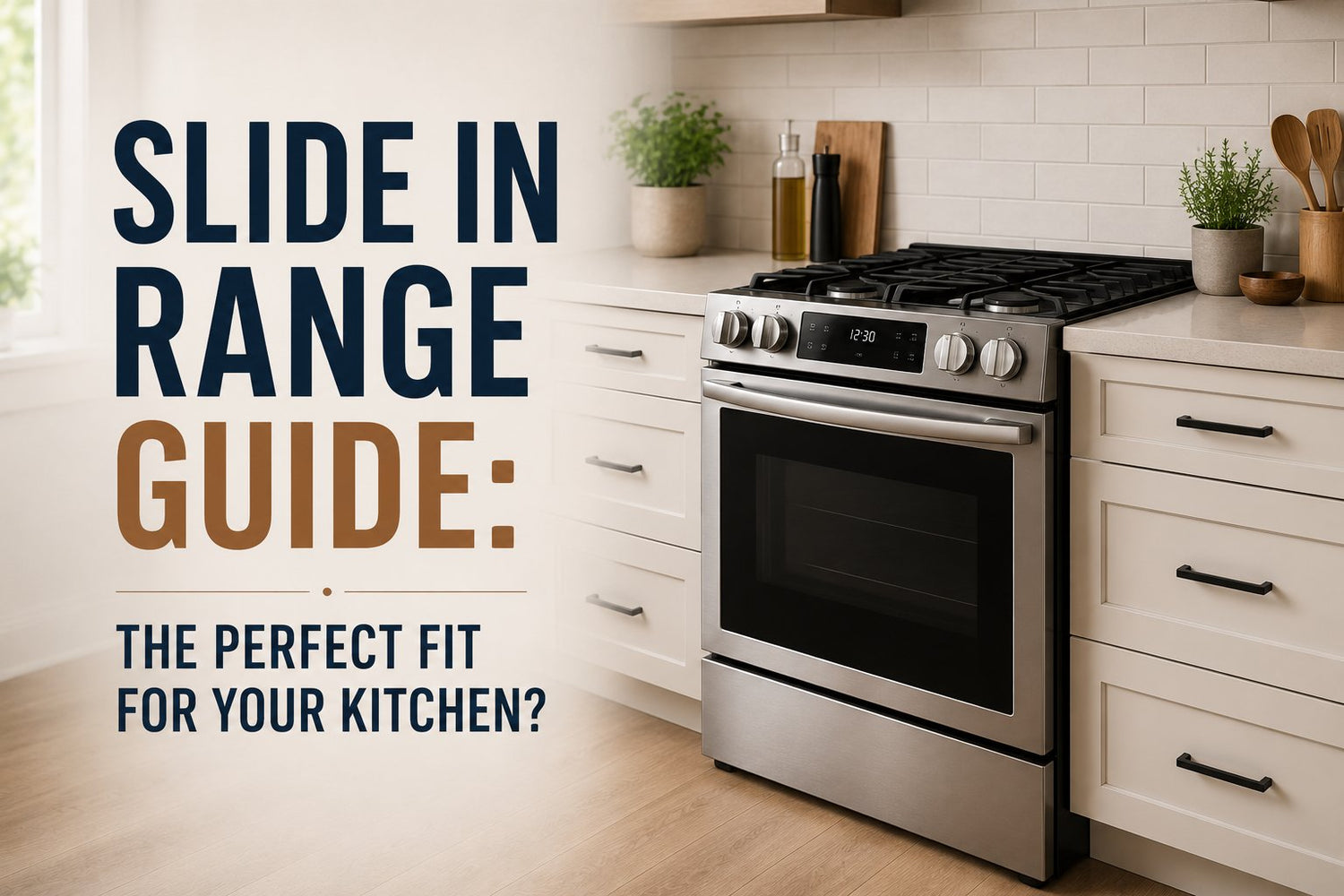
You're probably in one of two situations right now. Your old stove is failing, or you're remodelling and want the kitchen to look cleaner than it does with a basic range pushed into an opening.
That's where a slide in range starts to look appealing. In a showroom, it often seems like the obvious upgrade. It has a more integrated look, front controls, and fewer visible gaps. However, the important decision happens after the showroom. You need to know whether it will fit your cabinets, line up with your counters, meet local requirements, and still make sense years later when something needs service.
A lot of buying guides stop at appearance. That's not enough. A slide in range can be a smart choice, but only if the opening, utilities, clearances, and long-term maintenance all work in your favour.
Table of Contents
- What Is a Slide In Range
- Slide In vs Freestanding vs Built-In Ranges
- How to Measure for a Slide In Range
- Key Features and Technologies to Consider
- The Real Pros and Cons of Slide In Ranges
-
Frequently Asked Questions About Slide In Ranges
- Can I replace a freestanding range with a slide in model
- Do I need a trim kit
- Are all slide in ranges the same depth
- Are front controls better
- Is a slide in range worth it in an older home
- What's the biggest mistake people make
- Is a built-in setup better than a slide in range
- Who should skip a slide in range
What Is a Slide In Range
You spot one after the counters are installed. The new range looks great from the front, but the sides are visible, the countertop edge does not sit the way you expected, and a small gap starts collecting grease on day one. That is the point where many homeowners realize a slide in range is not just a style choice. It is an installation type.

A slide in range is a single appliance that combines a cooktop and oven and is designed to fit between base cabinets for a more integrated look than a standard freestanding range. The goal is simple. Keep the convenience of one appliance, but make it sit in the kitchen more like part of the cabinetry.
If you have been comparing layouts in a range in kitchen planning guide, this is usually the category that catches your eye when you want a cleaner finish without committing to a separate cooktop and wall oven.
Why people choose one
The appeal usually starts with appearance, but the day-to-day benefits are what make the decision stick.
A slide in range often has front-mounted controls, which leaves the backsplash more open and can make cooking feel more comfortable because you are not reaching over hot pans to change the heat. The appliance is also shaped to meet the counter more neatly, so the whole run of cabinets looks more intentional.
That said, its full value is realized beyond the showroom. A slide in model only looks built in when the opening, countertop edge, nearby drawers, and wall clearance all work together. In an older kitchen, even a small mismatch can mean trim pieces, countertop work, or side panels you did not budget for.
Practical rule: A slide in range is defined less by the oven cavity and more by how the appliance fits the surrounding cabinets and counters.
What makes it different physically
The name causes some confusion. A slide in range does slide into an opening, but so do many other appliances. What sets it apart is the way it is meant to be enclosed and finished.
Here are the parts that matter in real homes:
- Cabinet fit: The unit is usually intended to sit between cabinets, with the sides not treated as a design feature.
- Top edge design: Many models use a cooktop lip or overhang to help cover the joint where the appliance meets the countertop.
- Front control layout: Controls are commonly placed on the front, which changes both the look and how you use the range.
- Depth and rear fit: The appliance body often projects beyond the cabinet box, so you need to check how it sits against the wall, gas line, outlet, and backsplash surface. GE Appliances notes in its slide-in range installation guidance that these models are designed for a built-in appearance and require attention to countertop and rear fit details.
That last point gets overlooked. On paper, a range may "fit" the opening. In practice, the anti-tip bracket, gas shutoff location, power cord path, and countertop overhang can all affect whether the appliance slides fully back and sits level.
A slide in range can be an excellent choice if you want one appliance with a more custom look. It makes the most sense when the surrounding space is measured carefully and you plan for the hidden costs too, including trim, minor counter adjustments, and the extra cleaning that comes with tight seams around the cooktop.
Slide In vs Freestanding vs Built-In Ranges
You can see the difference the day the installer sets the range in place. A freestanding model usually gives you a little forgiveness if the opening is imperfect. A slide-in asks for tighter cabinet alignment and cleaner countertop edges. A built-in setup asks for the whole kitchen plan to support it.

That is the key comparison. It is not just about looks. It is about how much tolerance your space gives you, how visible the appliance sides will be, and how much installation work you want to take on now versus later.
Range Types A Closer Look
| Feature | Slide-In Range | Freestanding Range |
|---|---|---|
| Installation | Fits between cabinets and needs a precise opening | More forgiving and can go into a wider variety of spaces |
| Sides | Typically intended to be enclosed by cabinetry | Finished sides allow stand-alone placement |
| Controls | Usually on the front | Often on a backguard |
| Look | More custom and integrated | More utilitarian and clearly separate from cabinets |
| Cleaning around edges | Countertop overlap can reduce side gaps | Side gaps may catch crumbs and spills |
| Cost | Usually higher | Usually lower |
A built-in cooking setup belongs in a different category. It usually means a separate cooktop and wall oven, planned into the cabinetry rather than purchased as one appliance. That can look the most custom, but it also means more parts, more labor, and more places for a remodel budget to grow.
The price difference between these three options often shows up after the sale. Freestanding ranges are usually the least demanding to replace. Slide-in ranges often cost more up front, and the opening may need minor trim, countertop, or utility adjustments to get the fit right. Built-in setups tend to cost the most because you are paying for separate appliances and more involved installation.
The practical difference in daily use
A freestanding range is the easiest answer for many replacement jobs. If one side will be exposed, the floor is a little uneven, or you need a straightforward swap, it is usually the least troublesome path.
A slide in range makes more sense when the kitchen is being treated as a finished composition. Front controls keep the sightline cleaner, and the range can sit more quietly between the cabinets. But that cleaner look comes with details many showroom displays hide. You still need to think about countertop depth, side clearances for neighboring drawers or doors, and whether the unit can be pulled out later for service without damaging the counter edges.
Built-in cooking setups change daily use in a different way. The cooktop and oven can be placed where they work best for your workflow, which is helpful in larger kitchens or for households that cook often. The tradeoff is long-term complexity. If one component fails, replacement can be less straightforward than swapping a single range.
Cleaning and maintenance deserve more attention than they usually get. Slide-in models can reduce the open gaps where crumbs fall, but tighter seams also mean grease and spills collect right at the countertop joint. Built-in setups can look tidy on the surface while creating more service points underneath. Freestanding ranges are less polished visually, but they are often simpler to pull out, clean around, and replace years later.
For buyers thinking beyond the appliance itself, cookware fit matters too. Front-control layouts can make the cooking area feel more open, especially if you use larger pots or kettles often. If you are also sorting out pan materials and burner performance, this guide to cookware for gas stoves can help you plan the setup as a whole.
If your priority is flexibility and an easier replacement, freestanding usually wins. If you want a more integrated look without committing to separate appliances, slide-in is the middle ground. If you are building the kitchen around cooking zones from the start, built-in offers the most design control and the most planning responsibility.
How to Measure for a Slide In Range
Most slide in range problems begin before the appliance arrives. The opening looked right. The width seemed standard. Then the unit sits proud of the counter, the top doesn't align cleanly, or the installer discovers the outlet or gas connection is in the wrong place.
That's why measuring for a slide in range has to go beyond “it's a 30-inch space”.

The measurements that matter most
Use a tape measure, a straightedge, and a notepad. Measure more than once, especially in older homes where floors and cabinets may have shifted.
-
Opening width
Measure between the cabinets at the front and again at the back. Don't assume the opening is perfectly square. -
Opening depth
Measure from the wall to the front edge of the counter. Then account for how the appliance body, power cord, plug, or gas connector will sit behind the unit. -
Counter height
Measure from the finished floor to the top of the countertop on both sides. A small difference from left to right can make the cooktop line look off. -
Rear utility space
Check where the electrical outlet, junction box, or gas valve sits. A badly placed connection can stop the range from sliding back fully. -
Floor level and cabinet alignment
A slide in range depends on a neat relationship with the counter. If the floor slopes or the cabinets bow inward, the problem becomes visible fast.
A visual checklist helps if you're planning the work with a contractor or trying to document the opening before ordering:
Where many installations go wrong
The most overlooked issue is height where the range meets the counter. People focus on side-to-side fit and forget that the cooktop and surrounding surfaces need to align properly.
Some product pages note that electric cooking elements should sit at least 1 inch higher than the counter, but some California-specific codes require 1.5 inches for heat dissipation in tightly insulated homes, which can create a 0.5-inch misalignment that generic buying guides don't explain, according to this clearance discussion.
If the range fits on paper but the top sits wrong in the room, it doesn't fit.
That's especially important in newer California construction, where tighter envelopes and more exacting code expectations can change what “flush” really means.
Here are the questions worth asking before delivery day:
- Will the appliance sit fully back? Check the utility locations, not just the cavity size.
- Will the cooktop edge rest correctly on the counter? Ask your installer how the model handles overlap and trim.
- Is the counter level? A slide-in model exposes unevenness more clearly than a freestanding range.
- Are nearby finishes heat-safe and code-compliant? This matters more in remodels where cabinets were built around an older appliance.
If you're making related appliance changes at the same time, such as fitting ventilation above the range, this guide on installing an over-the-range microwave can help you think through vertical clearances and layout together.
Key Features and Technologies to Consider
A slide in range can look perfect in a showroom and still disappoint in daily use if the features do not match the way your kitchen works. The better approach is to choose the parts you will notice on a Tuesday night, six months after installation, not the parts that only sound impressive on a product card.
Start with fuel type, because it shapes everything else
Fuel type affects cooking performance, utility requirements, cleaning, repair costs, and even how future buyers may view the kitchen.
Gas gives you a visible flame and quick visual feedback. Many home cooks like that because it feels intuitive, especially for sautéing or simmering.
Electric radiant offers a familiar flat surface and broad model choice. It is often the simplest replacement path in homes that already have the right electrical service.
Induction heats fast, responds quickly, and usually makes cleanup easier because the surface around the pan stays cooler. The tradeoff is cookware compatibility and, in some homes, the added cost of electrical upgrades before the range is even delivered.
Dual-fuel pairs a gas cooktop with an electric oven. That setup can be appealing for households that want the feel of gas on top and more even, dry oven heat for baking.
Price often follows complexity. In many markets, induction and dual-fuel models sit at the higher end of the slide in category, and the upfront price is only part of the story. If your kitchen is not already configured for the fuel type you want, the total cost may include a new circuit, gas line work, permit fees, or a service visit later if replacement parts are brand-specific.
Focus on daily-use features, not showroom extras
A good feature earns its place by solving a recurring kitchen problem.
- Convection cooking: Useful for people who bake cookies on multiple racks, roast vegetables often, or want more even browning.
- Flexible burners or expandable elements: Helpful if your cookware changes from small pans to wide skillets to a griddle.
- Air fry modes: Nice to have for some households, but usually not a strong enough reason to choose one range over another by itself.
- Smart connectivity: Best for cooks who will use alerts, remote preheat checks, or app-based timers as part of a real routine.
Smart features deserve a little skepticism. If nobody in the house uses connected appliances after the first week, app control becomes one more menu to ignore. If you are comparing connected cooking features with the rest of your home setup, these smart home device guides for Alexa-compatible products can help you judge whether those tools fit your habits or just add complexity.
Pay attention to control layout and cleaning burden
Front controls are convenient, but they also collect splatter and fingerprints faster than many buyers expect. A sleek control panel can be easy to use and still take more effort to keep looking clean.
The same goes for cooktop design. Continuous grates on gas models make it easier to slide heavy pots, but they are heavier to remove for cleaning. Smooth electric and induction tops wipe down faster, yet they show scratches, streaks, and burnt-on residue more clearly if the wrong cleaner or cookware is used.
These are small details until you live with them.
Oven features matter more than marketing names
Manufacturers use different labels for similar oven functions, so read past the branding. What matters is whether the oven offers the cooking modes you use, whether the racks glide smoothly under weight, and whether the cavity is easy to clean without harsh chemicals or long self-clean cycles that add wear over time.
If you bake often, look for even heat performance and a layout that fits your sheet pans comfortably. If you cook large holiday meals, check rack positions and usable oven height, not just the total cubic-foot number.
A smart buy here is usually the model that fits your cooking pattern, your utility setup, and your tolerance for maintenance. The range that looks the most advanced on paper is not always the one that costs the least to own or causes the fewest headaches after installation.
The Real Pros and Cons of Slide In Ranges
A slide in range often looks like the polished choice in the showroom. The harder question is how it behaves after delivery, once it has to fit between real cabinets, clear real countertops, and leave enough room for cleaning and future repairs.

Where slide in ranges justify the investment
The strongest advantage is visual, but it is not only about looks. A slide in range finishes the cooking area more like built-in cabinetry, so the range feels integrated instead of dropped into place. In an open kitchen, that cleaner line can make the whole room feel more intentional.
There are also day-to-day benefits:
- Cleaner side transitions: The cooktop usually overlaps the counter edges, which helps block the narrow side gaps where crumbs and grease tend to fall.
- Front-mounted controls: You can change heat settings without reaching over steam, splatter, or a large stockpot.
- Better backsplash continuity: Without a rear control panel, tile, stone, or slab material stays visually cleaner behind the range.
Those benefits matter most for homeowners who cook often and care about how the range fits into the rest of the kitchen, not just how it performs on day one.
Where the trade-offs show up in everyday ownership
The downsides usually appear after purchase. Installation is less forgiving, service access can be tighter, and replacement planning takes more care than many buyers expect.
A slide in range works like a fitted suit. When the surrounding space is straight, level, and correctly sized, it looks excellent. When the floor slopes, the cabinets are slightly out of square, or the utility connection sits in the wrong spot, the same close fit can turn into shimming, trim changes, countertop adjustment, or a visible gap that bothers you every day.
Service is another overlooked issue. Because the appliance sits closely between cabinets and under a counter edge, pulling it forward for repairs can be slower and more awkward than with a freestanding model. That does not guarantee a higher repair bill, but it can add labor time, especially in older kitchens where gas, electrical, or flooring conditions leave little working room.
Other drawbacks are easier to miss in the store:
- Tighter visual tolerance: Small leveling problems are more obvious because the range is meant to align closely with the counters.
- More dependence on surrounding cabinetry: If cabinet sides are not straight or the countertop opening is inconsistent, the appliance will not disguise it.
- Less flexibility later: If you switch brands or appliance styles in the future, you may need trim pieces, fillers, or minor cabinet work to make the new unit look right.
- Potentially higher long-term upkeep: Front control panels and overlapping edges can look sharp, but they also create extra spots for grease, fingerprints, and debris to collect.
That last point matters more than it sounds. A range is not only a purchase price. It is an appliance you clean around, service behind, and live with for years.
If you are comparing total ownership costs across a home, a practical tool like this home energy monitor guide can help you look beyond style and think about electrical load, ventilation, maintenance access, and daily use patterns as one system.
For many homeowners, the advantages still win. A slide in range can be a smart choice when the opening is measured carefully, the surrounding cabinetry is in good condition, and you want a more built-in look. It is a weaker choice when the kitchen has uneven floors, aging cabinets, or a layout that makes future service difficult.
Frequently Asked Questions About Slide In Ranges
Can I replace a freestanding range with a slide in model
Sometimes, yes. But don't assume it's a direct swap.
The opening width may look correct while the sides, counter edge, rear utility position, or floor level make the installation harder than expected. A freestanding range is usually more forgiving. A slide in model asks the surrounding cabinets and counters to do more precise work.
Do I need a trim kit
Not always. You usually need one when the opening is slightly too wide, when the back edge leaves a visible gap, or when you're trying to adapt existing cabinetry that was planned around a different appliance style.
Trim kits are often a fix for mismatched conditions, not something every buyer needs from the start.
Are all slide in ranges the same depth
No. Even if the nominal width is standard, body depth, handle projection, and top overlap can vary by model.
That's why relying on the category name alone is risky. Always work from the exact installation specifications for the model you're considering, then compare those to the actual opening in your kitchen.
Are front controls better
They're better for some people, not all. If you want a cleaner backsplash and easier access to controls, front-mounted controls are often preferable.
If you have very young children at home, some buyers prefer the feel of rear-mounted controls. Others prefer front controls because they don't have to reach over hot cookware. It comes down to your household and habits.
Is a slide in range worth it in an older home
It can be, but older homes need more scrutiny. Check the floor level, cabinet squareness, electrical or gas setup, and service access before you commit.
In many older kitchens, the appliance can be made to work beautifully. But the installation often needs more thought than buyers expect.
What's the biggest mistake people make
They measure width and stop there.
Depth, height alignment, rear clearance, and utility placement matter just as much. If any of those are off, the range may technically fit but still look wrong or install poorly.
Is a built-in setup better than a slide in range
Only if it suits your budget, layout, and cooking priorities. A separate cooktop and wall oven can offer more design flexibility, but that doesn't make it automatically better.
For many households, a slide in range gives the cleaner look they want while keeping the appliance footprint simple and familiar.
Who should skip a slide in range
A freestanding model may be the better choice if you want the easiest replacement path, if the side of the appliance will remain visible, or if the cabinetry is inconsistent and you don't want to modify it.
That doesn't mean slide in ranges are fussy by nature. It means they reward careful planning and punish rushed assumptions.
If you're comparing kitchen essentials, appliance layouts, or everyday tools for a more organised home, GrifGlo provides decision-friendly guides that focus on fit, function, and practical buying choices rather than overwhelming catalog browsing.

Leave a comment
This site is protected by hCaptcha and the hCaptcha Privacy Policy and Terms of Service apply.