

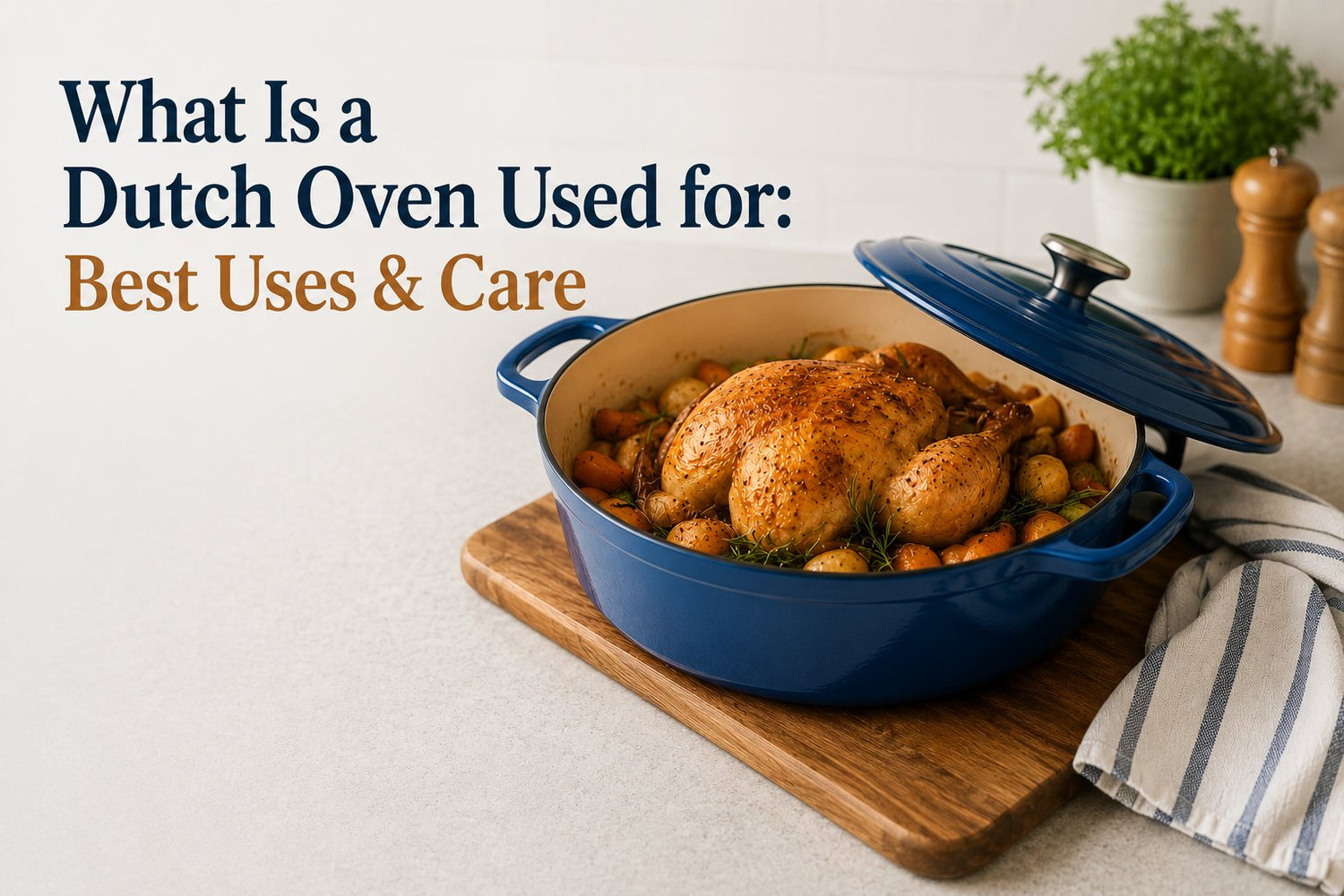
You're probably here because you've seen a Dutch oven in recipes for stew, bread, roast chicken, maybe even pasta, and you're wondering whether it's a genuine kitchen workhorse or just one more heavy pot to store.
That's a fair question, especially if you rent, cook in a small kitchen, or already own appliances that promise easy dinners. A Dutch oven earns its place when you want one vessel that can brown, simmer, bake, roast, and come straight to the table without making the meal feel like a project.
Table of Contents
- The One Pot That Rules Them All
- How a Dutch Oven Actually Works Its Magic
- The Many Talents of a Dutch Oven
- Choosing the Right Dutch Oven for Your Kitchen
- Essential Care to Make Your Dutch Oven Last a Lifetime
- Frequently Asked Questions About Dutch Ovens
The One Pot That Rules Them All
A Dutch oven tends to become the pot you reach for when you want dinner to feel calm. You sauté onions, brown meat, add broth or tomatoes, put the lid on, and let time do most of the work. Later, that same pot can go to the table looking perfectly at home.

At its simplest, a Dutch oven is a thick-walled, tight-lidded pot usually made of cast iron. It's used for slow cooking methods such as roasts, stews, casseroles, braising, simmering, and baking, and practical guides also note that it can move from stovetop to oven and handle almost any recipe that would otherwise go in a conventional oven, as described in this Dutch oven overview.
That definition explains what it is. It doesn't yet explain why people love it.
The reason is flexibility. A Dutch oven isn't just for one signature dish. It can handle a pot of chilli on Sunday, a loaf of bread on Monday, tomato sauce on Tuesday, and a roast on the weekend. If you're trying to keep your kitchen lean, that matters more than owning a specialised piece of equipment that only comes out a few times a year.
A good Dutch oven often replaces the need to juggle a frying pan, casserole dish, stockpot, and roasting vessel for many home meals.
For everyday households, that can make it one of the most sensible entries on a practical kitchen essentials list.
It also answers the core question, what is a Dutch oven used for. It's used for cooking methods that benefit from steady heat, trapped moisture, and one-pot convenience. That includes tender braises, rich soups, oven bakes, crusty bread, and many of the meals people want on a weeknight.
How a Dutch Oven Actually Works Its Magic
A Dutch oven cooks the way a small, steady oven cooks. That's why food often turns out more even, more tender, and less fussy than it does in a thinner pot.

Think of it as your personal oven
The heavy body is doing a lot of the work. According to this guide on how to use a Dutch oven, the thick cast-iron body and tight-fitting lid trap steam and retain heat, which improves temperature stability for braises, stews, soups, roasts, and crusty breads.
That sounds technical, but in practice it means three helpful things:
- Heat stays steady. Once the pot gets hot, it doesn't swing wildly.
- Steam stays inside. Moisture circulates instead of escaping too fast.
- You can start and finish in one pot. You can sear on the hob, then move the same vessel into the oven.
That last point is a big one. If you've ever browned meat in one pan and transferred everything into a baking dish, you know how annoying extra cleanup can be.
Why that matters in real cooking
Think about a beef stew. In a thin pot, the bottom may get too hot before the rest of the pot catches up. In a Dutch oven, the heavier walls help smooth that out. The stew simmers with less drama, and you're less likely to scorch a sauce while waiting for vegetables and meat to soften.
The lid matters just as much. During moist-heat cooking, steam rises from the food, hits the lid, and stays in that enclosed environment. That's one reason braised meat comes out tender instead of dry.
Practical rule: Use a Dutch oven when you want food to cook gently and evenly over time, especially after an initial sear.
It's also why Dutch ovens shine for recipes with stages. You might brown chicken thighs, add aromatics and liquid, cover the pot, then finish in the oven. No transfer. No second dish. No lost browned bits.
If you own a slippery skillet for eggs or delicate fish, keep it. A Dutch oven doesn't replace everything, and a guide to best non-stick cookware can help with those faster, lower-stick jobs. But for hot, heavy, covered cooking, Dutch ovens play a different role.
Because the whole pot gets very hot, protective gear matters. The HOME AESTHETICS HA-4121 2pc Oven Mitt & Pot Holder Set includes a 100% cotton oven mitt with a long 13"/33 cm length for added forearm protection and a 6.75" x 6.75"/17 x 17 cm pot holder that can also work as a trivet, which suits the way Dutch ovens move from hob to oven to counter.
The Many Talents of a Dutch Oven
The Dutch oven moves from being a nice idea to a practical tool. It handles several cooking jobs well, but not for the same reason each time.

For braises and stews
This is the classic use, and for good reason. Tougher cuts of meat need time, moisture, and steady heat. A Dutch oven creates that environment without much babysitting.
You can brown short ribs, chuck, lamb shanks, or chicken pieces first, then add vegetables and liquid, cover, and let the pot work. The result is the kind of meal where the sauce tastes integrated rather than separate from the meat.
A few home-friendly examples:
- Weeknight braise. Chicken thighs with onions, garlic, and stock.
- Cold-weather stew. Beef, carrots, potatoes, and herbs.
- Vegetarian version. White beans, tomatoes, greens, and parmesan rind.
For bread with a crackly crust
A Dutch oven is excellent for baking crusty bread because the enclosed pot creates a steamy baking chamber. That trapped moisture helps the loaf expand before the crust sets, which supports that bakery-style contrast between crisp exterior and softer interior.
If you've only seen Dutch ovens used for no-knead bread, that's a valid use. It's just not the only one.
The same feature that helps stew stay moist also helps bread develop a better crust. The pot controls the environment.
If you already use a dedicated baker for gratins or lasagne, keep that too. A ceramic baking dish guide is helpful for open-surface oven dishes where browning on top matters more than a covered environment.
Here's a practical visual if you want to see Dutch oven cooking in action:
For deep frying and controlled heat cooking
This surprises a lot of people. A Dutch oven can also be used for deep frying because cast iron holds heat for long periods, and guidance also notes use with a steamer basket and for confit at temperatures usually under 300°F, which makes it a controlled-heat vessel rather than just a soup pot, as explained in this KitchenAid Dutch oven guide.
Why is that helpful? Oil temperature drops when you add food. A heavier pot handles that change better than a light pan. You get a steadier fry and less frantic heat adjustment.
That said, this is one place to be honest about tradeoffs.
| Cooking job | Why a Dutch oven helps | When another tool may be smarter |
|---|---|---|
| Deep frying | Heavy pot helps maintain heat | An air fryer may be easier for lower-mess weeknight cooking |
| Confit | Controlled, gentle heat | A smaller saucepan works if you're making a very small batch |
| Steaming | Pot can work with a steamer basket | A dedicated steamer can be lighter and easier to store |
For roasting and everyday oven meals
A Dutch oven does a lovely job with roast chicken, pot roast, baked pasta, and covered casseroles. The lid helps keep meat juicy early in the cook, and you can uncover near the end if you want more browning.
For renters and small kitchens, this matters because one vessel can cover several kinds of dinner:
- Roast chicken with vegetables
- Baked pasta finished in the oven
- Rice or bean dishes that start on the hob and finish covered
- One-pot sausage and peppers
If breakfast bread is more your routine than artisan loaves, a HAUZ ATS7154 4 Slice Toaster Long slot Grey serves a different job entirely, with 2 wide and long slots for all types of bread plus browning control and a cancel function. That's a useful reminder that a Dutch oven is versatile, but it doesn't replace every bread-related appliance.
For soups sauces and hybrid meal prep
A Dutch oven is also good for meals that sit in the middle ground between quick and slow. You can sauté aromatics, simmer a soup, cool leftovers, and reheat the next day in the same pot.
The most value for many people is derived from it in this capacity. Not special-occasion braises. Regular food.
Try thinking in meal patterns instead of recipes:
- Make a large tomato sauce, then use it for pasta one night and baked chicken another.
- Cook soup now, then reheat portions later.
- Build a chilli that starts with browning and ends with a gentle simmer.
- Use it as a one-pot prep vessel when you want fewer dishes.
If your cooking style leans towards one-pot meals, baking, and occasional frying, the Dutch oven starts to look less like a niche purchase and more like a kitchen anchor.
Choosing the Right Dutch Oven for Your Kitchen
Buying the right Dutch oven is mostly about being realistic. Not aspirational. The right one is the one you'll lift, clean, store, and use.
Material choices that affect daily use
The choice is often between enameled cast iron and bare cast iron.
Enameled cast iron is usually the easier fit for home kitchens. It doesn't need the same seasoning routine as bare cast iron, and many people prefer it for acidic foods like tomato-based sauces because cleanup feels simpler. It also moves nicely from cooker to table.
Bare cast iron appeals to cooks who don't mind a bit more maintenance and like traditional cast iron care. It's sturdy and dependable, but it asks more of you after cooking.
Here's the tradeoff in plain language:
- Choose enameled if you want easier day-to-day upkeep.
- Choose bare cast iron if you're comfortable maintaining seasoning.
- Skip both for now if the weight alone means you won't use it.
If you avoid pulling out a heavy pot because your cupboard is awkward or your wrists protest, the pot isn't solving a problem for you.
For some households, a multi-use countertop oven, slow cooker, or stockpot may match daily habits better. For others, a Dutch oven replaces enough separate pieces to justify the shelf space.
Size and shape without the guesswork
The most common mistake is buying too large because bigger feels more versatile. In a small kitchen, oversized cookware becomes dead weight.
A better approach is to match the pot to your real cooking patterns:
- Small household. Think soups, beans, rice dishes, and smaller braises.
- Regular batch cooking. Leave room for leftovers without making the pot hard to handle.
- Occasional entertaining. Consider whether that's common enough to justify extra size.
Round versus oval also matters.
| Option | Usually better for | Possible downside |
|---|---|---|
| Round | Soups, stews, sauces, most everyday hob cooking | Less natural fit for longer roasts |
| Oval | Whole chickens, longer cuts of meat | Can feel a bit less tidy on some burners |
Storage matters too. If you rent or have narrow cupboards, measure the space you have before you buy. That simple step saves a lot of regret.
A practical cabinet plan helps because Dutch ovens are heavy and awkward to stack with lighter pans. This article on how to organize kitchen cabinets is useful if you're trying to work one substantial pot into a tighter layout.
One more point. If you want a decision-friendly way to compare categories, sizes, and use cases across everyday home tools, GrifGlo organises products and buying guides around practical fit rather than endless browsing.
Essential Care to Make Your Dutch Oven Last a Lifetime
A Dutch oven can last for years if you treat it like heavy cookware, not indestructible cookware. Most problems come from thermal shock, rough cleaning, or forgetting that every handle is hot.

Cleaning without damaging the pot
For enameled Dutch ovens, let the pot cool before washing. Warm water, a soft sponge, and patience usually handle most residue. If food sticks, soak it rather than attacking it with anything too harsh.
For bare cast iron, dry it thoroughly after washing so moisture doesn't linger. If needed, apply a light coat of oil after cleaning. The details depend on the finish and condition of the pot, which is why a focused guide to cast iron cookware care helps more than random kitchen lore.
A few habits make a big difference:
- Let it cool first. Sudden temperature changes can stress the pot.
- Use the right utensils. Gentle tools are kinder, especially on enamel.
- Don't store it damp. Dry cookware ages better than neglected cookware.
- Handle stuck-on bits patiently. Time and soaking beat scraping rage.
Heat safety and long term habits
The biggest day-to-day issue isn't seasoning. It's heat. A Dutch oven stays hot for longer than many people expect, and the lid knob and side handles can catch you off guard.
Keep mitts close before you move the pot. Don't wait until it's already in your hands.
Put your heat protection on before you touch the lid. Dutch ovens look calm on the outside even when they're fiercely hot.
If you want dedicated hand protection for oven-to-table movement, the screenshot above points to neoprene mitts, and cotton options can also suit regular use. Build the habit of setting down a trivet or pot holder before the pot leaves the oven.
Long term, the best care routine is boring. Clean it properly, dry it well, avoid rough treatment, and don't bang it around in crowded cupboards. That's what keeps a Dutch oven useful rather than merely durable.
Frequently Asked Questions About Dutch Ovens
Is a Dutch oven worth it for renters or small households?
It can be, especially if you want one pot that covers braises, soups, baking, roasting, and some frying. If storage is tight and you mostly cook very fast meals, a lighter pot or countertop appliance may be the smarter choice.
How does it compare with a slow cooker or pressure cooker?
A Dutch oven is more hands-on, but it browns and bakes in the same vessel. A slow cooker is easier for unattended cooking. An electric pressure cooker is faster for certain meals. The better tool depends on how you cook during the week.
Can it do more than bread and stew?
Yes. Current cookware coverage highlights frying, sautéing, braising, steaming, and smoking, though it often stops short of discussing real-life demand and safety tradeoffs, as noted in this discussion of Dutch oven uses.
Is it a smart buy if I cook only occasionally?
Only if you value one versatile pot more than a set of specialised tools. Occasional cooks often do better with equipment that feels easy to lift, store, and clean.
Can a Dutch oven replace every other pot?
No. It's versatile, not universal. It shines for steady, covered, one-pot cooking. For quick eggs, tiny sauces, or ultra-light handling, other cookware may be easier.
If you're comparing cookware for real-life routines instead of dream-kitchen scenarios, GrifGlo offers practical buying guides and organised essentials across kitchen, home, and everyday tools so you can choose what fits your space, habits, and budget with less guesswork.

Leave a comment
This site is protected by hCaptcha and the hCaptcha Privacy Policy and Terms of Service apply.