

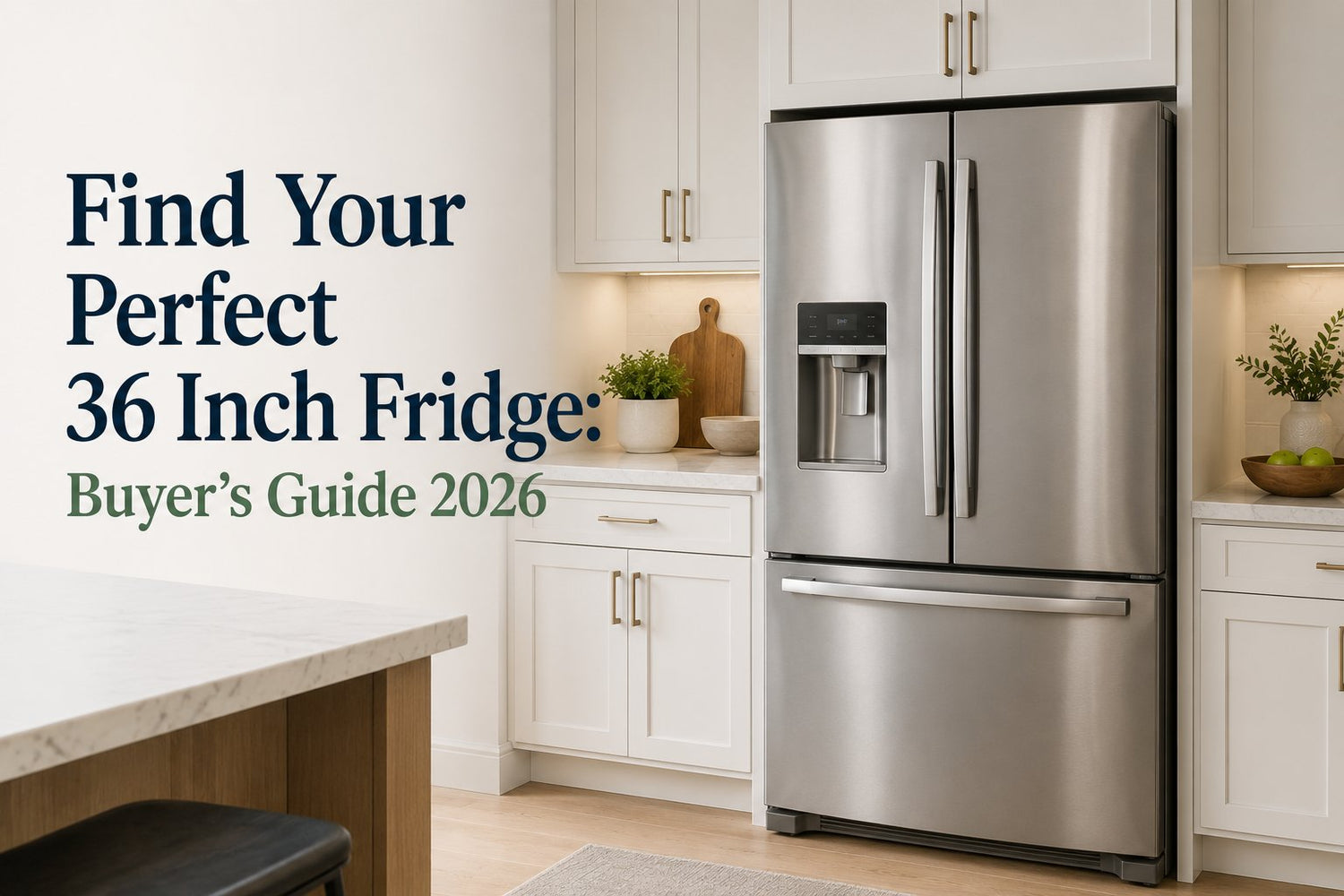
You're probably standing in the kitchen with a tape measure, looking at a fridge opening that seems straightforward until you start reading spec sheets. The label says 36 inch fridge, but then you see case depth, hinge height, door clearance, cutout width, and suddenly the simple purchase turns into a renovation decision.
That confusion is normal. A 36 inch fridge sits in the middle of the market where family-sized capacity, design expectations, and installation risk all collide. It's large enough to feel like a major upgrade, but not so standard that every model fits the same way. Two fridges with the same headline width can behave very differently once you account for handles, door swing, cabinetry, and walkway space.
I've seen this trip people up most often when they shop by width alone. They compare finishes, ice makers, and shelf layouts before they've settled the basic question of fit. That's backwards. If the depth is wrong, the doors can crowd an island. If the height is wrong, the hinges can clip the cabinet above. If the opening is tight, delivery day becomes the worst part of the whole project.
If you're also rethinking the rest of your kitchen setup, a practical kitchen essentials list for everyday cooking can help you decide what deserves space around a large appliance purchase.
Table of Contents
- Why a 36 Inch Fridge Is a Big Decision
- Decoding the Dimensions of a 36 Inch Fridge
- Planning Your Space for a Perfect Fit
- Choosing Your Fridge Type and Style
- The Counter-Depth vs Standard-Depth Tradeoff
- Matching Capacity to Your Household Needs
- Your Essential 36 Inch Fridge Shopping Checklist
Why a 36 Inch Fridge Is a Big Decision
You pick a 36 inch fridge because it sounds safe. Then delivery day comes, the old unit is out, and the new one suddenly feels a lot bigger than the label suggested. It may clear the opening but crowd the walkway, block a pantry door, or leave the handles jutting into the room more than expected.
That is why this purchase deserves more care than many homeowners give it. A 36 inch fridge sits at the center of daily kitchen traffic, and once it is installed, every sizing mistake becomes part of the routine. You notice it when you carry in groceries, when someone opens the freezer while another person is at the island, and when you try to wipe down the sides or reach the wall behind it.
The decision is also bigger than storage. Buyers often focus on cubic feet or door style first, but the better question is how the refrigerator will fit and feel in the room. A standard-depth model can give you more usable volume. A counter-depth model usually keeps the kitchen cleaner-looking and easier to move through. A built-in can sit nearly flush and look integrated, but it changes the budget and the installation requirements.
I see three mistakes cause regret again and again:
- Shoppers buy the category, not the exact unit. "36 inch" is a class of refrigerator, not a guarantee that every model will behave the same in the space.
- They judge fit from the front view only. Depth, door swing, handle projection, and top clearance are what turn a promising choice into an awkward one.
- They match the fridge to the kitchen plan, but not to the household. A family that bulk shops, cooks often, or relies on frozen food uses space very differently from a couple who shops every few days.
A refrigerator this size also affects what belongs around it. Many homeowners redo surrounding storage at the same time, so it helps to review a practical kitchen essentials list for everyday workflow before locking in the appliance layout.
The Decision Beyond the Label
The smart way to judge a 36 inch fridge is to look past the headline width and ask what you are buying in exchange for the space it takes. More depth can mean fewer grocery runs and better bulk storage. Less depth can make a narrow kitchen feel calmer and easier to use. Built-in styling can improve the sightline of the whole room, but only if the cabinetry, ventilation, and budget support it.
A good choice feels natural after installation. A bad one keeps asking for compromises.
Decoding the Dimensions of a 36 Inch Fridge
Most buying mistakes start with one false assumption. People think 36 inches tells them enough. It doesn't. That number is only the nominal width, and it leaves out the two measurements that usually create problems first: depth and height.

Width is only the label
A 36 inch fridge is usually described by the space category it belongs to, not by a guarantee that every part of the appliance measures exactly 36 inches. That's why shoppers need to look at the actual product width on the spec sheet, then compare it against the opening.
The more useful way to think about width is this: the headline number helps you shortlist models, but the manufacturer drawing decides whether one of them can be installed cleanly.
If you're planning to use storage add-ons after the fridge is installed, organisation works better when you think in zones rather than shelf counts. A guide on how to organize your fridge with bins and zones pairs well with dimension planning because the shallower the shelves, the more important internal layout becomes.
Depth changes how the kitchen feels
Depth is where one 36 inch fridge can feel completely different from another. Standard 36-inch refrigerators are often 30 to 34 inches deep, while counter-depth models are typically 24 to 28 inches deep (Orville's fit guide for 36-inch refrigerators).
That difference changes daily use in practical ways:
- Standard-depth models usually carry more food and give you deeper shelves.
- Counter-depth models sit closer to the cabinet line, which can improve sightlines and reduce the feeling that the fridge is pushing into the room.
- Handles and open doors add even more projection, which is why the box depth alone doesn't tell you enough.
A side organiser like the Magnet Shelf Rack for Refrigerator - Kitchen Organizer can be useful in homes that want to keep wraps, paper towels, or small kitchen tools off the counter. It's described as a versatile kitchen organiser with a stable tray, a middle hook position for paper towel storage, and a bottom wooden rail for towels or tools. That doesn't change fit requirements, but it does matter if you're counting on using the fridge exterior as part of your working storage.
Practical rule: If you only measure the cabinet opening and ignore front projection, you're not measuring for the kitchen you actually walk through.
Height can block an otherwise good fit
Height problems often show up late because people measure to the underside of the cabinet and stop there. But a fridge may have a difference between body height and hinge height, and that extra top detail can determine whether it slides in cleanly.
For shoppers, height also affects delivery and levelling. A tall unit that technically fits may still be awkward to tilt into place under upper cabinets. That's especially true in older kitchens where floors have settled and the opening isn't perfectly square.
Planning Your Space for a Perfect Fit
The common failure point is simple. The fridge arrives, the width looked right on paper, and then the doors clip a wall, the cabinet face crowds the handles, or the delivery team cannot make the last turn into the kitchen. A 36 inch fridge purchase goes better when you plan for the actual space around the appliance, not just the label on the spec sheet.

Measure the opening like an installer
Treat the refrigerator opening as a finished enclosure with tolerances, not a simple 36-inch gap. Cabinets drift out of square. Finished floors change height. Side panels and trim steal space in places a quick tape check misses.
Measure width at the top, middle, and bottom. Measure height at both front corners and at the back if you can reach it. Use the smallest number each time. That is the number the fridge has to live with.
Built-in models demand tighter planning than freestanding units. A 36-inch built-in refrigerator is typically engineered for a 35 3/4-inch cabinet width with an 84-inch-tall by 36-inch-wide by 25-inch-deep cutout, so installation depends on cabinet-level tolerances, flush alignment, and unobstructed door swing rather than the nominal width alone (Thermador 36-inch refrigeration specifications).
A practical measuring routine:
- Check opening width in multiple spots. Upper cabinets and floor buildup can pinch the space.
- Measure finished height. Include tile, underlayment, trim, and any cabinet light rail that drops below the face frame.
- Measure depth from the back wall to the cabinet front. That tells you how a standard-depth, counter-depth, or built-in model will sit in the room.
- Check for trim, filler strips, outlet covers, and water lines. Small obstacles cause big installation headaches.
One more point that gets missed. The opening can be correct and still feel wrong once the fridge is installed. A standard-depth model usually gives you more usable storage, but it projects farther into the aisle. A counter-depth unit often looks cleaner from across the kitchen, but you give up interior depth. Built-ins solve the projection issue best, yet they ask for tighter cabinetry and a bigger budget. If you want to pair appliance planning with connected kitchen features, these smart home devices that work with Alexa can help you think through the rest of the space without changing the fit requirements.
After you've measured the opening, it helps to watch an installation walkthrough and compare what you recorded against a real setup process.
Check swing path and delivery path
Door clearance is where a lot of otherwise good choices fall apart. The fridge may fit the cavity and still work poorly every day if a wall, island, pantry end panel, or nearby counter stops the door short. That matters because shelves, crispers, and bins often need the door to open wider than homeowners expect before they can slide out fully.
Handle clearance matters too. So does the space your body needs when you stand in front of the open door.
Delivery path deserves the same attention. Measure the front entry, hallway width, stair turns, elevator depth, and the final turn into the kitchen. In older homes, I also tell people to check door casing depth and low light fixtures. Those details are the difference between a routine delivery and a unit that has to be unboxed in the driveway, have doors removed, or be sent back.
Ask four questions before you buy. Will it get into the home, fit the finished opening, sit level with proper clearance, and open wide enough to work the way you cook?
Choosing Your Fridge Type and Style
Once fit is settled, the next question is how the fridge behaves when you use it every day. In the 36-inch category, style changes more than appearance. It affects shelf width, freezer access, and how the kitchen feels when both doors are open.
French door for wide fresh-food access
French door models make the most sense for people who store wide items in the fresh-food section. Platters, sheet-pan leftovers, party trays, and broad produce drawers all benefit from the wider upper compartment. In daily use, many people also like that you can open one side at a time.
Where French door models can disappoint is hidden in the details. The split upper doors reduce the width of each individual door bin, and some layouts prioritise aesthetics over simple, rectangular storage. If you buy large bottles, meal prep containers, or bulky deli trays, the interior design matters more than the exterior finish.
Side-by-side for freezer visibility
Side-by-side models divide fresh and frozen storage vertically. That layout works well for households that want frozen items at eye level rather than buried in a lower drawer. It also makes it easier to separate categories and avoid stacking everything in deep piles.
The compromise is width inside each compartment. Tall compartments are easy to scan, but wide items can be awkward. Pizza boxes, serving platters, and oversized produce trays may fit less naturally than they do in a French door design.
A simple comparison helps:
| Style | Usually works well for | Can be frustrating for |
|---|---|---|
| French door | Wide fresh-food items, entertaining, produce-heavy shopping | Narrow door bins, lower freezer drawer digging |
| Side-by-side | Freezer visibility, category separation, frequent frozen-food access | Wide items, large platters, bulk awkward loads |
Built-in and panel-ready for a design-first kitchen
Built-in and panel-ready 36 inch fridges appeal to buyers who want the kitchen to read as cabinetry first and appliance second. That look can be excellent in remodels with clean millwork lines, but it comes with tighter install demands and often more sensitivity to door swing, trim alignment, and service access.
This is also the category where feature shopping can go too far. Panel-readiness, smart controls, and premium finishes can all be useful, but they don't automatically improve daily storage. If you're comparing connected appliances across the home, a practical guide to smart home devices with Alexa helps put fridge tech in context so you don't overvalue features you won't use.
The Counter-Depth vs Standard-Depth Tradeoff
This is the decision that changes both the look of the kitchen and the experience of loading groceries. Buyers often treat it like a style preference. It's more serious than that. It's a choice between front-to-back footprint and usable storage.

What you gain with counter-depth
Counter-depth models make a kitchen feel more controlled. They align more closely with surrounding cabinets, reduce visual bulk, and can improve circulation in narrower layouts. In galley kitchens or tighter condo plans, that matters every single day.
They also tend to suit buyers who shop more frequently and store more selectively. If you value a neat sightline and hate the way a full-depth fridge projects into the room, counter-depth often feels like the more intentional choice.
What you give up in storage
The storage penalty is real. For 36-inch models sold through North American channels, a counter-depth French-door model is listed at 19.9 cu. ft. by BlueStar, a true counter-depth Whirlpool unit is 23.4 cu. ft. with 31.4375-inch product depth, while a deeper standard-depth Samsung model on a major California retailer listing is 31 cu. ft.. The reduction in storage volume is roughly one-third to two-fifths, which is the benchmark shoppers should weigh against the cleaner look of a flush fit (BlueStar discussion of 36-inch counter-depth refrigeration).
That tradeoff shows up in ordinary routines:
- Bulk shopping gets harder. Beverage cases, leftovers after holidays, and oversized produce loads fill a shallower fridge faster.
- Shelf management matters more. Vertical stacking can solve some issues, but only if the shelves and bins are arranged well.
- Aesthetics improve immediately. In many kitchens, that alone is enough to justify the smaller volume.
If you're deciding between those two paths, the smartest approach is to think about what you buy most often. A guide to choosing produce storage containers for your fridge can help you judge whether you can realistically make shallower storage work without turning the fresh-food section into a pileup.
Choose counter-depth when the room itself is under pressure. Choose standard-depth when the food load is under pressure.
Matching Capacity to Your Household Needs
A 36 inch fridge can feel roomy in a showroom and cramped two weeks after move-in. I see that most often with buyers who shop by cubic feet alone and miss how shelf depth, bin shape, and door storage affect daily use.
Capacity needs start with shopping habits, not family size on paper. A two-person household that cooks at home, stores meal prep, and buys warehouse packs can outgrow a poorly laid out 36 inch model faster than a family of four that shops every few days. The 36 inch label only tells you the cabinet width. It does not tell you whether the interior will hold pizza boxes flat, keep leftovers visible, or fit the containers you already use.
That is why this size has become so common. As noted earlier, 36 inches sits in the middle of the large-fridge market, and many models in this width deliver enough room for full-time family use. At the same time, larger refrigerators have become more complex, so extra features should earn their place. Ice systems, convertible drawers, and in-door dispensers can improve convenience, but they also take up usable space and add more parts that may need service later.
The households that usually get the best use from a 36 inch fridge are the ones that need width more than sheer bulk:
- Families that cook several nights a week. Wider fresh-food sections make sheet pans, produce bins, and leftover containers easier to arrange without stacking everything front to back.
- Households that want visibility. A fridge that lets you see what you have often reduces waste better than a deeper box with more total cubic feet.
- Shared kitchens. In rentals, offices, and multigenerational homes, broader shelves and clearer zones help different users keep food separated.
- Remodeling homeowners with a fixed opening. If the cabinetry is built for 36 inches, choosing a much smaller unit can leave awkward filler gaps and a kitchen that looks unfinished.
One practical test works better than spec sheets. Measure the containers, platters, and grocery items you store every week, then compare them with the shelf layout in the installation guide or showroom floor model. If your routine depends on meal prep bins, stacked deli containers, or produce boxes, a reference on food storage container sizes for real kitchens can help you judge whether you need more usable width, better shelf adjustability, or a better storage system.
Buyers usually regret the wrong interior layout before they regret the wrong cubic-foot number. That is the fit-and-feel reality behind a 36 inch fridge. The best choice is the one that matches how your household stores food on a Tuesday night, not how the appliance looks on a showroom tag.
Your Essential 36 Inch Fridge Shopping Checklist
A good fridge purchase usually feels less exciting in the store than a bad one. That's because the smart buyer checks fit, layout, and service realities before getting distracted by finishes and features.

The checks worth doing before you buy
Use this as your final pass before you commit:
- Confirm the opening properly. Measure width at more than one point and work from the smallest number.
- Check finished height. Look at the underside of cabinets and any hinge projection, not just the body of the appliance.
- Measure kitchen depth accurately. Compare wall-to-cabinet depth with the fridge body, doors, and handles.
- Test door swing on paper. Mark the arc near walls, islands, and tall panels.
- Walk the delivery route. Front entrance, hallway corners, stairs, and the final turn into the kitchen all count.
- Match style to use. French door, side-by-side, and built-in layouts each solve different daily problems.
- Decide on depth before brand. Shoppers waste time comparing features on models that don't suit the room.
- Read the installation drawing. The product page is not enough. The spec sheet is what saves you.
Where buyers overspend or misjudge
Premium 36-inch models deserve extra scrutiny because the footprint can suggest more usable space than is present. A 36-inch built-in French door refrigerator can have as little as 19.3 cu. ft. of capacity, which means some buyers are paying for panel-readiness and design integration while giving up the volume they expected from a large appliance footprint (SKS 36-inch built-in French door refrigerator).
That doesn't make premium models a bad decision. It just means you should know what you're buying.
A short reality check helps:
| Question | Good answer | Risky answer |
|---|---|---|
| Why this depth? | “It fits the aisle and our storage habits.” | “It looked sleek in photos.” |
| Why this style? | “It matches how we use fresh and frozen food.” | “It seemed like the standard choice.” |
| Why these features? | “We'll use them every week.” | “They came with the package.” |
Buy the fridge that solves your kitchen. Don't buy the one that only photographs well in a showroom.
If you want a decision-friendly way to compare practical home purchases, GrifGlo publishes guides, sizing advice, and product comparisons across kitchen, organisation, appliances, and smart living, with an emphasis on fit-for-purpose buying rather than browsing huge undifferentiated catalogues.


Laisser un commentaire
Ce site est protégé par hCaptcha, et la Politique de confidentialité et les Conditions de service de hCaptcha s’appliquent.