

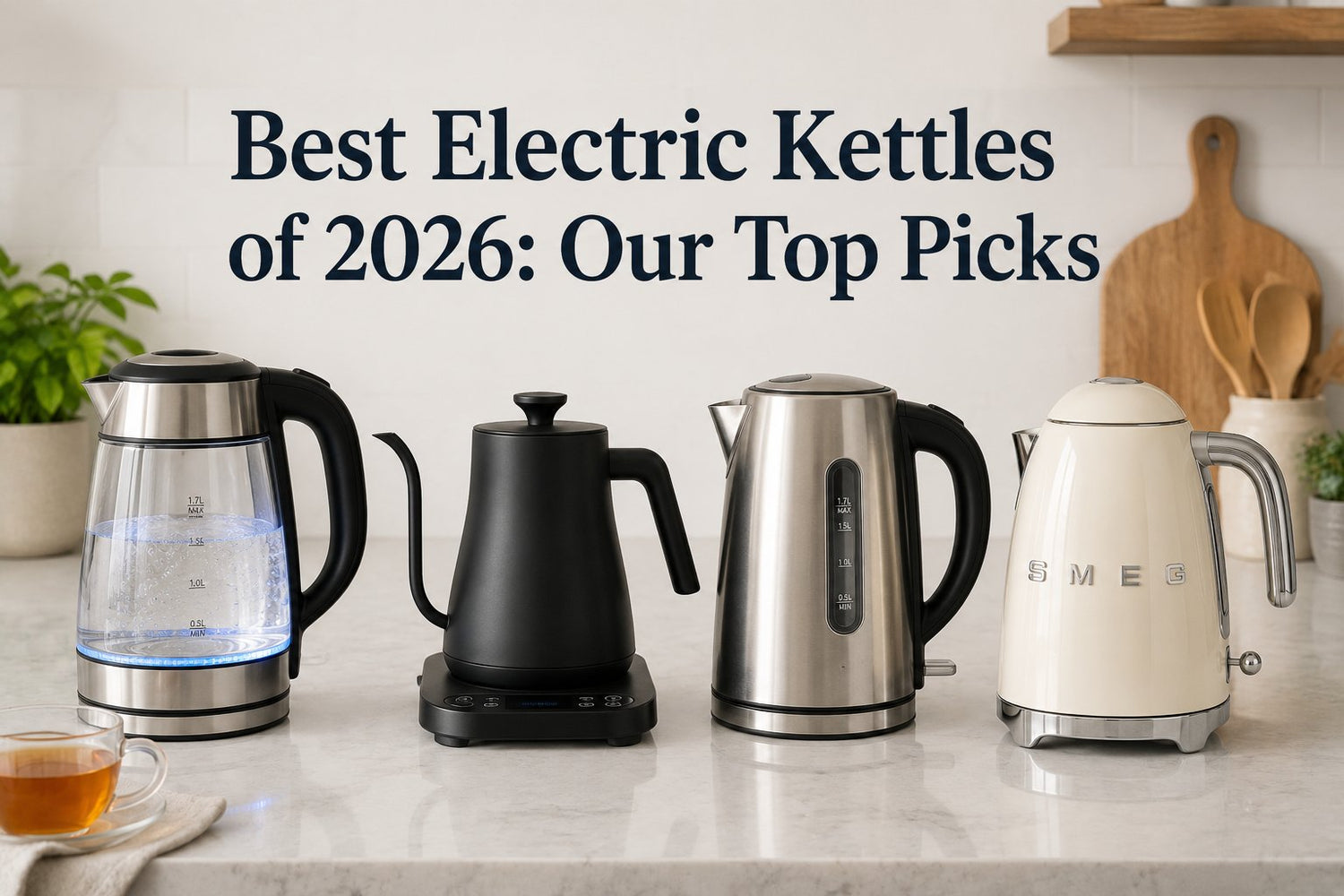
The weak point in most kitchens is not the stove or the coffee maker. It is the kettle you use every morning without thinking about it until it drips, splashes, or takes longer than it should.
That shows up at the worst time. You are making tea before work, rushing out the door, or trying to get oatmeal ready while someone else waits for hot water. In those moments, small design flaws matter. A stiff lid, a clumsy handle, a vague water window, or a shutoff switch that feels cheap can turn a basic task into a daily annoyance.
After testing a lot of kettles, the pattern is clear. Price alone does not predict satisfaction. Many higher-end models add features aimed at pour-over coffee fans, but plenty of households in Canada just need fast boiling, safe handling, and enough durability to survive repeated daily use.
That is the gap this guide is built to address.
For black tea, instant coffee, French press, noodles, or oatmeal, the best kettle is usually the one that gives you the strongest value for the money. Variable temperature control can be useful. A gooseneck spout can be excellent for precise pouring. But those upgrades only pay off if they match how you use the kettle. For many homes and offices, a well-made standard model with quick boil times, a comfortable grip, and reliable auto shutoff is the smarter buy.
Canadian shoppers also face a practical constraint. Availability changes often, model names shift, and a great option in one buying season may be hard to find in the next. That makes it even more important to focus on the features that hold up in daily use, rather than paying extra for premium extras you may never miss.
Table of Contents
- The Search for the Perfect Kettle
- How to Choose an Electric Kettle
- The Best Electric Kettles at a Glance
- Detailed Reviews of the Top Electric Kettles
- Best Kettle for Your Specific Needs
- Reliability Signals and Long-Term Maintenance
- Your Electric Kettle Shopping Checklist
The Search for the Perfect Kettle
A kettle upgrade usually starts the same way. You are trying to get breakfast moving, one person wants tea, another wants instant coffee, and the old kettle turns a simple job into a small annoyance. The switch feels cheap, the fill window is hard to read, and the pour either dribbles or splashes.
That daily friction is why kettle shopping gets harder than it looks. Many models boil water. Far fewer feel good to use twice a day, every day, for years. After testing a lot of kettles, I've found that key differences show up in the parts you notice after the first week, not on the product page. Lid action, handle balance, base stability, clear markings, and a shutoff that works every time matter more than flashy presets for many households.
For tea, oatmeal, ramen, and French press coffee, price-to-performance is the primary filter. A premium kettle can be worth it if the extra money buys better durability, cleaner pouring, and temperature control you will use. It is not worth it if you are paying mainly for a gooseneck spout, app features, or a design statement that adds little to weekday convenience. The same logic applies to other countertop gear. Many buyers comparing burr grinders vs blade grinders run into the same question. Which upgrade improves the daily result, and which one just sounds specialized?
Practical rule: If you mainly boil water for everyday drinks and quick meals, prioritize fast boiling, easy pouring, and reliable shutoff over specialty brewing extras.
The best kettles for average Canadian homes and offices usually land in the middle. They feel sturdier than the cheapest options, but they stop short of charging a premium for niche features many people will never touch.
Poor kettles miss in predictable ways. They look sharp in photos, then pour badly, run hotter on the handle than they should, or take up too much counter space with an oversized base. Good ones disappear into your routine. You fill them quickly, pour without thinking about it, wipe them down once in a while, and get on with your morning.
How to Choose an Electric Kettle
A good kettle should feel easier than the one you already have, not more impressive on a spec sheet.

Start with your actual routine
Capacity is the first filter. If you mostly make one mug at a time, a compact kettle is easier to store, quicker to fill, and less awkward to pour from. If you regularly serve several people, prep oatmeal and tea back to back, or use hot water while cooking, a larger body is more practical.
Here's the simplest way to understand it:
- Solo or occasional use. A smaller kettle suits a desk, condo kitchen, or guest setup.
- General household use. A mid-size kettle tends to be the most flexible shape for daily life.
- Family or shared use. A larger kettle saves repeat boils and handles heavier use better.
A kettle also has to fit your space. Tall, narrow models can work well on crowded counters. Wide-based designs may feel steadier but take up more room. If you tuck appliances away after use, pay attention to handle shape, cord storage, and whether the base is awkward to stack in a cabinet.
Pick the material you'll live with
Material changes both feel and upkeep.
Stainless steel is usually the easiest recommendation for long-term use. It feels sturdy, hides fingerprints better than glass, and tends to suit both modern and traditional kitchens. Glass lets you see the water level clearly and can look cleaner between uses, but it also shows scale faster if your water is hard. Plastic keeps weight down and often lowers cost, though it may feel less substantial.
For people who still prefer stovetop gear, a model like the HAUZ AKL1695 Whistling Stovetop Stainless Steel Kettle 2L shows the trade-off clearly. It's a stainless steel stovetop kettle with a whistle and a classic format, which can suit people who enjoy a simpler tea or coffee routine and don't need an electric base on the counter.
If you dislike seeing mineral marks, glass can test your patience. If you dislike hidden water levels, some stainless designs can do the same.
Pay for features you'll actually use
Shoppers most often overspend for features.
In Canadian buying contexts, the most useful technical differentiator is temperature control granularity. Variable-temperature and gooseneck kettles matter because they let you target brew temperatures instead of only boiling water, which is especially relevant for pour-over coffee and some tea workflows, as noted in this temperature-control discussion for kettles.
But for many households, premium control is optional. If your routine is breakfast tea, instant coffee, and quick noodles, exact increments often don't change the result enough to justify the added cost or the more complicated interface. In those cases, the features that earn their keep are simpler:
- Auto shut-off for safety and convenience
- Boil-dry protection so the kettle doesn't keep heating empty
- A clean, controlled pour that doesn't dribble
- A lid that opens easily for filling and cleaning
- A base that feels stable when docking and lifting
Keep-warm functions can be useful in offices or for tea drinkers who refill often. Real-time temperature displays are helpful if you'll watch them. Presets are only valuable if they match the drinks you make.
If you're building a coffee setup, kettle choice also has to match grind style and brewing method. That's why it helps to understand the difference between burr grinders and blade grinders before spending extra on a precision kettle for coffee.
The Best Electric Kettles at a Glance
Most readers don't need a dozen options. They need a short list that separates everyday value from speciality extras.
Top Electric Kettle Picks for 2026
| Model | Capacity | Material | Temperature Control | Best For |
|---|---|---|---|---|
| Fellow Clyde Electric Kettle | 1.5 L | Stainless steel | No | Most households that want a refined everyday kettle |
| Cosori Speed-Boil Electric Kettle | 1.7 L | Glass | No | Strong value for basic daily boiling |
| OXO Adjustable Temperature Kettle | 1.75 L | Glass and stainless steel | Yes | Tea drinkers who want precision without a gooseneck |
| Fellow Stagg EKG Pro Electric Kettle | 0.9 L | Stainless steel | Yes | Pour-over users and precise single-cup brewing |
| KitchenAid Compact Kettle | 1.25 L | Stainless steel | No | Small kitchens, lighter daily use |
These picks reflect different priorities, not one universal winner. The strongest buy is usually the kettle that removes friction from repeated daily use. That means a comfortable handle, predictable shutoff, a body that's easy to clean, and enough capacity for your routine.
If your broader kitchen setup also needs a reset, GrifGlo's guide to best non-stick cookware is useful alongside kettle shopping because both purchases hinge on the same question: are you paying for real convenience, or just a more expensive feature list?
Detailed Reviews of the Top Electric Kettles
Consumer Reports' 2026 test of electric kettles evaluated 9 kettles and selected 4 standout models, which reinforces a point that shows up in hands-on use: similar-looking kettles don't behave the same once they're filled, heated, and poured.

Best overall for most homes
Fellow Clyde Electric Kettle
This is the kind of kettle that makes sense for people who want a well-made everyday appliance without drifting into specialty territory. It skips temperature control and focuses on the fundamentals: a useful capacity, solid construction, and a form that works for tea, French press, instant meals, and general hot-water tasks.
What works is the balance. It feels more considered than a bargain kettle, but it doesn't ask you to pay for a gooseneck spout or precision interface you may never use. That's why it lands well for general households. It gives you some of the fit-and-finish people associate with premium models, while keeping the workflow simple.
Potential drawback: if you specifically want tea presets or target temperatures, this one doesn't bridge that gap. It's for buyers who want a nicer basic kettle, not a brewing tool.
Best value for simple daily boiling
Cosori Speed-Boil Electric Kettle
For straightforward price-to-performance, this type of kettle is often where the value is. A larger everyday capacity, a familiar shape, and simple controls cover what most kitchens need. If your goal is boiling water without fuss, this style usually offers the clearest return on your money.
The big advantage is that you're not paying for features that sit idle. You fill it, switch it on, pour, and move on with your morning. For households using a kettle several times a day, that simplicity is a strength, not a limitation.
The best budget kettle usually isn't the cheapest one. It's the one that still feels easy to use after months of repetitive, unremarkable tasks.
The trade-off is aesthetic and tactile. Value-focused models can feel lighter, noisier, or less polished in the lid and handle. That doesn't make them bad buys. It just means they're built for utility first.
Best for temperature control without going full specialty
OXO Adjustable Temperature Kettle
This is a smart middle-ground pick. You get variable temperature control and a hold function in a larger format that still suits general kitchen tasks. That makes it more flexible than a narrow-purpose pour-over kettle.
I like this category for tea drinkers who don't want to commit to a gooseneck. It's easier to recommend in homes where one person wants greener tea or more control, but everyone else still uses the kettle for ordinary boiling. A larger body and standard spout make it feel like a shared household appliance rather than a personal brewing instrument.
The downside is cost creep. Once a kettle adds temperature adjustment and hold mode, the price often rises faster than the convenience does for a basic user. If you only ever hit boil, that premium won't earn itself back in daily satisfaction.
Best for pour-over users who know they need it
Fellow Stagg EKG Pro Electric Kettle
This is a specialised tool, and that's both its strength and its limitation. If you care about pour control, slow flow, and exact brew temperature, this type of kettle solves a real problem. If you don't, it can feel like paying more to boil less water with a slower pour.
For coffee enthusiasts, the appeal is obvious. Fine control over both water temperature and stream helps with repeatability. The interface and design also tend to feel more deliberate than mainstream kettles. On a counter, it looks like a piece of brewing equipment because that's exactly what it is.
For everyday household use, the narrower spout and smaller capacity can become annoyances. Filling a large teapot, making multiple mugs quickly, or topping up cooking water is usually easier with a standard-spout kettle.
Buy a gooseneck because you need the pour, not because the kettle looks premium.
Best compact pick for small spaces
KitchenAid Compact Kettle
Compact kettles solve a specific problem well. They fit condo counters, office nooks, and kitchens where every appliance has to justify its footprint. They're also easier to lift and less awkward to store than bulkier full-size models.
This is the right type of kettle when your daily use is modest. One or two drinks at a time, occasional oatmeal, maybe a guest or two. It keeps the setup tidy and reduces the “appliance sprawl” feeling that a large base can create in a small kitchen.
Its limit is obvious. If multiple people use it in quick succession, you may end up running repeat boils and wishing you'd bought a larger model. Compact works best when the household routine is compact.
Best Kettle for Your Specific Needs
The strongest kettle choice depends less on brand loyalty than on what happens in your kitchen between wake-up and lunchtime.

Many “best electric kettles” roundups drift toward premium coffee gear. That overlooks how kettles are typically used. The more useful lens is price-to-performance for everyday boiling. As highlighted in TechGearLab's discussion of electric kettle testing criteria, practical buyers should care more about boil speed, auto shutoff, and basic reliability than niche features for many households.
Best for tea drinkers
Choose a variable-temperature standard-spout kettle, not automatically a gooseneck.
If you drink several types of tea and can taste the difference between a full boil and a gentler target temperature, precision matters. But you probably don't need a slow café pour to get that benefit. A standard-spout kettle with temperature selection gives you the useful part of premium design without forcing you into coffee-specific ergonomics.
That's the sweet spot for most tea drinkers. You get control without losing convenience.
Best budget-minded choice
Choose a simple electric kettle with strong basics.
For everyday value, skip prestige materials and advanced presets unless you know you'll use them. A dependable switch, stable base, readable water window, and clean pour matter more in real life than a long list of modes. The average kitchen gets more use from fast boiling and automatic shutoff than from one-degree adjustments.
If you also like cold coffee drinks and mixed routines at home, GrifGlo's guide on how to make cold foam pairs well with a simple kettle setup because not every beverage upgrade requires another expensive appliance.
Best for small kitchens and condos
Choose a compact cordless kettle.
Smaller spaces reward appliances that store easily and don't dominate the counter. A compact kettle is usually easier to fill at the sink, easier to tuck away, and less visually noisy. For one or two people, that often feels better than owning a large model “just in case”.
Here's a quick visual look at features and form factors that matter in this category:
Best for offices rentals and shared spaces
Choose a durable, low-learning-curve kettle.
Shared spaces punish fussy appliances. The right kettle here has obvious controls, dependable shutoff, and a design that doesn't invite misuse. It should be intuitive enough that anyone can walk up, fill it, and use it safely without asking questions.
For rentals, property managers, or office kitchens, a standard electric kettle often beats a niche model because it's easier to replace, easier to explain, and less likely to be handled incorrectly.
In a shared setting, the best kettle is the one nobody has to think about.
Reliability Signals and Long-Term Maintenance
A kettle can feel great for the first month and become annoying after that if scale builds up, the lid loosens, or the switch starts to feel inconsistent.

What reliability looks like before you buy
This category changes often enough that fresh comparisons matter. A 2024 ABC News guide to choosing an electric kettle shows how actively the market is still being updated, which is one reason older recommendations can age badly even when the product category seems simple.
Before buying, check these signals:
- Material consistency. Stainless interiors and solid lid hinges usually age better than flimsy mixed-material builds.
- Control simplicity. Fewer buttons often means fewer failure points, especially in shared kitchens.
- Base stability. A kettle that docks cleanly every time is easier to live with over years of use.
- Cleaning access. Wide openings and simple interiors make descaling less annoying.
If you already maintain other countertop appliances, the same habits apply here. GrifGlo's guide on cleaning an air fryer reflects the same principle: easier cleaning usually means more consistent performance over time.
How to keep a kettle working well
Descaling is the maintenance task people skip until performance drops. If your area has harder water, mineral buildup shows up faster, especially in glass kettles where you can see it.
A simple routine works:
- Empty standing water after use instead of leaving it in the kettle all day.
- Rinse occasionally so loose residue doesn't settle repeatedly.
- Descale when you notice buildup around the base or side walls.
- Wipe the exterior and handle so oils and fingerprints don't accumulate around controls.
You don't need obsessive upkeep. You need regular enough upkeep that scale doesn't become the reason an otherwise good kettle starts feeling slow, noisy, or unpleasant to pour from.
Your Electric Kettle Shopping Checklist
When brands make broad performance claims, it's easy to lose track of what matters. That's why the most useful benchmark is still heating speed versus capacity. As noted in All-Clad's kettle article on premium kettle choices, brands often say a kettle heats faster than standard options without publishing wattage or boil-time figures. That makes hands-on priorities even more important.
Run through this checklist before you buy:
- Match capacity to your real use. One or two mugs needs a different kettle than a family breakfast routine.
- Choose a material you'll tolerate cleaning. Stainless hides wear well. Glass shows scale sooner.
- Ask whether you need variable temperature. If you only bring water to a boil, don't pay extra for precision you won't use.
- Check pouring comfort. A beautiful kettle that dribbles or feels wrist-heavy gets old quickly.
- Look for auto shut-off and boil-dry protection. These are convenience features and safety features.
- Consider counter footprint. Small kitchens benefit from compact bases and tidy cord storage.
- Think about who else will use it. Shared spaces need simple controls more than specialty features.
- Compare your shortlist against the rest of your kitchen setup using practical buying guides like GrifGlo's kitchen essentials list.
The best electric kettles earn their place by making ordinary routines smoother. That's the standard worth buying to.
If you're narrowing down everyday home purchases and want fewer tabs, clearer comparisons, and more useful buying criteria, GrifGlo organises practical kitchen and home guides around real-life use so you can choose faster and with more confidence.

Laisser un commentaire
Ce site est protégé par hCaptcha, et la Politique de confidentialité et les Conditions de service de hCaptcha s’appliquent.