

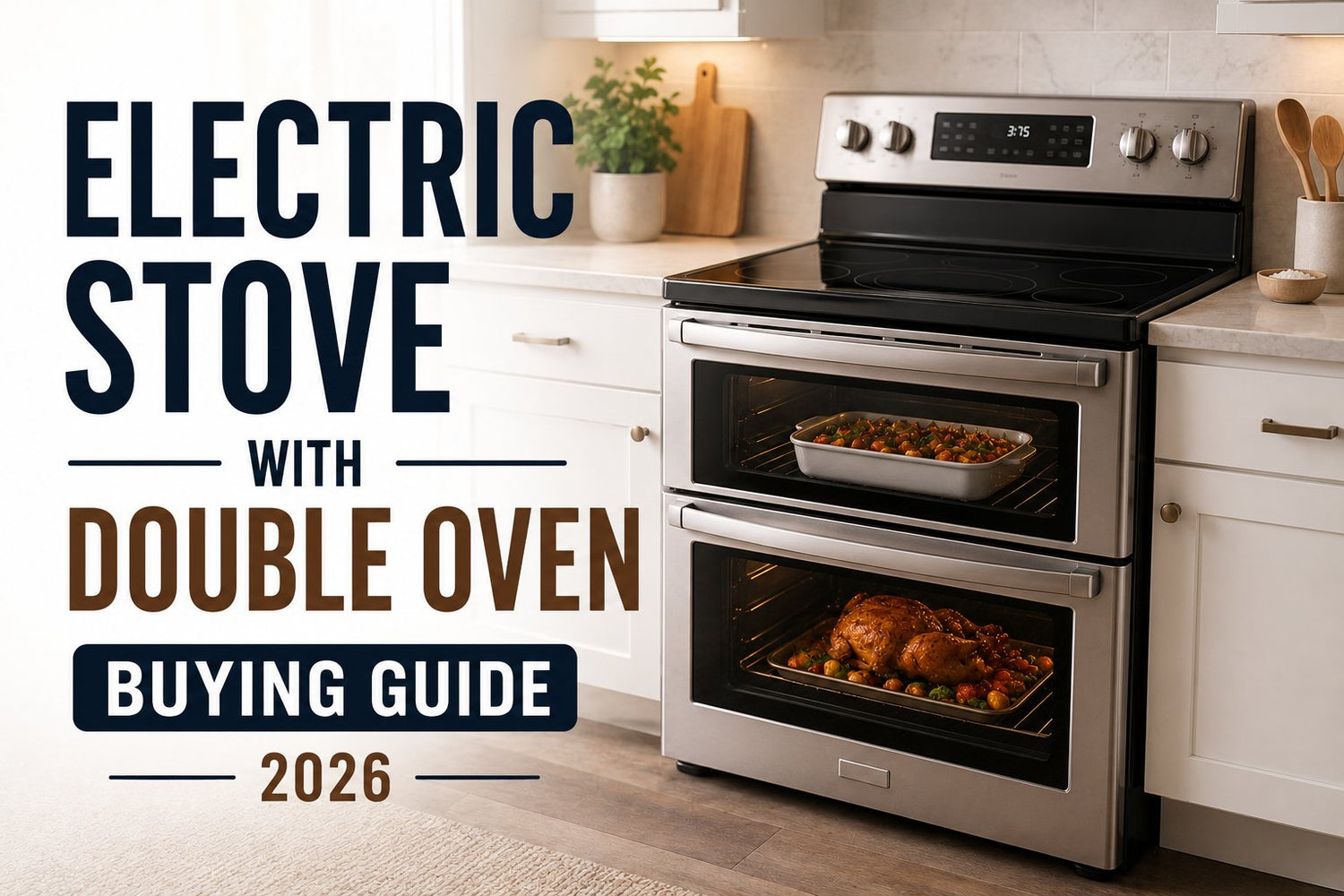
You're probably here because a standard range has started to feel cramped. Dinner runs late because one dish has to come out before the next goes in. Holiday meals turn into a timing puzzle. Or you've found a model you like, then realised your older kitchen may not be ready for it.
That last part matters more than most buying guides admit. An electric stove with double oven can make daily cooking much easier, but it also creates a very specific kind of purchase regret when the appliance arrives and your space, wiring, or cabinet depth won't support it. That's happening more often in retrofit-heavy markets where people are moving to electric cooking without building a brand-new kitchen around the appliance.
A good buying decision starts with how you cook, then moves quickly to fit, power, and workflow. If you approach it in that order, you'll avoid the two most common mistakes: buying for the occasional holiday instead of everyday use, and assuming every 30-inch range installs the same way.
Table of Contents
- Why Double Oven Stoves Are a Kitchen Game Changer
- Understanding the Double Oven Configuration
- The Real Benefits and Practical Tradeoffs
- Critical Sizing and Installation Requirements
- Key Features to Evaluate Before You Buy
- Decision Matrix for Households Renters and Businesses
- Maintaining Your Double Oven Electric Stove
Why Double Oven Stoves Are a Kitchen Game Changer
A double oven earns its keep on the kind of night most kitchens struggle with. One oven has a tray of vegetables that needs high heat. Another dish needs slower baking. Dessert still has to go in. With a single cavity, you end up sequencing everything. With an electric stove with double oven, you separate the jobs and stop treating dinner like air-traffic control.
That's why these ranges appeal to more than holiday hosts. They suit families who batch-cook on Sundays, parents who need dinner and packed-lunch prep happening at once, and anyone who wants one oven free for a quick reheat while the other handles the main meal. If your kitchen is the centre of the house, a second oven changes the pace of cooking.
In California, that shift is especially visible. 72% of households cook with electricity, and 41% regularly cook for over four people, helping drive a 28% sales increase for convection double ovens between 2020 and 2024, according to kitchen stove and appliance statistics compiled here. That tells you something important. Buyers aren't choosing this format just for style. They're choosing it because capacity and efficiency matter in real homes.
A double oven feels like a luxury in the showroom. It feels like a workflow tool the first week you use it.
There's also a layout benefit. A range keeps the cooktop and both ovens in one zone, which is often easier to live with than splitting cooking tasks across the room. If you're comparing formats, GrifGlo's guide to range placement in the kitchen is a useful companion for thinking about traffic flow, landing space, and day-to-day cooking movement.
Understanding the Double Oven Configuration
A double oven range isn't just a taller control panel and an extra door. It's a different cooking layout built into the space where a standard range usually sits.
Two ovens in one footprint

Think of it as two specialised ovens sharing one appliance body. The upper oven is often the quicker, more convenient cavity for smaller meals, side dishes, or broiling. The lower oven usually handles the larger bakeware, roasting pans, and multi-rack jobs.
That split changes your routine in practical ways:
- Weeknight use: Heat the upper oven for a smaller dish without giving the whole kitchen over to one large cavity.
- Big-meal use: Run separate temperatures at the same time so mains and sides don't compete.
- Holding strategy: Finish one dish, then keep it warm while the second oven completes the last item.
Separate controls matter here. On a good electric stove with double oven, you're not managing one compromise temperature. You're assigning each cavity a job.
Practical rule: If you often cook one large item plus two small supporting dishes, the format makes immediate sense.
Handling hot cookware is part of that workflow too. Something as simple as HOME AESTHETICS HA-4121 2pc Oven Mitt & Pot Holder Set fits this setup well because the oven mitt has a 13"/33 cm long design for added forearm protection, and the 6.75" x 6.75"/17 x 17 cm pot holder can help when moving hot dishes between the two cavities or using it as a trivet.
How it differs from wall ovens
A lot of first-time buyers confuse a double oven range with a separate cooktop plus double wall ovens. They're not interchangeable.
A wall-oven setup can feel more ergonomic because both cavities sit higher, but it needs different cabinetry, more planning, and usually more renovation work. A double oven range gives you much of the same cooking flexibility while staying in the familiar range footprint. That's the attraction for households that want more capability without rebuilding the kitchen.
The tradeoff is physical. Because both ovens live below the cooktop, one cavity sits lower than many people expect. If you routinely lift heavy Dutch ovens or large roasts, that becomes an everyday consideration, not a spec-sheet footnote.
The Real Benefits and Practical Tradeoffs
The headline benefit is obvious. You can cook at two temperatures at the same time. But the better reasons to buy this format usually show up in smaller, everyday tasks.

Where the design helps most
The smaller upper cavity is often the secret advantage. It can be more practical for a tray bake, a few baked potatoes, or reheating a casserole because you're not always heating the largest possible space. That's one reason buyers who cook often, not just those who entertain, end up appreciating the format.
Workflow improves too. Smells and moisture stay more contained when foods are separated, and timing gets easier because one dish doesn't hold another hostage. For busy kitchens, that can matter more than raw capacity.
Energy questions come up quickly, and they should. A double-oven electric range can consume 35% more kWh during simultaneous use, but convection can reduce cooking times by up to 25%, which can offset some of that added load, as explained in this range, oven, and cooktop buying guide. In plain terms, running two ovens at once does use more electricity, but an efficient convection cycle may shorten the cooking window enough to soften the penalty.
If you're trying to understand what appliance use looks like in the broader context of your home, a guide like this one on a home energy monitor can help you think beyond the oven itself and spot which routines drive your bill.
What buyers sometimes dislike
Double ovens aren't automatically better for everyone. Some people miss the deep storage drawer found under many single-oven ranges. Others find the lower cavity awkward for heavy cookware, especially during large meals when the pan is hottest and heaviest.
Controls can also take longer to learn. More modes, more timers, and two cavities mean more room for user error if you prefer very simple appliances.
A few tradeoffs are worth weighing before you buy:
- Lower access: Pulling a heavy roast from the bottom cavity may be uncomfortable if you have back, knee, or shoulder issues.
- Smaller individual spaces: Two separate ovens can mean each cavity is less flexible than one tall single oven for unusually bulky cookware.
- Higher purchase cost: You're paying for added hardware, controls, and complexity, not just an extra door.
Buy for your Tuesday dinner routine first. Your holiday meal matters, but your everyday habits decide whether the appliance feels helpful or annoying.
The strongest fit is usually a household that cooks often enough to use both cavities with intention. If you rarely bake and mostly use the cooktop, the second oven may sit idle.
Critical Sizing and Installation Requirements
Many buyers avoid a poor purchase by verifying fit and power. Fit and power aren't small details. They decide whether the stove can be installed safely at all.
Start with the physical opening, then move to the electrical supply. Don't reverse that order. If the appliance is too deep or the cavity isn't aligned, the wiring discussion won't matter.
Measure depth before anything else

Depth catches people out more than width. In California's residential market, double-oven electric ranges typically need 28–30 inches of depth clearance with the door closed, compared with 25–27 inches for many single-oven models, based on this range measurement guide from The Home Depot. In a common kitchen layout, that extra projection affects cabinet recess planning, rear clearance, and how flush the appliance sits.
That same source notes a practical risk. Insufficient rear clearance can contribute to control panel overheating or hinge misalignment. So “it mostly fits” isn't good enough.
Another detail from that guidance is easy to miss: the added depth increases thermal mass, and California Energy Commission benchmarks cited there show electric ovens with higher thermal mass achieve 12–15% better energy efficiency per cycle than lighter single-oven units, particularly when convection is in play. That doesn't mean every deeper unit is automatically cheaper to run. It means the physical design can improve heat retention during longer baking cycles.
Before you buy, watch an installer walk through the basics visually:
The retrofit reality in older homes
The biggest mistake in older kitchens is assuming an electric range is an electric range. It isn't.
A critical, often-overlooked requirement for many double-oven electric models is a 50-amp circuit, not the standard 40-amp found in many pre-2010 homes. That matters enough that 68% of online reviews fail to mention this installation barrier, according to CNET's oven buying guide. If you're retrofitting an older condo, rental, or house, this is one of the first questions to answer.
That retrofit problem is one reason California is such a useful example. Buyers there are often moving towards electric cooking in existing homes, not blank-slate kitchens. If you're comparing range styles while planning that kind of upgrade, GrifGlo's overview of the slide-in range format can help you separate appearance questions from installation realities.
Ask for the model's electrical specification sheet before purchase, then ask an electrician whether your existing circuit matches it. Do that before delivery day.
A pre-purchase checklist
Use this short checklist before you place an order:
- Measure the opening width, height, and depth from more than one point, not just the front edge.
- Check door swing and walkway space so both oven doors can open without blocking normal movement.
- Confirm outlet type and circuit rating against the exact model, not against your old stove.
- Look behind the current range for clearance issues, uneven flooring, or trim that may interfere.
- Read the install guide fully before assuming your current setup is compatible.
If any one of those points is uncertain, pause the purchase. The cheapest fix is the one you catch before delivery.
Key Features to Evaluate Before You Buy
Once fit and power are confirmed, the shopping gets more interesting. At this point, you separate a stove that looks impressive in a showroom from one that works well on a wet Wednesday evening when you're tired and hungry.
Capacity and cavity shape
Capacity numbers matter less than usable shape. A lower oven may look roomy on paper but still feel limiting if the rack positions don't suit your roasting pan or if the upper cavity is too shallow for the dishes you use most.
Look closely at:
- Rack flexibility: More positions help when you're baking and roasting in the same week.
- Upper-oven usefulness: Some upper ovens are ideal for casseroles and sheet pans. Others are better for smaller dishes and warming.
- Door opening height: This affects how easily you can move a dish in and out without tilting it.
Bring your own cookware measurements into the decision. That one habit prevents a lot of disappointment.
Cooktop type and daily use
The top half of the range matters just as much as the ovens. You'll probably use the cooktop more often than either cavity.
A smooth radiant electric top suits buyers who want familiar cookware compatibility and a flat surface that's easy to wipe down. Induction appeals to cooks who care about speed and responsive heat control, but it only works with compatible cookware. If you already own heavy pots you like, check them before getting attached to an induction model.
Your cleaning tolerance matters too. A glossy cooktop can look sleek and still irritate you if every splash shows. Knob placement affects this as well. Front controls are convenient, but they collect grease faster in busy kitchens.
Convection controls and cleaning systems
Convection is worth paying attention to because it changes more than browning. It can also affect timing, especially when both ovens are in use. As noted earlier, simultaneous use can raise electricity consumption, but convection can shorten cooking time enough to offset part of that increase. That makes convection particularly relevant in high-rate areas and for people who cook often.
What to examine in person:
- Convection clarity: Some controls make it obvious when you're using convection bake, convection roast, or a standard bake mode. Others bury those options in menus.
- Control logic: Tactile knobs are quicker for many people. Digital panels look cleaner but may take longer to learn.
- Smart features: Wi-Fi can be useful if you want alerts or remote monitoring, but it's only valuable if you'll use it.
- Self-clean style: High-heat self-cleaning is powerful but intense. Steam-clean cycles are gentler and better for lighter maintenance.
A simple way to decide is to match features to real habits. If you bake every weekend, convection quality matters. If multiple people use the appliance, intuitive controls matter more than app features. If you clean little and often, steam-clean convenience may suit you better than long high-heat cycles.
One useful approach is to keep your research tools organised in one place rather than juggling retailer tabs and screenshots. A platform like GrifGlo's appliance and home buying guides shows the general style of decision-friendly comparison many shoppers find easier to use when narrowing features across categories.
Decision Matrix for Households Renters and Businesses
The right electric stove with double oven changes depending on who's using it and what constraints they're under. A family of five, a renter in an older flat, and a holiday-let operator shouldn't shop the same way.
| User Profile | Top Priority | Key Features to Look For | Main Consideration |
|---|---|---|---|
| Large household | Cooking flexibility for frequent multi-dish meals | Useful upper oven, roomy lower oven, convection, durable cooktop, simple controls during busy meal prep | Check whether the lower cavity works comfortably for heavy cookware and large roasts |
| Renter | Compatibility with an existing kitchen and low upgrade risk | Standard freestanding format, straightforward controls, practical cooktop, installation requirements that match the building | Electrical and landlord constraints may matter more than premium features |
| Condo owner in an older building | Retrofit viability | Exact depth fit, confirmed circuit requirement, clear installation guide, model-specific specs | Older electrical setups can stop the project before it starts |
| Small business or office kitchen | Ease of use across multiple users | Durable surfaces, clear controls, easy-clean interior, predictable heating | Staff turnover and shared use favour simplicity over advanced niche modes |
| Short-term rental host | Reliability and guest-friendly operation | Legible controls, smooth cooktop, easy cleaning, modes that are hard to misuse | Guests need an appliance they can understand without a manual |
A few patterns show up quickly.
For households, the better question isn't “Do we host?” It's “Do we regularly cook overlapping dishes?” That catches daily reality more accurately.
For renters, installation is often the whole game. You may prefer a more advanced model, but if the flat's power supply or space is fixed, the practical choice wins.
For businesses and rental properties, user error matters. A cleaner interface usually beats a longer feature list because several people will use the appliance differently. The easiest stove to operate often becomes the easiest one to maintain.
The best model for a shared kitchen is rarely the one with the most modes. It's the one that's hardest to misuse.
Maintaining Your Double Oven Electric Stove
A double oven range asks for regular light care, not heroic deep cleans. If you stay ahead of spills and residue, both ovens and the cooktop will stay easier to manage.
Cleaning habits that protect the finish
Wipe the cooktop after it cools, especially if sugary or starchy spills landed on the surface. Letting residue bake on repeatedly makes later cleaning harsher and increases the temptation to use abrasive tools that can scratch the finish.
Inside the ovens, remove loose debris before running any self-clean setting. For lighter messes, many people do better with frequent manual wipe-downs than with waiting for a major build-up. Racks also deserve attention. If food drips carbonise on them, sliding heavy dishes in and out gets rougher and noisier.
Basic habits that help:
- Use the right cloths: Soft non-abrasive cloths protect glass and coated surfaces.
- Clean spills early: Small messes are easier to remove than baked-on residue.
- Check door seals: A damaged or dirty seal can affect heat retention and cooking consistency.
Simple checks before calling for service
If one oven isn't heating, first confirm the cooking mode and timer settings. Dual-cavity appliances can be less intuitive at first, and a mode mismatch is common.
If the appliance seems unresponsive, check the breaker before assuming the range itself has failed. For cooktop error messages or temperature irregularities, the model manual should be your first stop. Sensor and temperature-related issues can also be easier to understand if you know how an oven heat sensor affects temperature control and why a faulty reading changes cooking performance.
Long term, the biggest maintenance win is simple: use both ovens intentionally, clean them before residue hardens, and don't ignore small signs like uneven rack movement, loose knobs, or doors that stop closing cleanly. Appliances usually give early clues before they give serious trouble.
If you're comparing an electric stove with double oven and want help narrowing the field by fit, layout, and practical use, GrifGlo publishes decision-focused guides across kitchen, home, and organisation categories to help shoppers choose products that suit real routines rather than showroom impressions.

Laisser un commentaire
Ce site est protégé par hCaptcha, et la Politique de confidentialité et les Conditions de service de hCaptcha s’appliquent.