

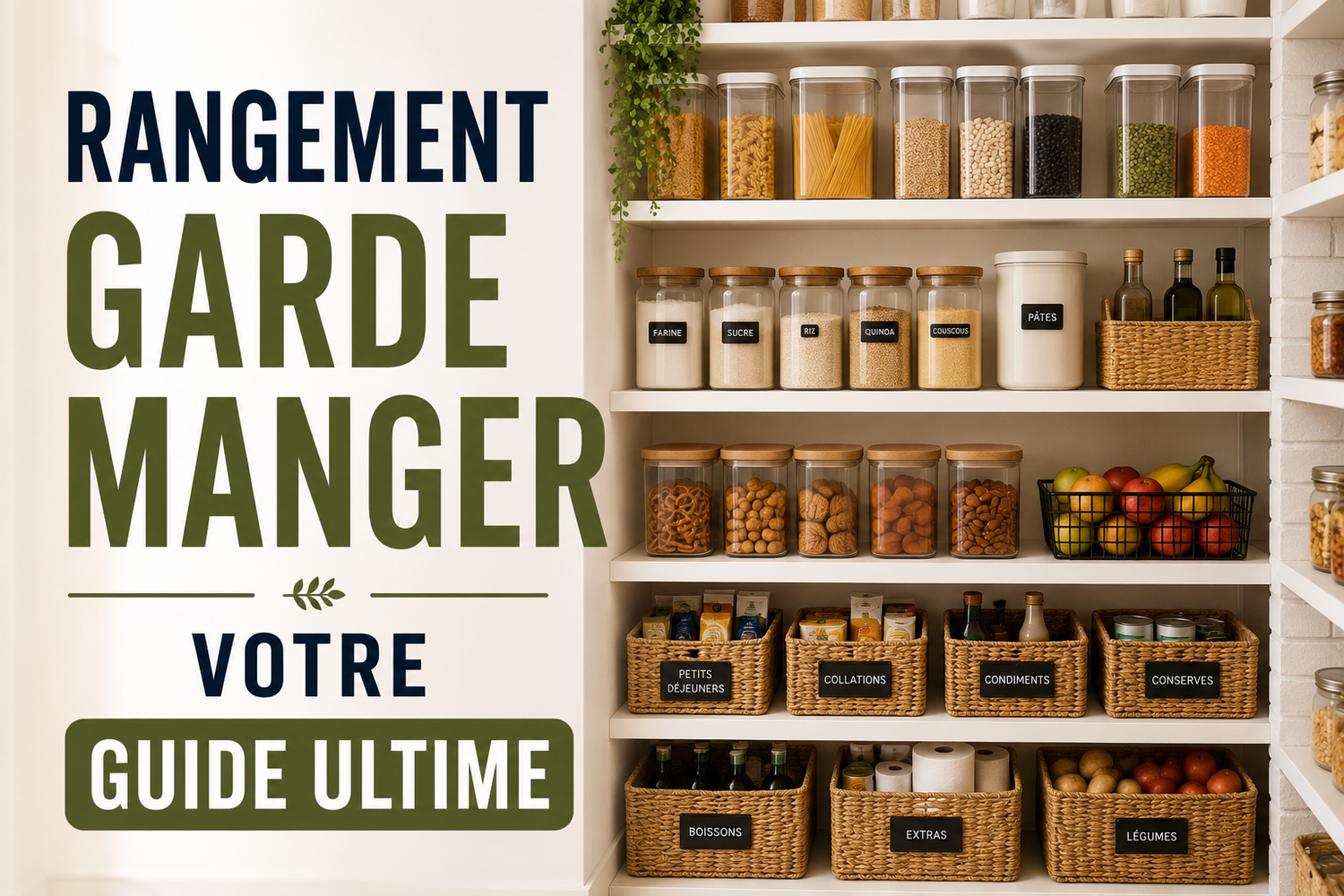
You open the pantry to make dinner and something falls forward. There's half a bag of rice behind crackers, three open pasta packages, a jar you forgot you bought, and a top shelf that might as well belong to someone taller, younger, or more optimistic. That's the moment many decide their garde-manger needs “better storage.”
Usually, it needs a better system first.
Good rangement garde manger isn't about making shelves look styled for one afternoon. It's about making food visible, reachable, and easy to put back. It should work in a narrow apartment cupboard, a shared family kitchen, or a walk-in pantry that somehow still loses ingredients. It also has to work for real bodies and real routines, especially for renters dealing with fixed shelving and awkward high cabinets.
Table of Contents
- The Foundation Assess and Plan Your Pantry
- The Reset A Step-by-Step Decluttering Process
- Solutions for Every Space and Lifestyle
- Building Sustainable Systems for Labeling and Rotation
- Your Pantry Organization Buyer's Checklist
- Conclusion Enjoy Your Newfound Clarity
The Foundation Assess and Plan Your Pantry
Most pantry projects go wrong before a single shelf gets wiped down. People buy bins first, then discover the bins don't fit, don't suit their food, or make daily access worse. If your pantry has been frustrating you, that doesn't mean you're disorganised. It usually means your setup has never been matched to how your household shops, cooks, and reaches.
Pantry professionals treat the garde-manger as a working system, not a decorative corner. The role itself is foundational to kitchen operations, and pantry organisation guidance tied to that approach stresses doing a full inventory before shopping and creating clear zones such as sweet items, oils, pasta, and cereals, as noted in this garde-manger salary and role overview.

Start with the pantry audit
Don't begin by removing everything at once. Start with a notebook, your phone, or a printed sheet and capture what's happening now.
Write down:
- What gets lost: snack bars, spices, baking ingredients, sauces, school lunch items.
- What gets duplicated: canned tomatoes, pasta, flour, oils, breakfast cereal.
- What annoys you daily: hard-to-open lids, unreachable top shelves, dark corners, heavy items stored too high.
- What doesn't belong: small appliances, serving platters, water bottles, paper goods, random hardware.
That last point matters more than people think. A pantry often becomes overflow storage for the whole kitchen. Once that happens, food stops being the priority and the system collapses.
Practical rule: If you can't tell what you own before you shop, your pantry is managing you, not the other way around.
Your audit should also include habits. If you bake every weekend, give baking ingredients premium space. If you make fast weekday lunches, put wraps, spreads, crackers, and lunchbox snacks in one zone. If you buy in bulk but live in a small flat, your system needs backup storage and a daily-use transfer method, not giant containers on every shelf.
For households planning layout changes, adjustable pantry shelving options are useful to review before buying containers, because shelf height often determines whether a system stays practical.
Measure the space you actually use
People often measure wall-to-wall and call it done. That misses the details that cause clutter later.
Measure:
- Shelf width and depth
- Clear height between shelves
- Door clearance
- Reach height for the person who uses the pantry most
- Awkward zones, such as corners, pipes, hinge areas, or shelves blocked by trim
Then divide your pantry into functional zones on paper. Keep it simple.
| Zone | Best use | Placement |
|---|---|---|
| Daily use | breakfast, snacks, lunch staples | eye level or just below |
| Cooking core | oils, grains, canned goods, pasta | easy reach |
| Baking | flour, sugar, extracts, decorations | grouped together |
| Back stock | duplicates, bulk refills | higher or lower shelves |
| Rare use | specialty items, holiday supplies | hardest-to-reach spots |
If you're a renter, add one more note: which shelves are physically difficult, not just inconvenient. That distinction matters. A shelf you need a stool to reach won't support daily-use storage, no matter how neat it looks.
The Reset A Step-by-Step Decluttering Process
This is the part people put off because it feels messy before it feels satisfying. It is messy. That's normal. A proper reset means the pantry gets worse for an hour so it can get better for years.
The strongest home pantry reset I've seen follows a seven-phase protocol: emptying and categorising, removing non-essentials, cleaning shelves, adding shelving if needed, transferring dry goods into transparent containers, labelling, and grouping by food family. That method can reduce food waste by 30 to 40% in Canadian households, according to this video source on garde-manger organisation.

Use the seven-phase reset
Follow the order. If you skip ahead, you'll end up organising clutter instead of removing it.
-
Empty everything
Put every item on a table or counter. You need to see the full volume to make good decisions. -
Remove non-essentials
Take out anything that doesn't support pantry function. That includes gadgets you rarely use and objects stored there out of habit. -
Clean the shelves
Wash with dish soap and water. Sticky residue and crumbs undermine any new system. -
Improve the structure if needed
Add shelf risers, sliding racks, or extra layers if the current setup wastes height.
A quick visual can help if you want a simple reference while you work:
-
Transfer suitable dry goods
Pasta, grains, legumes, cereal, flour, and similar items are easier to manage in clear containers. -
Label clearly
Content first. Extra details only if you'll maintain them. -
Group by food family
Herbs together. Canned goods together. Baking supplies together. Snacks together.
Decide fast with clear sorting rules
The hardest part is usually not cleaning. It's deciding what stays.
Keep, Toss, Donate
Keep items your household eats regularly, unopened duplicates you'll use, and ingredients that support your real cooking habits.
Toss expired goods, stale packages, mystery crumbs, and anything contaminated, leaking, or no longer safe.
Donate unopened food your household won't realistically use.
Speed matters here. If you spend five minutes debating each packet, you'll burn out.
A short sorting table helps:
| Decision | Ask yourself | Common example |
|---|---|---|
| Keep | Do we use this without forcing it? | oats, canned beans, lunch snacks |
| Toss | Is it expired, stale, or unusable? | rancid nuts, broken pasta crumbs |
| Donate | Is it good but wrong for us? | unwanted canned soup, extra boxed goods |
One practical example of “containerise where it helps” is the Automatic Egg Dispenser Rack – Rolling Storage Holder. It uses a gravity-fed, 2-tier design that dispenses eggs one at a time and keeps them contained with a small footprint. That kind of tool makes sense when a category needs controlled access and clear limits, not when you're trying to buy a matching gadget for every shelf.
Solutions for Every Space and Lifestyle
A pantry doesn't fail because it's small. It fails when the storage logic ignores the room, the person using it, or both. The right rangement garde manger strategy changes with shelf depth, ceiling height, family size, mobility, and whether you're allowed to install anything permanent.
Research cited by Radio-Canada and Quebec organisers points to one clear win: transparent, uniformly sized containers can lead to an 85% reduction in forgotten items, and shelves deeper than 30 cm cause 62% of items to be overlooked. The recommendation is to favour wide, shallow shelving of 25 cm or less where possible, according to this Radio-Canada pantry organisation reference.

What works in small cupboards and rentals
Renters get generic advice all the time: “Put daily items on the middle shelf.” That sounds fine until the middle shelf is too high, too deep, or built into a narrow upper cabinet. A 2025 CMHC study cited in a secondary source notes that 68% of renters in Toronto and Vancouver live in units with pantry shelves exceeding 1.5 metres in height, creating real access problems for standard pantry advice, as discussed in this article about pantry organisation and renter constraints.
For small cupboards and rentals, use accessibility-based zoning:
- Keep daily food low and forward: breakfast, tea, lunch items, cooking oils.
- Assign high shelves to backup stock only: duplicates, unopened refills, occasional items.
- Use pull-down or pull-forward tools where allowed: freestanding risers, removable under-shelf baskets, magnetic side caddies, and handled bins.
- Choose narrow containers over deep bins: deep bins become black holes in fixed cabinets.
High storage isn't extra storage if you avoid using it.
If you're shopping by pantry type rather than by product category, pantry storage rack comparisons can help sort out which formats suit cupboard shelves, freestanding units, or utility-room overflow.
A practical add-on for produce overflow is the AS SEEN ON TV 8-Piece Green Fresh Food Bags - 80426. The product snapshot states that the bags are reusable, use a wide-seal zipper closure, and are designed to absorb ethylene gases to extend produce freshness. That won't solve a bad pantry layout, but it can support households that split food storage between pantry and fridge.
What works in deep shelves and walk-ins
Deep shelves create the illusion of abundance while hiding what you own. If replacing shelving isn't possible, convert the depth into lanes.
Try this:
- front lane for current use
- back lane for unopened duplicates
- turntables for oils or sauces
- pull-out bins for packets and pouches
- risers for cans so labels stay visible
Walk-in pantries need a different discipline. Because there's more room, people spread categories too far apart and lose the natural friction that keeps a pantry tidy. In large spaces, I prefer stronger zoning over more containers. One wall for cooking staples, one zone for baking, one area for snacks and school supplies, one shelf or cart for inventory overflow.
For households that don't want to hunt across multiple stores, GrifGlo provides decision-focused guides and organised product categories for pantry, kitchen, and home essentials through the GrifGlo platform. That's useful when you want to compare formats such as bins, risers, and shelf organisers without sorting through an oversized catalogue.
Building Sustainable Systems for Labeling and Rotation
A tidy pantry can unravel in a week if nobody knows where things belong or which package should be used first. Containers help, but they're only the hardware. The maintenance comes from two habits: labelling and rotation.
Canadian pantry organisation advice consistently recommends putting items with the nearest expiration dates at the front and placing new purchases behind them, then pairing that habit with clear container labels and expiration information. That's the first-in, first-out method, and it's directly tied to reducing food waste in the home, as explained in this guide to organiser son garde-manger.
Why labels matter after the tidy-up
People often resist labels because they don't want the pantry to look rigid. In practice, labels reduce decision fatigue. Nobody has to guess where lentils go, whether that white powder is flour or icing sugar, or where to put the extra crackers after shopping.
Label what people need to know:
- Name of item: flour, jasmine rice, breadcrumbs
- Use-by or best-before cue: especially for decanted foods
- Zone label: baking, lunches, breakfast, pasta night
Don't over-label. If every basket has a detailed tag but your household ignores it, the system becomes decoration.
A simple format works best:
- tape and marker for trial runs
- acrylic marker for directly writing on containers if that suits your setup
- printed labels if you already know the system is stable
For households comparing formats, this guide to airtight, stackable, and modular pantry containers is useful because label strategy should follow container type, not the other way around.
How to make FIFO realistic at home
FIFO sounds formal, but at home it just means old food first. The trick is making it easier to follow than to ignore.
Use these routines:
- Unload groceries by pulling older items forward first
- Place unopened duplicates behind the current package
- Create a small “use next” zone for near-date items
- Check one category per week, not the whole pantry at once
One habit beats one big tidy-up: rotate groceries as you unpack them, and the pantry won't drift back into chaos.
If you live with kids, partners, or roommates, keep the rule visible. A small note inside the pantry door is often enough: newest in back, oldest in front. That's not glamorous, but it works.
Your Pantry Organization Buyer's Checklist
Buying storage without a checklist is how people end up with pretty containers that don't stack, baskets that block labels, and risers too tall for the shelf they're meant to save. Good pantry buying is less about trends and more about fit, access, and cleaning.
The most reliable shoppers bring their pantry notes with them. Not mental notes. Actual measurements, category lists, and a short record of what frustrates them now.

Questions to ask before buying anything
Start with the container, bin, or rack in your hand and ask practical questions.
| Buying question | Why it matters |
|---|---|
| Does it fit my measured shelf height and depth? | Most buying mistakes start here |
| Can I see the contents easily? | Visibility supports daily use |
| Is it easy to open with one hand? | Important for busy cooking |
| Can it be cleaned without fuss? | Hard-to-clean tools don't stay in use |
| Will it stack safely? | Vertical space matters in small pantries |
| Is it suited to this food type? | Flour needs different handling than snack bars |
Material matters too. Glass looks good and works well for some dry goods, but it's heavier. Plastic is lighter and often better for upper shelves or households with children. Woven baskets hide visual clutter, but they also hide inventory. Opaque bins are best when the category is obvious and stable, such as onions, potatoes, or sealed snack packs.
A practical shopping checklist
Use this list before you check out:
- Clear containers: best for dry goods you decant and use often
- Handled bins: useful for pouches, packets, and grouped meal components
- Tiered risers: good for cans, jars, and short items that disappear behind each other
- Shelf expanders: helpful when there's unused height between shelves
- Turntables: practical for oils, vinegars, spreads, and sauces in corners or deep shelves
- Door or side storage: valuable in rentals where shelf space is fixed
- Labels: choose the simplest format you'll maintain
- Backup storage pieces: necessary if you buy bulk but have a small everyday pantry
Buy for the food you have, not the pantry you saw online.
If you're comparing formats before purchasing, this pantry container guide can help narrow down which products suit dry goods, packaged items, and mixed-use shelves.
For business or bulk buyers, uniformity matters more than style. Short-term rentals, offices, and hospitality kitchens usually benefit from repeatable container sizes, clearly named zones, and replacements that are easy to source again. A mixed system assembled from random bins may work once, but it's harder to maintain across multiple units or staff members.
Conclusion Enjoy Your Newfound Clarity
A well-organised pantry changes the pace of a kitchen. Breakfast is quicker because the cereal, oats, and tea are where they belong. Dinner starts with less friction because you can find the rice, the canned tomatoes, and the oil without shifting five other things first. Grocery shopping gets easier because you know what you already have.
That's a significant reward of good rangement garde manger. It lowers the background noise in daily life.
The nicest pantries aren't always the ones with the most containers or the prettiest labels. They're the ones people can maintain on a tired Tuesday. They suit the shelf height, the food habits, and the people using them. A renter with one awkward cupboard can build a better system than a homeowner with a walk-in pantry if the setup respects access and routine.
Spices are usually the category that drifts first, so if that area still feels messy, these spice storage solutions are a practical next step.
Keep your standards realistic. A pantry can be orderly without being perfect. You don't need matching jars for every ingredient. You need clear categories, usable shelf zones, and a restocking routine that doesn't ask too much of you. Once that's in place, the pantry stops being a source of mild daily stress and starts doing its job unobtrusively in the background.
That's what good organisation should feel like. Less searching. Less waste. Fewer duplicate purchases. More confidence when you open the cupboard door.
If you want help choosing pantry tools without wading through endless product pages, GrifGlo offers decision-friendly guides, comparisons, and organised shopping paths for home, kitchen, and storage essentials so you can buy for your actual space and routine.


Laisser un commentaire
Ce site est protégé par hCaptcha, et la Politique de confidentialité et les Conditions de service de hCaptcha s’appliquent.