

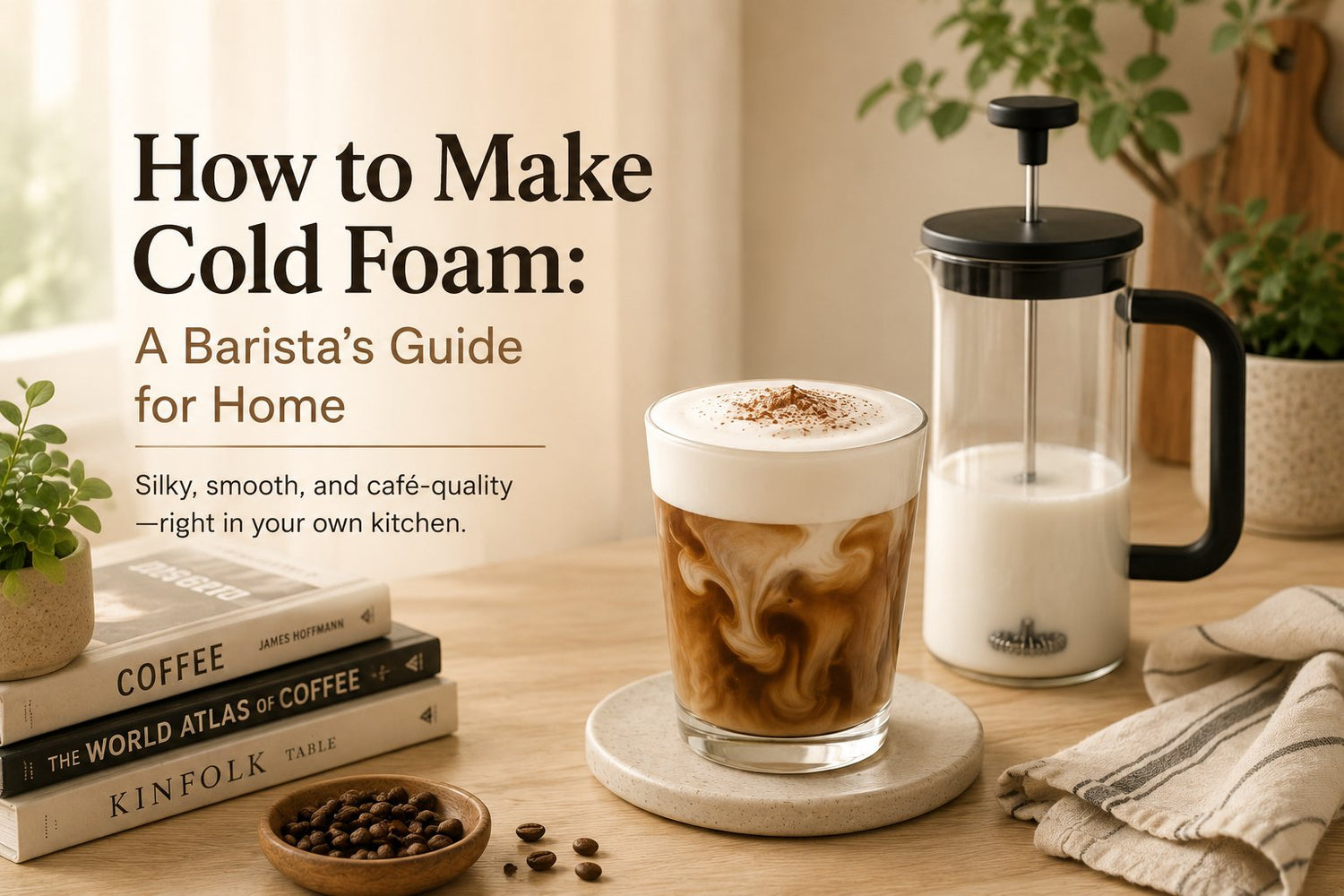
You're probably here because you've had an iced coffee topped with that soft, velvety layer that looks like it came from a café, then assumed it needed special equipment or barista training. It doesn't. Cold foam is one of the easiest upgrades you can make at home, and once you understand what changes the texture, it becomes much more reliable.
The trick isn't chasing one “perfect” recipe. It's knowing what kind of foam you want, choosing a milk base that can get you there, and using a frothing method that suits the tools already in your kitchen. That's what makes the difference between a topping that sits neatly on your drink and one that disappears into it.
If you already enjoy tinkering with coffee at home, the same mindset that helps with espresso machines also helps here. Small choices matter, especially texture and timing, and a practical buying guide like this look at De'Longhi automatic espresso machines fits that same decision-making style.
Table of Contents
- Your Guide to Perfect Homemade Cold Foam
- Gathering Your Cold Foam Essentials
- Four Proven Frothing Methods for Your Kitchen
- Customizing Your Foam with Delicious Flavours
- Troubleshooting Common Cold Foam Fails
- Serving, Storing, and Pairing Your Creation
Your Guide to Perfect Homemade Cold Foam
Cold foam should feel simple. If a method leaves you measuring, frothing, and guessing all at once, it's usually the method that's the problem, not you.
Cold foam is a cold dairy or a dairy-rich mixture with enough air worked into it to become light, pourable, and stable enough to sit on top of a cold drink. That last part matters. It isn't meant to behave like steamed milk for a hot latte. It's meant to float, layer, and slowly blend as you sip.
What makes homemade cold foam work
Three things decide the result:
- The base you choose: Skim milk makes a lighter foam. Cream-heavy mixtures make a richer one.
- The amount of air: Too little and it stays flat. Too much and it goes stiff.
- The timing: Cold foam is at its best right after frothing, when it still has that soft, cloud-like structure.
Practical rule: Decide first if you want light and airy or rich and creamy. That choice tells you which milk to use and how aggressively to froth.
A lot of frustration comes from using one recipe for every drink. That's why some people end up with foam that vanishes into cold brew, while others get something closer to dessert topping. Both outcomes make sense once you understand the ingredients.
The mindset that gets café-style results
Think like a barista, but keep it relaxed. Use cold ingredients, froth in short bursts, and stop the moment the texture looks glossy and spoonable. You're aiming for a topping, not a whipped cream substitute.
If you remember one thing, make it this: how to make cold foam well depends more on matching method to ingredients than on buying fancy gear.
Gathering Your Cold Foam Essentials
Cold foam doesn't ask for much. Most kitchens already have at least one usable frothing tool and one milk option that can produce a good result. The key is choosing on purpose instead of grabbing whatever is nearby.
Tools that actually work
A few tools show up again and again because they're practical, not because they're trendy.
- Handheld frother: Fast, cheap, and easy to control. This is the easiest way to get started.
- French press: Good for a manual, airy foam. The plunger adds air evenly if you keep the movement quick and steady.
- Electric milk frother: Useful when you want repeatable results with less hands-on effort.
- Blender: Best when you want a larger batch of base or you're making drinks for more than one person.
- Mason jar with lid: Not the most polished method, but it works in a pinch if you shake hard enough.
If you're still sorting out which kitchen tools earn their shelf space, a decision-focused guide to home bar essentials can help you think through what's worth keeping close at hand.
The best cold foam tool is often the one you'll actually use on a weekday morning.
Choosing your milk on purpose
Milk choice changes everything. Some bases foam high and light. Others stay denser and silkier. One popular home method uses 1/4 cup whipping cream, 1/4 cup 2% milk, 1/4 cup condensed milk, and 1 teaspoon vanilla extract, then froths until light and stable. That same guide notes that cold foam is designed for cold drinks because it stays on top instead of dissolving like steamed milk in a hot drink, as shown in this cold foam recipe guide from SF Bay Coffee.
Here's the practical version of that choice.
Choosing Your Milk for Cold Foam
| Milk Type | Foam Texture | Stability | Best For |
|---|---|---|---|
| Skim milk | Light, airy, more delicate | Moderate | A classic café-style topping for cold brew or iced coffee |
| 2% milk | Slightly creamier, still fairly light | Good | Everyday cold foam with a softer mouthfeel |
| Whole milk | Richer and smoother, less airy | Good | Iced lattes or drinks where you want a fuller taste |
| Heavy cream | Thick, lush, closer to sweet cream foam | High, but easy to overdo | Dessert-like toppings and richer flavoured drinks |
A few practical patterns show up quickly in the kitchen:
- If you want height: Use a milk-forward base.
- If you want richness: Add cream, but froth more carefully.
- If you want sweetness and body: A little syrup or condensed milk changes both flavour and texture.
- If you want clean layering: Keep everything cold before you froth.
A useful shortcut
Don't think of one milk as “better”. Think of each one as suited to a different drink. Skim milk gives you that airy cap on top of black cold brew. Cream-heavy mixes make more sense when the drink underneath is already indulgent.
That's why strong home results usually come from picking the base for the drink, not from following one recipe forever.
Four Proven Frothing Methods for Your Kitchen
There isn't a single correct way to froth cold foam at home. There are just methods that suit different kitchens better. If you understand what each one does well, you can get a dependable texture without overcomplicating it.

One straightforward benchmark uses 2 ounces of skim milk plus 1/2 ounce of vanilla simple syrup, frothed for about 20 seconds with a milk frother. That amount can top 2 glasses of cold brew, which makes it a useful home reference for portioning and timing in this cold foam recipe from A Nerd Cooks.
Handheld frother for speed
This is the easiest method for most readers.
Pour your cold milk or milk mixture into a tall glass or measuring cup. Tilt the container slightly, then place the frother just below the surface. Move it up and down gently as the foam builds. If you keep the frother buried at the bottom the whole time, you'll get less lift.
What it produces: a light, spoonable foam with good control.
What works:
- Short frothing bursts: Stop and check before it turns too dense.
- A narrow container: It helps the liquid deepen around the wand.
- Cold ingredients: They usually hold structure better than room-temperature ones.
French press or jar for a no-gadget option
A French press creates foam by forcing air through the liquid with the plunger screen. Add your mixture, then pump briskly until it expands and turns lighter in colour. You're not brewing coffee here, so the goal is fast movement, not a slow press.
A lidded jar is more rustic. Shake hard until the mixture loosens and foams, then open it and check. It's effective, but less precise.
If you don't own a frother yet, a French press is the most reliable workaround.
For either method, make enough space in your fridge so your milk, cream, and flavourings stay cold and easy to grab. A simple system like the one in this fridge organisation guide using bins and zones makes morning prep smoother.
Electric milk frother for consistency
An electric frother is useful when you want repeatable results and less guesswork. Add your ingredients, choose the cold setting if your unit has one, and let it run. This is especially handy when you tend to over-froth by hand.
The result is usually more uniform from one drink to the next. That's helpful if you make iced coffee often or want the same topping each morning.
A tool like the KALORIK EM51426GR Electric Cordless Knife With Case isn't related to frothing, but it's a good reminder that many kitchen appliances are designed around a very specific job. Cold foam works the same way. When a tool suits one task clearly, it tends to give cleaner, more predictable results.
Blender for larger amounts
If you're making drinks for several people or testing a few flavour variations at once, a blender can help. Use a small blender jar if possible so the blades can catch the liquid properly. Pulse instead of running it continuously. That gives you better control and reduces the chance of creating a dense, overly thick foam.
This method is less elegant for tiny single servings, but it shines when you want efficiency.
A quick way to choose:
- Use a handheld frother for single drinks and speed.
- Use a French press if you want strong manual control.
- Use an electric frother if consistency matters most.
- Use a blender when making more than one serving.
Customizing Your Foam with Delicious Flavours
Plain cold foam is lovely, but flavoured cold foam is where home prep becomes more fun. The best versions taste intentional, not sugary for the sake of it. A small amount of flavour can turn the top of a drink into the part you notice first.

Sweeteners and syrups
Liquid sweeteners are the easiest place to start because they blend smoothly into the base. Vanilla is the obvious classic, but caramel, brown sugar-style syrup, or a simple maple-inspired note can work beautifully in iced coffee.
Add liquid sweeteners before frothing so the flavour spreads evenly through the foam. If you add them after, the foam can streak or collapse unevenly.
A few combinations that usually work well:
- Vanilla over cold brew: Clean and café-like.
- Caramel over iced latte: Rich and familiar.
- Chocolate syrup in a creamier base: Closer to a mocha topping.
If you like keeping syrups, extracts, and toppings neat instead of losing them in a crowded cupboard, choosing food storage containers that suit small pantry items makes experimentation much easier.
Powders and spices
Powders need a lighter touch. Cocoa powder, matcha, cinnamon, and pumpkin spice-style blends can all work, but they're best whisked thoroughly into the liquid before frothing. If they sit in clumps, the texture gets gritty fast.
Matcha tends to pair best with a milk-forward foam. Cocoa and cinnamon are more forgiving in richer mixtures. If you want a dusted finish, save a pinch for the top after spooning the foam onto the drink.
Here's a helpful visual walkthrough for flavour ideas and texture cues:
Extracts and seasonal ideas
Extracts are potent, so restraint matters. A drop or two of peppermint or almond can shift the whole drink. More than that, and the flavour can taste sharp instead of rounded.
A good flavoured cold foam should still taste like foam first, flavour second.
Seasonal ideas are where cold foam gets playful. A pumpkin-spice version over cold brew feels autumnal without needing a full café menu. A chocolate cream foam can give iced coffee a dessert-like finish. Peppermint works well in winter drinks, especially over iced mocha or chilled coffee with a stronger roast profile.
Troubleshooting Common Cold Foam Fails
Cold foam is simple, but it's sensitive. Small changes in temperature, ingredient choice, and frothing time can shift the result quickly. The good news is that most problems have an easy fix.
When the foam is too thin
If your foam collapses right away or looks bubbly instead of silky, start with the basics.
- Check the temperature: Warm ingredients don't usually foam as neatly as cold ones.
- Check the base: Very light mixtures can need a bit more body.
- Check your technique: If you barely introduced air, the liquid won't hold much structure.
Try a slightly richer milk or add a small amount of sweetener before frothing. Then froth in short bursts and stop once the texture looks airy but still fluid.
When it turns too thick
This usually happens with cream-heavy recipes. One practical warning comes from a method using 3 tbsp heavy cream, 2 tbsp milk, and 1 tsp sugar, where 15 to 25 seconds of frothing is ideal. Going longer can push the foam into whipped-cream territory, which is why this cold foam method from Laughing Spatula recommends serving it right away.
If that's what happened, don't throw it out. Stir in a little more milk and whisk gently to loosen it. It won't be identical to a fresh batch, but it can still be usable.
When the flavour feels off
Sometimes the structure is fine, but the taste isn't.
A few fixes usually solve it:
- Too sweet: Use less syrup next time or pair it with a less sweet drink base.
- Too bland: Add a touch more vanilla or choose a richer milk.
- Too heavy: Shift toward milk and away from cream.
- Too sharp from extracts: Use fewer drops. Extracts get loud quickly.
Cold foam should support the drink under it, not bury it.
The easiest way to improve flavour is to taste the liquid base before frothing. If it already tastes balanced cold, the finished foam usually lands where you want it.
Serving, Storing, and Pairing Your Creation
The final step is where all the small choices show up. Good cold foam should sit on the drink with a soft layer at the top, then slowly blend in as you sip.

How to serve it cleanly
Pour your drink first. Add ice if you want it, then spoon the foam gently over the top rather than dumping it in all at once. A spoon gives you that layered café look and keeps the foam from sinking too fast.
For richer sweet cream-style foams, let them drape over the ice slowly. For lighter milk foams, spoon and spread them gently across the surface.
What to prep ahead and what to froth fresh
For home use, a practical question often arises: Can you make cold foam in advance?
Commercial operators clearly care about this. A beverage supplier frames cold foam around “labour and cost-saving methods” and discusses batch preparation and storage for operational efficiency in this commercial cold foam resource from Rich's USA. That makes the question valid for home kitchens too.
The most useful takeaway is simple. Froth fresh when you can, but prep the base ahead if you want efficiency. A milk, cream, and syrup mixture can be kept chilled so all you need to do later is froth and serve.
For that approach, clean storage matters. If you're saving a prepared base in the fridge, these tips for cleaning food storage containers properly help prevent lingering odours from affecting flavour.
Drinks that pair especially well
Cold brew is the obvious partner, but it's not the only one worth trying.
A few strong pairings:
- Iced matcha latte: Especially good with vanilla or lightly sweet cream foam.
- Iced chai: Works well with cinnamon or caramel notes.
- Iced tea: A gentle vanilla foam can soften sharper tea flavours.
- Coffee-based mocktails or simple cocktails: Richer foams can add a layered finish.
Once you know how to make cold foam, you're not limited to coffee shop copies. You can tailor the texture, sweetness, and flavour to the drink in front of you, and that's what makes homemade versions feel worth doing.
GrifGlo helps people sort through practical kitchen and home purchases with clear, decision-friendly guides instead of endless browsing. If you're refining your coffee setup, organising your fridge, or comparing everyday tools for real routines, visit GrifGlo for straightforward advice and curated essentials.


Laisser un commentaire
Ce site est protégé par hCaptcha, et la Politique de confidentialité et les Conditions de service de hCaptcha s’appliquent.