

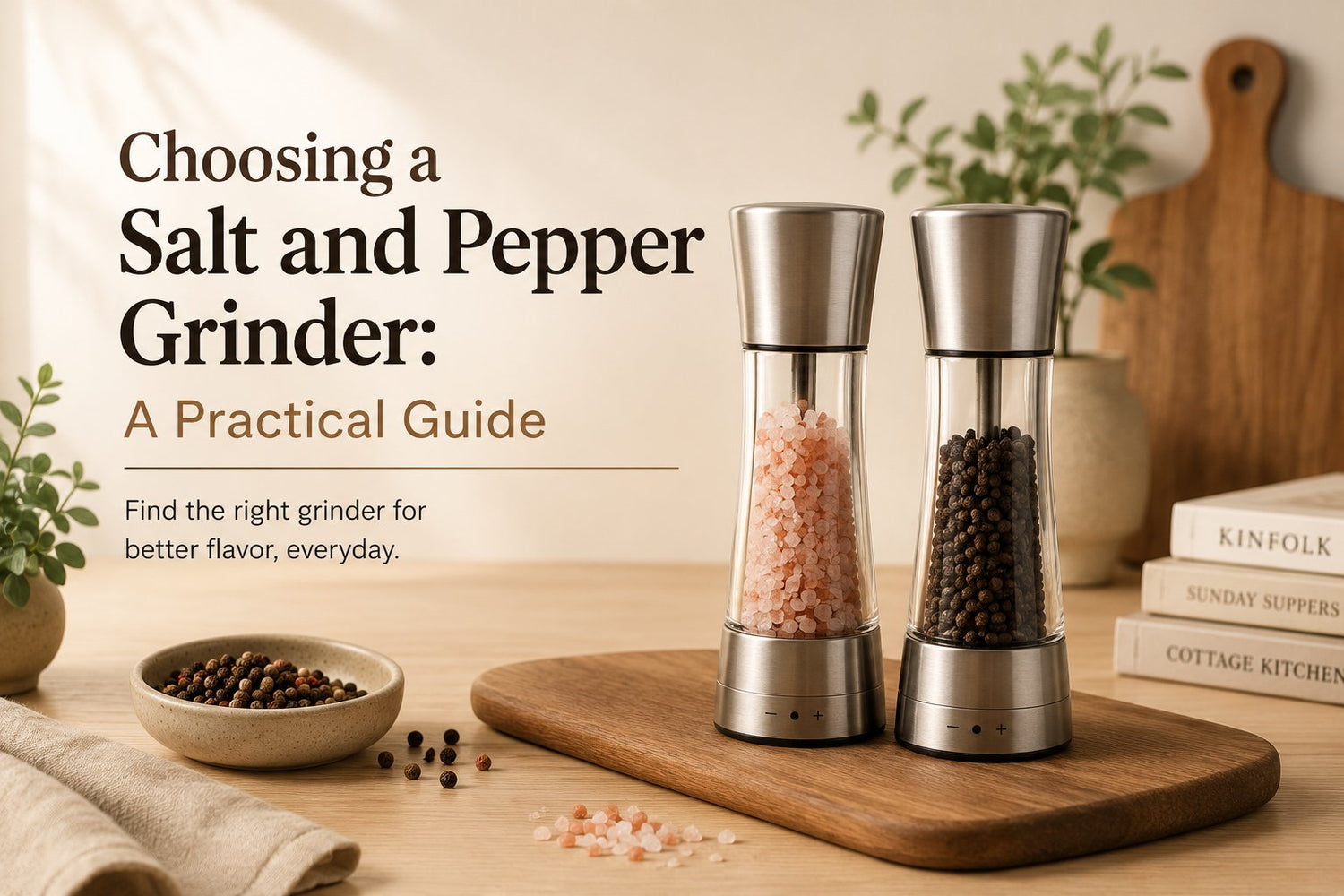
You're standing at the hob, one hand stirring a pan, the other reaching for a tired old shaker that drops dusty pepper with almost no aroma. Dinner is fine, but it could taste sharper, brighter, more finished. That's usually the moment people start looking for a better salt and pepper grinder.
A good grinder seems simple until you shop for one. Then you run into manual or electric, ceramic or steel, compact or oversized, sleek table set or heavy-duty kitchen tool. Add in the needs of renters, busy family kitchens, cafés, B&Bs, and short-term rentals, and the choice gets murkier.
The useful way to choose isn't by chasing fancy features. It's by matching the grinder to how you cook, how often you refill it, where you store it, and who will use it. That matters because this category isn't fading away. The global pepper mill grinder market was valued at USD 0.76 billion in 2025 and is projected to reach USD 1.13 billion by 2035, with a 4.5% CAGR, according to Business Research Insights on the pepper mill grinder market.
Table of Contents
- Your Guide to the Perfect Salt and Pepper Grinder
- Why Freshly Ground Spices Elevate Every Meal
- Manual vs Electric Grinders The First Big Decision
- Decoding Grinder Mechanisms and Materials
- Choosing the Right Size Style and Capacity
- Proper Maintenance and Troubleshooting Tips
- Your Final Salt and Pepper Grinder Checklist
Your Guide to the Perfect Salt and Pepper Grinder
A strong grinder does two jobs at once. It improves flavour, and it makes seasoning easier to control. Those sound obvious, but many home cooks live with tools that do neither well. They spill, jam, grind unevenly, or look nice on the table but feel awkward in the hand.
The right choice depends less on brand prestige and more on daily behaviour.
If you cook once or twice a week in a small flat, you may want a compact grinder with a simple refill opening and a mechanism that can handle both salt and pepper. If you cook most nights, you'll notice grind consistency more quickly, especially when finishing eggs, roasted vegetables, grilled meat, or salad. If you run a small hospitality space, durability and easy cleaning matter as much as appearance.
What people often get wrong
Many shoppers focus on the outer body first. They choose wood because it looks classic, stainless steel because it looks modern, or acrylic because they can see the fill level. Those are valid preferences, but the body doesn't do the grinding. The mechanism does.
Practical rule: If you're buying one grinder to handle both salt and pepper, check the mechanism before anything else.
A poor mechanism creates three common annoyances:
- Inconsistent output that gives you powder one moment and chunks the next
- Faster wear when the grinder material doesn't suit the seasoning
- Messy upkeep from awkward refill ports or trapped residue
Match the tool to the setting
A salt and pepper grinder can serve very different roles depending on where it lives:
- At the cooker: You need grip, speed, and quick adjustment.
- On the dining table: Looks and clean dispensing matter more.
- In a rental or guest suite: Ease of use matters because different people handle it.
- In a café or B&B: Refill time, maintenance, and reliability matter every week.
That's why one “best” grinder doesn't exist. The better question is whether a model suits your kitchen, your hands, and your routine.
Why Freshly Ground Spices Elevate Every Meal
Pre-ground pepper works. It just doesn't give you the same result. Fresh grinding releases aroma at the moment you use it, which is why the difference feels immediate even in simple food like scrambled eggs, tomato soup, or buttered green beans.
For most cooks, the easiest comparison is coffee. Whole beans smell lively when ground. Pre-ground coffee still functions, but some character is gone. Pepper behaves in much the same way in the kitchen.

Fresh grinding changes what you smell and taste
Salt and pepper don't play the same role on food. Salt sharpens and lifts flavour. Pepper adds aroma, warmth, and a more noticeable top note. When you grind pepper fresh over a dish, you can smell it before you taste it. That matters because aroma shapes how seasoned food feels.
Fresh grinding also improves control. You can choose a finer grind for sauces or eggs, and a coarser grind for steaks, roasted mushrooms, or creamy pasta. That gives you more than “more pepper” or “less pepper.” It changes texture too.
A related kitchen habit helps preserve ingredients before they ever reach the grinder. If you're trying to keep produce and pantry items in better condition, GrifGlo's guide to airtight food storage containers for everyday kitchen organisation is useful alongside seasoning tools. In the same practical vein, the catalog item AS SEEN ON TV 8-Piece Green Fresh Food Bags - 80426 is described as a reusable storage design with a wide-seal zipper closure that absorbs ethylene gases and is intended to help keep food fresh longer.
Why this tool became a kitchen standard
The pepper grinder isn't a recent gadget. The modern pepper grinder dates to 1842, when Peugeot invented a practical tabletop mechanism that replaced older mortar-and-pestle methods, according to PepperMate's brief history of pepper mills and grinders.
That date matters because it marks a shift from crushing spices by hand in a more improvised way to using a repeatable kitchen tool. The grinder became something ordinary households and restaurants could rely on for a more consistent result.
Fresh pepper doesn't just add heat. It adds a finishing aroma that a shaker rarely delivers.
If you've ever thought restaurant food tastes more “alive” even when the ingredients seem ordinary, seasoning at the end is often part of the answer. A good grinder makes that habit easier, so you use it.
Manual vs Electric Grinders The First Big Decision
This is the choice most buyers feel first. Not because one type is always better, but because they change how you season while cooking.

Who should choose manual
Manual grinders suit cooks who value control, simplicity, and fewer parts to manage. They're usually quieter, don't need batteries or charging, and often feel better at the table than bulkier electric designs.
They also make sense in smaller homes. A compact manual mill slips into a narrow drawer, tucks beside oils on the counter, and travels easily between kitchen and dining table.
Manual is often the safer pick if your priorities look like this:
- You want less maintenance
- You prefer a classic table presence
- You cook in a small kitchen and want a compact tool
- You don't want to think about charging or batteries
A good manual grinder also pairs well with other tactile kitchen tools. If you care about edge control and hand feel in prep, GrifGlo's guide to knife sharpening tools for everyday kitchen upkeep fits the same practical mindset.
A quick visual can help if you're comparing use styles in a real kitchen setup.
Who should choose electric
Electric grinders solve a different problem. They reduce effort and free one hand while you cook. That matters if you're seasoning with the other hand busy on a pan handle, spoon, or lid.
The main tradeoff isn't just battery dependence. It's upkeep. The practical decision point with electric models is balancing one-handed convenience against more frequent refills and cleaning complexity, as noted in this video discussion on salt and pepper mill buying considerations.
That makes electric a strong fit for:
- Busy cooks who season while stirring or flipping food
- People with limited grip strength who don't want repeated twisting
- Small hospitality settings where quick, repeatable use matters
- Households that value speed over simplicity
Kitchen reality: The grinder you'll use with one hand often gets used more often.
Manual vs. Electric Grinder Comparison
| Feature | Manual Grinder | Electric Grinder |
|---|---|---|
| Operation | Twist or turn by hand | Button or switch operated |
| Control feel | More tactile and direct | More effortless during active cooking |
| Power needs | None | Requires batteries or charging |
| Cleaning | Usually simpler | Often a bit more fiddly |
| Refilling | Straightforward on many models | Can be awkward on some designs |
| Best for | Table use, small kitchens, low-maintenance routines | One-handed use, limited grip, faster seasoning |
If you're torn, don't force a universal answer. A manual grinder often belongs on the table. An electric model often belongs by the cooker. In some kitchens, that split works better than trying to make one tool do everything.
Decoding Grinder Mechanisms and Materials
Most frustration with a salt and pepper grinder starts inside the mill, not outside it. If the mechanism is wrong for the ingredient, the grinder won't stay pleasant to use no matter how attractive it looks on the counter.

Burr and blade are not the same
For seasoning, burr-style grinding is the more useful design to understand. It crushes material between two surfaces and gives you better consistency and adjustment. That's the quality often sought when a grinder that feels precise is desired.
Blade-style systems chop rather than grind. In practice, that can mean less even particle size and less predictable seasoning. For a home cook trying to control texture on a finished dish, consistency matters more than novelty.
Here's the practical takeaway:
- Burr mechanisms suit cooks who care about repeatable grind size.
- Blade-style mechanisms are less ideal if even output is your priority.
- Adjustment settings matter most when you cook a range of foods, not just one style.
If you like kitchen tools that blend utility with presentation, GrifGlo's guide to wooden pizza boards for serving and prep shows a similar idea. The material and design both affect how the tool performs.
Ceramic and steel solve different problems
Mechanism material matters even more than body material. For a dual-purpose salt and pepper grinder, a ceramic grinding mechanism is the most technically sound choice because it's suitable for both salt and pepper. Traditional carbon steel mills are designed for hard peppercorns and can be damaged by salt, according to The Home Depot guide on salt and pepper mill mechanisms.
That leads to a simple buying rule.
If one grinder will handle both seasonings, choose ceramic. If it's a dedicated pepper mill, steel can still make sense.
A few common situations make this clearer:
- One grinder in a rental flat: Ceramic is the safer all-round choice.
- Separate mills for a home cook: A pepper-dedicated steel mill can work well, with ceramic reserved for salt.
- Guest-facing use in hospitality: Ceramic reduces the risk of misuse if someone refills the wrong seasoning.
What to look for on a product listing
Product descriptions often bury the important line. Scan for these details before buying:
- Mechanism material such as ceramic or carbon steel
- Whether it's for salt, pepper, or both
- Adjustable grind settings
- Refill access that doesn't require a struggle
If the listing talks a lot about finish and barely mentions the mechanism, pause. That usually tells you where the design effort went.
Choosing the Right Size Style and Capacity
A grinder can be technically excellent and still feel wrong in your kitchen. Size, capacity, and body material shape whether it becomes a daily tool or something you only bring out when guests come over.

Best fit for renters and small kitchens
In a compact kitchen, oversized grinders become clutter fast. You don't need a dramatic restaurant-style mill if it blocks sightlines, topples in a shallow drawer, or takes up prep space beside the toaster and kettle.
Look for a model with a modest footprint, a comfortable grip, and a refill method that won't shower peppercorns across the counter. Clear-bodied grinders can help here because you can see when they need topping up.
Storage matters too. If your counters already feel crowded, GrifGlo's guide to kitchen drawer organisers for tighter spaces can help you plan where compact tools like grinders live.
Best fit for family homes and hosting
A busier home kitchen needs capacity and stability more than minimalism. If several people cook, or you host often, tiny mills become annoying because they empty at the worst moment.
Choose a grinder that feels secure in the hand and doesn't need constant refilling. A wider body can be worth it if it saves interruptions during meal prep. For hosting, matching salt and pepper mills with a clear visual distinction also prevents mix-ups at the table.
Best fit for cafés B and Bs and managed properties
Small business and hospitality buyers should think like operators, not collectors. The grinder has to survive repeated handling, occasional misuse, and regular cleaning.
A few priorities usually rise to the top:
- Durable exterior: Stainless steel and sturdy acrylic tend to cope better with frequent handling than delicate finishes.
- Easy visibility: Clear sections help staff or cleaners see fill levels quickly.
- Simple maintenance: Fewer fiddly parts usually means fewer service headaches.
- Professional appearance: The grinder should look intentional on a breakfast table or service counter.
Wood gives warmth and a classic look. Stainless steel feels contemporary and usually wipes down easily. Acrylic helps with inventory at a glance. None is universally right. The room, routine, and user matter more than style trends.
Proper Maintenance and Troubleshooting Tips
A well-made grinder can last for years if you keep it dry, clean it gently, and refill it with the right ingredient. Most grinder failures in home kitchens aren't dramatic breakages. They're slow annoyances like clogging, weak output, or a mechanism that starts feeling rough.
Cleaning without damaging the mechanism
Start with the exterior. Wipe wood with a barely damp cloth and dry it straight away. Stainless steel and acrylic are easier. A soft cloth removes oil and fingerprints without much effort.
For the inside, stay cautious. Moisture is the enemy. Don't soak the mechanism unless the manufacturer explicitly says it's safe. In most cases, it's better to empty the grinder, brush away loose residue, and wipe accessible parts dry.
A tidy refill and cleaning routine matters across more than just seasoning tools. GrifGlo's guide on how to clean food storage containers without lingering odours or residue uses the same practical approach: clean thoroughly, but don't trap moisture where it causes future problems.
Keep grinders away from direct stovetop steam. Heat and moisture shorten the life of both the seasoning and the mechanism.
How to fix common grinder problems
Most common issues have simple causes.
- The grinder is jammed: Empty it, check for clumped seasoning, and clear the mechanism with a dry brush.
- The grind is uneven: Adjust the setting and make sure old residue isn't blocking smooth movement.
- Nothing comes out: Check whether the chamber is overpacked or filled with the wrong ingredient for that mechanism.
- An electric model won't run: Check the batteries or charge level first, then inspect for trapped debris near the grinding area.
When refilling, work over a bowl or tray. That one habit saves cleanup and lets you pour stray peppercorns or salt crystals back into the container instead of sweeping them off the counter.
A grinder should feel smooth, not forced. If you have to fight it every time, stop blaming yourself. The tool may be overfilled, damp, or mismatched to what you're asking it to grind.
Your Final Salt and Pepper Grinder Checklist
A good final check is less about features on a box and more about fit in daily use. The right grinder for a renter with one shallow drawer is different from the right grinder for a homeowner who cooks most nights, and different again from the right grinder for a café, guesthouse, or small dining room where several people handle the same tool.

Before you buy, ask one plain question. Will this grinder stay easy to use after the first week, the tenth refill, and a busy dinner service? That question usually leads you to a better choice than style alone.
Home and rental checklist
Choose this route if storage space is tight, countertop room is limited, or the grinder may be used by several people with different habits.
- Compact body: It should fit comfortably on a narrow counter, in a drawer, or on a small dining table.
- Ceramic mechanism: This is a practical choice if you want flexibility and a lower risk of material mismatch between salt and pepper use.
- Straightforward refill design: Refilling should be quick and clear, not a small project that spills across the counter.
- Comfortable grip: A grinder that feels awkward in your hand during a quick test usually feels worse when cooking.
- Easy cleaning routine: In rentals or shared homes, simpler tools tend to last longer because people maintain them.
Avid cook checklist
This profile suits home cooks who season in stages, care about texture, and use grinders both at the stove and at the table.
- Adjustable grind control: You want the range to go from fine for soups and eggs to coarser for steaks, salads, or roasted vegetables.
- Mechanism matched to the ingredient: Pepper and salt do not always ask for the same internals, so check what the grinder is built to handle.
- Capacity that matches your cooking volume: If you cook often, a tiny chamber gets annoying fast.
- Stable handling: The grinder should feel balanced over a hot pan and steady enough for table service when guests are helping themselves.
- Body material you like using: Wood, stainless steel, acrylic, and matte finishes all feel different in the hand. A tool you enjoy reaching for tends to stay in regular use.
A simple rule helps here. Buy for a rushed Tuesday dinner first. If it works well when you are tired, multitasking, and seasoning with one hand, it will usually work well for weekend cooking too.
Small business and hospitality checklist
For hospitality use, the grinder has to serve two jobs at once. It needs to work for staff during prep and service, and it needs to make sense immediately to guests who have never touched it before.
- Durability first: Repeated refills, frequent wiping, and constant handling put pressure on threads, caps, and grinding parts.
- Clear separation of use: Dedicated salt and pepper mills reduce refill errors and keep service more consistent.
- Quick visual checks: Seeing the fill level helps during setup, room turnover, and pre-service checks.
- Surfaces that wipe clean easily: Acrylic and stainless finishes are often easier to maintain in higher-turnover settings.
- Consistent user experience: Guests should not have to guess which way to turn, how hard to grip, or whether the mill is empty.
For small cafés, short-stay rentals, breakfast rooms, and event spaces, size matters more than many buying guides admit. Too small, and staff refill constantly. Too large, and the grinder becomes heavy, awkward, or visually bulky on the table. Homeowners can usually choose based on cooking habits. Hospitality managers should also think about refill frequency, staff training, and how the grinder looks after repeated cleaning.
GrifGlo publishes buying guides that compare household and business-use kitchen and organisation products with a practical focus on fit, upkeep, and intended use.


Laisser un commentaire
Ce site est protégé par hCaptcha, et la Politique de confidentialité et les Conditions de service de hCaptcha s’appliquent.