

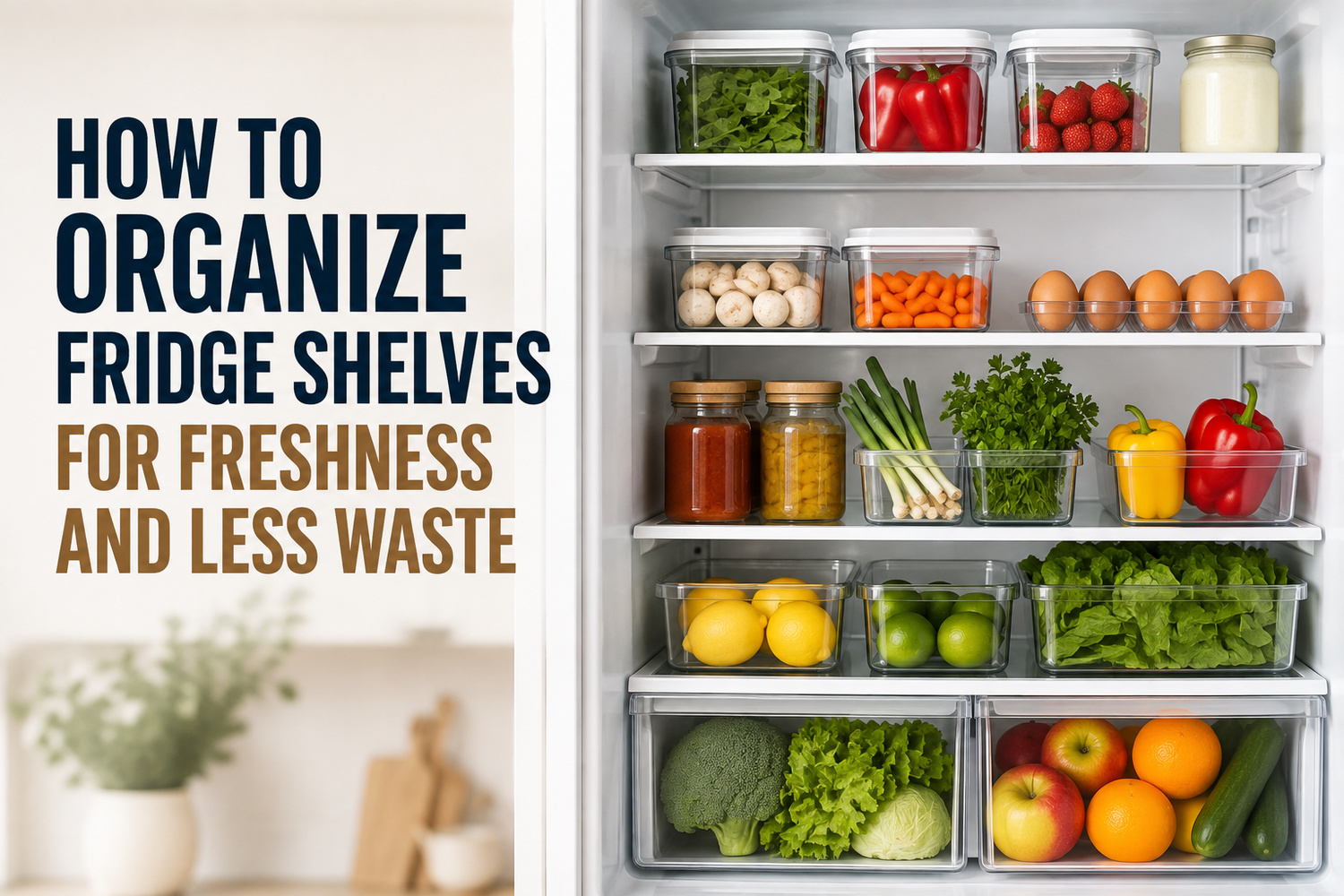
Your fridge can look full and still waste food every week. The half-used yogurt tubs, the takeout container buried behind the juice, the chicken package sitting on the wrong shelf, all of it turns a simple grocery run into a guessing game. How to organize fridge shelves is really about making the coldest, safest, and most visible spots do the work for you, so food gets used before it slips past its best window.
In California, that matters even more because food waste isn't just a housekeeping issue. CalRecycle says the state generates about 6 million tons of edible food waste each year, and California's SB 1383 made food-recovery a statewide priority starting in 2022. A better fridge layout won't solve that problem on its own, but it does help households apply the same first-in, first-out logic behind food recovery at home. California's fridge-organisation and food-waste context makes the case clearly, and it's the right starting point for a more useful system.
Table of Contents
- Reset Your Fridge Before You Reorganize
- The Temperature Logic Behind Fridge Zones
- Shelf by Shelf Placement Guide
- Containers, Labels, and Rotation Habits
- Adapting the System to Different Fridges and Households
- A Simple Maintenance Schedule That Actually Sticks
Reset Your Fridge Before You Reorganize
The worst time to “organize” a fridge is when you're just sliding old jars around and calling it done. If the shelves are sticky, the drawers are cluttered, and the back corners hide mystery containers, the layout won't hold for long. A proper reset gives every zone a clean baseline.
Pull everything out and sort it on the counter into three piles: keep, use soon, and toss. Open each container instead of assuming it's fine, because forgotten leftovers often look innocent until they're right in front of you. Wipe every shelf, drawer, and door bin before anything goes back in. That single reset makes the next grocery trip easier because you can see what you own.
Practical rule: if you can't identify it in a few seconds, it probably shouldn't go back in the fridge.
Keep the decision-making simple. Return only food you can use, refrigerate, or clearly label for later. If a bottle or container is stained, cracked, or too awkward to stack, it's usually taking up better space than it deserves. A clean fridge is not the goal by itself, it's the setup that lets zoning and labels work.
For a pantry-style version of this same reset-and-zone approach, see how bins and zones work in a pantry. The principle is the same, visibility beats hiding.

The Temperature Logic Behind Fridge Zones
Fridge shelf placement isn't an aesthetic choice. It's a safety decision built around temperature, airflow, and spill control. In a warm kitchen, especially one that gets opened constantly, every small layout mistake can shorten freshness and raise the risk of contamination.
Why the top and bottom shelves matter
The top and middle shelves are where ready-to-eat foods belong, because they're easier to see and less likely to be exposed to drips from raw items. The bottom shelf belongs to raw meat, poultry, and seafood in leak-proof containers, because that lower section is typically the coldest zone and keeps juices from falling onto other food. That layout follows standard food-safety logic and matches the shelf-by-shelf guidance used by appliance experts. Maytag's refrigerator organisation guidance lays out the same basic pattern.
The door is the warmest, most unstable area, so it's the wrong place for milk, eggs, or anything that needs steadier cold. Use it for condiments, juices, and butter instead. If you've ever found milk going sour before its date, the door is often the reason.
Keep perishables at or below 40°F. That threshold matters because even a small rise above it increases spoilage risk, especially when doors open often.
If you want a business-grade reference for the same storage logic, Monopack's guide on safe food storage for businesses covers the broader safety mindset well. The same principles apply at home, just on a smaller scale.

A quick note on tools. If you're installing shelf risers, securing bins, or adjusting a storage add-on, a compact kit such as the BLACK+DECKER BDC120VA 20V MAX* POWERCONNECT Cordless Drill with 100-Piece Kit can handle light household assembly with its 20V MAX cordless drill power, 24-position clutch control, and 100-piece accessory kit.
Shelf by Shelf Placement Guide
The easiest fridge layout to maintain is the one that matches how people reach for food. Morning items need to be visible, raw proteins need isolation, and condiments need a place where temperature swings won't matter as much. Once each shelf has one job, the whole fridge starts working harder.
Put the most urgent food where eyes land first
Top shelf works best for leftovers, meal-prep containers, opened dairy, and anything that should be eaten soon. Put older containers at the front and taller items toward the back so the shelf doesn't become a wall of blocked sightlines. Middle shelf is a good home for yogurt, cheese, eggs, and other items you use often but don't want hidden in drawers. If you like an egg container, keep it on the shelf that's most visible in your fridge rather than relying on the door.
The bottom shelf should hold raw chicken, meat, and fish in sealed containers or on a tray that can catch leaks. That matters more than neatness, because cross-contamination is harder to undo than clutter. One useful habit is keeping a dedicated use-first zone on the top shelf for food that needs attention within the next meal or two.
Practical rule: don't fill a fridge to the front edge if you can help it. Leave airflow space so the cold can move around the shelves.
Expert guidance converges on the same point, shelves should be kept no more than two-thirds full so refrigerated air can circulate. That matters in busy family kitchens where one large grocery shop can crowd the whole unit. A fuller fridge isn't a more organised fridge if cold air can't move.
For a more targeted example of container choice, how to choose produce storage containers for your fridge is useful when your produce drawer keeps turning into a jumble. If you're looking at egg storage specifically, this egg-holder guide fits naturally with shelf zoning.

Containers, Labels, and Rotation Habits
A shelf map only works if the containers help people follow it. Opaque tubs, mismatched lids, and unlabeled leftovers are the fastest way to undo good organising. Clear containers and simple labels reduce the guessing that leads to waste.
Use clear bins to group similar foods without blocking the view of what's behind them. One bin can hold lunch fixings, another can hold yoghurt cups, and another can keep snack items from drifting all over the shelf. If a bin is too deep or too tall, it becomes a hiding place, not a helper. That's why silicone containers that collapse flat can be practical in a fridge system where space changes week to week.
Make rotation automatic
Put newer groceries behind older ones and move older items to the front when you unpack. That simple first-in, first-out habit is what keeps the fridge from filling with duplicate condiments and forgotten leftovers. A strip of masking tape and a marker is enough for most homes. Date leftovers, especially anything you won't eat immediately.
Useful habit: every time you bring groceries home, touch the front row of the fridge before you fill the back. Move what needs using up first.
For a store-and-see approach that fits mixed produce and shelf items, produce storage containers for the fridge can help you decide what deserves a bin and what doesn't. GrifGlo also curates fridge and kitchen organisation options in one place, which is handy when you want a practical short list instead of a crowded search results page.
Labels don't need to be fancy. They just need to be legible and consistent. If a household has more than one cook, broad labels like leftovers, dairy, and snacks work better than clever custom names, because everyone can put things back without asking where they belong.
Adapting the System to Different Fridges and Households
A compact apartment fridge can't follow the same layout as a large family unit, and that's fine. The rules that matter most are the safety rules, not the exact shelf count. Raw proteins stay low, ready-to-eat foods stay visible, and the warm door stays reserved for less fragile items.
In a small fridge, your job is to reduce categories, not force more containers into less space. Combine similar foods, use shallower bins, and keep the top shelf reserved for what needs to be eaten first. In a side-by-side model, the compartments are often narrower, so the system works better when you prioritise visibility over perfect grouping. A large family kitchen is the opposite problem, more hands mean more drift, so clear zones and labels matter even more.
Shared fridges need the strongest boundaries. If the fridge is in a rental, office, or house share, use one shelf for each category instead of expecting everyone to follow a perfect household routine. Keep raw foods in sealed containers and place them where they won't be moved around by someone else looking for a drink.
If your freezer gets crowded as well, this freezer organisation guide can help you keep the cold-storage system consistent from top to bottom. The method is the same, visibility first, safety second, clutter last.
A Simple Maintenance Schedule That Actually Sticks
A fridge system survives when it attaches to habits you already have. The weekly shop, Sunday meal prep, and trash day are better anchors than a vague promise to “stay on top of it.” If the routine is too big, people stop doing it.
Use a short weekly reset to move older food forward, wipe spills, and toss anything that clearly won't get eaten. Once a month, empty the fridge enough to check what's hiding in the back and clean the shelves properly. If your water tastes off or the fridge seems to be slipping into the background of daily life, pair the check with refrigerator water filter replacement so the whole appliance gets attention.
When the system is working, you'll notice fewer forgotten containers, less duplicate buying, and less guesswork before meals. That's the payoff of how to organize fridge shelves, not a prettier interior, but a fridge that helps you use what you buy.
If you want practical home-organisation picks that support this kind of fridge setup, visit GrifGlo for clear, curated guidance on bins, containers, and everyday kitchen essentials. Their approach fits real households that need simple systems, not complicated projects, and it's a good place to start when you're ready to turn your fridge into a safer, lower-waste routine.



Laisser un commentaire
Ce site est protégé par hCaptcha, et la Politique de confidentialité et les Conditions de service de hCaptcha s’appliquent.