

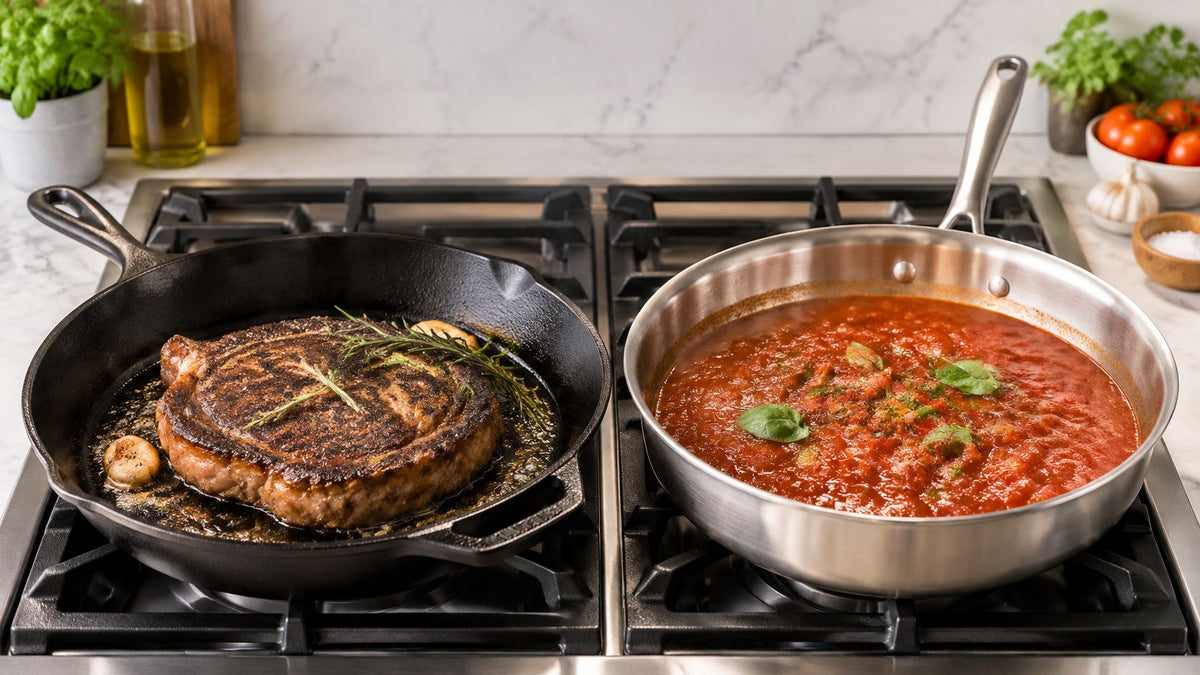
You're standing in the cookware aisle, or scrolling a late-night cart, trying to replace one tired skillet before the weekend. One pile is bright stainless. The other is heavy black cast iron. A tag promises easy cleanup. Another promises a steakhouse crust. Nobody has asked what you cook, whether the stove is gas, coil, or a glass induction top in a rental, or whether you'll oil a pan after Tuesday's pasta.
Both metals can serve for decades. They heat, release food, and ask for care in different ways. I wouldn't pick a winner from the label alone. The pan that suits you depends on the alloy, how the base is built, and the cooktop under it. A fridge magnet and a short checklist will tell you more than the box art.
Stainless Steel vs Cast Iron at a Glance
At a glance, stainless steel and cast iron differ in more than cooking performance. Their weight, care requirements, reactivity, and fit with your cooktop all affect whether a pan works well in your kitchen.
| Factor | Stainless Steel | Cast Iron |
|---|---|---|
| Heat response | Fast with an aluminum or copper core; follows burner changes quickly | Slow to heat and slow to cool; temperature lags the dial |
| Heat retention | Moderate; cools when cold food goes in | Excellent; holds a steady surface temperature |
| Maintenance | Many models are dishwasher-safe; mild acid lifts heat tint | Hand wash, dry immediately, reseason when sticking starts |
| Durability | Can last for years; thin bases can warp if overheated empty | Can last for generations and be restored, but may crack or chip if abused |
| Food reactivity | Non-reactive; suitable for tomatoes, wine, and citrus | Uncoated iron can react with long-cooked acidic food |
| Cooktop fit | Works on induction only when the base is magnetic | Induction-ready; lift rather than slide on glass |
| Weight | Light to moderate; generally easier to manoeuvre one-handed | Heavy; a 12-inch skillet can exceed 3.5 kg |
These are useful tendencies, not guarantees. Alloy and base construction change how a pan performs, while your cooktop affects compatibility and handling. Before buying, check the base for magnetic material if you use induction, and consider the pan's weight and care routine alongside its cooking surface. For dish-by-dish guidance, see the matching section.
How Each Metal Handles Heat
The main split in stainless steel vs cast iron is thermal mass, not a vague idea of "better heat." Cast iron is thick and dense. It takes time to load with heat, then it holds a steady surface temperature. Stainless steel on its own is a poor conductor, so a bare steel wall follows the burner poorly and leaves hot rings.
Health Canada describes cast iron as heat-retaining and stainless steel as durable and corrosion-resistant. Many stainless pans add aluminium or copper layers to distribute heat. Evaluate the whole construction: thickness, mass and the arrangement of those layers affect response and evenness.
What that means at the burner
Preheat cast iron gradually according to the maker’s instructions. Its mass helps it retain heat, but it can still develop hot spots and cool when food is added. Reduce the heat in advance when moving from searing to a delicate sauce.
A stainless pan with a conductive core can respond more readily than a heavy iron skillet, but construction varies. Both fully clad and well-designed encapsulated-base pans can be useful. Compare usable cooking area, base flatness, weight and the maker’s heating instructions instead of imposing one minimum thickness.
Buying check: compare base thickness, an aluminum or copper core, pan mass, and whether the face is bare or enamelled. The word on the box is the least useful line.
Enamelled cast iron combines an iron body with a coated cooking surface and does not need seasoning. It can suit acidic dishes where the maker permits them. Use the specified heat settings and handle it carefully to avoid chips. For a lighter iron-based alternative, see cast iron versus carbon steel.
Cleaning, Seasoning and Everyday Care
A cast-iron pan needs a little attention after cooking; stainless steel usually does not. Choose a routine you can keep up.
Cast iron after every use
For seasoned cast iron, Lodge recommends hand washing, thorough drying and a light oil coating. A small amount of ordinary dish soap is acceptable; avoid soaking or putting a seasoned skillet in the dishwasher.
Use a suitable brush or scraper for food residue, dry promptly and apply only a thin film of oil. Surface rust can often be removed and the pan reseasoned following its maker’s method. Enamelled cast iron needs different care and should not be treated as a bare seasoned surface.
Stainless after cooking
Check the individual stainless pan’s care instructions before using a dishwasher. For stuck food, let the pan cool appropriately, then soak in warm soapy water and use a non-scratching cleaning method. Use specialist cleaners only where the maker permits them, and avoid chlorine bleach.
Cast iron takes a couple of minutes of aftercare after each use. Stainless usually needs little attention unless food scorches.
Durability and How Long Each Pan Lasts
A pan's service life depends on its construction and on whether damage can be repaired. Cast iron can often return to cooking after rust or a worn seasoning layer is addressed. A cracked body, however, usually ends its useful life.
Cast iron failure modes
Thermal shock can crack cast iron: plunging a ripping-hot skillet into cold water puts the body under sudden stress. A hard drop onto tile can also break it. Enamel chips are permanent because the exposed iron beneath the glass coating cannot be recoated at home.
Stainless failure modes
Stainless steel resists ordinary corrosion, but extreme heat, thermal shock or damage to a bonded base can affect flatness and performance. Stop using a pan with a loose handle or separating layers and ask the maker about repair or replacement.
Both materials can outlast a non-stick coating, which eventually wears down and needs replacing. For a simple hypothetical comparison, assume a preseasoned cast-iron skillet costs $45 and lasts 20 years: that works out to $2.25 per year. Assume a tri-ply stainless skillet costs $150 and lasts the same 20 years: that works out to $7.50 per year. Those figures compare purchase cost over an assumed lifespan, not a guarantee. Cast iron has the repair advantage when rust or seasoning fails; stainless depends more on sound construction, since a warped pan is difficult to put back into service.
Matching the Pan to the Dish
The right choice can change with the dish, the pan's surface and how precisely you need to control the heat. Eggs and open-fire cooking show those trade-offs better than a general-use table.
| Cooking task | Better choice | Why |
|---|---|---|
| Cornbread, frittatas and oven braises | Cast iron | A single pan moves from stovetop to oven to table. |
| Camping and open-fire cooking | Cast iron | Use over flames or coals only where the manufacturer permits it. |
| Fried eggs | Either | Seasoned cast iron is forgiving; preheated stainless works with enough fat. |
The rows people argue about
Eggs can be cooked in either material with suitable temperature control and fat. Stainless steel is not a nonstick surface, and a seasoned iron pan is not guaranteed to release every food. Avoid overheating an empty pan merely to perform a water-drop demonstration.
Acid is the hard limit on bare iron. A quick deglaze is fine, but a long tomato simmer can dull the seasoning and leave a metallic note. Choose stainless or enamelled iron for hours of acidic cooking.
For larger batches, compare the actual flat cooking surface and the cookware’s permitted burner arrangement. A nonstick aluminium grill pan is a different construction from either uncoated stainless or cast iron. Before oven use, check the pan and handle temperature limits.
Induction and Glass Cooktop Behaviour
The material name doesn't settle whether a pan will heat, or whether it will scar a glass top. That assumption is how people buy the wrong skillet twice.
Cast iron is generally magnetic and many stainless pans have a magnetic base, but verify induction suitability for the exact pan. A magnet is a useful screening check; the cooktop’s pan-detection and diameter requirements still apply. On glass, keep the underside clean and lift heavy pans rather than sliding them.
Four checks before you pay
- Check the cookware’s induction marking and its maker’s compatibility information.
- Test whether a magnet sticks firmly to the base.
- Compare base diameter with the cooktop’s permitted pan sizes.
- Check weight, handles and flatness; plan to lift heavy cookware on glass.
For a shared kitchen, choose cookware people can handle comfortably. Our induction-cookware guide explains the compatibility checks.
Buying Criteria and Budget
Set the budget after narrowing by size, weight, construction and care. Check oven limits, handle comfort and return terms. For acidic cooking, stainless steel or suitable enamelled iron is often the easier fit. Compare current prices rather than assuming every kitchen needs a pair of expensive skillets.
Compare pans with similar usable cooking areas, and check their materials before treating them as alternatives. Buy one well-matched pan first if it covers your regular meals. A frying-pan set is useful only when its sizes, surfaces and bases suit your cooking and burners.
Choosing the Right Pan by Situation
Choose by the way you cook most often, then account for your stove and how comfortably you can handle the pan.
| Your situation | Choose | Why |
|---|---|---|
| You cook acidic dishes regularly | Stainless steel | Tomato, wine and vinegar-based foods can be cooked without managing a seasoning layer. |
| You want a hard sear and steady heat for a single dish | Cast iron | Its heat retention suits searing, though it takes longer to heat and cool. |
| You cook quick meals and want easier cleanup | Stainless steel | It needs no seasoning, and food residue can be loosened with a soak. |
| You cook dishes that move from stovetop to oven | Check the pan's oven-safe rating | Both materials can be used in oven cooking, but handles and construction determine the pan's limits. |
For frequent acidic cooking or varied weeknight meals, stainless steel is the more adaptable choice. For a dedicated searing pan, cast iron earns its place if you are comfortable with its weight and care routine. Check the specific pan's construction and the limits of your cooktop before deciding; the material name alone does not settle the choice.
GrifGlo's Kitchen collection groups cookware with knives and sharpening, kitchen appliances, racks and holders, food storage, cutting boards, and kitchen tools and gadgets. Its decision-friendly guides and sizing advice help shoppers compare options by fit and use. Visit GrifGlo to browse the Kitchen range.

Laisser un commentaire
Ce site est protégé par hCaptcha, et la Politique de confidentialité et les Conditions de service de hCaptcha s’appliquent.