

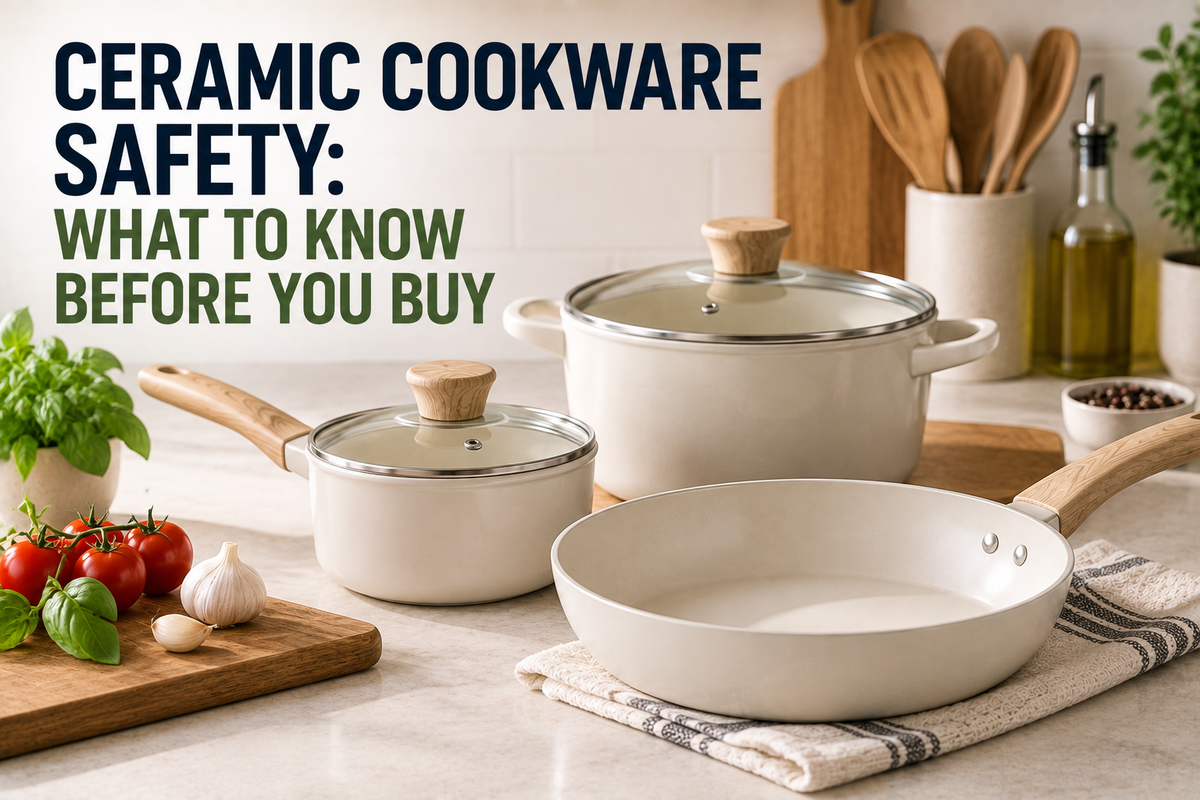
You're standing in a cookware aisle with two pans that both promise “ceramic” cooking. One is a heavy baking dish with a glossy interior. The other is a light frying pan with a dark metal body and a smooth, colourful coating. They look related, but their materials, failure modes, and safety questions are different.
That distinction matters more than a broad “non-toxic” label. Ceramic cookware safety depends on what the product is, whether food-contact surfaces can release regulated metals, how the coating is tested, and how the pan has been used. The calm approach is to identify the category first, then match the product to measurable standards and sensible care.
Table of Contents
- What Ceramic Cookware Actually Means
- Heavy Metals in Glazes and What the Rules Allow
- Ceramic Nonstick Coatings and Their Composition
- Heat, Thermal Shock, and Day-to-Day Use Risks
- Standards and Testing Buyers Can Actually Verify
- Safe Use, Care, and When to Replace a Pan
- A Practical Ceramic Cookware Safety Checklist
What Ceramic Cookware Actually Means
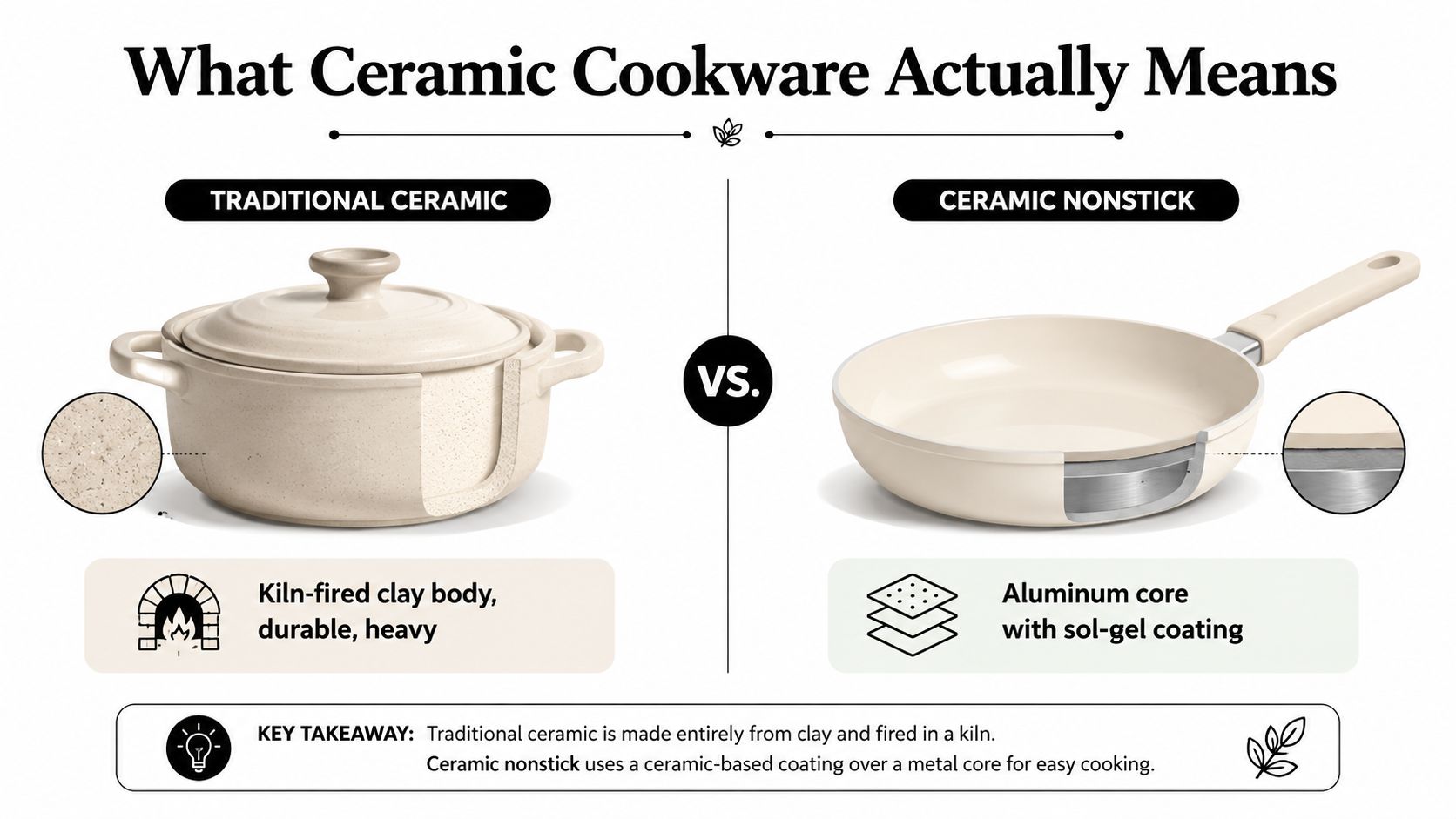
The word ceramic covers two product families that behave differently in a kitchen.
Traditional ceramic cookware has a solid body made from clay-based material, stoneware, or porcelain. Manufacturers shape and fire that body in a kiln, then add a vitreous glaze that creates a smoother, less porous food-contact surface. Ceramic baking dishes, casserole pots, and some tabletop serving pieces belong here. Their weight, thickness, and heat retention come from the fired ceramic body itself.
Ceramic-coated cookware starts with a metal pan, commonly aluminium or stainless steel. A manufacturer applies a thin sol-gel coating to the cooking surface, then cures it. The metal provides the structure and heat response, while the coating provides the initial low-stick behaviour. It's closer to a coated metal pan than to a pottery dish.
Read the label before judging the pan
A label such as “100% ceramic” generally points toward a solid fired ceramic body, although you should still check the product specifications. “Ceramic nonstick” usually describes a metal pan with a sol-gel surface, not a clay body.
That difference changes the first question you should ask:
- Solid ceramic: Is the glaze suitable for food contact, and has it been tested for lead and cadmium migration?
- Ceramic-coated metal: What is the coating made from, what materials sit beneath it, and what use limits does the manufacturer provide?
A traditional glazed dish may be used for a slow bake or a crisp crust on a backyard grill, but it still needs instructions that address thermal shock and direct heat. A coated frying pan has a different concern, namely preserving the thin surface that separates food from the metal underneath.
If you're comparing alternatives, the guide to non-stick cookware alternatives can help you think beyond the word “ceramic.” The rest of this article treats the two categories separately, then brings them together in a buyer filter based on testing, surface condition, heat use, and documentation.
Heavy Metals in Glazes and What the Rules Allow
Glazed ceramic foodware is where the heavy-metal question sits, because lead or cadmium can be present in a glaze or decorative layer. During an extraction test, acidic food may draw those substances out of the finished surface. Tomato-based sauces and citrus-heavy preparations deserve particular care, especially when warm food remains against the glaze.
California's Department of Public Health considers tableware below the state's Proposition 65 lead standards safe to use. Tableware above those levels may still be sold, but it must carry a written warning. The department also explains that laboratory testing is the only reliable way to determine how much lead a traditional ceramic piece releases. Colour, decoration, and a reassuring product description cannot establish safety. California CDPH guidance on lead in tableware explains the testing requirement.
A peer-reviewed study of newly purchased imported dinnerware tested 28 ceramic designs. Two released lead above FDA limits, 10 additional patterns exceeded California Proposition 65 lead thresholds, and one dish exceeded FDA limits for cadmium. The results do not make every imported ceramic item unsafe. They show why the glaze, decoration, and measured leaching result matter more than appearance or country-of-origin assumptions. The 1999 dinnerware study provides the underlying data.
Canadian limits are product-specific
Health Canada sets different migratable limits for glazed ceramic cookware and bakeware according to an article's shape and use:
| Standard | Lead limit | Cadmium limit | Applies to |
|---|---|---|---|
| Canada, flatware | 3.0 mg/L | 0.50 mg/L | Flatware |
| Canada, large hollowware | 1.0 mg/L | 0.25 mg/L | Large hollowware |
| Canada, cups and mugs | 0.5 mg/L | 0.50 mg/L | Cups or mugs |
| Canada, decorated drinking vessels near the rim | 4 mg/L | 0.4 mg/L | Distinctive exterior decoration within 20 mm of the rim |
These values come from Health Canada's cookware safety guidance and the Glazed Ceramics and Glassware Regulations. The rim-specific rule reflects the likelihood of direct mouth contact with decoration close to the lip.
A product page for the ITY 4 Piece Ceramic Diamond Pattern Bathroom Set, listed as a ceramic accessory set, describes a soap dispenser with a stainless steel pump. It is not cookware or food-contact ware, so that listing cannot demonstrate cooking safety. For storage guidance involving ceramic containers, see this sourdough starter container guide.
For a pot or dish, request a Declaration of Conformity or independent laboratory certificate identifying the extraction method and result. “Lead-free style,” “natural,” and “non-toxic” are marketing descriptions, not substitutes for a report tied to the finished food-contact surface.
Ceramic Nonstick Coatings and Their Composition
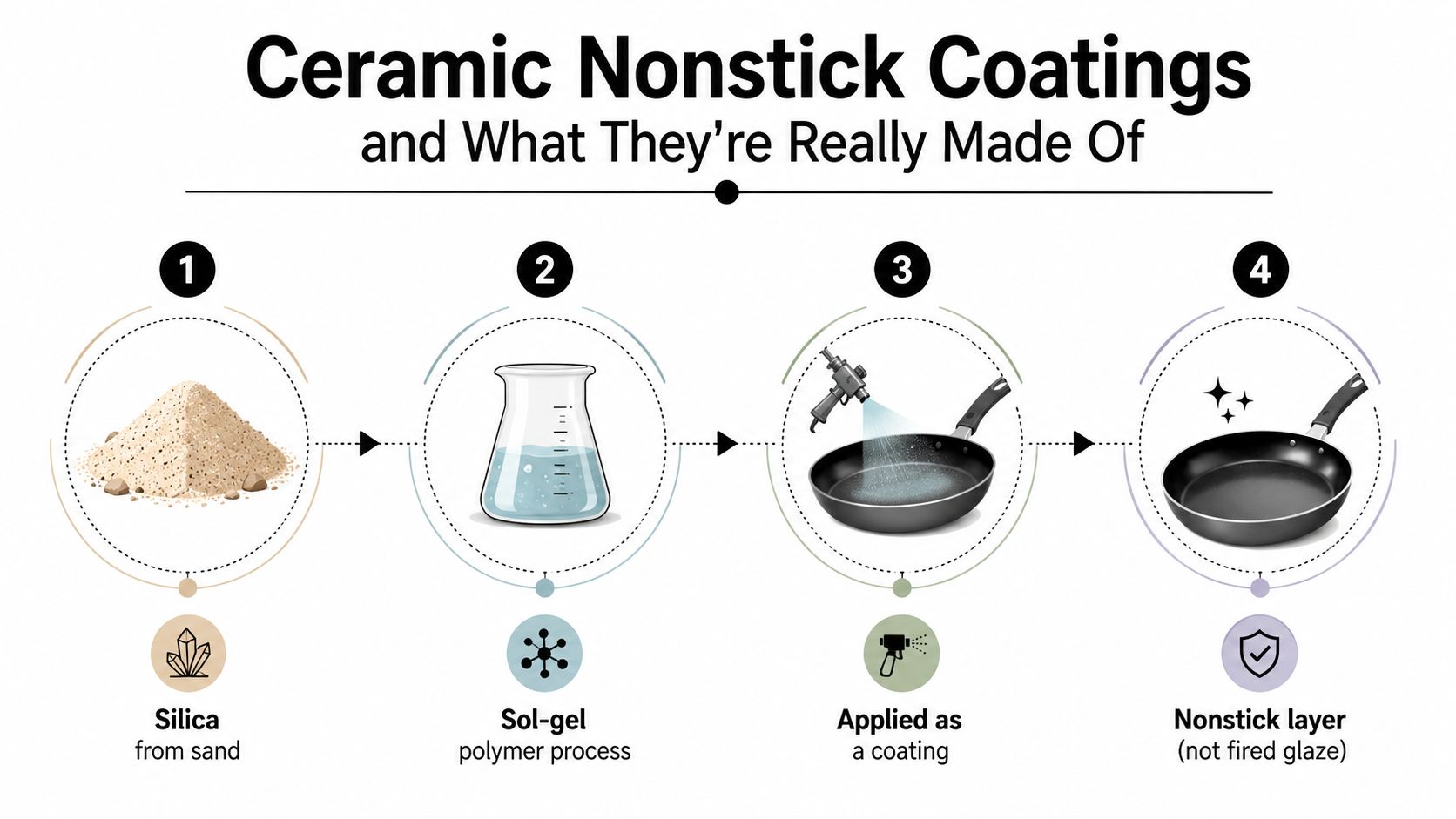
Most pans marketed as ceramic nonstick use a silica-based sol-gel layer applied over an aluminium body, rather than a kiln-fired ceramic construction. Silica, commonly associated with sand-derived raw material, starts in liquid form and cures into a hard, smooth surface. The result can feel glass-like, but it differs from the glaze on a stoneware casserole. This distinction matters when comparing ceramic nonstick cookware materials.
A coated pan therefore raises a different set of questions from a brightly decorated glazed dish. Its nonstick layer is an engineered coating over metal, while a traditional glaze forms part of a fired ceramic surface. Ask what the coating contains, which substances the maker excludes, and whether the finished pan has food-contact testing. Marketing terms alone cannot answer those questions.
Performance fades before the pan looks ruined
Sol-gel surfaces often start with excellent release, then gradually lose it through heat, oils, abrasion, and washing. Food may begin gripping in the centre, the finish may look dull, or faint grey streaks may appear. A practical check is an egg that once slid freely but now needs butter or oil.
Reduced release does not by itself prove toxic exposure. It shows that the pan no longer performs as designed, while visible damage may expose the underlying substrate. Treat the finish as a coating that needs periodic inspection, not as a permanent safety category.
For a large stovetop surface, the All-Clad HA1 Double Burner Grill Pan is described as a 13 by 20 inch nonstick grill with low walls and a surface spanning two burners. Its listing shows why construction details matter, but the product name alone does not establish a ceramic coating or laboratory result.
This ceramic nonstick coating video helps visual learners distinguish a coating process from fired pottery.
Heat, Thermal Shock, and Day-to-Day Use Risks
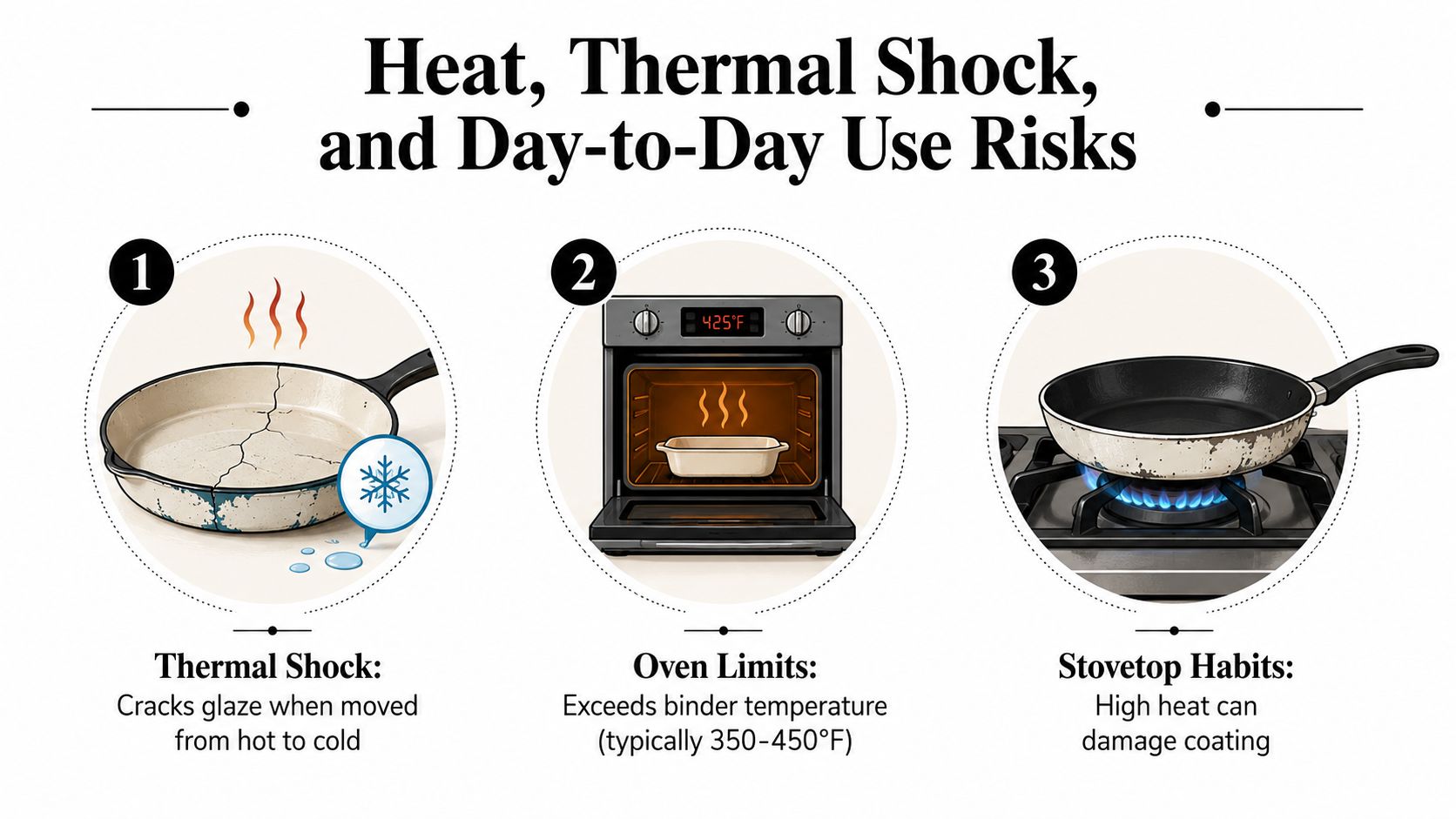
Solid ceramic and coated metal each face distinct heat-related risks. A fired ceramic dish can crack when one area expands or contracts faster than the rest. A coated pan may stay intact while repeated overheating gradually reduces its release.
Avoid sudden temperature changes
Set a hot ceramic baking dish on a dry, heat-resistant surface. Moving it onto a cold, wet counter, rinsing it with cold water, or placing a frozen ceramic container in a hot oven can create stress through the body and glaze. Cracks may begin as small fractures and become easier to miss during washing.
Let the dish cool gradually. Follow the maker's instructions for preheating, oven use, and direct heat. An oven-safe label does not establish broiler safety, stovetop safety, or suitability for a burner flame.
Treat coated pans as moderate-heat tools
Ceramic nonstick pans generally last longer with low-to-medium heat and a gradual preheat. An empty pan over a strong burner heats faster than one filled with food, so add ingredients promptly and avoid maximum heat as a default. Metal utensils, sharp-edged tools, and unprotected stacking can score the coating even without overheating.
A simple sink-side check helps. Before washing, hold your hand near the pan's exterior without touching it. Strong radiating heat means the pan should cool first, protecting the cookware and sink from an abrupt temperature change.
Stop using cookware with a visible crack, flaking surface, exposed base material, or a wobble that prevents stable contact with the hob. These defects affect safe handling and can worsen with further heating.
For broader context on heat-retaining cookware, cast iron versus carbon steel compares two uncoated materials with different handling requirements. Their heat response also shows why a pan's material, thickness, and cooking setting matter as much as its surface label.
Standards and Testing Buyers Can Actually Verify
A safety label is useful only when you know what it means. In California, Proposition 65 functions as a warning-and-exposure framework, not a universal certification mark. A warning doesn't automatically prove that a product is unusable, but it does signal that the seller or manufacturer is disclosing exposure covered by the law. California CDPH directs shoppers toward Proposition 65 compliance and laboratory testing because appearance can't reveal the amount of lead in a glazed ceramic piece.
Canadian buyers have a more product-class-based reference point. Health Canada publishes migratable lead and cadmium limits for flatware, hollowware, cups, mugs, and specially decorated drinking vessels. The category matters because the shape changes how much surface may contact food or drink.
Ask for the finished-product evidence
Before buying traditional glazed ceramic cookware, request documentation that identifies the exact product or model and the tested food-contact surface. A useful report should show:
- The analytes: Lead and cadmium should be addressed where relevant.
- The test result: Look for migration or extraction results expressed in the units used by the applicable standard.
- The article class: A mug, flat dish, and large hollow vessel may fall under different limits.
- The test identity: The report should identify the sample, date, laboratory, and method.
- The compliance conclusion: The result should be connected to the applicable Canadian or California requirement.
Canada updated its technical testing reference for release of lead and cadmium in food-contact ceramic and glassware to ISO 6486-1:2019 in 2024, according to Health Canada's 2024–2025 compliance information. The same material records imported glazed ceramic products that failed allowable lead-concentration and warning requirements, so compliance checks remain practical rather than theoretical.
Use the limits as a comparison tool
| Standard | Lead limit | Cadmium limit | Applies to |
|---|---|---|---|
| California Proposition 65 | Below the applicable state exposure standard | Not specified in the provided benchmark | California tableware and ceramic food-contact products |
| Canada, flatware | 3.0 mg/L | 0.50 mg/L | Flatware |
| Canada, large hollowware | 1.0 mg/L | 0.25 mg/L | Large hollowware |
| Canada, cups or mugs | 0.5 mg/L | 0.50 mg/L | Cups and mugs |
| Canada, decorated drinking vessels near rim | 4 mg/L | 0.4 mg/L | Distinctive decoration within 20 mm of rim |
Don't give vague phrases such as “eco-friendly” or “non-toxic” the same weight as a test certificate. A product standardization guide may help you think about documentation more systematically, but the seller still needs to provide evidence for the specific cookware you're considering.
Safe Use, Care, and When to Replace a Pan
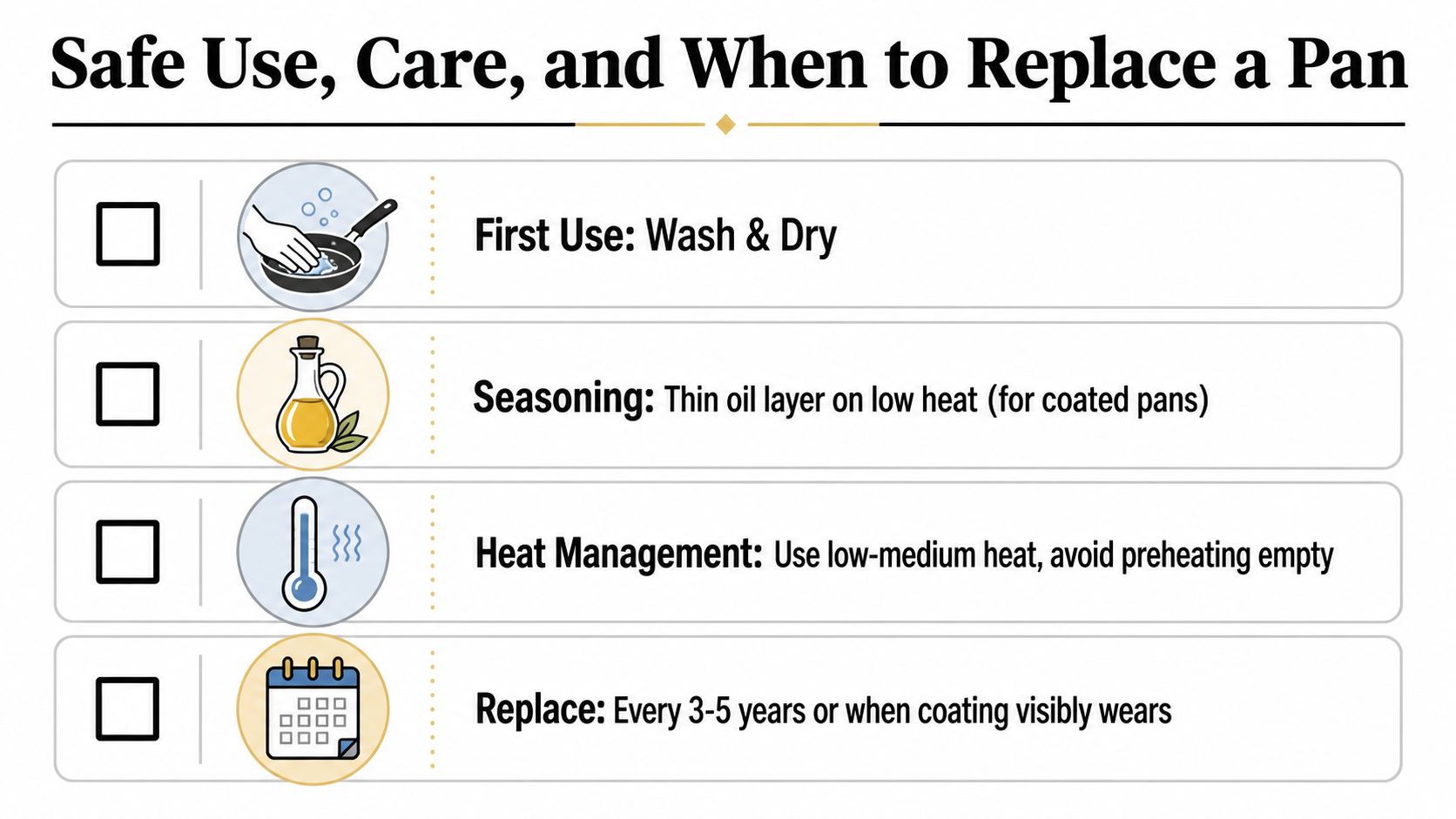
Good care starts by separating solid glazed ceramic from coated metal. Wash and dry a new coated pan, then follow the manufacturer's instructions about any initial oil conditioning. For glazed stoneware, a simple wash and thorough dry is usually the appropriate first step unless the maker provides different directions.
During cooking, match the burner to the pan base so heat doesn't concentrate unnecessarily around the edges. Use wood or silicone utensils, keep the setting within the stated range, and don't leave an empty coated pan heating unattended. A thin film of oil can support release, but heavy residue from cooking sprays may build up and make a surface feel sticky.
Make cleaning deliberately boring
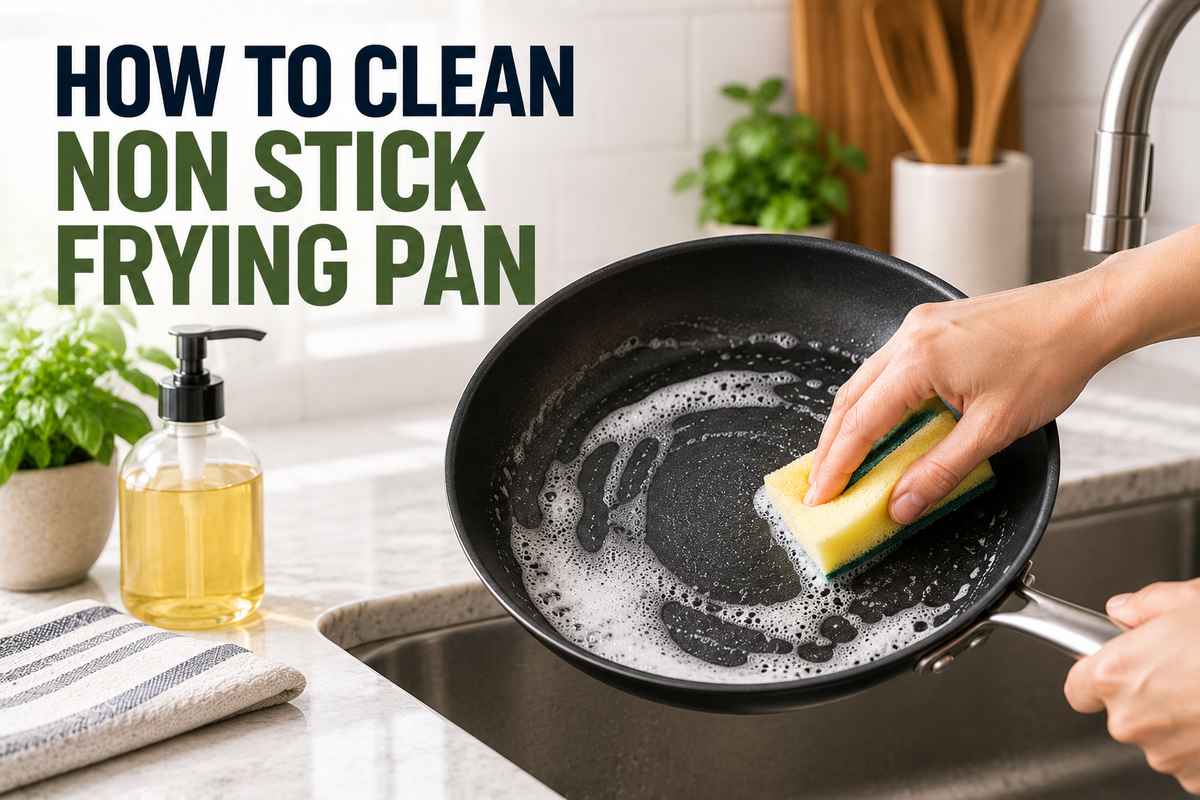
Hand-wash with mild detergent and a soft sponge unless the manufacturer confirms dishwasher compatibility. A baking soda paste can loosen stubborn residue without forcing you to use steel wool or an aggressive abrasive. Even when a product is technically dishwasher-safe, repeated harsh cycles may shorten the useful life of a coated surface.
Store pans with felt separators, tea towels, or another soft barrier between pieces. The aim is to protect the cooking face and the rims, where chips can begin when pans knock together.
Replace based on condition
Retire cookware when you see:
- Cracks or crazing: A damaged glazed surface is no longer a sound food-contact barrier.
- Peeling or exposed substrate: A coated pan has lost surface integrity.
- Persistent sticking: If careful cleaning and ordinary oil no longer restore release, the coating has reached the end of its useful service.
- Warping: A pan that wobbles on a flat counter may heat unevenly and sit unstably.
- Unusual taste or smell: Stop cooking and investigate rather than trying to mask the odour with stronger seasoning.
A calendar review every five years can be a useful household habit, but condition matters more than an arbitrary date. Some pieces will need replacement sooner, while carefully used cookware may remain intact longer. When a pan retires, check local options for scrap-metal recycling, ceramic recycling, or manufacturer take-back rather than placing every material in the same bin.
A Practical Ceramic Cookware Safety Checklist
Use this filter while shopping online or standing in a store. It isn't a fear list. It's a way to stop a persuasive label from doing the thinking for you.
Confirm the category
Start by asking what sits under the cooking surface.
- Glazed ceramic: The body is fired clay, stoneware, or porcelain, and the glaze or decoration touches food.
- Ceramic-coated metal: The body is metal, and a sol-gel coating supplies the nonstick surface.
- Unclear wording: If the listing says only “ceramic cookware,” look for a materials section, construction diagram, or manufacturer response before buying.
This first check determines whether your main documentation request concerns glaze migration or coating composition and durability. It also prevents you from applying the care routine for a heavy casserole dish to a thin frying pan.
Check compliance evidence
For glazed ceramic foodware, look for a report or declaration tied to the finished product. In California, check whether the product carries a Proposition 65 warning and whether the seller can explain the applicable compliance position. In Canada, compare the article type with Health Canada's published migratable limits for lead and cadmium.
A credible document should name the product, identify the tested surface, state the test method, and show results. Be cautious when a seller provides only a general statement such as “free from harmful chemicals” without a laboratory report. The claim may describe a material intention, but it doesn't tell you how the finished glaze performed in an extraction test.
One-minute rule: If the seller can't identify the product category and won't provide relevant food-contact evidence, don't let a colour, influencer recommendation, or discount make the decision for you.
For ceramic-coated metal, ask for the coating specification and the recommended heat range. Confirm whether the pan is intended for oven use, induction, dishwasher cleaning, or metal utensils. Those instructions address performance and surface integrity, which are different from heavy-metal migration in glazed ware.
Use price and origin as clues, not proof
A low price may indicate thinner construction or less documentation, while a higher price may reflect branding rather than better testing. Country of manufacture can help you decide which regulatory information to request, but it can't prove that an individual item is safe or unsafe. The tested article and its actual surface remain the important evidence.
If you're buying for an office, rental property, or hospitality setting, record the model, care instructions, and compliance documents together. A consistent purchasing record makes it easier to replace matching pieces and remove damaged cookware before someone else uses it.
Inspect the physical surface
For a glazed piece, run your eyes over the rim, handles, interior, and decorative areas. Reject visible chips, cracks, sharp glaze breaks, and suspicious damage around food-contact zones. For a coated pan, look for dull patches, scoring, peeling, flaking, or exposed metal.
Finish by checking the base. It should sit securely on a flat surface without rocking, and the handle should feel firmly attached. Confirm the recommended use range before checkout, especially if you plan to move the cookware from freezer to oven, use it under a broiler, or cook over direct flame.
The simplest decision standard is this: buy only when you can match the cookware to a clear category, relevant testing or compliance documentation, an intact surface, and instructions that fit your routine. If one of those pieces is missing, choose a product with clearer evidence.
GrifGlo organises cookware and other household essentials into decision-friendly guides, comparisons, and practical purchasing categories. Visit GrifGlo to compare kitchen options with the material, care, and fit-for-purpose details in view before you buy.

Leave a comment
This site is protected by hCaptcha and the hCaptcha Privacy Policy and Terms of Service apply.