

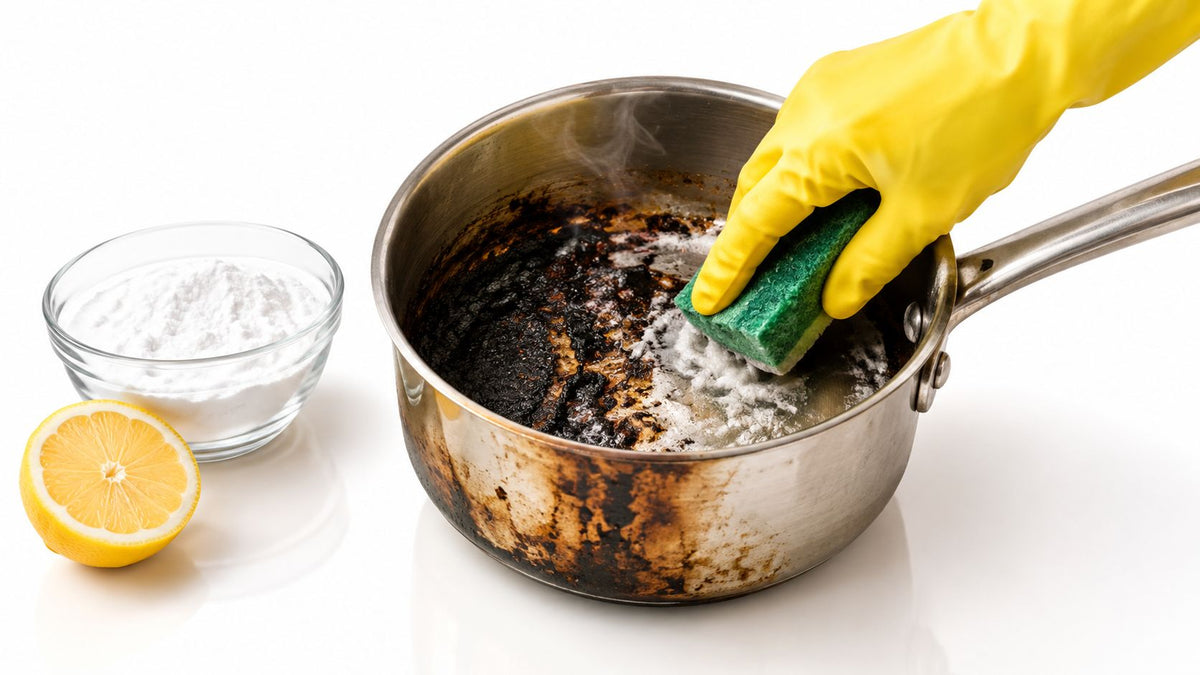
You lift the lid and find a blackened pot, a scorched frying pan, or a layer of burnt sauce welded to the base. The first impulse is usually to attack it with a scraper. Resist that urge. The safest and most effective way to clean burnt pots and pans starts with cooling, identifying the cookware material, and separating burnt food from mineral residue.
A pan that has overheated may be structurally damaged even when it looks salvageable. The right method depends on whether you're dealing with stainless steel, enamel, cast iron, aluminium, ceramic coating, or non-stick cookware. Use the least aggressive approach that can do the job, then rinse and dry carefully so you don't replace one problem with scratches, scale, or coating damage.
Table of Contents
- Essential Safety and Cooling Protocols
- Matching the Cleaning Method to the Cookware Material
- The Controlled Boiling Method for Uncoated Metals
- Specialized Care for Non-Stick and Cast Iron Surfaces
- Managing Water Hardness and the Final Rinse
- Proactive Prevention and Daily Maintenance Habits
Essential Safety and Cooling Protocols
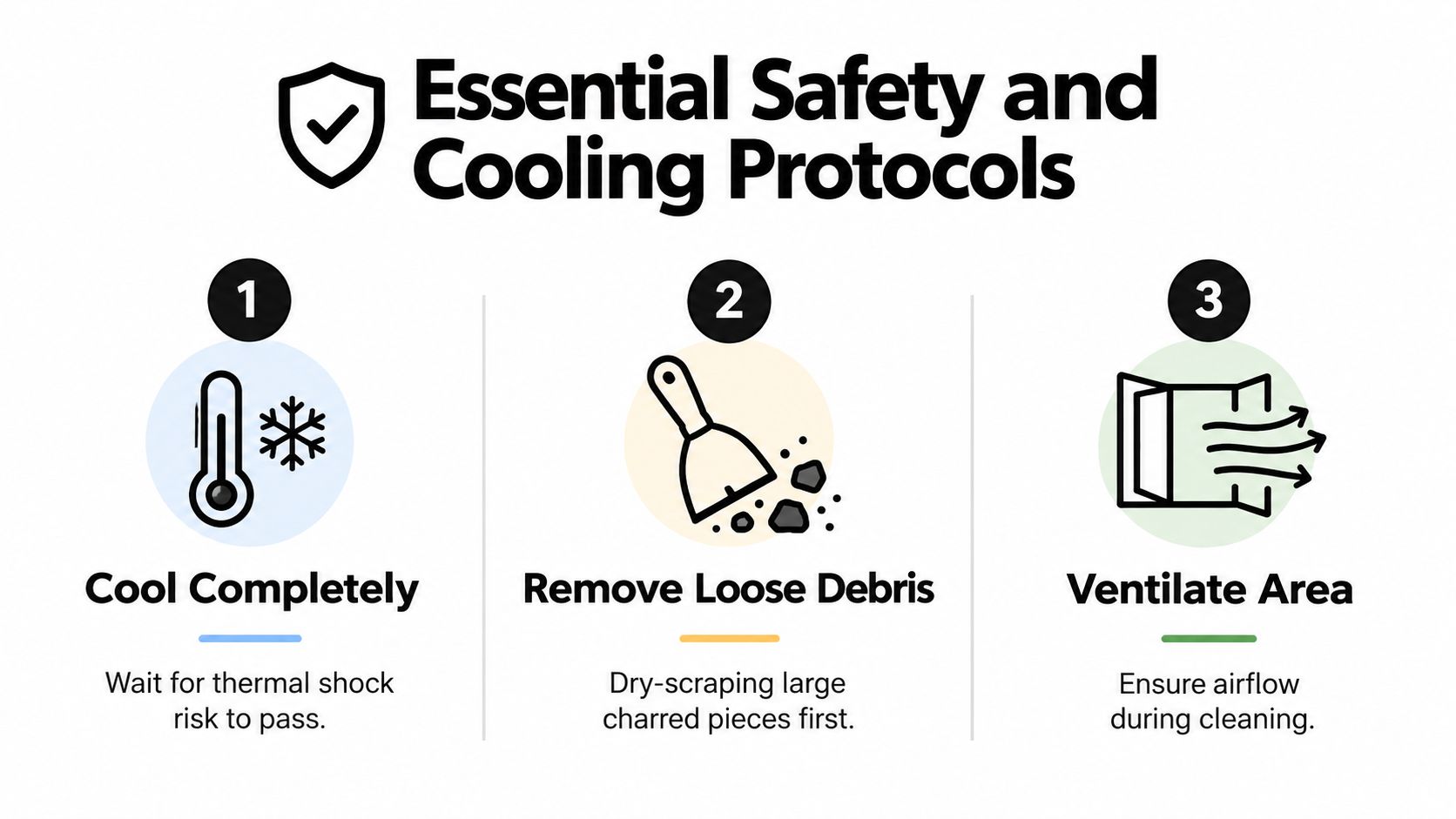
Before cleaning, make sure the pan is completely cool and safe to handle. Don't carry a hot pan to the sink, pour water into overheated oil, or grab a handle just because the surface looks less smoky. Rapid cooling can warp cookware, and sudden contact with water can create dangerous steam.
If grease or oil has caught fire, slide a lid over the pan, turn off the burner if you can do so safely, and leave the lid in place until everything is completely cool. Never use water on a grease fire, because water can spread burning oil. California's State Fire Marshal reports that unattended cooking contributes to one-third of cooking fires, while two-thirds begin when food or cooking materials ignite. Those figures make supervision and safe cooling more important than any cleaning shortcut. California cooking-safety guidance sets out the lid-and-cool procedure.
The safe sequence
- Extinguish safely: Cover burning oil, stop the heat, and don't move the pan.
- Cool completely: Wait until the cookware can be handled without heat, smoke, or bubbling oil.
- Remove loose debris: Lift large flakes with a wooden or plastic utensil. Don't gouge the surface.
- Ventilate the area: Open suitable ventilation before heating detergent solutions or working around smoke residue.
- Inspect before cleaning: Look for warping, cracks, blistering, flaking, or a damaged coating.
Practical rule: Extinguish safely, cool completely, then clean and inspect. Scrubbing is always the third stage, never the first.
Once the pan is cool, remove loose food while it's dry, then choose a wet method suited to the surface. If smoke or grease has collected above the stove, clean the range hood according to its care instructions, using this range hood cleaning guide for a practical reference. A stainless-steel kettle such as the HAUZ AKL1695 Whistling Stovetop Stainless Steel Kettle 2L also needs the same basic respect for heat and cooling, even though its everyday use is different.
Matching the Cleaning Method to the Cookware Material
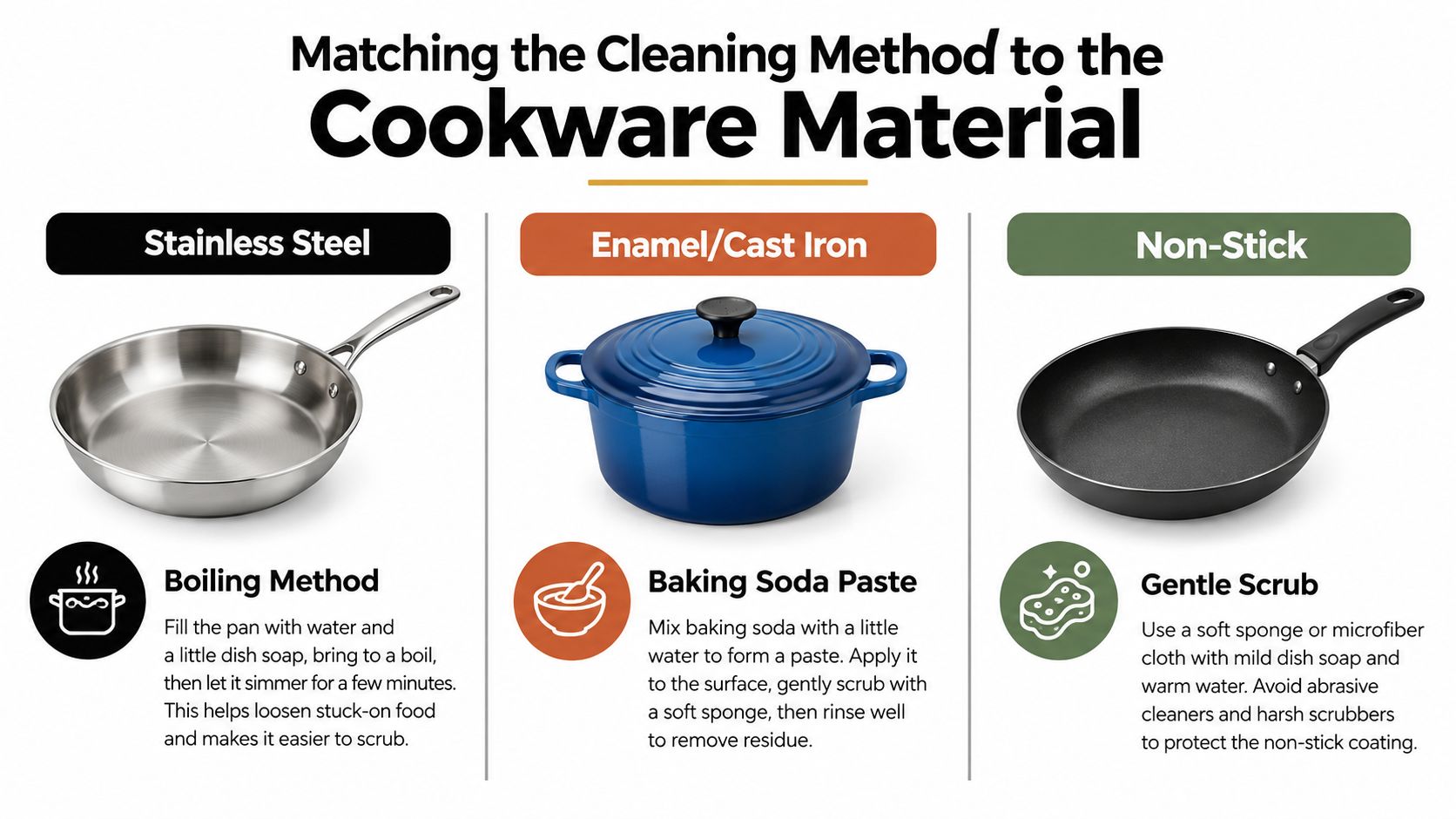
The surface determines how much heat, water, chemistry, and friction it can tolerate. Stainless steel and other uncoated metals generally handle a controlled detergent boil better than coated cookware. Enamel tolerates soaking but can chip, while non-stick coatings need light handling. Cast iron adds another concern: excess moisture can encourage rust and strip seasoning.
Stainless steel and uncoated aluminium
For carbonized food on stainless steel, begin with warm water and mild detergent. Let the residue soften before using a plastic spatula, sponge, or another nonmetal tool. Avoid steel wool and metal scouring pads, which can leave scratches and dull the finish. Health Canada's cookware-care guidance recommends mild detergent and soft cleaning materials, with particular caution around coarse abrasives.
Uncoated aluminium needs a more careful chemical choice. Strong alkaline cleaners can discolor or attack the metal, and prolonged acidic contact may also cause problems. Follow the cookware maker's instructions rather than applying a stainless-steel treatment automatically. This guide to anodized aluminium cookware explains why the finish matters. Use the gentlest approved method, especially if the aluminium is anodized.
Enamel, cast iron and carbon steel
Enamelled cookware responds well to warm water, mild detergent, and a soft sponge. Keep sharp metal tools away from the glass-like surface, especially around an edge or existing chip. If burnt food remains, repeat the soak instead of increasing pressure.
Bare cast iron and carbon steel need short contact with water, controlled scrubbing, and immediate drying. Long soaking can promote rust and remove more seasoning than necessary. After drying, restore the protective oil layer according to the cookware maker's care instructions.
| Surface | Start with | Avoid |
|---|---|---|
| Stainless steel | Warm detergent soak or controlled boil | Random metal scraping |
| Uncoated aluminium | Manufacturer-approved mild cleaning | Strong alkaline cleaners |
| Enamel | Warm water, mild detergent, soft sponge | Sharp tools and harsh abrasives |
| Bare cast iron or carbon steel | Short soak, gentle scrub, thorough drying | Long soaks and damp storage |
| Non-stick | Mild detergent and soft sponge | Steel wool, metal utensils, aggressive heat |
Non-stick and ceramic coatings
Non-stick cookware should not receive the same treatment as bare stainless steel. Avoid boiling detergent, abrasive pastes, metal tools, and hard scouring pads, since they can wear or scratch the coating. A pan that is flaking, badly scratched, blistered, or no longer smooth cannot be restored through cleaning. Follow the manufacturer's replacement guidance.
Ceramic-coated pans also need low mechanical pressure. Let water and mild detergent loosen the residue, then wipe with a soft sponge. If residue remains after a 30-minute soak, repeat the soak rather than scrubbing harder. Ceramic coatings can chip or scratch when friction increases, even if the surface looks durable.
The Controlled Boiling Method for Uncoated Metals
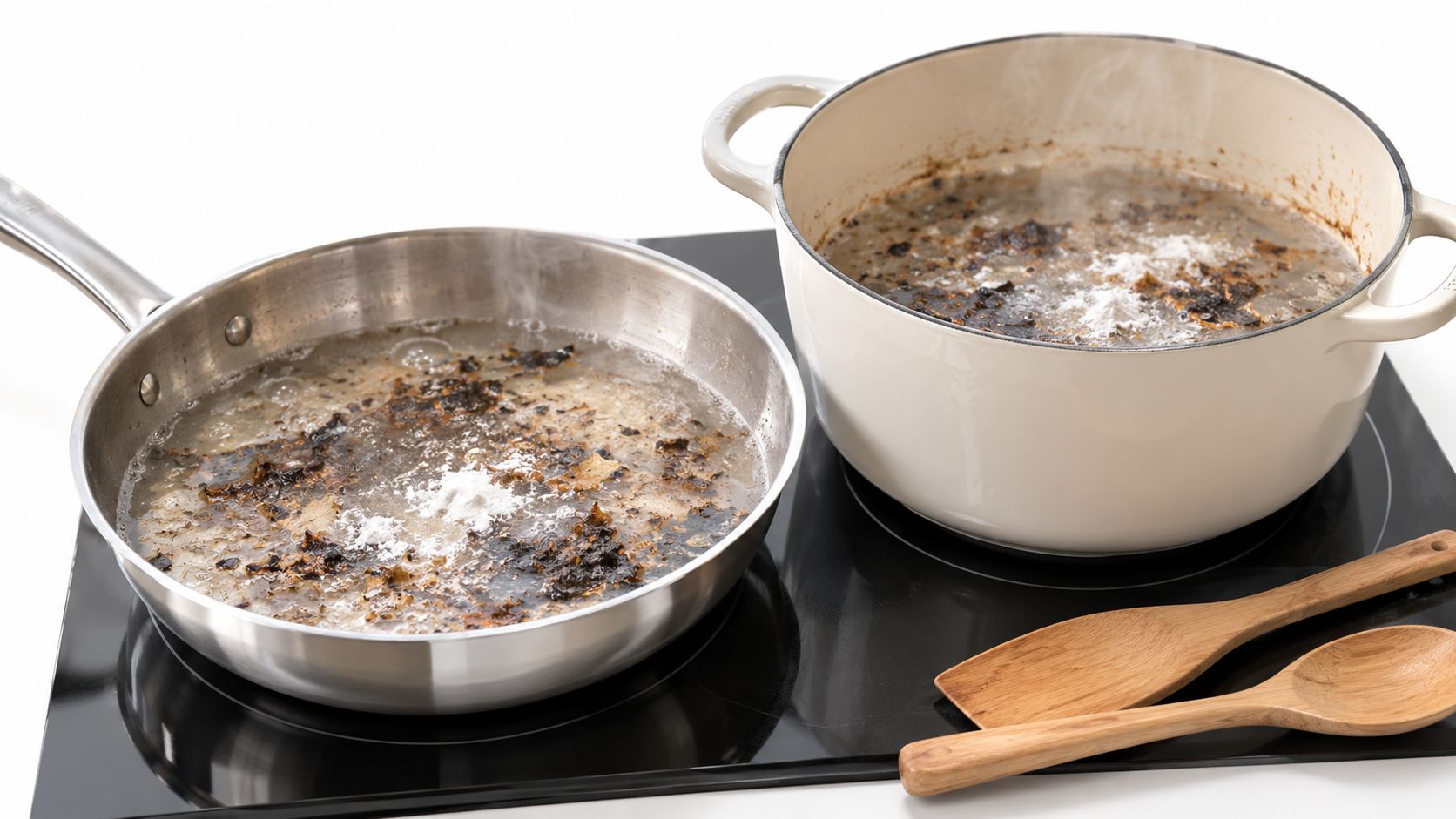
For a stainless-steel or other uncoated pan with firmly baked-on residue, controlled boiling is more effective than dry scraping. Heat softens the carbonized food, while alkaline dishwasher detergent helps detach organic material from the surface. This approach limits the mechanical force needed to finish the job.
Follow the wet-cleaning cycle
- Remove loose food: Once cool, lift off flakes and large pieces with a plastic spatula or wooden utensil.
- Add the solution: Put approximately 2.5 cm (1 in) of water in the pan and add 15 mL (1 tablespoon) of non-lemon dishwasher detergent.
- Heat gradually: Bring the solution to a boil, then reduce the heat.
- Simmer for 15 minutes: Keep the pan at a controlled simmer rather than allowing vigorous boiling to splash the detergent.
- Cool in the solution: Turn off the heat and let the cookware cool while the softened residue remains submerged.
- Drain and rinse: Empty the solution carefully, then rinse the pan thoroughly.
- Lift the residue: Use a sponge or plastic spatula to remove the loosened material.
- Repeat if needed: A second cycle is safer than escalating immediately to metal abrasives.
Work with ventilation because detergent vapours can irritate the respiratory tract. Keep your face away from the steam, don't lean over the pan, and follow the product label as well as the cookware instructions. Never add chlorine bleach or another cleaner to this solution.
The method works best when the burnt layer is organic food or oil. It won't necessarily remove a white mineral film, heat tint, corrosion, or pitting. Those are separate surface issues and need a different diagnosis.
Watch the sequence in action before trying a stubborn rescue:
After the pan cools, use the plastic tool at a shallow angle. Push softened residue across the base rather than stabbing underneath it. If the pan still has dark patches, repeat the wet cycle instead of increasing pressure. Scratches create places for food to lodge, which makes future cleaning harder.
Specialized Care for Non-Stick and Cast Iron Surfaces
Non-stick and cast iron need different rescue methods. A non-stick pan relies on an intact factory coating, while cast iron depends on a thin, bonded layer of seasoning over bare metal. Choosing the wrong abrasive can permanently shorten the life of either surface.
Non-stick cookware
Let a PTFE or other non-stick pan cool before removing loose food. Add warm water and mild dish detergent, allow the residue to soften, then wipe with a soft sponge or plastic utensil. Steel wool, abrasive powder, metal turners, and hard-edged scrapers can scratch or cut through the coating.
Never heat an empty non-stick pan to burn away stuck food. Excessive heat can damage the finish, and severe overheating calls for a careful inspection. Replace the pan if the coating is flaking, blistered, heavily scratched, or separating from the base. A rough surface that no longer releases food will not become safe or functional through more scrubbing. If replacement is necessary, compare suitable materials in this guide to non-stick cookware alternatives before buying.
Use the least aggressive method that removes the residue. Soften first, wipe second, and stop as soon as the surface is clean. A plastic tool is appropriate for a stubborn spot only when gentle wiping cannot lift it.
Bare cast iron and carbon steel
Cast iron and carbon steel can often recover from localised scorching. Avoid prolonged submersion, which encourages rust and can weaken seasoning. Start with hot water and a stiff nylon brush. For a firmly attached patch, use a modest amount of coarse salt with oil to create friction, removing the residue without stripping more seasoning than necessary.
Dry the pan immediately with a towel or over low heat, then spread on a thin film of cooking oil. The surface should show a light sheen, not a sticky pool. If scorching has exposed dull or bare metal, rebuild the seasoning with thin oil applications and controlled heating in line with the manufacturer's instructions. Several light layers produce a smoother bonded surface than one heavy coat, which can turn tacky.
Enamelled cast iron follows different rules. Do not season it, and keep metal scrapers away because chips can expose the underlying metal. Stop using the pan if you find chips, cracks, or exposed areas, then check the manufacturer's guidance before attempting further cleaning.
Managing Water Hardness and the Final Rinse
Sometimes the burnt food is gone but a pale, chalky film remains. That film may be scale from hard water, not carbon. Water hardness comes mainly from dissolved calcium and magnesium. When water evaporates, those minerals can remain behind and interfere with soap and detergent performance.
California's reported water hardness varies substantially by region. Tracking data across 78 cities ranges from 1.35 to 31.6 grains per gallon, with 54 cities classified as hard or very hard. Reported examples include about 3.5 grains per gallon in San Francisco, 4.9 in Sacramento, 11.6 in Los Angeles, 16.1 in San Diego, and 31.6 in Oxnard. California water-hardness data shows why a cleaning routine that works in one household may leave visible residue in another.
Separate carbon from scale
Carbonized food usually feels rough, looks dark, and remains attached in patches. Mineral scale tends to look white, cloudy, or chalky, especially around the waterline or on areas where rinse water dried. If the pan feels clean but develops a pale film after drying, more scrubbing may only create scratches.
First rinse thoroughly with clean water. Dry the cookware with a soft cloth rather than allowing droplets to evaporate on the surface. If a white deposit remains, use a separate mild acidic rinse, such as diluted vinegar, only when the cookware material and manufacturer instructions allow it.
Rinse test: If the dark residue has lifted but a white haze returns after drying, reassess the water before reaching for a harsher scrubber.
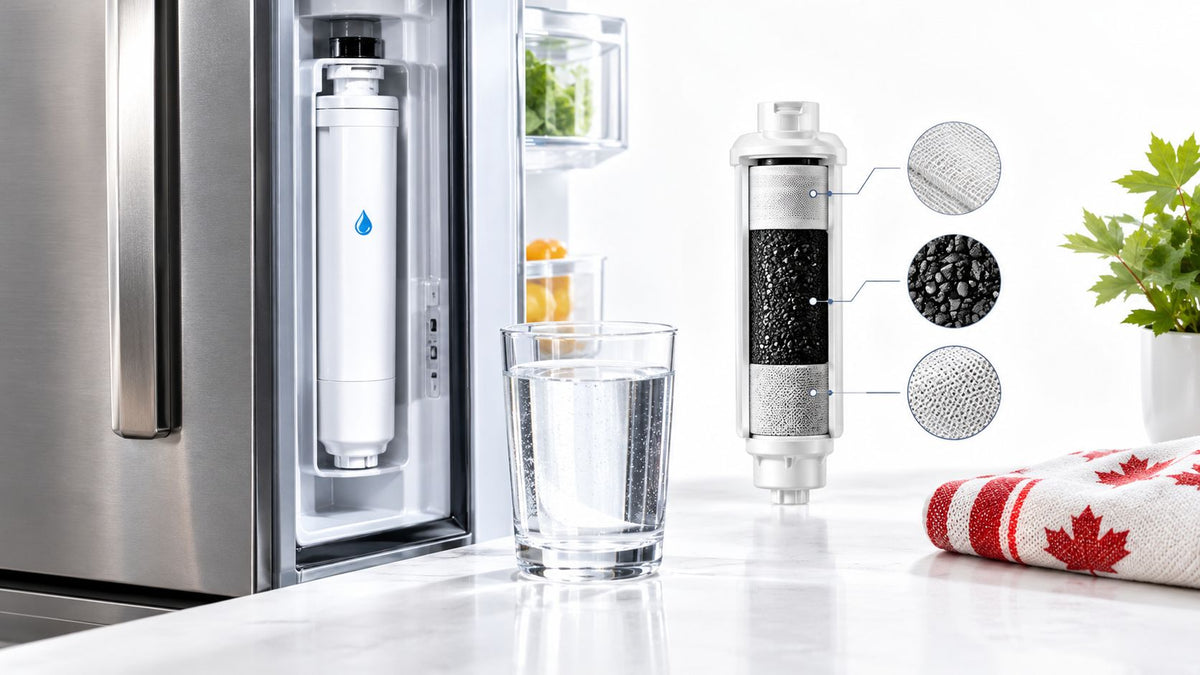
Never mix acids with chlorine bleach. Don't pour an acidic solution into a detergent mixture unless you've confirmed the products are compatible. A water filter may help with broader household water concerns, but it won't replace material-specific cookware care. Review options through this guide to water filters, then check your local water-quality report before treating persistent residue as burnt food.
Proactive Prevention and Daily Maintenance Habits
A pan rarely becomes difficult to clean in one cooking session. Scorching usually follows unattended oil, excessive heat, or residue left to harden overnight. Match the burner to the pan diameter, monitor empty cookware, and keep routine cooking at low to medium heat. Avoid aggressive preheating of empty non-stick pans, and choose oil suited to the cooking temperature.
Utensils matter too. Silicone, wood, or approved plastic tools reduce scratches on coated surfaces. A flat wooden turner can lift fond from uncoated metal before it carbonizes. Deglaze uncoated cookware while warm when the recipe permits, then soak it after cooling.
Use this short daily routine:
- Deglaze while warm: Loosen stuck food before it bakes onto the base.
- Soak after cooling: Let water and mild detergent soften remaining residue.
- Use low to medium heat: Reduce scorching and stress on coatings.
- Dry thoroughly: Protect bare iron and limit mineral marks on other surfaces.
If a non-stick pan has suffered a severe burn, check this non-stick pan cleaning guide before scrubbing. If replacement is necessary, GrifGlo's cookware guides group options by coating type and care requirements, making it easier to choose a pan you can maintain.
Visit GrifGlo to compare kitchen essentials and cookware guidance for everyday routines. Choose tools that support gentle cleaning, organized storage, and longer pan life.


Leave a comment
This site is protected by hCaptcha and the hCaptcha Privacy Policy and Terms of Service apply.