

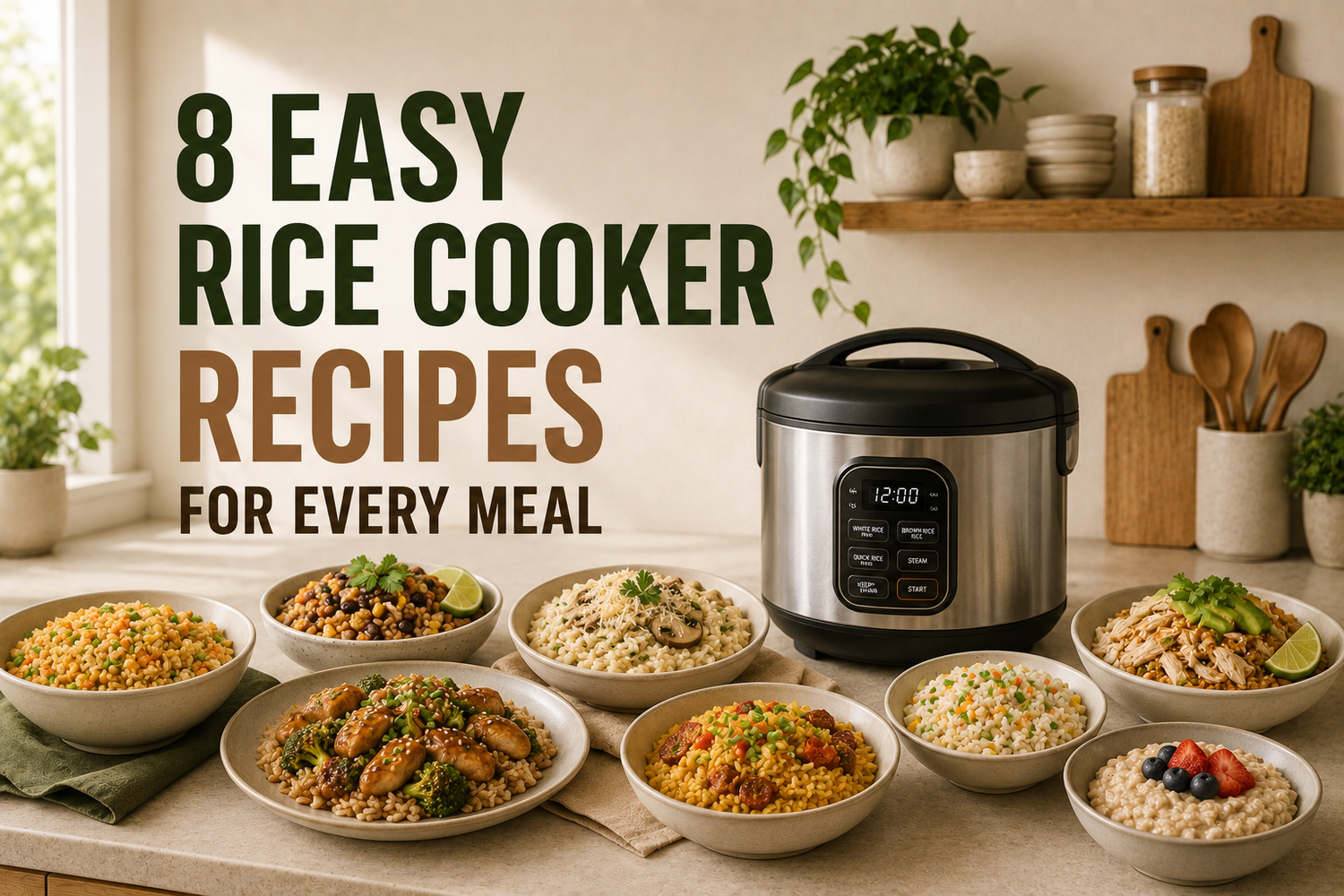
You've got a bag of rice on the shelf, a cooker on the counter, and the same old thought every night, “I should be doing more with this.” That instinct is right. Rice cooker recipes can move far beyond plain white rice, because the appliance has evolved from a niche tool into an everyday kitchen staple, from Japan's rapid household adoption after 1955 to the U.S. rice cooker wave that reached the South in the mid-1970s, where communities in South Carolina and Louisiana made it part of daily cooking (Japanese government history of rice cookers, Smithsonian rice cooker object history).
The advantage isn't novelty, it's control. A rice cooker gives you a steady heat source, automatic shutoff or keep-warm behaviour in many models, and a closed environment that makes simple grains, one-pot meals, and porridges much easier to manage than on a crowded stove. In California especially, where rice cooking spans a wide set of traditions and household habits, it makes sense to choose recipes that work for both standard cookers and more capable multifunction models, not just for plain rice but for congee, multigrain blends, and batch-friendly meals.
Table of Contents
- 1. Basic White Rice
- 2. Brown Rice
- 3. Risotto
- 4. Rice and Beans
- 5. Jambalaya
- 6. Congee
- 7. Sushi Rice
- 8. Multigrain Rice Mix
- Rice Cooker Recipes: 8-Dish Comparison
- Your Rice Cooker Is Your Kitchen's Most Valuable Player
1. Basic White Rice
Basic white rice is the benchmark recipe. If this comes out right, everything else in the cooker gets easier, because you're learning how your machine handles absorption, steam, and resting time instead of guessing at the pot. A practical starting point is a 1:1 to 1:1.5 water-to-rice ratio, depending on whether you want separate grains or a softer finish, and most standard cookers will handle that without any babysitting.
What works well and what usually fails
A good white-rice batch should cook hands-off, stay fluffy, and hold up in the warmer for a while without turning into a crusty block. That's where a modern model like the HAUZ ARZ866 6-Cup Rice Cooker makes sense, because the non-stick bowl, steam basket, warmer option, cool-touch handles, and dishwasher-safe parts are all practical features for everyday use. The same basic method is the one to compare against when you're adjusting for jasmine, calrose, or other medium-grain rice.
Practical rule: If the rice comes out too firm, add a small amount of water next time. If it comes out sticky or wet, reduce the liquid and let it rest longer after the cycle ends.
The hardest mistake is treating warming like cooking. White rice can dry out if it sits too long on the warmer, especially in older machines, so the best habit is to fluff it promptly and move what you won't eat into storage. For anyone who keeps looking up ratios, stop guessing rice water amounts is exactly the kind of reminder that helps, but the core fix is learning your own cooker's behaviour batch after batch.
2. Brown Rice
Brown rice asks for more patience, but it pays you back with a nuttier flavour and a chewier bite. The bran and germ stay intact, so it needs more water, usually 1:2.5, and a longer cycle, often 40 to 50 minutes. That's exactly why a rice cooker is the right tool here, because the machine can hold the heat steady while you do something else.
How to keep the texture right
Brown rice punishes rushed cooking. If the water is too low, the centre stays tough. If it's too high, the grains can go soft on the outside before the middle finishes, which is why many cooks use the cooker's brown-rice setting when it has one and add a short resting period before serving.
Brown rice is forgiving only when you respect its timing.
The biggest trade-off is planning. Brown rice works beautifully for meal prep, especially in households or wellness-oriented kitchens that want something more filling than white rice, but it's not the grain to start an improvised dinner with. It also needs sensible storage, because the oils in the bran can go stale sooner than polished rice. If you're building batch meals, cook it fresh, cool it fast, and portion it before it sits around.
For high-volume cooking, the same logic scales. A rice cooker is not just a household tool anymore, and that matters for institutions that need reliable grain bases without constant supervision. Brown rice also does well when paired with steamed vegetables or simple proteins, because the texture stays substantial instead of disappearing into the rest of the plate.
3. Risotto
Risotto is the recipe that proves a rice cooker can do more than set-and-forget grains. Traditional risotto depends on gradual liquid addition and stirring to release starch, so the rice cooker version changes the workflow rather than copying the stove method exactly. Use arborio or carnaroli rice, warm broth, and enough attention to stop the dish from becoming soup.
The rice cooker method that actually behaves
The cooker helps more than you'd think. Instead of standing over a pan and nursing the rice, you can build the base with aromatics, add broth in stages if your model allows it, and let the cycle do the heat management. The result isn't identical to stovetop risotto, and that's fine. What matters is a creamy finish without constant stirring fatigue.
Use the cooker for control, not imitation. The best rice cooker risotto is slightly different from a pan version, but it should still be silky, cohesive, and spoonable.
The trade-off is ingredient cost and texture precision. Arborio and carnaroli aren't cheap pantry rice, and if you overfill the cooker with liquid, the dish loses the lush body that makes risotto worth making. That's why this recipe works best when you keep the portion modest, finish with butter and cheese at the end, and serve it right away or reheat gently later.
If you want a useful kitchen pairing idea, think in terms of technique, not fashion. Risotto rewards the same sort of measured heat control that a good saucepan or frying pan gives you on the stove, but the cooker reduces the risk of scorching and frees you from standing there the whole time. That makes it a practical entertaining dish, especially when you want something polished without hovering over the burners.
4. Rice and Beans
Rice and beans is one of the smartest rice cooker recipes you can keep in rotation. It's economical, filling, and flexible across cuisines, from Caribbean plates to Latin American bowls to simple weeknight pantry meals. When rice and legumes cook together, you get a one-pot meal that can work for vegan, gluten-free, and bulk-prep needs without much drama.
Where the method succeeds
The cooker shines here because it handles the long, steady cook that legumes need. You still have to make good choices, though. Pre-soaked dried beans behave differently from canned beans, and canned beans need rinsing if you're trying to keep sodium under control. If you're storing ingredients for regular use, the right pantry setup matters, which is why pantry storage tips belong in the same conversation as the recipe itself.
A compact one-pot method also makes sense for households and organizations feeding people on a budget. The combination gives you protein, fibre, and a shelf-stable base that's easy to season with garlic, cumin, bay leaf, scallions, or whatever matches the dish's regional style. If you're cooking for a group, the seasoning is what keeps the pot from tasting flat.
Watch the texture closely
The main failure point is mush. Beans release starch, rice absorbs it, and if you add too much liquid or cook too long, everything collapses into a soft mass. Start with a modest amount of liquid, especially if the beans are already cooked, and check the texture before serving. A little firmness is better than a pot that eats like paste.
Rice and beans are also a good example of where a rice cooker can streamline the process without replacing judgment. You still need to think about bean type, seasoning, and timing, but once you get the rhythm, it becomes one of the most dependable batch meals in the whole category.
5. Jambalaya
Jambalaya is where the rice cooker starts acting like a real dinner machine. You build flavour first with sausage, chicken, seafood, or vegetables, then let the rice absorb the tomato-based seasoning and broth without constant stirring. The dish carries enough structure to feel substantial, but it still forgives small ingredient swaps, which is exactly what makes it useful for home entertaining or casual group meals.
Build flavour before the cycle starts
Brown the protein first if you can, because that step matters more here than in simpler recipes. The cooker won't give you the same caramelized base as a heavy pan, so that initial sear does a lot of the heavy lifting. After that, add the onions, celery, bell pepper, spices, rice, and liquid in the right balance, then let the cooker do the rest.
Don't overload the pot with water. Jambalaya should be moist, not soupy, and rice cookers punish overwatering more visibly than stovetop pots do.
That balance is the whole game. Too much liquid and the grains turn soft before the dish finishes. Too little and the rice stays underdone, especially if you're using raw protein or a heavier tomato mixture. Once you understand that line, jambalaya becomes one of the best make-ahead dishes in the cooker because the flavours deepen after resting and reheating.
For people who like comparing cookware roles, a Dutch oven is still the classic stovetop vessel for this style of dish, but the rice cooker wins on convenience and cleanup. It's especially useful when you're cooking in smaller kitchens, rental spaces, or anywhere the burner space is already spoken for.
6. Congee
Congee is the comfort recipe that makes a rice cooker earn its keep. The ratio is dramatically higher than plain rice, usually 1:6 to 1:10, and the long simmer, often 1.5 to 2 hours, turns the grains into a creamy porridge that works for breakfast, recovery meals, or a savoury late dinner. This is one of the best examples of a rice cooker doing exactly what it was built to do.
Why this recipe suits the machine
Congee needs steady heat and patience, two things rice cookers are naturally good at. The cooker can hold the liquid and rice at a gentle simmer without the constant risk of scorching the bottom of the pot. That matters if you're using leftover rice, broth, or simple toppings like egg, scallions, ginger, or pickled vegetables.
The main downside is overflow. Foam can rise during cooking, especially in smaller machines, so it's smart to leave enough room in the pot and watch the first few batches closely. Once you know how your cooker behaves, congee becomes a reliable batch dish that can stretch across multiple meals.
Keep the finish simple
Congee doesn't need a long ingredient list. The strength of the dish is its texture, not its complexity. Add flavour at the end with toppings, because that keeps the base clean and the final bowl flexible for different eaters. In households with older family members or people who prefer softer foods, that adaptability is a real advantage.
There's also a cultural reason this recipe belongs on a rice cooker list. In California, where rice traditions are broad and varied, congee fits naturally alongside porridge-style breakfasts and savory grain bowls. It's not just trendy wellness food. It's a practical, gentle, and efficient way to turn basic rice into a full meal.
7. Sushi Rice
Sushi rice is all about texture discipline. Use short-grain rice, usually sushi or calrose, and cook it with a tighter ratio, around 1:1.2, so the grains come out sticky enough to hold together without becoming gluey. The cooker handles the hard part, which is consistent cooking, but the seasoning and cooling after the cycle matter just as much.
What the cooker does well
A rice cooker gives you a dependable base for rolling, shaping, or layering. That's useful because sushi rice is fussy about moisture. If the grains are unevenly cooked, the seasoning won't absorb evenly, and the final result feels sloppy even if the fish or vegetables are good.
After cooking, fold in the vinegar, sugar, and salt mixture while the rice is still warm, then cool it properly before using it. You can't rush that part. If the rice stays too hot, it steams itself and gets gummy, which ruins the texture for sushi, onigiri, or hand-pressed bowls.
The rice should be sticky, not wet. If it clumps from excess water instead of grain structure, you've missed the target.
That's why rice variety matters more here than in many other recipes. Long-grain rice won't give you the same result, no matter how carefully you season it. If you're buying rice for sushi nights, spend the money on the right grain and let the cooker protect your technique.
This recipe also pairs well with home cooking ambition. It teaches precise seasoning, handling, and cooling, all of which build better habits for the rest of your rice cooker use. Once you get sushi rice right, ordinary plain rice tends to improve too, because you've learned what properly cooked grain should feel like.
8. Multigrain Rice Mix
Multigrain rice mix is the best answer when plain rice feels too simple and a full grain bowl feels too fussy. Combine rice with grains like quinoa, barley, farro, or millet, then add lentils or split peas if you want more body and protein. The result is a bowl with more texture, more flavour variety, and more flexibility for vegetarian or vegan meals.
The method needs a little planning
The cooker helps because these blends often need longer heat exposure than white rice alone. Depending on the grains you choose, you may need 45 to 60 minutes and a bit of pre-soaking for some ingredients. The challenge is that every grain behaves differently, so water ratios are less intuitive than with a single-grain pot.
That's where practical storage and portion planning matter too. If you're prepping for a week, or stocking a rental or shared kitchen, bulk food storage containers in Canada are part of keeping the grain mix fresh, not just organized.
How to avoid a muddy bowl
The biggest mistake is treating every grain as if it cooks the same way. Quinoa softens faster than barley. Farro can stay chewy longer. Lentils can collapse if they're overcooked. The only way to get this right is to choose grains with similar cook times or accept that the texture will be layered rather than uniform.
Best outcome: a multigrain mix should feel varied, not random. You want distinct grains that still eat as one dish.
This recipe also scales well for hospitality, offices, and health-focused meal prep because it adapts to different dietary needs without feeling like a compromise. If you want a cooked base that can support roasted vegetables, tofu, chicken, or a sauce-heavy topping, this is the recipe to keep in rotation. It's not the fastest option, but it's one of the most useful.
Rice Cooker Recipes: 8-Dish Comparison
| Recipe | Implementation Complexity 🔄 | Resource Requirements ⚡ | Expected Outcomes ⭐📊 | Ideal Use Cases 📊 | Key Advantages ⭐💡 |
|---|---|---|---|---|---|
| Basic White Rice | Low, one-step, hands-off | Minimal, standard rice cooker, 15–20 min | ⭐⭐⭐, consistent fluffy base | Daily meals, meal prep, institutional kitchens | Reliable, cost-effective, easy scale |
| Brown Rice | Low–Medium, longer cook / soaking | More water/time, brown‑rice setting preferred (40–50 min) | ⭐⭐⭐, nutty, chewier, more nutritious | Health‑focused households, wellness programs | Higher fiber & micronutrients, filling |
| Risotto | Medium–High, staged broth addition; occasional stirring | Arborio/carnaroli, warm broth, butter/cheese, 18–25 min | ⭐⭐⭐, creamy, restaurant-style (slightly different than stovetop) | Upscale home entertaining, hospitality kitchens | Impressive presentation; scalable; reduced stirring |
| Rice and Beans | Medium, bean prep affects process | Beans (canned or soaked), adjusted liquid, spices, 30–45 min | ⭐⭐⭐, complete protein, hearty meal | Bulk cooking, schools, food banks, budget households | Economical, high protein/fiber, versatile |
| Jambalaya | Medium–High, multi-step (browning proteins then cooker) | Proteins, vegetables, broth, pre-sauté step, 30–40 min | ⭐⭐⭐, bold, complex flavors; one‑pot finish | Casual entertaining, restaurants, catering | Flavorful, customizable, one‑pot service |
| Congee (Rice Porridge) | Low, long unattended simmer | High liquid ratio, long cook (1.5–2 hrs), high-capacity cooker | ⭐⭐, very soft, easily digestible, comforting | Wellness kitchens, care facilities, breakfast service | Economical, soothing, reheats/freezes well |
| Sushi Rice | Medium, precise post-cook seasoning & cooling | Short‑grain sushi rice, vinegar mix, timing control | ⭐⭐⭐, sticky, glossy grains when done correctly | Home sushi, Japanese restaurants, cooking classes | Enables sushi prep at home; consistent base |
| Multigrain Rice Mix | Medium–High, varied grain times & soaking | Multiple grains/legumes, longer cook (45–60 min), pre-soak for some | ⭐⭐⭐, nutrient-dense, varied texture | Wellness meal services, health restaurants, corporate programs | Superior nutrition, customizable, one‑pot prep |
Your Rice Cooker Is Your Kitchen's Most Valuable Player
Your rice cooker is far more than a single-task appliance. It's a versatile tool for creating complete meals, exploring new cuisines, and simplifying your meal prep. Once you learn how different rice types, liquid ratios, and cook times behave, the machine stops being a convenience gadget and starts acting like a steady kitchen partner.
The best part is how many use cases it can handle without demanding much from you. Basic white rice gives you the baseline. Brown rice builds better whole-grain habits. Risotto, jambalaya, congee, sushi rice, rice and beans, and multigrain mixes all stretch the appliance in different directions, from comfort food to entertaining to bulk cooking. That's where the value lives, in recipes that are simple enough for weeknights but sturdy enough for repeat use.
For California households and foodservice teams, the rice cooker has another advantage, it fits a wide set of eating styles. It handles sticky short-grain rice, porridge textures, grain blends, and larger-batch meals without forcing every kitchen into the same routine. For multi-unit operations, the logic is even more obvious. Standardized rice cooker recipes make it easier to serve consistent bowls, porridge, and side dishes without tying up stove space or staff attention.
If you're trying to build a smarter kitchen setup, GrifGlo can help you compare practical home and kitchen essentials with less guesswork. Choose one recipe from this list, cook it this week, and pay attention to how your machine responds. That's the fastest way to turn one appliance into a reliable meal-making system.
If you want more practical kitchen guidance, browse GrifGlo for decision-friendly picks that fit real routines. You'll find simple, usable recommendations that make rice cookers, pantry basics, and other everyday essentials easier to choose and easier to use.


Leave a comment
This site is protected by hCaptcha and the hCaptcha Privacy Policy and Terms of Service apply.