

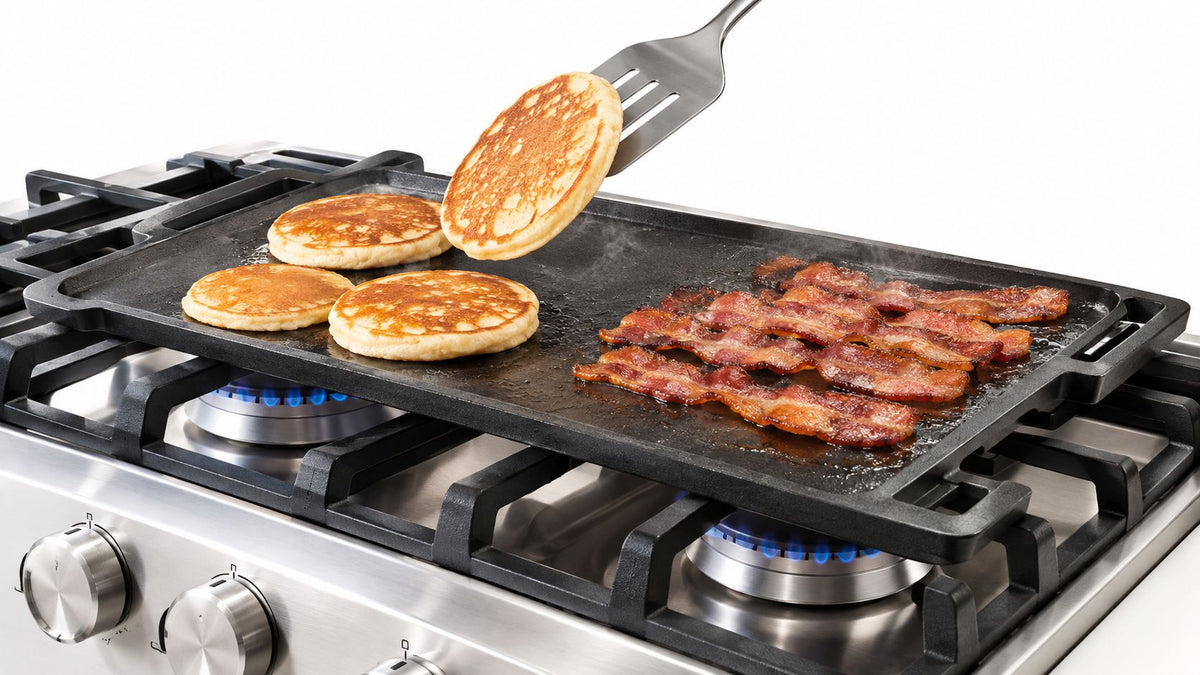
Saturday morning, and the four-burner gas cooktop is already crowded. Pancakes need a steady surface, bacon is spitting in a frying pan, and the eggs are waiting for somewhere to go. You try shifting the pans, but their handles compete for space and the burners don't heat each one the same way.
A griddle can make that breakfast easier by giving you a broad cooking surface over one or more burners. But a good choice depends on more than size or maximum heat. You'll want to know how the plate fits your cooktop, how its material handles flame, and whether your kitchen can ventilate a longer cooking session. For a wider view of burner layout and cooktop dimensions, start with this guide to 36-inch gas cooktops.
Table of Contents
- The Weekend Breakfast Problem Every Gas Cooktop Owner Faces
- What a Gas Cooktop Griddle Actually Is
- Built-In Versus Removable Griddles Compared
- How Gas Burners Deliver Heat to a Griddle
- Best Foods to Cook on a Gas Griddle
- The Ventilation Question Most Griddle Guides Skip
- Cleaning and Maintaining a Gas Griddle
- Choosing the Right Griddle for Your Cooktop
The Weekend Breakfast Problem Every Gas Cooktop Owner Faces
The first pancakes brown quickly over one burner, while the ones at the far end of the pan stay pale. You turn the heat up, and now the bacon pan spits harder than before. The eggs are still waiting, and every time you move a pan, you risk bumping a handle or crowding the space you need to work.
A gas cooktop griddle can solve the crowding problem by replacing several small cooking zones with one shared surface. You can line up pancakes, toast, or quesadillas without juggling separate pans. A removable plate can also free up counter space again when breakfast is over.
But the plate doesn't create heat by itself. The burners underneath supply it, so the arrangement of those burners, the plate's weight, and its contact with the grates all affect how well it cooks. A surface can be wide enough for a family breakfast and still be awkward if it wobbles, blocks nearby burners, or develops stubborn hot spots.
A useful starting point: Pick a griddle that fits the way your cooktop and ventilation work, not just the number of pancakes you hope to cook at once.
You'll leave with a clear way to distinguish built-in plates from removable options, understand how gas flames heat a broad metal surface, and choose a style that suits your kitchen and routine. The right griddle should make the cooking feel simpler, not turn the cooktop into a crowded piece of equipment.
What a Gas Cooktop Griddle Actually Is
A gas cooktop griddle is a flat or ridged cooking plate heated by the burners beneath it. It isn't a separate appliance, and it doesn't have its own heat controls. That distinction matters: the cooktop's burner layout and the griddle's position determine how the plate heats.
Three griddle styles
Factory built-in plates fit into a dedicated recess or well in a compatible cooktop. They sit in place as part of the appliance and are designed for a particular model or product line. Think of one as a built-in desk: integrated and ready when you need it, but not something you move to another room.
Removable bridge plates rest on the grates and span two or more burners. Some are reversible, with a flat face for pancakes and a ridged face for grill marks. They're like a rolling cart: useful when needed, then put away. Check that the plate sits steadily across your specific grate arrangement.
Portable griddle pans sit on a single burner grate, much like a small pan with a broad flat base. They're the lap tray of the group: compact and easy to pick up, but limited in cooking area. A model that works on one burner may be a practical fit when storage space or ventilation makes a wide plate less suitable.
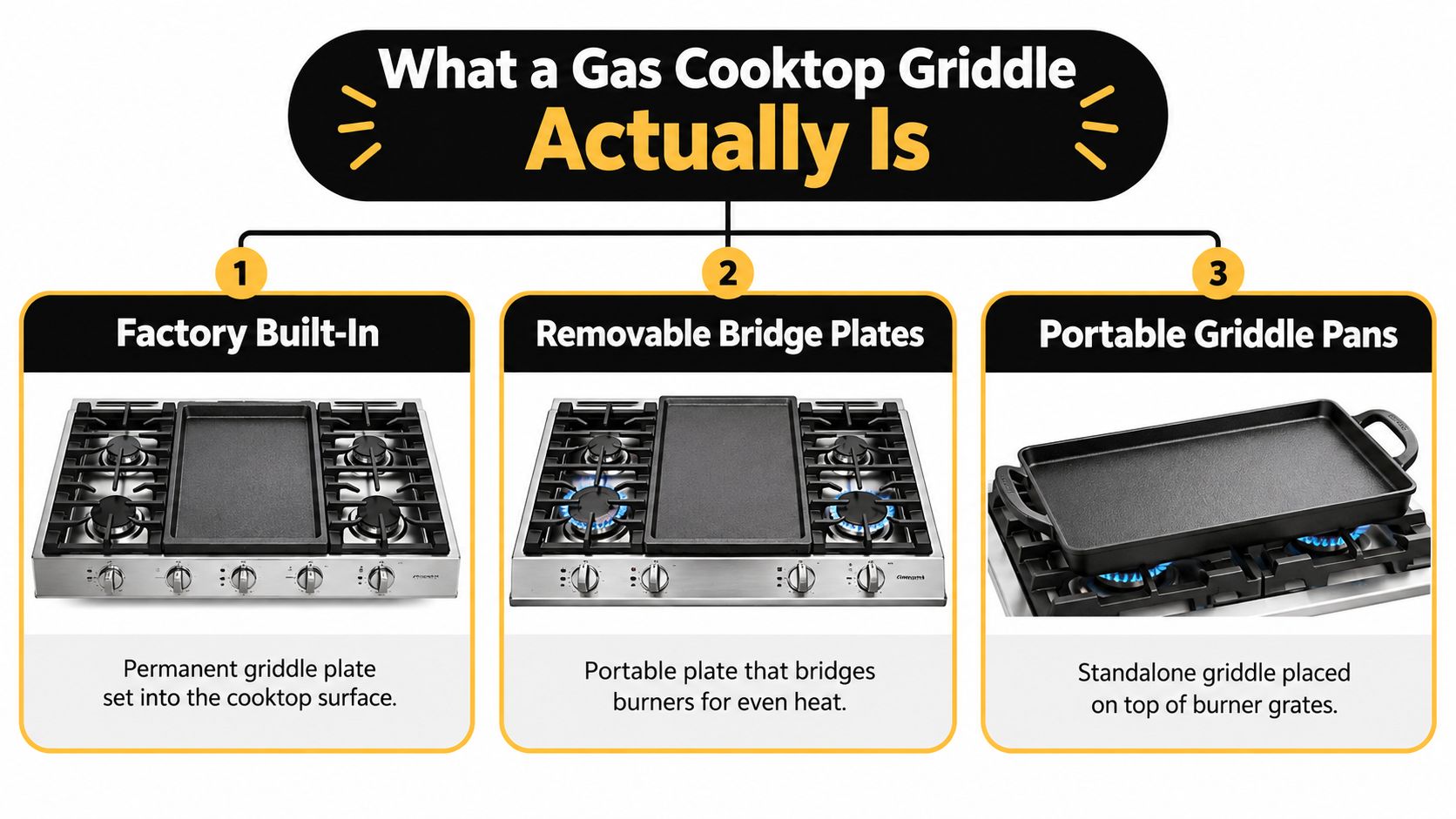
When you compare listings, check whether the product is a built-in insert, a bridge plate, or a single-burner pan. Then look at how it rests on the grates and which burners it will cover. Burner spacing, flame height, and plate weight all affect safe, even cooking. A griddle needs stable support, and its cooking surface should sit where the burners can heat it without flames extending past the edges.
Built-In Versus Removable Griddles Compared
Built-in and removable griddles solve different kitchen problems. A factory plate stays in its designed location and often has a recess or surrounding channel to manage drips. A removable griddle lets you choose when to create a large cooking zone, then store the plate when you want the full cooktop back.
Heat isn't automatically more even with either type. A built-in plate is designed for its cooktop, but the burners beneath it can still deliver different amounts of heat across the surface. A removable plate has the same challenge, with an extra fit question: it needs to rest securely across the grates and sit over the burners as intended.
The table gives a practical way to compare them:
| Factor | Built-In Griddle Plate | Removable Griddle or Griddle Pan |
|---|---|---|
| Fit | Made for a compatible cooktop and its griddle well | Must match the grate layout and burner spacing |
| Installation | Part of a cooktop designed to accept the insert | Set on the grates; no permanent fitting |
| Storage | Remains with the cooktop | Can be lifted off and stored |
| Heat pattern | Depends on the cooktop's burner arrangement | Depends on plate material, burner placement, and support |
| Drips | May have a dedicated well or channel | May need a separate grease-management plan |
| Adjacent burners | The appliance layout defines what's accessible | A wide plate can obstruct nearby burners |
| Flexibility | Convenient for regular griddle cooking | Can be removed or replaced with a smaller pan |
A removable griddle gives you more flexibility, but a broad plate can limit access to burners beside it and can place part of the cooking surface outside the hood's strongest capture area. A smaller griddle pan gives up cooking room while leaving more of the cooktop available. If you're choosing other stovetop essentials too, the HAUZ AKL1695 Whistling Stovetop Stainless Steel Kettle 2L is a separate stainless-steel kettle for heating water, not a griddle accessory.
How Gas Burners Deliver Heat to a Griddle
A gas burner heats a griddle from below. The flame is strongest close to its ports, so food directly above a burner can brown faster than food between burners or near the plate's edges. On a two-burner plate, the middle can lag if the burners don't direct enough heat there or the metal can't spread it quickly.
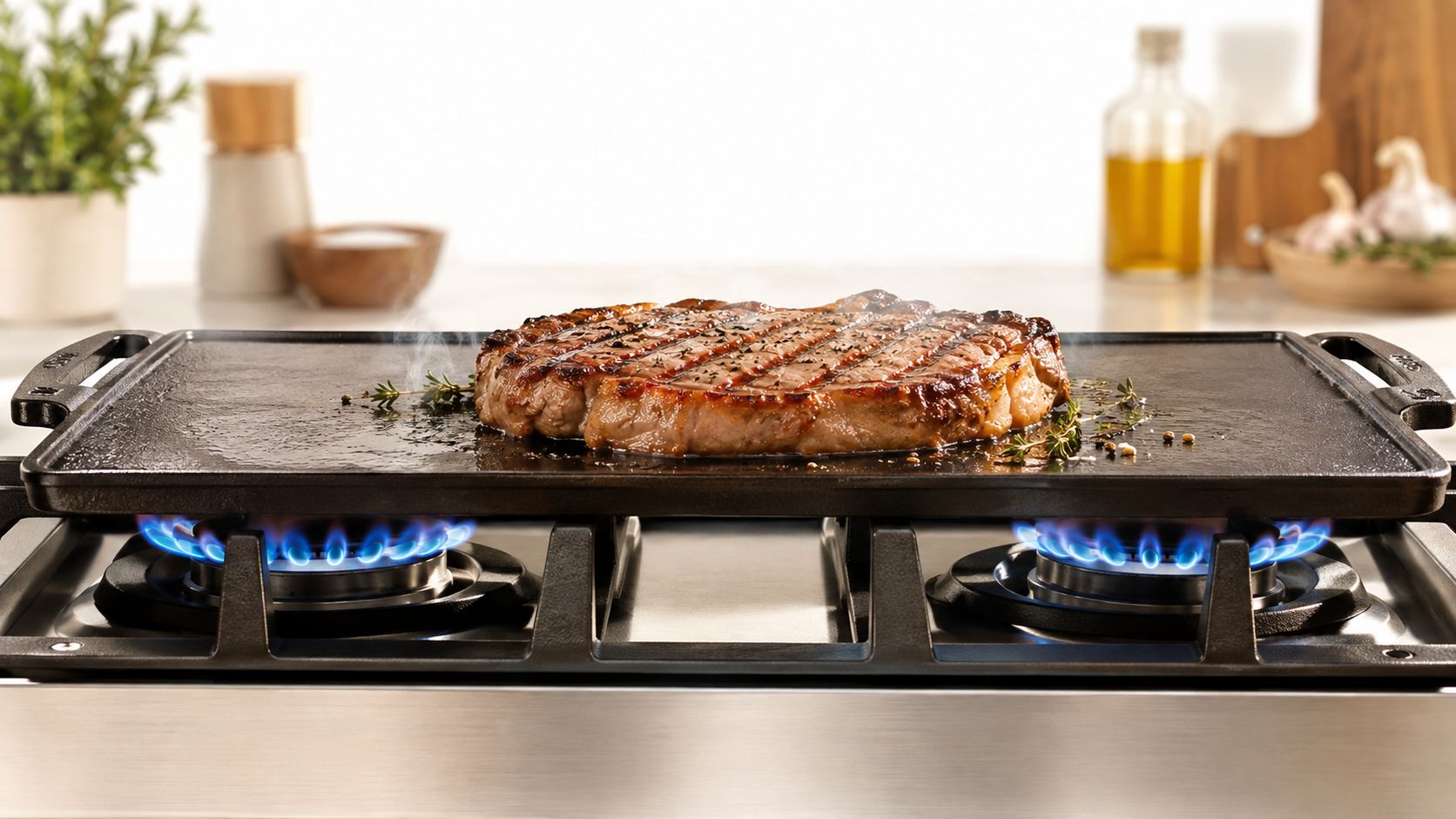
Plate material changes how those hot and cool zones behave. Cast iron takes time to warm through, but its mass helps hold heat when cold food hits the surface. Carbon steel is generally more responsive to changes in the flame, while aluminium transfers heat readily but may be lighter and less able to buffer temperature changes. The actual result depends on the plate's construction and thickness, not just the material name on the label.
Why thickness and burner spacing matter
A thicker plate can soften temperature swings by storing heat, though it also takes longer to preheat and can be heavy to lift. A thinner plate responds more quickly, but may show the burner pattern more clearly. Burner spacing is the hidden fit detail: if the flames land far apart relative to the plate, the centre may heat differently from the areas over the burners.
BTU ratings indicate a burner's heat output capacity. They don't tell you the temperature of every point on the griddle, or guarantee even browning. For cooking, the plate's coverage and response matter alongside the burner rating. A larger flame isn't automatically better. Use a moderate setting to bring the plate up to heat, then adjust based on how the food browns.
Preheating helps the plate settle into a more consistent cooking rhythm, but don't leave a broad surface over high flames unattended. Keep the flame beneath the plate rather than letting it lick around its edges. For a practical look at pans and materials that work with gas, see this guide to cookware for gas stoves.
The embedded demonstration below shows griddle cooking in action. Watch how food contacts the surface and how the cook manages the heat as the meal progresses.
Best Foods to Cook on a Gas Griddle
A griddle earns its counter space when several foods benefit from the same broad, flat surface. Pancakes and French toast are natural choices: you can cook pieces side by side, and their flat bottoms brown through direct contact. Turn each piece when the underside is golden, and move finished food toward a cooler area if the plate has uneven zones.
Bacon also works well because the grease has room to spread away from the strips. If your plate has a channel or removable grease tray, use it as intended and empty it after the surface cools. A plain plate needs more attention: excess fat can pool, smoke, or run toward the burners.
For lunch and dinner, try smash burgers, quesadillas, grilled sandwiches, or sliced vegetables. A smash burger needs firm contact with the hot plate to develop a browned crust. Press once with a sturdy spatula, then let the meat sear before turning it. Quesadillas and sandwiches benefit from the griddle's open space, where you can toast several at once without balancing them in a crowded skillet.
When a skillet is the better tool
The griddle isn't right for every job. Delicate fish with loose skin can tear when you flip it across a broad surface, and foods that need constant stirring are easier to manage in a wok or skillet. A griddle also gives you fewer ways to contain liquids, so saucy dishes belong in a pan with sides.
Try a reversible griddle's flat side for batter, eggs, and sandwiches; use its ridged face when you want raised sear marks. The ridges make it harder to scrape up small pieces and collect residue, so choose that side for foods that can bridge the grooves rather than drip into them. Match the cooking surface to the food, and you'll spend less time fighting the tool.
The Ventilation Question Most Griddle Guides Skip
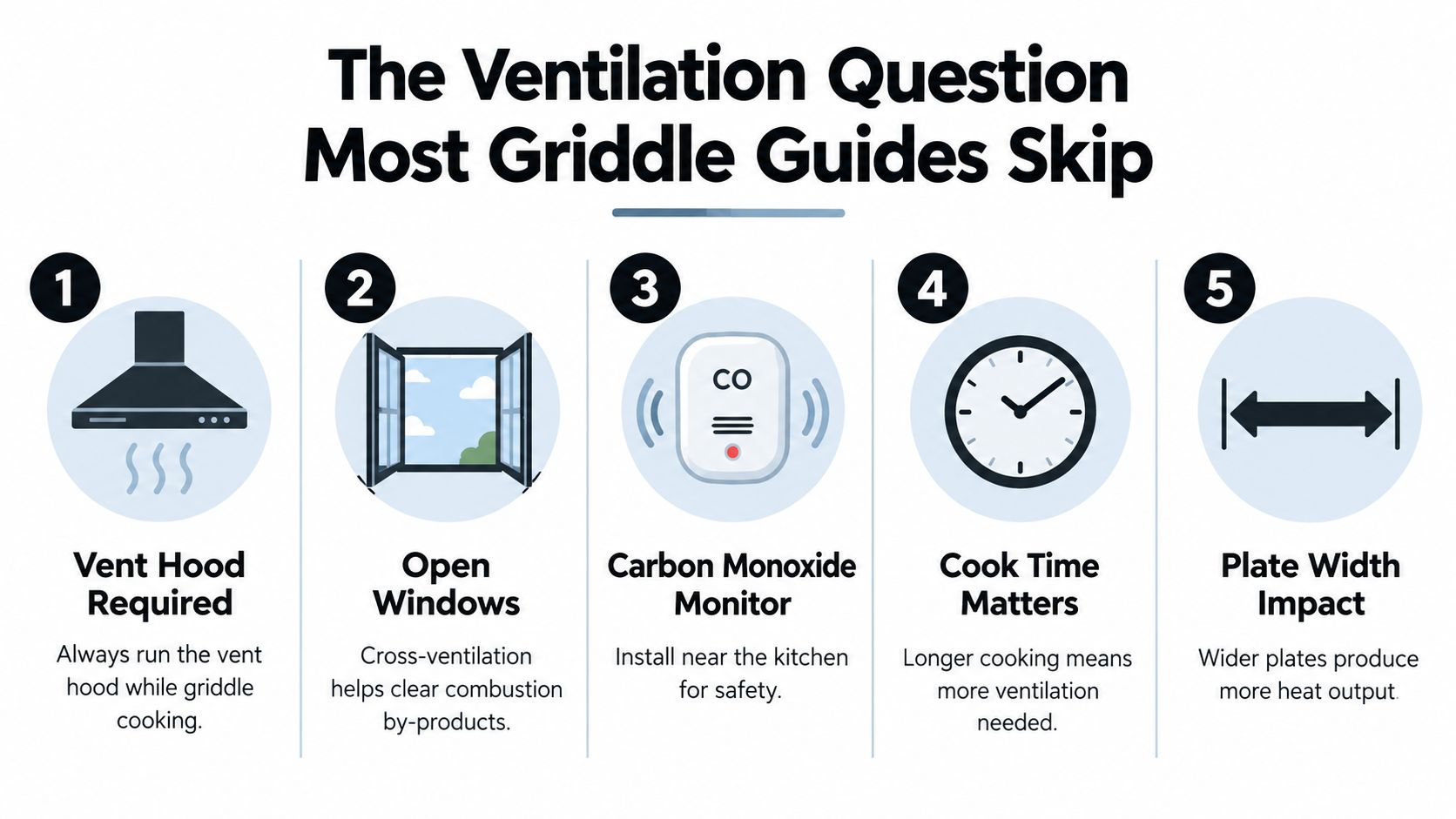
A large griddle can keep gas burners running for longer than a quick pan-cooking task. The broad plate may cover multiple burners, and maintaining even heat can mean sustained flame use. Gas combustion produces indoor pollutants, so the choice between a compact pan and a wide bridge plate should include how well your kitchen removes air, not just how much food the griddle holds.
California Energy Commission data reports that about 70% of California households use a gas stove and that about two-thirds of Californians don't use their range hoods. The briefing also describes nitrogen dioxide, carbon monoxide, and benzene as pollutants associated with gas combustion indoors. Those figures make ventilation a practical part of choosing and using a griddle in California homes, not a detail to consider only after purchase. California Energy Commission household cooking and ventilation briefing
Check where the air goes
A hood that recirculates air through filters is not the same as one that exhausts outdoors. A California Energy Commission simulation found that without a range hood or exhaust fan, peak kitchen nitrogen dioxide concentrations exceeded the relevant one-hour threshold in the vast majority of its modeled California homes. The assessment considered different cooking durations and supports using outdoor-vented extraction during extended gas cooking. California Energy Commission simulation of indoor nitrogen dioxide from cooking
Before you buy, confirm whether the hood vents outdoors and check that the griddle will sit under its capture area. Run the hood before preheating, keep it on while cooking, and continue ventilation afterwards. Use the smallest burner arrangement that heats the plate adequately, and avoid flames that extend beyond its edges.
California research also found higher nitrogen oxides and nitrogen dioxide in homes that cooked with gas, with levels rising alongside the amount of gas cooking. In homes using gas for several hours, self-reported kitchen exhaust use was associated with lower nitrogen oxides, nitrogen dioxide, and peak one-hour carbon monoxide. The study examined homes, not griddles as a separate appliance, so it doesn't establish a griddle-specific emission rate. California study of gas cooking, exhaust use, and indoor air
Before buying: In a small kitchen or rental, a modest removable plate may be the more useful choice if a wider surface would sit outside your hood's capture area. Compare your hood setup with a guide to 36-inch vent hoods, and ask your landlord about appliance rules or ventilation concerns.
Cleaning and Maintaining a Gas Griddle
A quick clean while the plate is still warm is easier than letting grease and food residue harden. Turn off the burners first, then use a suitable scraper or non-abrasive tool to lift scraps. Don't touch the cooking surface until it's safe to handle, and check the manufacturer's cleaning instructions, especially for coated plates.
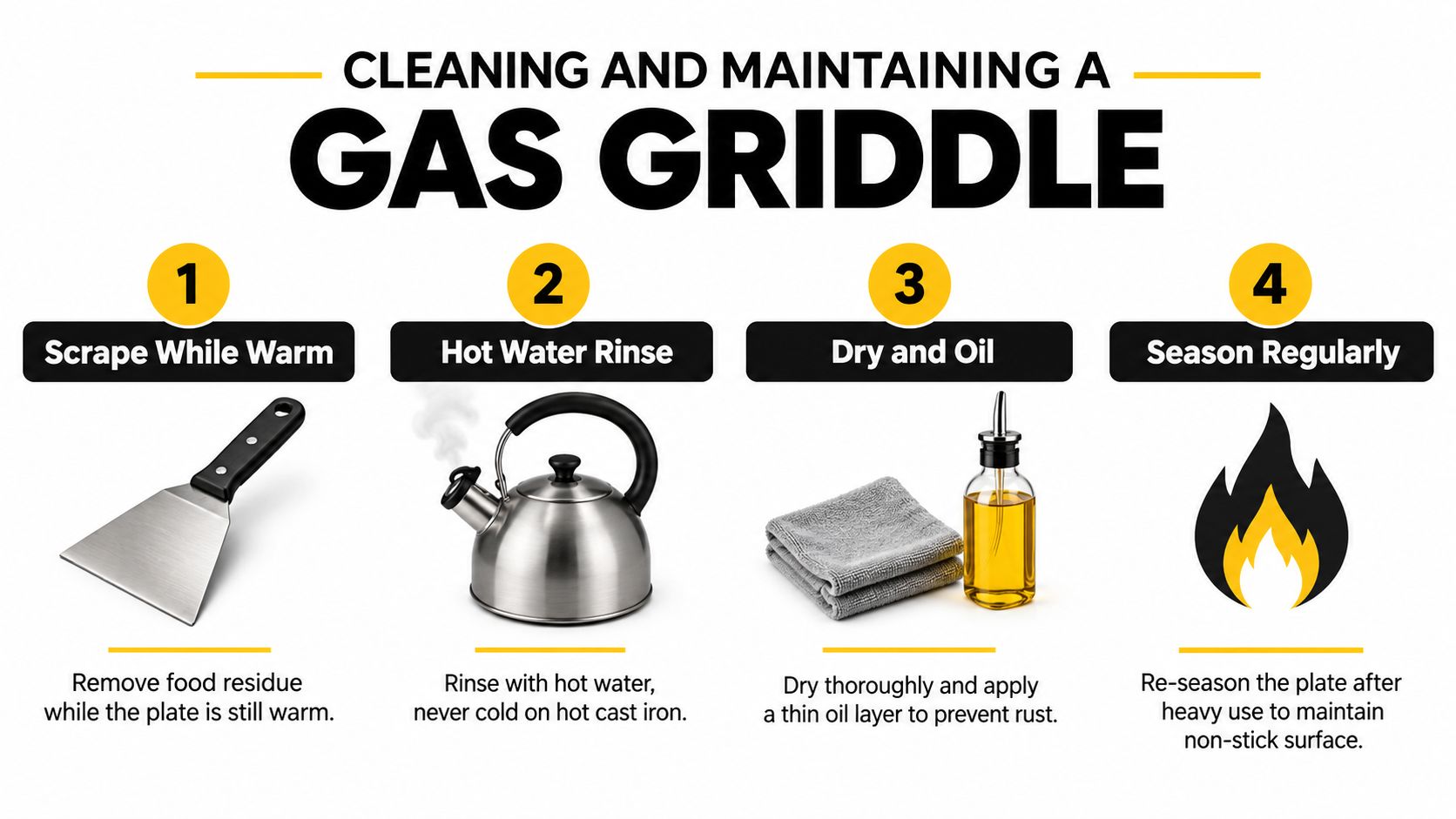
For seasoned cast iron or carbon steel, wipe away grease and residue without stripping the protective surface. If a rinse is needed, use warm or hot water rather than pouring cold water onto a hot plate, which can cause thermal shock. Dry the plate thoroughly, then apply a thin film of cooking oil while it's still slightly warm. Store it somewhere dry so moisture doesn't encourage rust.
Non-stick griddles need a gentler routine. Let the plate cool, wash it with mild detergent and a soft sponge, and avoid abrasive pads or utensils that can damage the coating. Follow the product instructions for heat limits and cleaning, because coated surfaces vary.
A repeatable after-cooking routine
- Switch off and cool: Turn off the burners and let the plate cool enough to handle safely.
- Remove residue: Scrape or wipe away food while it's still easy to lift.
- Wash appropriately: Use warm water for seasoned metal or gentle detergent for non-stick surfaces.
- Dry and store: Dry cast iron and carbon steel completely; keep all plates in a spot where they won't be knocked or scratched.
If a burner or cooktop gets splattered, wait until it's cool before cleaning it, and avoid pushing debris into burner openings. For general cookware cleaning ideas, see this guide to cleaning burnt pots and pans.
Choosing the Right Griddle for Your Cooktop
Start with the cooktop, not the product listing. Measure the space between the burners you'd use, check whether the grates support a plate steadily, and note which area the hood can capture. Also consider storage: a heavy plate that's awkward to lift may stay on the stove whether you want it there or not.
A practical pre-purchase checklist:
- Fit: Confirm the plate's length and width against the cooktop grates and burner arrangement.
- Stability: Check that the griddle won't rock or bridge unsupported gaps.
- Material and weight: Choose a plate you can lift and maintain comfortably.
- Surface type: Decide whether a flat-only or reversible flat-and-ridged plate suits your menu.
- Ventilation: Make sure the cooking area sits within the hood's effective capture zone.
- Cooktop compatibility: If you want a built-in insert, verify that your specific cooktop supports it.
For a frequent griddle cook with a compatible cooktop, a built-in plate offers convenience and a designated place to cook. Choose a removable two-burner plate when you regularly cook for a group and can ventilate the cooking area effectively. If you cook griddle meals occasionally, have limited storage, or need to keep more burners accessible, a smaller cast-iron pan may be the sensible starting point.
Measure before ordering, and check the appliance manual for approved inserts and cookware guidance. A simple guide to measuring frying-pan size can help you compare cookware dimensions, though you'll still need to check the griddle against your cooktop's grate layout.
Explore GrifGlo for kitchen essentials and practical guides that help you compare cookware and choose products suited to your home. Use your measurements, cooking habits, and ventilation setup to narrow down the griddle style that will make your next breakfast easier.


Laisser un commentaire
Ce site est protégé par hCaptcha, et la Politique de confidentialité et les Conditions de service de hCaptcha s’appliquent.