

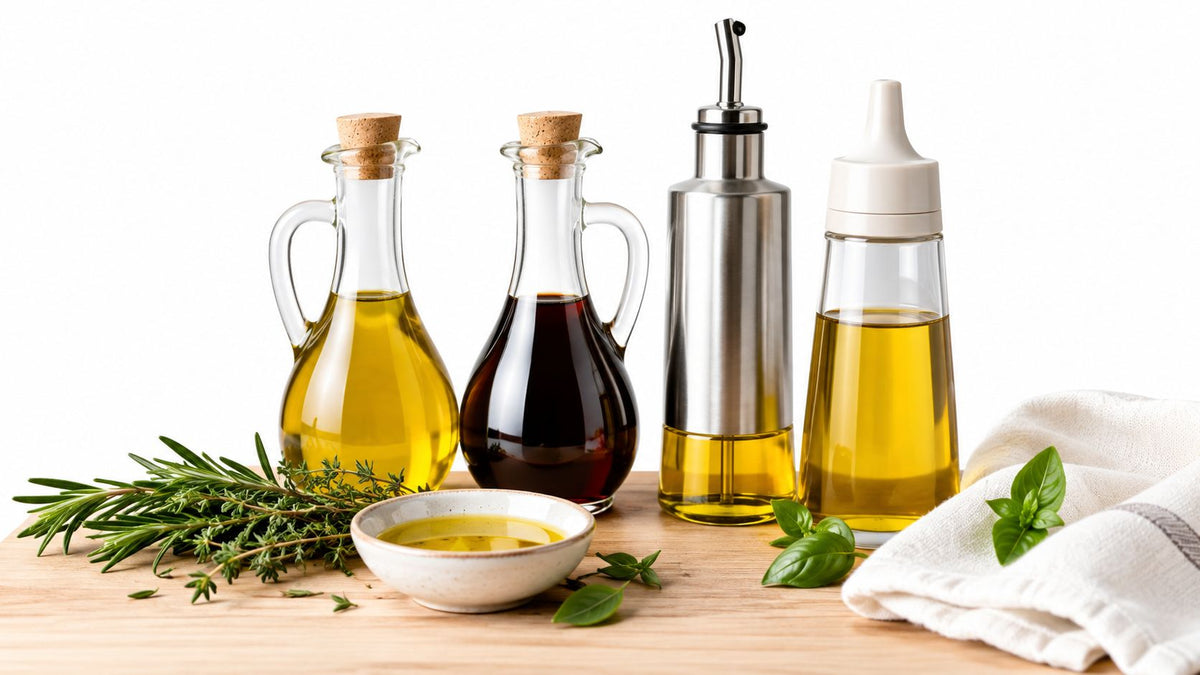
You're halfway through dressing a salad when the oil bottle leaves a shiny trail across the counter. The vinegar dribbles down the neck, the stopper sticks, and your expensive olive oil lands in the bowl faster than intended. Later, when guests arrive, the same bottles sit on the table looking attractive but working poorly.
Oil & vinegar bottles are cooking tools, not merely table decorations. Their necks, closures, materials, and airflow determine whether you can add a controlled ribbon, refill without a mess, and keep the contents protected between uses. The right choice depends on how you cook, where you store supplies, and whether the bottle serves one person at the hob or a whole table at dinner.
This guide starts with bottle mechanics, then moves through materials, pourers, capacity, labelling, care, and storage. Along the way, you'll see why a classic cruet still earns its place, and why a squeeze or hybrid dispenser may suit a busy California kitchen better.
Table of Contents
- Why the Right Oil and Vinegar Bottle Changes Daily Cooking
- Understanding Oil and Vinegar Bottle Types and How They Work
- Choosing Materials Pourers and Drip Control That Actually Work
- Sizing Labeling and What California Standards Teach About Quality
- Cleaning Maintenance and Keeping Oil and Vinegar Fresh Longer
- Styling Storage and Organization for Small Kitchens and Hosting
- Finding Your Best Oil and Vinegar Bottle Without the Guesswork
Why the Right Oil and Vinegar Bottle Changes Daily Cooking
A bottle earns its counter space by solving a recurring problem. If you fry vegetables most evenings, you need a dispenser that responds quickly and stops cleanly. If you set out olive oil and balsamic vinegar for dipping, you may care more about visual balance, a stable base, and an easy-to-lift stopper.
That difference is easy to miss in a shop. Two glass bottles can look nearly identical, yet one may pour in a thin stream while the other releases a sudden rush followed by a drip. The shape of the shoulder, the opening size, and the way air returns to the bottle all affect control.
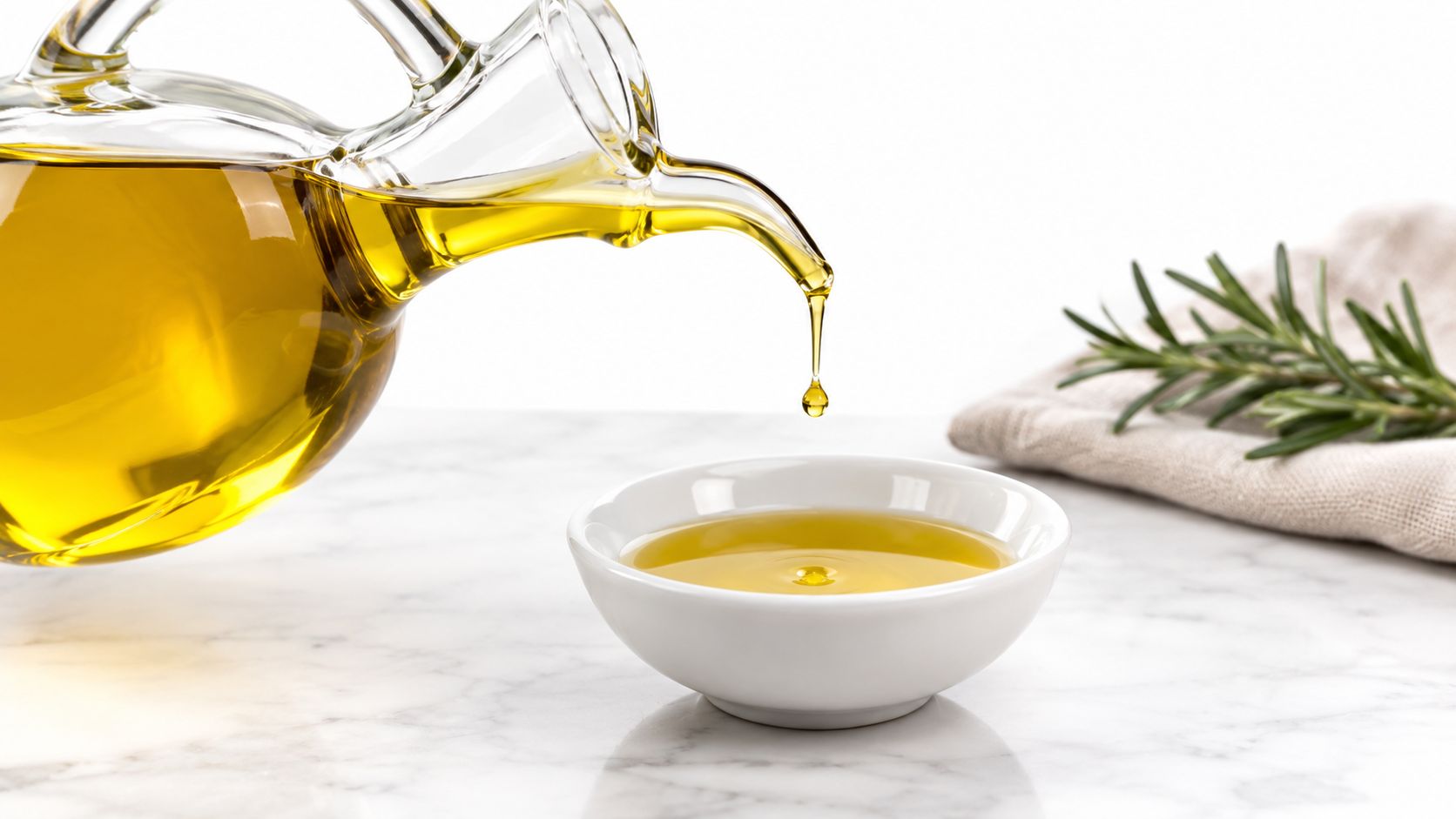
Start with the job, not the look
Think of the bottle as a small measuring tool. A narrow pour can help you finish a salad gradually, while a squeeze bottle lets you place oil exactly where a pan or plate needs it. A wide opening makes refilling easier, but it can also make fast pouring harder to moderate.
A host may prefer a matching pair of cruets on a tray. A renter with limited counter space may need one compact bottle that can move from pantry shelf to hob without leaking. Neither choice is automatically superior. The useful bottle is the one that matches the hand movement you repeat most often.
Practical rule: If you regularly wipe the bottle after pouring, the closure is part of the problem, not just your technique.
Bottle design also affects freshness and cleaning. Oil exposed to excess light, heat, or air can lose quality sooner, while residue around a spout can attract dust and turn sticky. Vinegar creates a different maintenance challenge, especially when dried liquid forms a crust around the opening.
The rest of this guide will help you decide whether you need a traditional cruet, gravity dispenser, pump, spray format, squeeze bottle, or hybrid. It will also show how to choose glass, ceramic, or stainless steel, how to read provenance cues, and how to build a refill routine that doesn't turn a small kitchen into a cluttered one.
Understanding Oil and Vinegar Bottle Types and How They Work
The simplest way to understand a dispenser is to compare it with familiar bottles. A water bottle usually pours freely because air can enter as liquid leaves. A ketchup bottle often needs squeezing because the thick contents move slowly and the bottle uses pressure to push them out.
Oil and vinegar sit between those examples, but they don't behave exactly alike. Oil tends to coat the spout and move differently from a thinner vinegar, so a pourer that feels smooth with one liquid may splash, glug, or drip with the other.
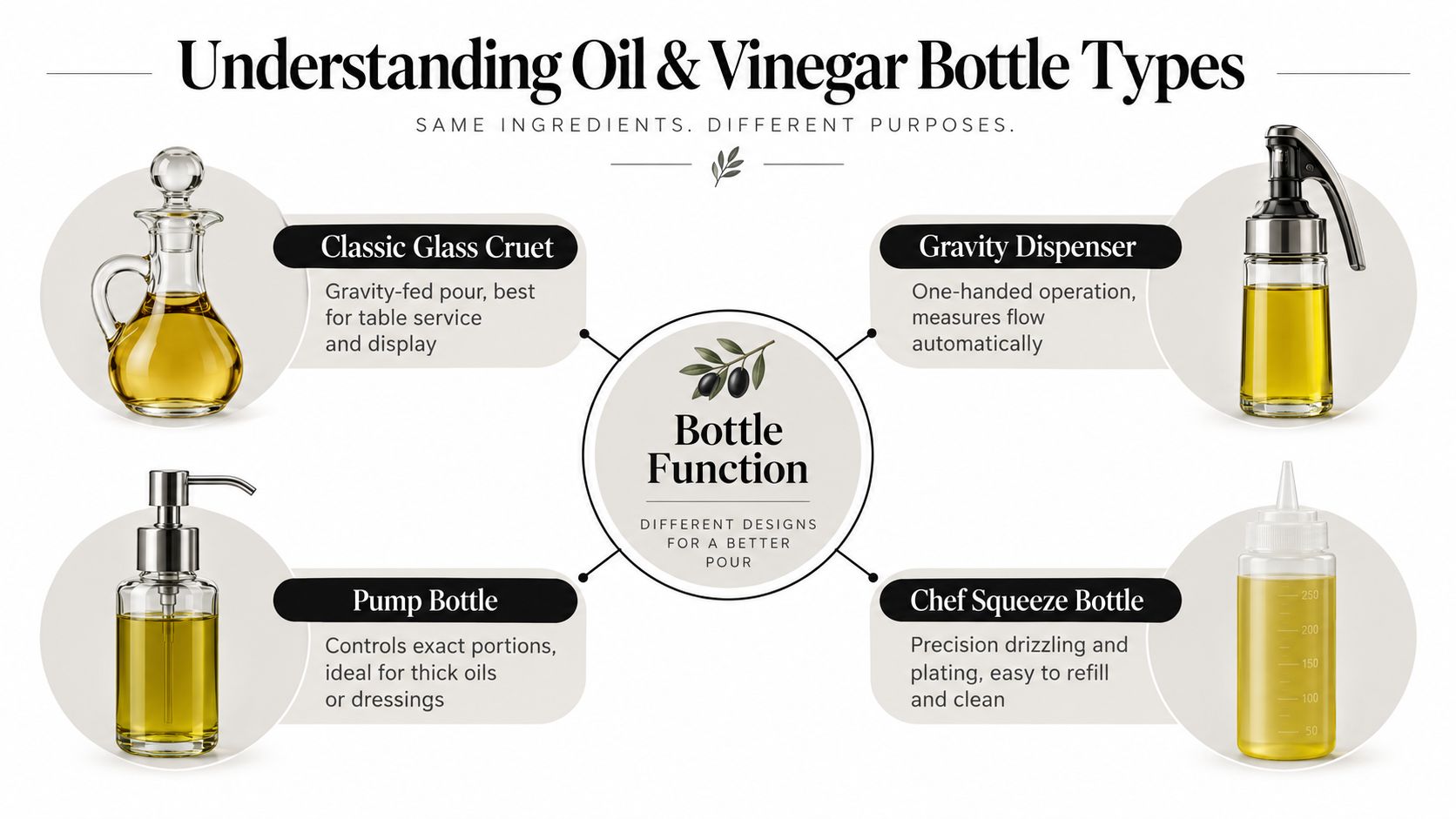
Match the format to the hand movement
Classic glass cruet: This is the familiar gravity-fed bottle with a stopper or pour spout. It works well for table service, especially when appearance matters and diners want to add their own oil or vinegar. A double cruet can keep two liquids together, although the shared presentation doesn't mean both sides will pour identically.
Gravity dispenser: A lever, weighted top, or tilt mechanism opens the flow when you tip the bottle. This can make one-handed cooking easier because the opening responds to movement rather than requiring you to remove a stopper first. It's a practical middle ground between a formal cruet and a squeeze format.
Pump or spray bottle: A pump gives your hand a repeatable action and can suit dressings or thicker oils that are awkward to pour slowly. A spray format is useful when you want a light coating across a pan or tray, but it may be less convenient for a visible finishing drizzle.
Chef squeeze bottle: A soft bottle works like a ketchup bottle. You squeeze to create pressure, then release to stop the stream. The format is quick for cooking, plating, and one-handed use, and its wide opening can make cleaning and refilling less frustrating.
Understand airflow before blaming the spout
A bottle that glugs is struggling to replace outgoing liquid with incoming air. If the opening and air-return path are poorly balanced, the liquid may come out in bursts rather than a steady stream. A secondary vent can help, but the design still has to suit the liquid and the angle at which you pour.
For storage and refill organisation, keep reserve containers separate from active dispensers. A useful bulk food storage container guide can help you think about the same principle across the pantry, buy larger supplies in a stable container, and keep a smaller working bottle within reach.
One spout doesn't automatically fit both liquids. A narrow oil pourer may slow the flow attractively, while a thin vinegar may shoot out too quickly. If you alternate between olive oil and vinegar, test the bottle with the actual liquids, not just water.
Choosing Materials Pourers and Drip Control That Actually Work
Material changes the bottle's weight, visibility, durability, and care requirements. Glass lets you see the contents and works naturally with table presentation, but clear glass offers less protection from light than dark glass. Ceramic blocks light and can look substantial, yet chips around the rim may make a closure fit poorly. Stainless steel is durable and opaque, although you'll need labels or memory to identify what's inside.
California's olive-oil rules offer a useful quality lesson. The California Department of Food and Agriculture standards require finished samples to be bottled in dark coloured glass no smaller than 250 ml, connecting the package with protection from light and quality control. That standard doesn't mean every home bottle must copy a commercial package, but it does show why dark glass deserves consideration for oil stored on a bright counter.
Vinegar brings another concern. In Canada, glass oil and vinegar bottles fall under food-contact glassware rules, and migration limits apply to lead and cadmium depending on the vessel class. The Canadian Glazed Ceramics and Glassware Regulations list, for example, limits for small hollowware under 1.1 L of 2.0 mg/L lead and 0.50 mg/L cadmium, while pitchers have limits of 0.5 mg/L lead and 0.25 mg/L cadmium. Decorative rims, glazes, and coatings therefore deserve as much attention as the glass or ceramic body.
Compare the practical trade-offs
| Option | Light Protection | Pour Control | Cleaning Ease | Best For |
|---|---|---|---|---|
| Clear glass | Low | Depends on spout | Usually straightforward | Identifying contents and table service |
| Dark glass | Stronger protection for oil | Depends on spout | Usually straightforward | Countertop oil storage |
| Ceramic | Strong | Moderate | Can be harder around glazed openings | Decorative service and shaded storage |
| Stainless steel | Strong | Often precise | Simple exterior, contents hidden | Busy cooking areas and durability |
| Silicone squeeze bottle | Strong | Very high | Easy if opening is wide | Fast cooking and plating |
| Cork stopper | Moderate closure control | Variable | Requires inspection and drying | Traditional presentation |
| Silicone or metal pourer | Depends on bottle | Can be precise | Varies by parts and channels | Refillable dispensers |
Read the pourer like a small valve
A good pourer needs a clean liquid path and a way for air to return. Dual-vent designs can reduce the vacuum effect that causes bursts, but extra channels also create places where residue can collect. A simple spout with fewer parts may be easier to wash, even if it gives up some control.
Corks feel warm and traditional, but they can absorb liquid and become difficult to clean. Silicone seals usually create a snug fit, while metal components can offer rigidity at the opening. Check whether the parts separate before buying, then look for smooth food-contact surfaces rather than decorative grooves.
For a broader look at small stainless-steel serving tools, see this frothing milk pitcher comparison. The same buying habit applies here, inspect the rim, seams, grip, and cleaning access before choosing based on finish alone.
Sizing Labeling and What California Standards Teach About Quality
Capacity controls how often you refill, how much counter space the bottle occupies, and how long oil sits in the working container. A small cruet suits light use and lets you refresh the contents regularly. A larger bottle reduces refill work for a busy household, but it needs a cool, dark storage location and a reliable transfer method.
Use the serving bottle as a working container, not necessarily as your entire supply. Keep reserve oil or vinegar in its original package when practical, then refill the smaller bottle with a funnel after cleaning and drying it. That approach keeps daily handling separate from long-term storage and makes spills easier to contain.
California provides particularly clear lessons about olive-oil labelling. The state's framework requires truth in labelling for production, processing, and bottling locations. Products labelled “California Olive Oil” must use 100% California-grown olives, while regional California claims require at least 85% regional content, as described in this University of California Agriculture and Natural Resources document.
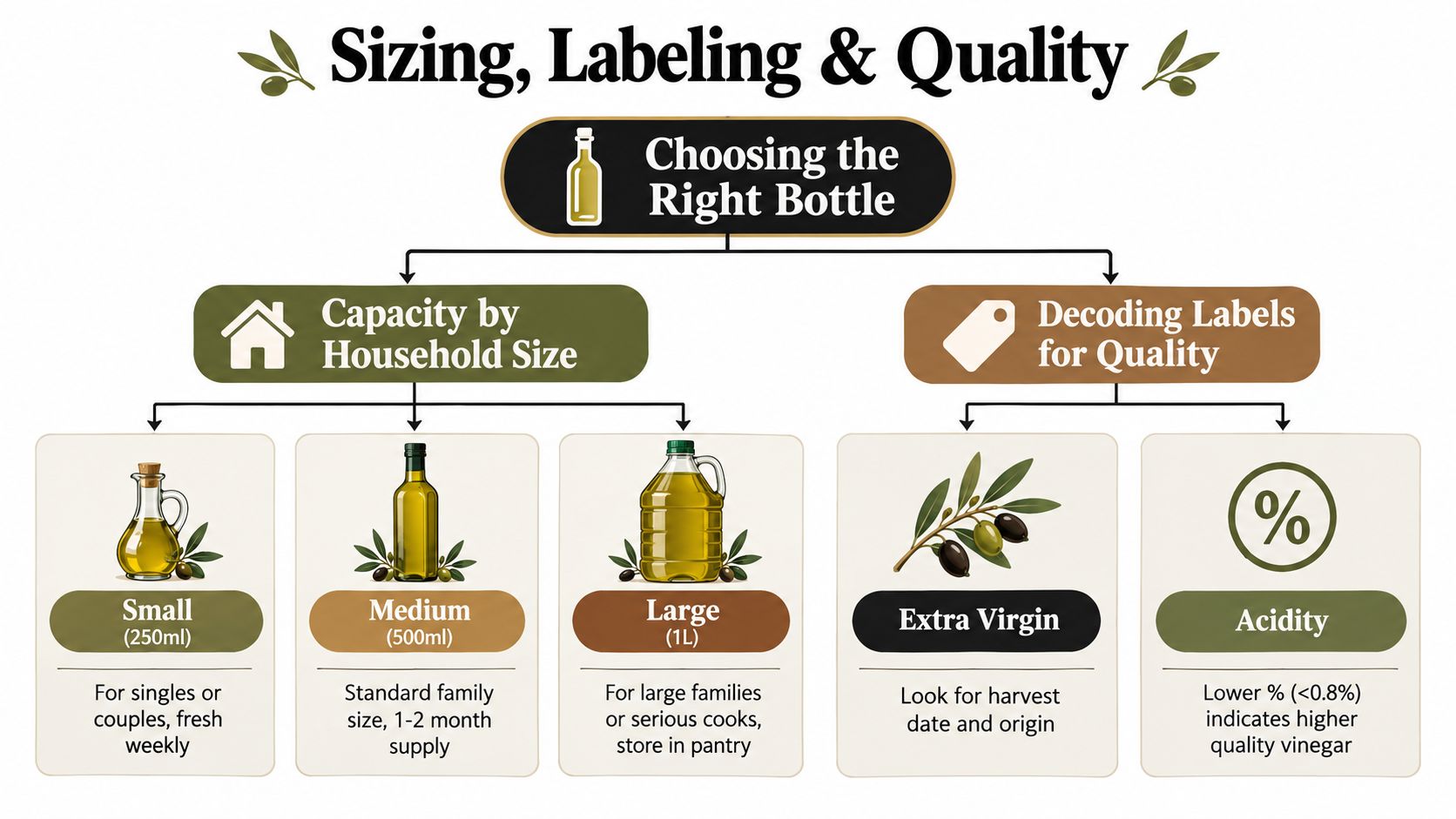
Choose capacity by rhythm
For a household that uses oil occasionally, a compact working bottle can prevent a large quantity from sitting open on the counter. Frequent cooks may prefer a medium dispenser with a larger pantry refill nearby. Hosts and serious cooks often need both, a convenient service bottle and a carefully stored reserve.
Don't treat a capacity label as a freshness guarantee. A bottle becomes a good fit when its volume matches how quickly you use the contents and how consistently you protect them from light, warmth, and air.
California also requires bottled olive-oil manufacturers, packers, and distributors to obtain a Processed Food Registration. CDFA standards specify new dark glass bottles of at least 250 ml, which gives shoppers a concrete packaging cue without suggesting that appearance alone proves quality.
A label should tell you where the oil comes from and what the claim means. Harvest information, origin details, and a clear producer identity can make comparison easier. For a useful way to organise product attributes and purchasing criteria, consult this guide to product standardisation.
The embedded visual below can help you connect bottle capacity with labelling questions before you shop.
Cleaning Maintenance and Keeping Oil and Vinegar Fresh Longer
A bottle can pour beautifully on the first day and become unpleasant after weeks of residue build-up. Oil leaves a film that traps dust, while vinegar can dry into a sharp-smelling ring around the spout. Cleaning works best as a routine rather than a rescue job.
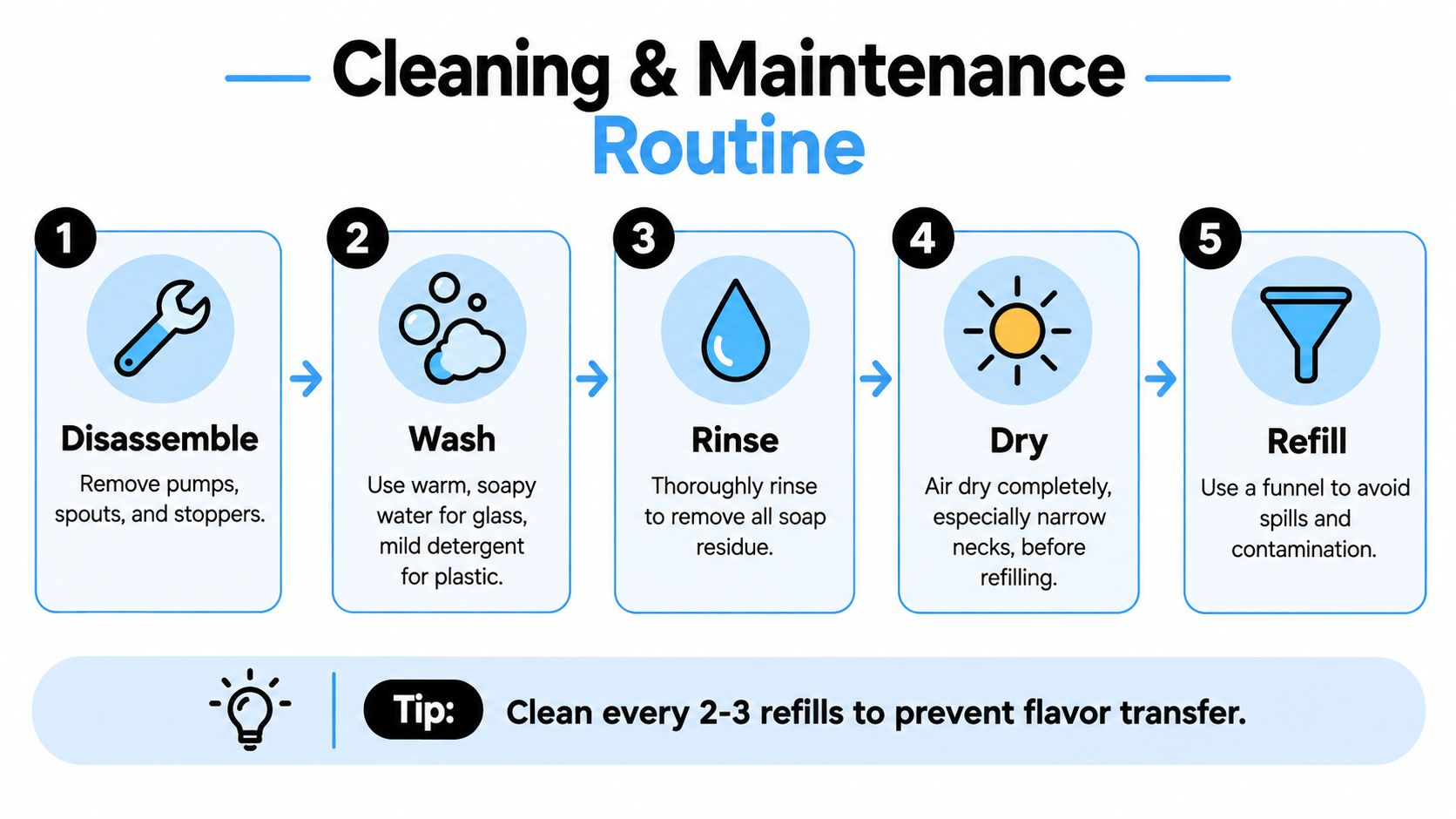
Use a repeatable refill routine
- Disassemble everything. Remove the pump, spout, stopper, gasket, and cap. Small seals often hold more residue than the bottle body.
- Wash according to the material. Warm, soapy water works for many glass parts. Use a mild detergent for compatible plastics and avoid harsh treatment that could damage seals or finishes.
- Rinse the channels. Run clean water through narrow openings and vents until no soap smell remains. A small bottle brush can reach the shoulders and base, but don't force a brush through a delicate valve.
- Dry completely. Stand the bottle and its parts so air can circulate. A narrow neck can retain moisture, and refilling before it dries can dilute the contents or encourage odours.
- Refill with a funnel. A stainless-steel or food-safe silicone funnel keeps the stream inside the opening. Wipe the outside and the threads before replacing the closure.
A clean bottle is easier to control. Residue changes the shape of the stream before it changes the appearance of the container.
Separate oil care from vinegar care
Oil and vinegar need different checks. With oil, inspect for sticky build-up around the pourer and keep the active bottle away from heat and direct light. With vinegar, look for dried scale, cloudiness, or a closure that has become stiff from repeated contact with acidity.
Replace a cork when it smells stale, crumbles, or no longer seals securely. Replace a silicone seal when it has stretched, split, or continues to leak after cleaning. If a pourer has hidden channels that you can't rinse properly, a simpler replacement may be more hygienic than repeated soaking.
Clean the bottle after a sensible refill cycle rather than topping up indefinitely. The cleaning infographic recommends cleaning every 2 to 3 refills to reduce flavour transfer, as shown in the supplied bottle maintenance visual if you need a quick reminder. For related food-contact hygiene habits, see this guide to sanitising cutting boards.
Styling Storage and Organization for Small Kitchens and Hosting
A well-organised bottle system gives each container a job. On a small rental counter, place the active oil and vinegar bottles on a shallow tray beside the prep area. The tray catches minor drips, keeps the pair together, and lets you move both bottles when you need the workspace.
Choose a tray with enough room to lift the bottle without knocking the neighbour. Keep labels facing forward, especially if you use dark or opaque containers. A simple handwritten label can prevent the familiar mistake of reaching for vinegar when you meant to add oil.
Keep working bottles close, reserves elsewhere
The best countertop position is convenient but not exposed to avoidable heat. Don't park oil beside a hob, toaster oven, or sunny window if a shaded shelf is available. Reserve containers belong in a cool pantry area where they remain upright and easy to inspect.
For a dinner party, a matching pair of glass cruets can provide a polished centrepiece. Fill only what you expect to serve, wipe the neck before the tray reaches the table, and place a small saucer beneath the pair if the pourers tend to retain a drop.
Squeeze bottles suit a different visual language. They look more like working kitchen equipment, but they can be ideal beside a cutting board or prep station because they support one-handed drizzling. In a tiny kitchen, that functional appearance may be preferable to decorative clutter that has to move every time you cook.
Ontario recycling guidance lists oil and vinegar bottles as accepted glass containers when they're emptied and the lids are removed, according to Circular Materials' Ontario guidance. Rinse away residue where local instructions require it, separate the closure, and keep the bottle design simple enough to handle at end of life.
Finding Your Best Oil and Vinegar Bottle Without the Guesswork
Start your decision with the moment that causes the most irritation. If the problem is table presentation, choose a stable glass cruet with a stopper that lifts cleanly. If the problem is fast pan work, prioritise a squeeze or gravity dispenser that opens and stops with one hand.
Use this short matching guide:
- Choose a classic cruet when serving appearance, visible contents, and shared table use matter most.
- Choose a gravity dispenser when you cook often and want quick tilt-to-pour operation.
- Choose a pump when repeatable portions matter more than a traditional look.
- Choose a chef squeeze bottle when you drizzle, plate, or cook rapidly and want direct pressure control.
- Choose a hybrid when the bottle must move between everyday cooking and hosting.
Then check the construction. Look for a stable base, a neck you can reach with a brush, a pourer with an air-return path, and closures that separate for washing. For oil, consider dark glass or opaque material when the bottle will live in a bright area. For vinegar, favour straightforward food-contact surfaces and avoid finishes that may chip, flake, or trap residue.
Before buying, answer four questions:
- What liquid will stay inside most often? Oil and vinegar may need different spout behaviour.
- Where will the bottle live? A hot, bright counter calls for more protection than a shaded pantry.
- How will you refill it? A wide opening and funnel-friendly neck reduce mess.
- Who will use it? A host, child, renter, and professional-style home cook may value different controls.
A structured decision-making framework can help you compare these criteria without letting colour or styling dominate. GrifGlo also organises kitchen essentials and decision-friendly buying guidance, giving shoppers a way to compare fit, sizing, and practical use across everyday categories.
The best oil & vinegar bottles disappear into your routine. They pour where you aim, stop when you release them, stay clean at the neck, and store without taking over the kitchen.
Visit GrifGlo to compare practical kitchen essentials, organisation ideas, and decision-friendly guides for oil and vinegar bottle choices. Use the site to narrow your options by fit, size, and everyday usability before you buy.


Laisser un commentaire
Ce site est protégé par hCaptcha, et la Politique de confidentialité et les Conditions de service de hCaptcha s’appliquent.