

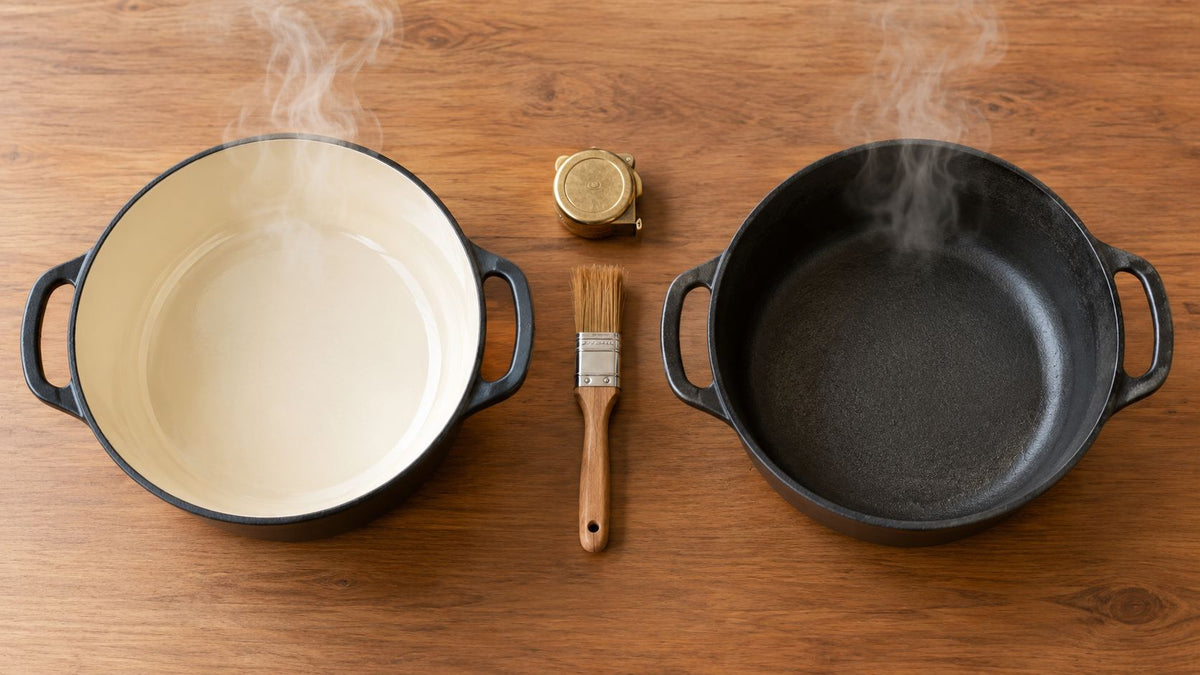
A cold morning exposes the difference between a cast iron kettle and a lightweight electric model. The electric kettle gets water boiling quickly, then disappears into a cupboard. A cast iron kettle stays warm beside the stove, radiates heat into the room, and asks you to lift, dry, and store a heavy object. On a wood stove, it can also add useful moisture to dry winter air, but only if you treat it as a working vessel rather than a decorative accent.
That distinction matters before you buy. Cast iron offers excellent heat retention, durability, and a steady heating experience, yet it gives up speed and convenience. The right choice depends on whether you want a tea vessel, a water heater for a hearth, a winter humidifier, or some combination of all three.
Table of Contents
- The Reality Of Owning A Cast Iron Kettle
- Choosing Between Enamel And Bare Iron Interiors
- Managing Thermal Mass And Stovetop Safety
- Using Cast Iron Kettles As Winter Humidifiers
- Cleaning Drying And Preventing Rust Damage
- Final Sizing And Purchase Criteria Checklist
The Reality Of Owning A Cast Iron Kettle
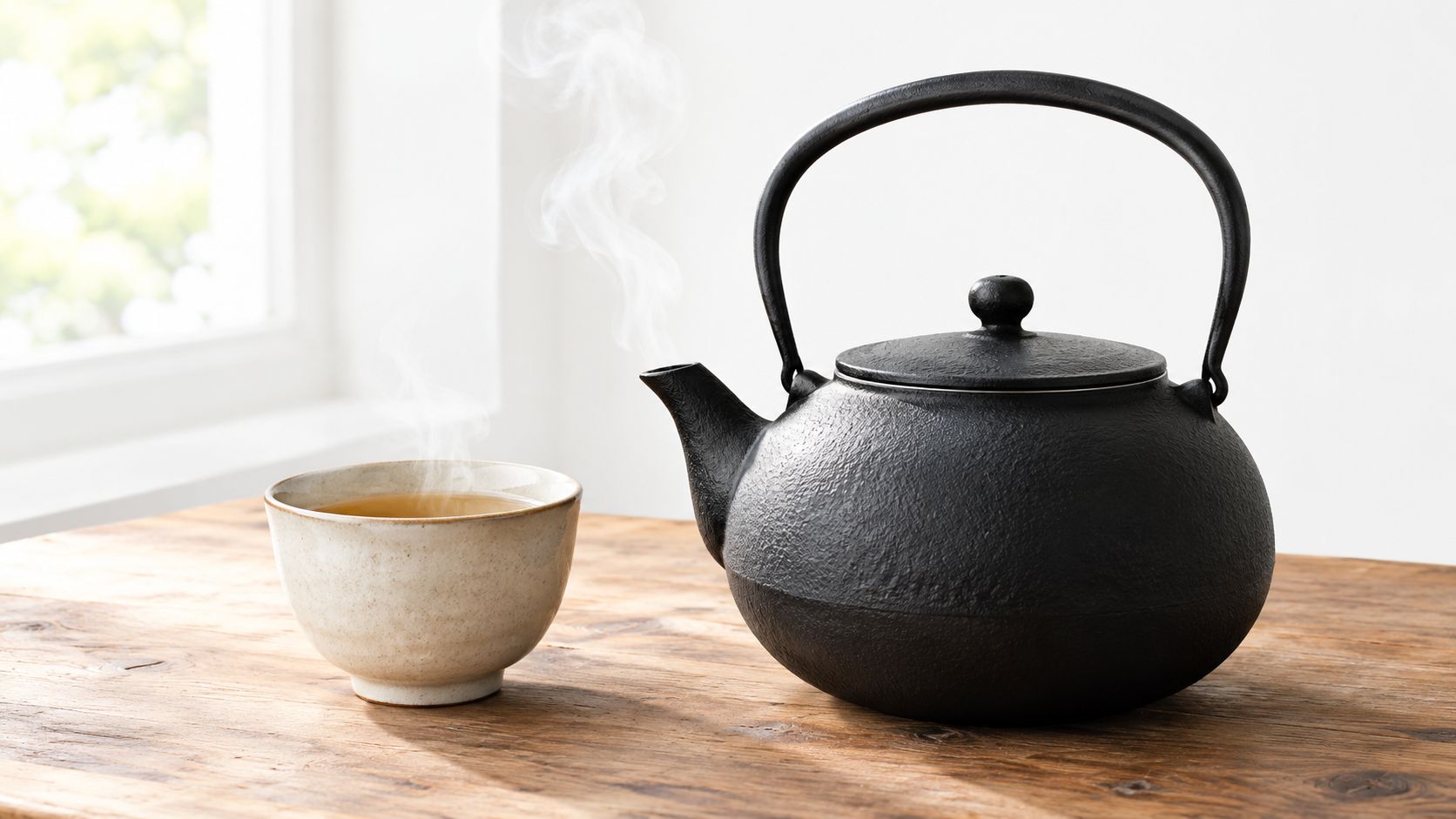
The first use is physical. You fill the kettle, set it on the burner, and wait while the metal gradually takes on heat. The handle becomes hot, the lid needs care, and the body continues radiating warmth after the flame has been lowered. It doesn't behave like an appliance that you can grab casually and move without thinking.
That slowness is also the appeal. Once heated, cast iron holds warmth for a long time, so water and the surrounding vessel don't cool as quickly as they would in a thin stainless steel kettle. Health Canada describes cast iron cookware as durable, versatile, and effective at retaining heat, which is a useful summary of its practical strengths. Health Canada's cookware guidance also makes clear that the material needs to be matched to the intended use.
What daily use actually feels like
A modern electric kettle rewards speed. A cast iron kettle rewards planning. You can put it on low or moderate heat while preparing breakfast, but it isn't the right tool when you need boiling water immediately. The high thermal mass means the vessel stores heat, and that heat remains present even after the burner setting changes.
Weight affects every part of the routine. A retail humidity kettle listed by Canadian Tire weighs 8.49 lb and holds 3.0 L, before you account for the water inside. That Canadian Tire product listing illustrates why capacity should never be considered separately from lifting ability, counter space, and the location of the stove.
Practical rule: Buy the kettle you can safely move when full, not the largest one that fits on the burner.
The historic appeal isn't imaginary, either. Archaeological evidence from Southern California includes cast-iron kettle and iron-pot fragments at Indigenous sites, while researchers describe large iron pots as widely used by California and Great Basin Indigenous communities during the latter half of the 19th century. The Southern California study of cast-iron pots places these objects within a broader history of trade goods and changing vessel materials.
California's industrial development also helped support the distribution of iron household goods. The manufacturing history recorded for the region identifies the Pacific Rolling Mill in San Francisco as entering operation on July 25, 1868, and describes the California Iron Company's Clipper Gap furnace producing its first cast on April 24, 1881. The documented California iron manufacturing history helps explain how cast-iron cookware could move from imported trade goods into a more established regional supply chain.
If you store several heavy pans and kettles, plan the cupboard rather than improvising. A low, stable shelf is safer than an overhead cabinet, and padding prevents enamel from striking neighbouring cookware. A practical pot and pan organisation approach is especially useful when the kettle needs a permanent, reachable position.
Choosing Between Enamel And Bare Iron Interiors
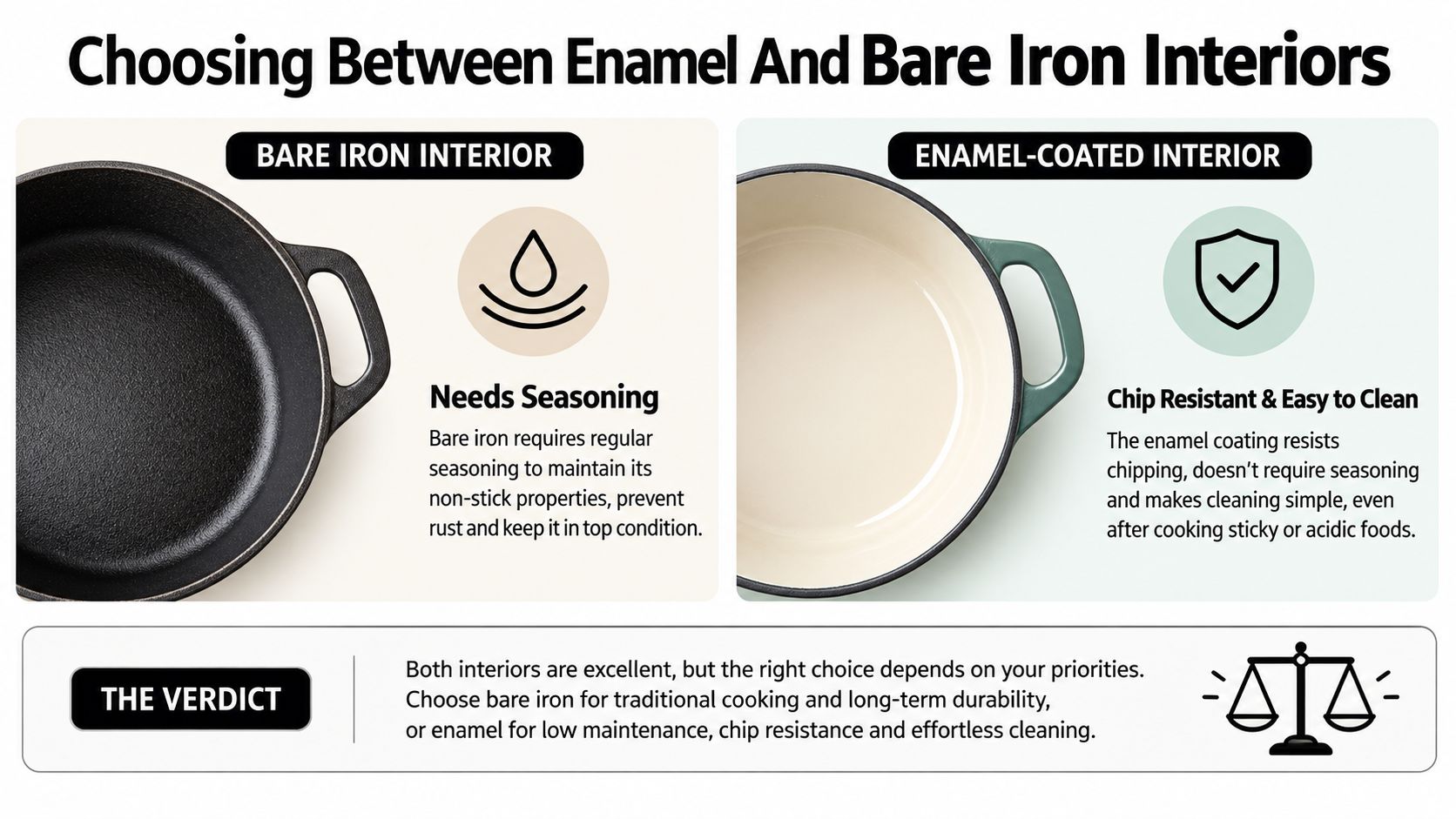
The interior finish determines what the kettle can do well. Bare iron suits water heating and short contact with neutral liquids, while enamel is more forgiving for tea, flavoured infusions, and drinks that may contain fruit or wine. The wrong finish won't necessarily fail on the first use, but repeated misuse can create taste, corrosion, or surface problems.
Health Canada advises against using uncoated cast iron to cook or store acidic foods such as tomatoes or rhubarb for long periods. Iron can migrate into food and affect taste or safety. For a kettle, the practical translation is simple: use bare iron primarily for water, and choose an enameled interior if the vessel will regularly hold acidic infusions, mulled drinks, or concentrated tea.
A practical decision matrix
| Intended use | Better interior | Why |
|---|---|---|
| Heating water for a humidifier | Bare iron or enamel | Water-only use places fewer demands on the interior, but either finish still needs thorough drying |
| Brewing plain tea | Either, depending on cleaning habits | Bare iron can work when contact is limited and the kettle is emptied promptly |
| Lemon water or fruit infusion | Enamel | Acidic liquids are a poor match for prolonged contact with uncoated iron |
| Mulled drinks or tea concentrate | Enamel | The coating helps separate the liquid from the iron and simplifies cleaning |
| Long periods on a wood stove | Check the manufacturer's instructions | Heat exposure, water level, and thermal shock matter more than appearance |
Bare iron has a traditional character and can tolerate ordinary use when kept dry, but it demands discipline. Don't leave acidic liquid sitting in it, and don't treat it like a storage container. The interior may also influence flavour, especially when the kettle has accumulated mineral deposits or residue from previous brews.
Enamel is easier for mixed beverage use, but it isn't indestructible. A chip exposes the underlying metal, and abrupt temperature changes can damage the coating. Never assume that an enameled kettle is safe to heat empty just because the interior is sealed. The iron underneath still expands, and the enamel remains vulnerable to impact and thermal shock.
The lighter alternative
A cast iron kettle isn't the only stovetop option. The HAUZ AKL1695 Whistling Stovetop Stainless Steel Kettle 2L is a stainless steel alternative designed for stovetop tea and coffee preparation, with efficient heating and a whistle to signal that the water is ready. It won't provide the same heat-retaining mass, but it may suit a household that values easier lifting and faster everyday handling.
The useful comparison isn't cast iron versus stainless steel as a matter of taste. It's maintenance and heat retention versus speed and lower physical demand. A cast iron and carbon steel comparison can also help clarify how different iron cookware materials behave, though a kettle's shape, finish, handle, and intended heat source remain decisive.
Managing Thermal Mass And Stovetop Safety
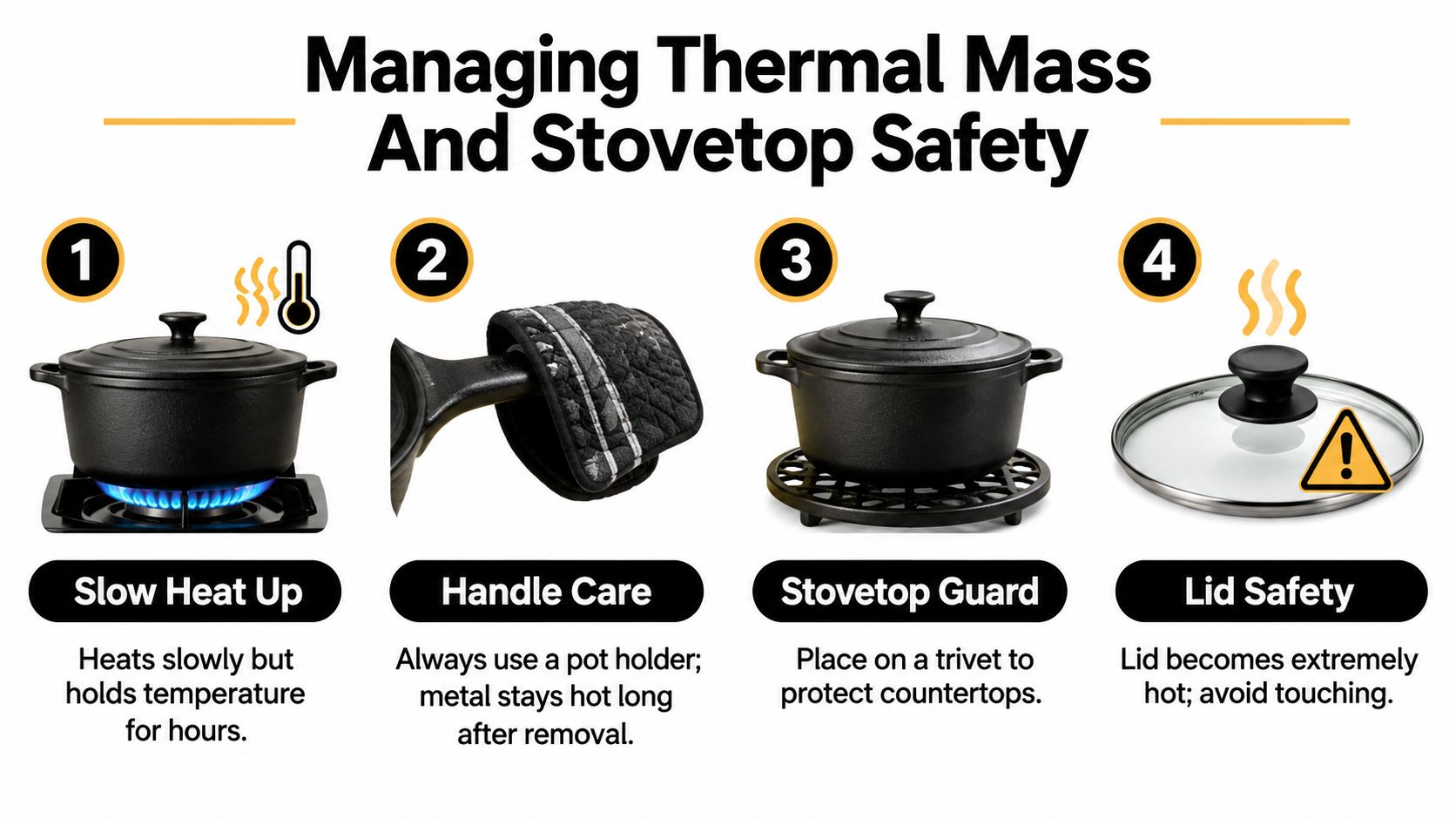
A cast iron kettle can stay hot long after the burner is reduced, so heating it safely requires control rather than speed. Treat the vessel as a heat reservoir. Health Canada identifies heat retention as a benefit, while Canadian product guidance commonly recommends low-to-medium heat and slow preheating for cast iron kettles.
Begin with water in the kettle unless the manufacturer's instructions allow another method. Set the burner to low or medium, never full power, and let the body warm gradually. A high flame can concentrate heat beneath one area of the base while the rest remains cooler. That uneven expansion stresses the iron and can also damage enamel where the kettle has a coated interior.
A safe heating sequence
- Inspect the kettle first. Check for cracks, loose fittings, chipped enamel, and a lid that does not sit securely. Do not heat a damaged vessel.
- Add the water before heating. Water helps distribute heat more evenly than an empty kettle. Keep enough inside to prevent the base from becoming excessively hot, particularly on a wood stove.
- Use gradual heat. On gas, keep the flame beneath the base rather than letting it climb the sides. See this guide to the best cookware for gas stoves for how flame spread affects vessel choice. On an electric coil or glass surface, use a low-to-medium setting and allow extra time. With induction, confirm that the base is compatible and raise power cautiously because induction can heat a magnetic vessel quickly.
- Move it with protection. Handles and lids become hot. Use a dry pot holder or heat-resistant mitt, and remember that the kettle may remain unsafe to touch after removal from the burner.
- Set it on a trivet. The hot base can mark or damage a countertop. A stable trivet also keeps the heavy vessel from sliding.
Thermal shock causes some of the most avoidable damage. Adding cold water to a hot, dry kettle can crack enamel or harm the vessel. Canadian care guidance warns against rapid temperature changes, including placing cold water into a hot kettle. The manufacturer's cast-iron care guidance recommends gradual preheating and notes that some Canada-market cast iron kettles are rated to 500°F (260°C) for oven or stovetop use. That rating does not justify maximum heat or override the instructions for your model.
Wood stoves require supervision
Wood stoves can deliver uneven, prolonged heat. Check the water level regularly, keep the kettle from boiling dry, and remove it if the stove will be unattended, following both the appliance and kettle instructions.
Heat stays in the metal. Reducing the flame lowers heat input, but it does not cool the handle or lid immediately.
Using Cast Iron Kettles As Winter Humidifiers
In a cold climate, a cast iron kettle can serve as more than a tea vessel. Set on a suitable wood stove, it provides a steady source of warm water that releases moisture into heated, dry air. This makes it useful during long winter burns, particularly in rooms where electric humidification is inconvenient or unavailable. Retail products are often marketed for adding indoor moisture in heated rooms, as shown by Canadian Tire's humidity kettle listing.
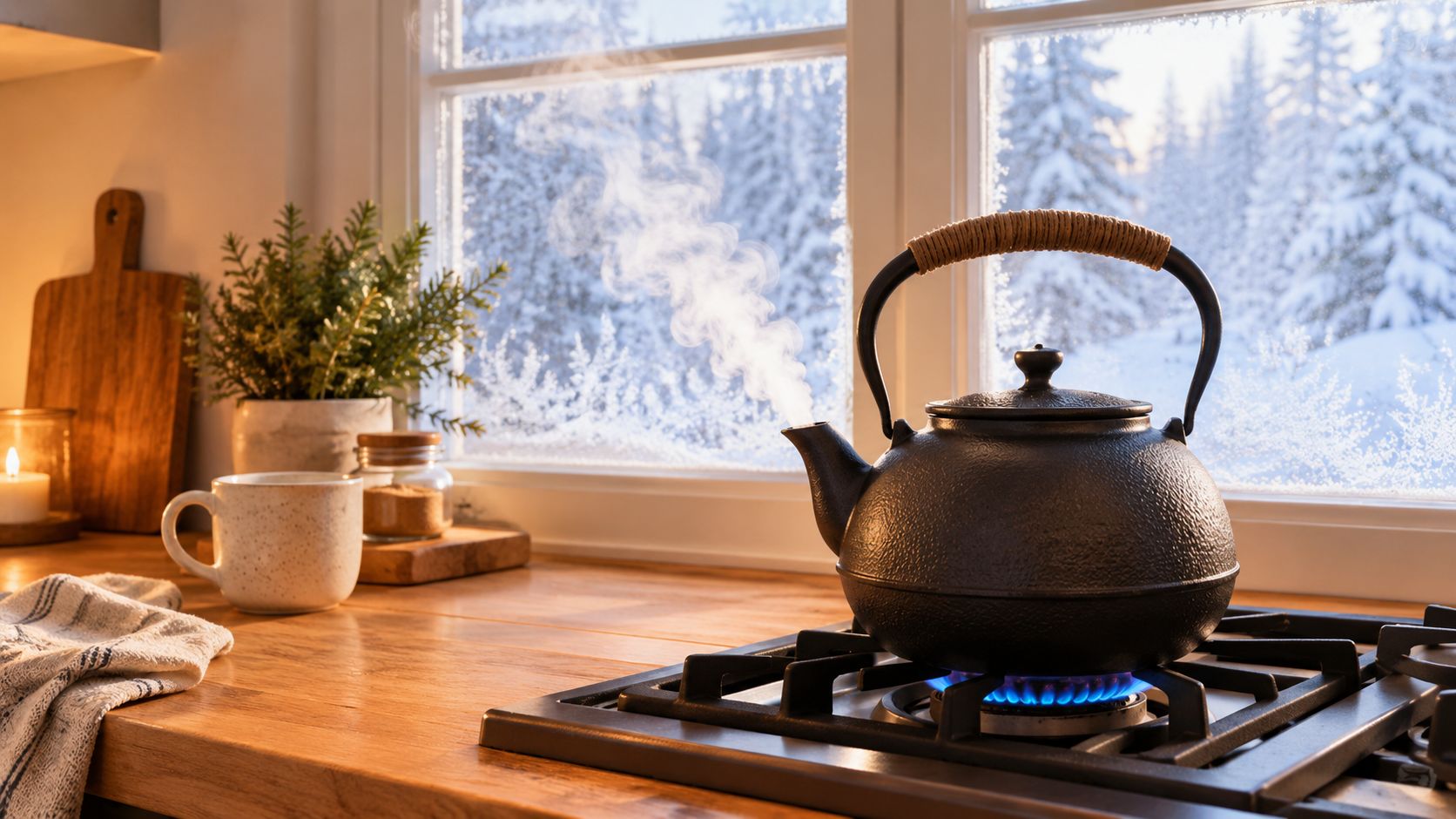
The practical drawback is weight. The humidity kettle cited earlier weighs 8.49 lb empty, before water is added. A full vessel needs a firm grip, a clear route, and a stable place to land. Keep it close enough to heat effectively, but well inside the stove surface rather than near an edge where a handle, lid, or spout could catch on clothing or equipment.
Why the winter use case works
Cast iron holds heat well, so water can remain warm and evaporate throughout a stove-burning period. The result is gradual moisture release rather than the controlled output of an electric humidifier. Its effect also depends on room size, airflow, stove temperature, and how often the water is replenished. A small room may feel the difference sooner than an open-plan space.
Use a simple monitoring routine. Check the water whenever you add wood, adjust the stove, or begin preparing a meal. On a long burn, the level can fall steadily without obvious warning, especially when the room is dry. Refill before the kettle is nearly empty, and leave enough headspace to prevent bubbling water from spilling onto the stove.
A room hygrometer can help you judge whether the kettle is providing useful moisture, rather than relying only on condensation or how dry the air feels. If windows begin collecting water, reduce evaporation or improve ventilation. The kettle should support a reasonable indoor environment, not create damp surfaces around the stove.
Minerals remain behind as water evaporates. Hard water can leave a chalky film, reduce the usable volume, and make the vessel harder to maintain over time. If scale is a recurring problem, water filter choices can help you assess whether filtered water is practical for regular use. Follow the interior finish's care instructions and avoid allowing residue to build up through repeated heating cycles.
Know what the kettle cannot do
A cast iron humidifier requires supervision. It does not measure room moisture, shut off when the water is gone, or protect the stove if evaporation continues unattended. Never use it on an unstable surface, an unsuitable radiator, or any stove position that blocks controls, doors, or access to the fire.
Water-only use generally suits bare iron better than beverage brewing, but the vessel still needs to be emptied after the heating period and kept dry. If nobody can check the stove regularly, or the home needs precise humidity control, choose an electric humidifier instead.
Cleaning Drying And Preventing Rust Damage
A cast iron kettle usually fails through neglect rather than ordinary use. Water left inside encourages corrosion, mineral deposits become harder to remove, and a damp lid can trap moisture against the rim. The cleaning routine should be short enough to follow every time, because a complicated process that gets skipped isn't useful.
The routine after water-only use
- Empty the kettle promptly. Don't store leftover water inside, even if the vessel is still warm. This is especially important for bare iron.
- Rinse while the kettle is safe to handle. Use warm water and a soft cloth or non-abrasive sponge. Avoid aggressive scouring that could damage enamel or remove a carefully maintained bare-iron surface.
- Deal with residue immediately. Mineral film and tea staining are easier to remove when fresh. For enamel, use a gentle cleaner appropriate for the coating. Don't use harsh tools that can scratch the surface.
- Dry the interior completely. Wipe the body, rim, lid, and spout. Then place the empty kettle on low residual heat briefly, if the manufacturer's instructions permit, to evaporate hidden moisture. Don't walk away from it or allow it to heat empty for an extended period.
- Store with airflow. Once cool and dry, keep the lid slightly ajar or stored beside the kettle if the design allows. A sealed, damp interior is an efficient rust-making environment.
Bare iron needs more attention than enamel. A very thin protective film of suitable oil may be used when the manufacturer recommends it, but excess oil creates residue and unpleasant smells. The aim is a dry, lightly protected surface, not a pool of oil. For an enameled interior, don't oil the coating as though it were bare iron. Clean it gently, dry it fully, and inspect for chips.
Handling rust, scale, and stains
Small surface rust spots on bare iron should be addressed before they spread. Remove loose rust with a suitable gentle abrasive, rinse away the residue, dry the kettle completely, and restore the protective treatment recommended for that product. Deep pitting, cracks, or structural damage deserve replacement rather than a cosmetic repair.
Hard-water scale calls for patience. A mild descaling approach may be appropriate, but check the manufacturer's advice first, particularly if the kettle has enamel, decorative exterior work, or exposed fittings. Never combine cleaning chemicals, and don't leave a solution sitting in bare iron for prolonged periods.
The maintenance rule that matters most: a cast iron kettle should never go into storage wet.
For a broader reference on cast iron cookware care, the same fundamentals apply here: avoid soaking, avoid the dishwasher, protect the surface, and make drying part of the use cycle rather than an optional final step. A kettle used as a winter humidifier may need this routine more often because repeated evaporation concentrates minerals and encourages users to leave warm water sitting inside.
Final Sizing And Purchase Criteria Checklist
Buy the kettle around the job it must perform. A tea-focused vessel may prioritise a controlled pour, a comfortable handle, and an interior finish that tolerates repeated brewing. A winter humidity kettle needs a stable base, a secure lid, a handle that remains manageable with heat protection, and enough capacity to avoid constant refilling without becoming unsafe to lift.
Use this checklist before committing:
- Choose the interior first. Bare iron is a sensible fit for water heating and short contact with neutral liquids. Enamel is the safer practical choice for acidic infusions, mulled drinks, or tea concentrates.
- Test the weight in context. Think about the kettle empty, filled, and hot. If you need both hands to move it, the stove and counter layout must leave room for a controlled transfer.
- Measure the landing zones. Confirm that the base sits securely on the burner or stove surface. Check that the handle, lid, and spout won't strike a wall, shelf, backsplash, or neighbouring pot.
- Inspect the pouring hardware. A narrow spout may provide better control, while a broad opening may simplify filling and cleaning. The lid should be easy to remove with a mitt and should not wobble when the kettle is moved.
- Match the vessel to the heat source. Gas, electric, induction, and wood stoves behave differently. Confirm compatibility and follow the product's heat limits rather than relying on general cast-iron folklore.
- Plan the refill routine. A larger capacity reduces interruptions, but more water also means more lifting weight. For a wood-heated room, place the kettle where you can check the level without reaching across an active fire.
- Look for damage before purchase. Reject cracks, unstable feet, chipped functional surfaces, distorted lids, and rough fittings that suggest poor control or unsafe handling.
- Make storage part of the decision. A cast iron kettle needs a dry, stable home. If it will be buried behind other cookware, you'll be more likely to drag it, knock it, or put it away damp.
When cast iron isn't the right tool
Choose stainless steel if you value quick heating, easy lifting, and a low-maintenance daily routine. Choose an electric kettle if automatic shut-off and speed matter more than stovetop ritual. Choose a dedicated humidifier if you need controlled moisture rather than a manually monitored source of steam.
Cast iron earns its place when heat retention, durability, visual character, and winter utility matter enough to justify the extra care. It works especially well for someone who has a stable stove setup, can lift the vessel safely, and will empty and dry it after use. It works poorly for anyone who wants to boil water instantly, store drinks for long periods, or leave the kettle unattended on a hot stove.
Before buying, hold the empty model if possible, inspect the interior finish, and decide whether your primary task is brewing or humidifying. GrifGlo organises home and kitchen essentials with decision-focused guides, comparisons, and sizing advice, so visit GrifGlo to compare practical cookware options against your space, heat source, and maintenance routine.

Leave a comment
This site is protected by hCaptcha and the hCaptcha Privacy Policy and Terms of Service apply.