

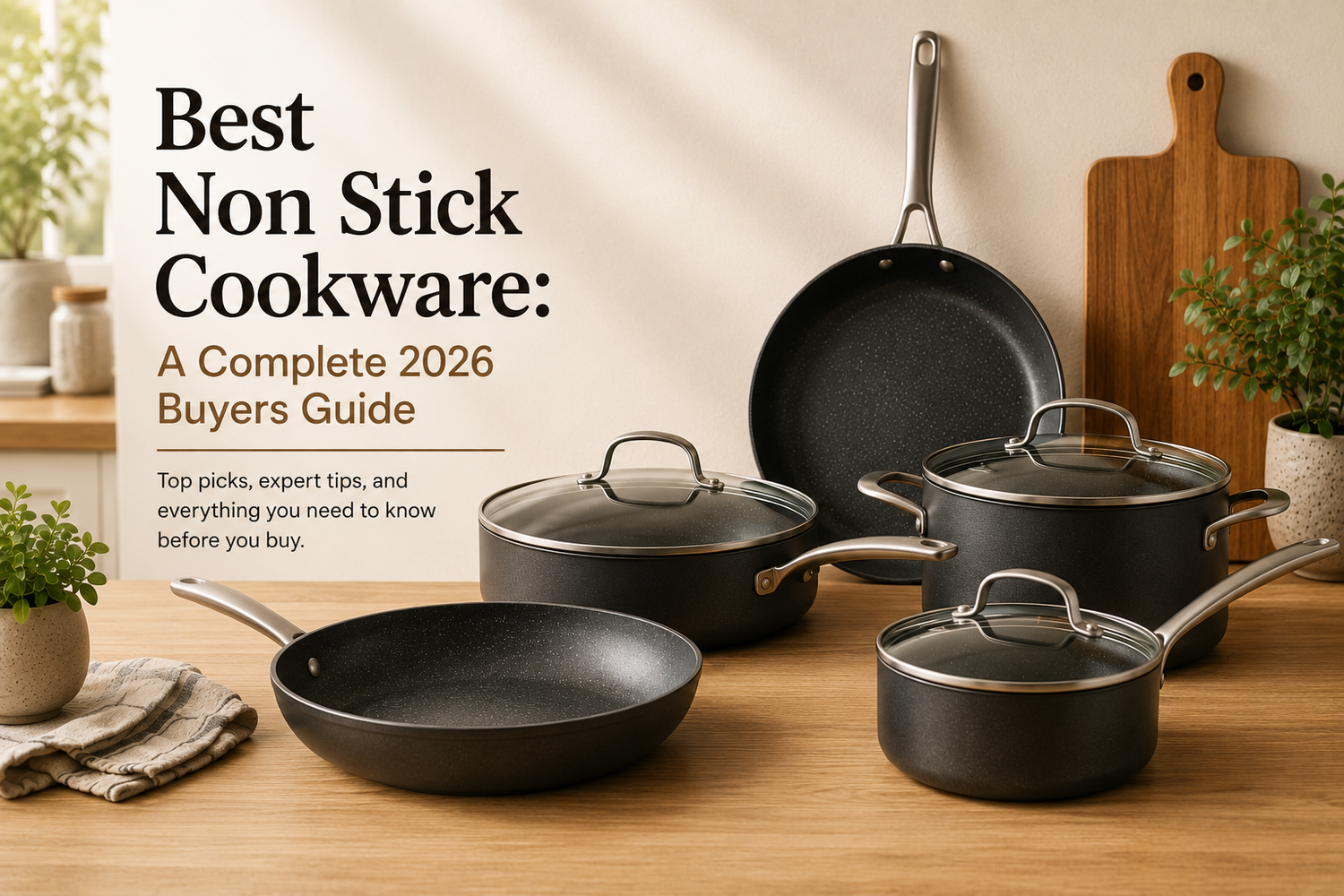
You're probably here because a pan you bought for “easy clean-up” now grabs eggs like glue, shows pale scratches across the surface, and makes you wonder whether non-stick cookware is all marketing and no substance. That cycle is common. People buy a pan for convenience, use it like a stainless skillet, store it carelessly, overheat it once or twice, then replace it far sooner than they expected.
The better way to shop isn't to chase a single winner. It's to match coating type, pan construction, heat habits, and care routine to the way you cook. That's how you find the best non stick cookware for your kitchen, not just the pan with the loudest packaging claims.
A good non-stick pan should solve a specific problem. It should help with eggs, fish, pancakes, quick weeknight vegetables, or sticky sauces. It shouldn't be asked to do every job in the kitchen. Once you treat it as a specialist instead of an all-purpose workhorse, the category gets much easier to understand.
Table of Contents
- Why Your Non Stick Pans Keep Failing
- The Two Faces of Non Stick Coatings
- Understanding Pan Construction and Materials
- Safety Heat Limits and Pan Longevity
- Building Your Collection Sets vs Single Pans
- Cookware Profiles Recommendations for Your Kitchen
- Your Final Checklist for Buying with Confidence
Why Your Non Stick Pans Keep Failing
Most failed non-stick pans die the same way. Not with one dramatic mistake, but through a string of ordinary habits. A burner runs too hot. A pan gets preheated empty for too long. A metal fork slips in during a rushed breakfast. The pan gets stacked under heavier cookware without protection. Then one morning, the omelette sticks.
That failure frustrates people because it feels like wasted money. But in many kitchens, the pan wasn't wrong for the category. It was wrong for the job, or wrong for the user. Non-stick cookware has limits, and those limits matter more than brand slogans.
I've seen people use a delicate non-stick skillet for high-heat finishing, broiler work, and hard searing. That's like buying running shoes and complaining they don't work as hiking boots. Non-stick shines in controlled, repetitive cooking. It struggles when treated like heavy-duty restaurant equipment.
Practical rule: If your pan mostly cooks eggs, fish, pancakes, and quick reheats, non-stick makes sense. If it mostly handles steaks, blistered vegetables, and oven-heavy finishing, you need another material in rotation.
A lot of shoppers also focus on the coating and ignore the rest of the kitchen routine. Ventilation matters. So does residue build-up, especially when people cook in compact spaces with multiple countertop appliances. If you're tightening your kitchen set-up overall, this guide to a cleaner cooking environment around an air fryer fits the same mindset: better maintenance leads to better performance.
Three patterns usually explain the replacement cycle:
- Wrong heat habits: People assume non-stick can take the same punishment as stainless or cast iron.
- Poor role assignment: One pan gets asked to fry eggs, sear meat, finish in the oven, and survive rough washing.
- Cheap construction underneath: Even a decent coating won't feel good on a thin body that heats unevenly or warps easily.
The fix isn't buying the most expensive pan on the shelf. It's buying the right one, then using it like it was designed to be used.
The Two Faces of Non Stick Coatings
Non-stick cookware looks simple from the outside. In practice, you're usually choosing between two different systems: PTFE and ceramic. They're not interchangeable. They ask for different expectations, and they fail in different ways.

PTFE still defines classic non-stick performance
If you grew up with a pan that let an egg slide across the surface with almost no fat, you were probably using PTFE. It remains the most familiar traditional non-stick coating. It's the low-friction specialist, and for delicate release, it's still hard to beat.
A useful way to think about it is this: PTFE is like a petrol car tuned for smooth daily driving. It's predictable, easy to live with, and very good at the main purpose of non-stick cookware. That doesn't mean it loves abuse. It doesn't. But when people want effortless release, PTFE is usually what they mean, whether they know the term or not.
One historical shift changed the way shoppers talk about this category. The 2015 phaseout of PFOA in the United States led many products to advertise themselves as “PFOA-free,” but that doesn't automatically mean a pan is PFAS-free, as explained in FoodPrint's overview of what to know about nonstick cookware. That distinction matters because “PFOA-free” sounds broader than it is.
PTFE tends to suit cooks who want:
- Easy egg and pancake release
- Low-effort weekday cooking
- A forgiving pan for fish and fragile proteins
Its weak point is simple. PTFE rewards moderate cooking and careful handling, not aggressive heat or rough utensils.
Ceramic changed the conversation
Ceramic isn't just a different label. It changed what people expect from the best non stick cookware because it gave buyers an alternative language: mineral-based coating, PFAS-free positioning, and a different maintenance profile.
Ceramic reminds me of an electric car comparison. It appeals for a different reason, and it often attracts shoppers who care as much about the system behind the product as the daily driving feel. In cookware terms, that means people often choose ceramic because they want a coating category that feels easier to understand and easier to screen.
That shift has become especially relevant in California. The state enacted AB 1200 in 2021, requiring manufacturers of cookware with intentionally added PFAS to disclose that fact by January 1, 2023, and to identify the specific PFAS used, as noted in Bottom Line's discussion of nonstick cookware safety and performance. For buyers, that means coating identification is no longer a vague preference. It's part of a practical buying checklist.
Consumer testing has also changed the conversation. In the same Bottom Line summary, Consumer Reports' most recent tests found ceramic-coated nonstick frying pans performed so well that they occupied the top three slots. That doesn't mean every ceramic pan is better than every PTFE pan. It means ceramic is no longer a consolation prize.
If you're also comparing ceramic bakeware and coated oven pieces, a separate guide to a ceramic baking dish helps sort out where that material does and doesn't fit.
A specialty piece can also make sense once you know the coating you prefer. For example, the All-Clad HA1 Double Burner Grill Pan – 13×20-Inch Nonstick is described as a nonstick double-burner grill pan with a 13 x 20 inch cooking surface spanning two burners, low walls for flipping food, and a design intended for grill marks and fat drainage. That's not a universal everyday pan. It's a good example of why coating choice and shape should follow use case.
PTFE vs. Ceramic Non Stick At a Glance
| Feature | PTFE (e.g., Teflon) | Ceramic (Sol-Gel) |
|---|---|---|
| Primary strength | Very slick food release | Strong modern alternative with broad shopper appeal |
| Best use | Eggs, fish, pancakes, delicate foods | Daily low to medium heat cooking for buyers who want PFAS-free positioning |
| Heat approach | Better with restraint | Still needs care, even if buyers assume it can take more abuse |
| Main risk | Performance drops faster when overheated or scratched | Release can fade sooner if care gets sloppy |
| What shoppers misread | “PFOA-free” is not the same as PFAS-free | “Ceramic” doesn't mean maintenance-free |
| Who it suits | People who prioritise slipperiness first | People who want disclosure clarity and a newer coating category |
Buy by cooking style, not by slogan. A pan that matches your breakfast routine will outperform a trendier pan that doesn't fit your habits.
Understanding Pan Construction and Materials
The coating gets the attention, but the body of the pan decides how the pan behaves on the hob. Heat-up speed, responsiveness, stability, and resistance to warping all start there. If the coating is the skin, the core is the skeleton.

The coating releases food but the body controls the cooking
Most non-stick pans are built with an aluminum or stainless-steel core, which keeps them relatively lightweight and improves heat transfer, leading to faster responsiveness for delicate foods like eggs and fish, according to Made In's explanation of frying pan materials. That's one reason a decent non-stick pan feels so easy to cook with. It reacts quickly.
Aluminum usually gives you the fastest, lightest feel. That's good for quick breakfast cooking and for anyone who doesn't want a heavy skillet. The trade-off is that cheaper aluminum pans often show their weaknesses fast. They can feel flimsy, they can heat unevenly, and they may warp more easily if the construction is poor.
Stainless-backed non-stick pans often feel more stable and more substantial. They can also work better for buyers who need compatibility across different cooktops. But they don't automatically cook better. What matters is how the pan is built, not just which metal appears on the label.
Here's the practical sorting method I use:
- Thin and very light: Usually fine for occasional use, less convincing for frequent cooking.
- Moderate weight with balance: Often the sweet spot for everyday non-stick.
- Heavy but awkward: May sound premium, but poor balance can make routine cooking annoying.
What hard-anodized actually changes
Hard-anodized pans deserve separate attention because many of the best everyday non-stick options use this construction. Hard-anodizing changes the aluminum surface to make it tougher and better suited to hold a coating. In use, that usually means a pan that feels sturdier than cheap stamped aluminum while still staying manageable in the hand.
That construction often lands in the practical middle. It doesn't have the ritual of cast iron. It doesn't ask for the precision mindset of stainless. It gives home cooks a durable-feeling base that still supports the easy-release reason they bought non-stick cookware in the first place.
The body of the pan determines whether heat feels calm or erratic. A slick coating on a badly built pan is still a badly built pan.
If you already keep other materials in rotation, it helps to think in roles. Non-stick for release. Stainless for fond and sauces. Cast iron for hard searing and retention. If you need a refresher on where heavier traditional cookware fits, this guide to cast iron cookware care is a useful complement.
A buyer who understands construction shops better. You stop asking, “Is this coating good?” and start asking, “Does this whole pan cook well, feel stable, and suit the jobs I do?”
Safety Heat Limits and Pan Longevity
The safety conversation around non-stick cookware gets muddled because people mix old chemical history, current coating categories, and bad cooking habits into one vague fear. A clearer rule is this: modern non-stick pans are easiest to live with when you understand their temperature limits and stop treating them like high-heat tools.

Safety starts with temperature discipline
For non-stick cookware, oven-safe limits are typically around 400°F (204°C), and overheating is a primary cause of coating breakdown, so checking the manufacturer's maximum temperature matters before you buy, as outlined in Circulon's guide to finding the best nonstick pan. That one number tells you a lot about how the pan wants to be used.
In real kitchens, the damage usually happens on the hob before the oven is even involved. People crank the burner, walk away, and leave an empty pan heating. Non-stick coatings don't reward that habit. If you want a pan to last, keep the heat controlled and intentional.
Many “bad pan” complaints frequently stem from this situation. The coating wasn't necessarily defective. The cooking style was too aggressive for the tool.
If you routinely cook on full heat, the best non stick cookware for you might be less non-stick cookware, not more.
What California buyers should check
California buyers have one advantage right now: better disclosure. As noted earlier, the state's AB 1200 law requires manufacturers to disclose intentionally added PFAS in cookware sold there. That shifts the shopping process away from fuzzy claims and toward specific coating information.
For buyers, three checks matter:
- Coating identity: Is it PTFE, ceramic, PEEK, or positioned as PFAS-free?
- Disclosure clarity: Does the product tell you what chemistry category you're buying?
- Use-case match: Is this pan intended for low to medium heat daily cooking, or are you expecting more from it than it can realistically deliver?
That transparency matters because “PFOA-free” and “PFAS-free” are not the same thing. California shoppers now have stronger reason to look past front-of-box language and inspect the details.
If kitchen air quality is part of your concern, especially in smaller homes or flats, a guide to choosing an air purifier for kitchen use can help you think more broadly about everyday cooking conditions.
Care habits that actually extend pan life
Longevity doesn't come from one miracle coating. It comes from a boring routine, repeated consistently.
- Use gentle utensils: Silicone, wood, or other softer tools reduce surface wear.
- Wash with restraint: A soft sponge and mild washing beat abrasive scrubbing every time.
- Store with separation: If pans are stacked, put something between them.
- Retire damaged pans appropriately: Once the surface is visibly compromised and performance has clearly dropped, don't keep pretending it's fine.
Some shoppers chase indestructibility. That's the wrong target. Non-stick should be judged by whether it stays dependable within its lane. A carefully used pan can remain useful for a long time. A mistreated one can feel spent surprisingly quickly.
The safest approach and the longest-lasting approach are basically the same approach. Moderate heat. Gentle tools. Gentle cleaning. Realistic expectations.
Building Your Collection Sets vs Single Pans
A cookware set looks organised. Matching lids, matching handles, matching finish. For some kitchens, that's useful. For many others, it's how people end up owning pans they never touch.
The smarter question isn't “set or no set?” It's “how many pieces will earn permanent space on my hob and in my cupboards?”
When a set makes sense
Sets work well for households starting from almost nothing. If you've just moved, outfitted a first home, or need to standardise a kitchen quickly, a coordinated set can simplify the process. You get visual consistency and a broad starting toolkit without making a dozen separate decisions.
They also make sense when more than one person cooks in the household. Shared kitchens benefit from standard handles, similar maintenance rules, and predictable performance across pieces.
A set is usually the better route if you need:
- A fast reset for a new kitchen
- A uniform collection for shared use
- A straightforward buying decision with less research
The risk is overbuying. Many sets include extra skillets, oversized pots, or specialty shapes that don't match how people cook.
When single pans are the smarter buy
Buying individual pieces is usually the sharper move for experienced cooks. You can assign jobs properly. One non-stick skillet for eggs and fish. One stainless sauté pan for browning and sauces. One heavier pan for searing.
That mix almost always cooks better than trying to force every task through one matching collection.
Here's a simple framework:
| Situation | Better choice | Why |
|---|---|---|
| First kitchen with few essentials | Set | Faster setup, less decision fatigue |
| Small kitchen with limited storage | Single pans | You avoid clutter and duplicates |
| Experienced cook with clear habits | Single pans | You can buy by role, not by appearance |
| Rental or guest kitchen | Set | Easier to standardise and maintain |
There's also a middle ground. Start with one or two excellent pieces, then add slowly. Often, the primary non-stick workhorse is a medium skillet that handles breakfast and quick dinners. Everything else should justify its place.
The best non stick cookware collection often starts smaller than people expect. A focused line-up usually performs better than a cupboard full of compromise.
Cookware Profiles Recommendations for Your Kitchen
The decision gets easier. Once you stop looking for one perfect pan and start matching cookware to real routines, the right choice usually becomes obvious.

The everyday home cook
If you cook most days and want one reliable non-stick piece in regular rotation, prioritise balanced construction, a comfortable handle, and a clear coating identity. This buyer doesn't need the cheapest pan on the shelf and usually doesn't need a giant set either.
A hard-anodized non-stick skillet is often the practical answer here. It tends to feel stable, heats quickly, and stands up better to routine use than very thin pans. For this profile, the ideal use is predictable: eggs in the morning, fish at lunch, dumplings or quick vegetables at night.
What works:
- A medium everyday skillet
- A coating you understand and are willing to maintain properly
- Moderate weight that feels secure but not cumbersome
What usually doesn't:
- Ultra-light bargain pans that feel unstable
- Specialty shapes bought before the basics are covered
- Expecting one non-stick pan to replace stainless or cast iron completely
For the home cook who likes occasional indoor grilling or large-batch stovetop cooking, a specialty expansion piece can make sense after the basics are sorted. That's where something like a large double-burner grill pan belongs. Not first. Later.
The renter or student
This buyer needs simplicity. Limited storage, mixed-quality cooktops, and tight kitchen routines all change the recommendation. A renter or student usually benefits more from one versatile non-stick skillet and one saucepan in another material than from a large matching bundle.
The priority here is ease of use. The pan should be light enough to handle easily, forgiving for quick meals, and straightforward to clean in a small sink. It also helps if the user isn't expected to memorise a complicated care routine.
A compact, purpose-built item can also help if kitchen space is especially tight. Products like a non-stick omelet or frittata maker can work well for repetitive breakfast cooking because they reduce the need for extra gear, though they make sense only if that's a meal you cook often.
If you want a decision-friendly way to compare practical kitchen tools without sorting through endless catalogues, GrifGlo groups household and kitchen products into easier buying paths. That's useful for renters who need function first and don't want to overbuy.
This profile should avoid:
- Heavy pans that are annoying to wash and store
- Fragile coatings paired with rough communal-kitchen habits
- Oversized sets that waste cupboard space
A small kitchen rewards specialisation. One dependable non-stick pan beats three mediocre ones.
After the broad framework, this quick video can help visualise how pan choice and use habits come together in practice.
The small business host
Property managers, short-term rental hosts, and light hospitality operators have a different problem. They're not buying for one careful user. They're buying for many unknown users with mixed skill levels and very little emotional attachment to the pan.
That changes the answer. For this profile, the best non stick cookware is rarely the most delicate or most enthusiast-focused option. It's the option that balances easy use, easy replacement planning, and simple care instructions.
Guest-use kitchens need cookware that survives ordinary misuse, not cookware that requires perfect technique.
For host settings, I'd bias toward:
- Standard sizes: Easier to replace and easier for guests to understand
- Simple coating categories: Fewer confusing claims, clearer user expectations
- Moderate investment: Expensive enough to avoid the flimsiest tier, restrained enough to replace without drama
A set can make sense here because consistency matters. Matching pieces simplify inventory, guest instructions, and housekeeping checks. But don't overdo it. Hosts are better served by a small, repeatable core collection than by a chef-style assortment.
The biggest mistake in this profile is buying cookware as if guests will treat it like their own. They won't. That means your buying framework should favour resilience, clarity, and replacement ease over niche performance.
Your Final Checklist for Buying with Confidence
The best non stick cookware isn't the one with the fanciest coating story. It's the one that fits your real kitchen, your real burner habits, and the food you cook during the week.
Use this shortlist before you buy:
- Start with your cooking pattern: If you mostly cook eggs, fish, pancakes, and quick meals, non-stick earns its place.
- Choose the coating on purpose: PTFE usually wins on classic slick release. Ceramic appeals to buyers who want a newer alternative and clearer PFAS-free positioning.
- Check the pan body: A decent core and sensible weight matter as much as the surface.
- Verify heat limits: Non-stick isn't your high-heat searing tool. Treat the maximum temperature as a real operating limit.
- Buy fewer pieces, better matched: One strong skillet is more useful than a crowded cupboard.
- Commit to the care routine: Gentle utensils, gentle cleaning, and careful storage are part of the purchase.
One last practical habit helps after the cookware is in your home. Keep the rest of your kitchen systems organised too. If lids, tools, and prep containers are a mess, pans get mishandled more often. Even a simple guide to cleaning food storage containers properly supports the same end goal: equipment that stays useful because the kitchen around it is well managed.
Confidence comes from clarity. If you know your cooking style, your coating preference, and your tolerance for maintenance, you won't need to guess.
GrifGlo helps shoppers narrow home and kitchen purchases with decision-friendly guides, practical comparisons, and curated product paths. If you're building a more reliable kitchen set-up, it's a useful place to compare essentials without sorting through an overwhelming catalogue.

Laisser un commentaire
Ce site est protégé par hCaptcha, et la Politique de confidentialité et les Conditions de service de hCaptcha s’appliquent.