

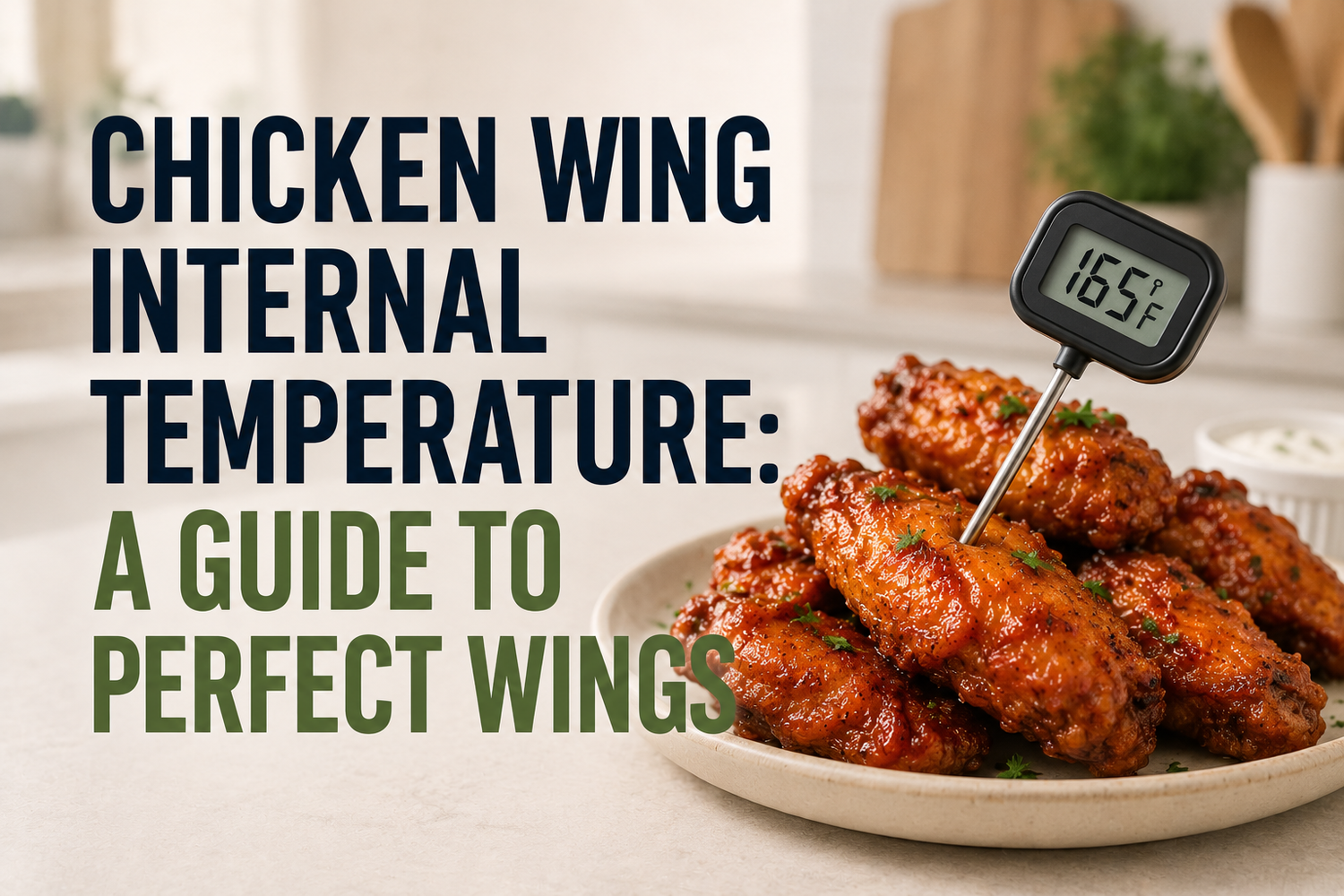
Chicken wings are safe to eat at 165°F (74°C). But if you want juicy, tender wings with rendered fat and better texture, aim for a final internal temperature of 175 to 185°F (79 to 85°C).
That advice goes against the most common tip people hear. Many cooks stop the moment a thermometer shows 165°F, then wonder why the wings are edible but not especially satisfying. The number is right for safety, but it isn't the whole story for eating quality.
Wings are a perfect example of how safe and delicious are related but not identical. Consider bread. A loaf can be baked enough to be food-safe, yet still pale and unimpressive if you pull it too early. Chicken wings work the same way. They need one temperature to protect you, and often a slightly higher one to reward you.
Table of Contents
- The Secret to Restaurant-Quality Chicken Wings
- Safety vs Quality The Critical Temperature Gap
- How to Measure Chicken Wing Temperature Accurately
- Your Temperature Guide for Perfect Wings
- Temperature Tips for Fried Baked and Grilled Wings
- Beyond Safe The Path to Unforgettable Wings
The Secret to Restaurant-Quality Chicken Wings
Restaurant-style wings usually aren't better because of a secret sauce. They're better because the cook understands that the target for safety isn't always the target for texture.
That difference matters most with wings because they contain skin, fat, and connective tissue in a small package. If you stop too early, the meat can feel tight and the skin can seem less satisfying, even when the wings are fully safe. If you keep going a bit longer, the wing loosens up and eats more like what people expect from a pub platter or game-night tray.
A lot of home cooks get tripped up here because food safety messaging is necessarily simple. It gives one minimum number. That's useful and important. It just doesn't teach the second half of cooking, which is knowing when the meat will feel good in your mouth.
Practical rule: Treat 165°F as the point where the wings become safe, not always the point where they become ideal.
This is also why wings are so forgiving compared with leaner cuts. A chicken breast can punish you for overshooting. Wings often improve when you move beyond the minimum and let the fat and connective tissue catch up.
If you like learning how cookware and kitchen materials affect cooking results, GrifGlo's guide to cast iron cookware care is a useful companion read because surface heat and retention can change how wings brown and finish.
Safety vs Quality The Critical Temperature Gap
The most useful way to understand chicken wing internal temperature is to separate it into two questions. First, is it safe? Second, will it eat the way I want?

Safety has a clear finish line
Health Canada's chart for safe internal cooking temperatures puts poultry pieces, including wings, at 74°C (165°F), with no resting time required once that temperature is reached at the thickest point, as shown on Health Canada's safe internal cooking temperatures page.
This number must be met. It's the line that matters for destroying harmful bacteria associated with poultry. If your wings haven't reached it, keep cooking.
Many guides stop here, and from a safety standpoint that makes sense. But from a cooking standpoint, stopping the conversation there is like teaching someone to paint by only discussing primer.
Quality needs a little more heat
Culinary guidance for wings points to 175 to 185°F (79 to 85°C) as the range where texture improves because fat renders more fully and connective tissue softens. Destination BBQ describes the lower safety mark as wings that are “done but tight” and notes that the higher range is where the meat becomes looser and juicier on its chicken wing internal temperature guide.
That change is easy to feel once you know what to look for. At the minimum, the wing can seem a bit springy, almost like the meat is holding itself together too firmly. In the higher range, it relaxes. The bite gets cleaner. The skin and meat feel more in sync.
Cooking chicken wings to 165°F answers the safety question. Cooking them into the higher range answers the pleasure question.
A simple analogy helps. Safety temperature is like making sure your winter coat is zipped. Quality temperature is like adding the scarf, gloves, and hat that make you comfortable. One protects you. The other makes the experience better.
This idea applies whether you fry, bake, air fry, grill, or smoke. The route changes. The destination doesn't.
For cooks who like to organise batches or hold food warm for serving, a tool such as the Hamilton Beach Oval Slow Cooker – 4QT, 33140VCR can fit small-batch meal prep or holding side dishes, with a 4 quart oval cooker body and Off, Hi, Low, and Keep Warm settings listed in the product snapshot. It isn't a wing-finishing tool, but it shows how different appliances solve different kitchen tasks.
Storage matters too when you're prepping wings ahead or cooling leftovers safely. GrifGlo's guide to freezer food storage containers can help if you portion wings, sauces, or pre-cooked sides.
How to Measure Chicken Wing Temperature Accurately
Small cuts are harder to temp than people expect. Wings curve, bones sit close to the meat, and one tray can contain flats and drumettes that don't cook exactly alike.

Many guides say to insert the probe into the thickest part and avoid bone, but Harrison Public Health adds the practical part many beginners miss: check multiple wings and cook based on the lowest reading, not the average, as noted in its article on keeping chicken wings safe during game-day serving.
Where the probe should go
Use a fast digital thermometer and slide the tip into the thickest meat, not straight into the centre of the joint and not against the bone.
Bone can throw off your reading. It's like taking the temperature of a mug by touching the spoon sitting in it. You want the food itself, not the nearby object that may be hotter.
A simple routine works well:
- Start with the largest pieces. They usually take longest.
- Probe from the side when possible. That gives you more meat to travel through.
- Pause for a steady reading. If the number jumps around, give it a moment.
- Check more than one wing. One perfect wing doesn't guarantee the batch is ready.
How to handle uneven wings in one batch
A mixed tray often fools people. The smaller flats can be ready while the meatier drumettes still need time.
Don't average the numbers in your head. If one wing is lagging behind, the batch isn't done yet. Cook to the lowest reading among the pieces you test.
Kitchen habit: When wings vary in size, sort your mental question this way: “What's the coolest wing on this tray?”
That one answer is more useful than the average of five different readings.
Here's a quick visual demo that pairs well with the thermometer advice:
When visual cues help more than numbers
Thermometers matter, but wings also give visual clues. Harrison Public Health notes that cues like meat splitting from the bone are often more reliable than temperature alone for beginners.
Look for signs that the wing has relaxed rather than tightened:
- Skin that looks rendered: It should look set, not soft and damp.
- Meat pulling back slightly: This suggests the structure has cooked through.
- Easy probe entry: The thermometer should slide in without a rubbery feel.
If you're building out your basic setup, GrifGlo's list of kitchen essentials covers the kinds of practical tools that make repeat cooking easier, including the sort of thermometer-first approach that takes the guesswork out of wings.
Your Temperature Guide for Perfect Wings
Numbers are easier to use when they connect to a result you can picture. The table below turns chicken wing internal temperature into a cooking decision instead of a trivia fact.
Chicken Wing Temperature and Texture Guide
| Internal Temp (°F / °C) | Resulting Texture | Best For |
|---|---|---|
| 165°F / 74°C | Safe, but firmer and often less rendered | Minimum doneness when safety is your immediate concern |
| 175 to 185°F / 79 to 85°C | Juicier, more tender, looser meat, better rendered fat | Most home cooks who want the best eating texture |
| 190 to 200°F | Very soft, pit-style tenderness | People who like a more barbecue-style finish |
The big misconception is that the first row is also the best row. It usually isn't. Temp Pro's discussion of wing doneness points out that the belief that 165°F is the optimal eating temperature is widespread, while wings often eat better at 175 to 185°F or even 190 to 200°F, where fat renders and connective tissue softens, as described on its chicken wing temperature article.
Carryover cooking and resting
Once wings come off the heat, they don't stop changing instantly. Their temperature can continue to climb a bit, especially if they're piled together on a tray.
That matters because you can use it to your advantage. If your target is the quality range, pull them when they're close and let the residual heat finish the job. Then give them a short rest so the juices settle instead of spilling out on the first bite.
A ceramic dish can help when holding hot wings for tossing or serving. If you're comparing materials for sides, casseroles, or serving vessels, GrifGlo's guide to ceramic baking dishes is a practical place to start.
Temperature Tips for Fried Baked and Grilled Wings
Different methods change the outside of the wing more than the inside target. That's the key idea to keep in mind. Whether the skin gets crisp from oil, dry oven heat, or grill heat, the interior still benefits from the same final doneness range.

Destination BBQ's guidance applies across methods: 165°F (74°C) is the safety minimum, but 175 to 185°F (79 to 85°C) is where wings become less tight and more enjoyable to eat. That's why method choice should support the finish you want, not distract from it.
Frying
Fried wings cook fast on the outside, so the mistake here is trusting colour alone. Deep golden skin can arrive before the thickest meat has reached the texture you want.
Use the thermometer near the end rather than guessing from browning. If the wings are safe but still feel tight, a little more time can improve the bite without harming them.
Good fried wings should have contrast. Crisp shell outside, relaxed meat inside.
Baking and air frying
Oven and air-fryer wings tend to be easier for beginners because the heat is steady and predictable. The challenge is evenness.
A few habits help:
- Turn or rotate the tray: Some spots brown faster than others.
- Leave space between pieces: Crowding encourages steaming.
- Check the thickest pieces first: Drumettes often need more time.
If the skin looks appealing but the interior still feels firm, keep going until the wing matches the texture you're after, not just the colour you expected.
Grilling and smoking
Grill heat can be patchy, and that's exactly why wings benefit from a gentler start and a stronger finish. Indirect heat cooks the meat through more evenly. Direct heat then crisps and chars the exterior where needed.
Wings cooked over fire often look done before they feel done. Trust the probe, then confirm with texture.
Smoked wings can go even further if you like that softer, pit-style tenderness. Some cooks prefer the upper end of the doneness spectrum because wings stay pleasant there in a way lean cuts often don't.
If you're comparing pans, grill-safe vessels, and other heat-friendly kitchen gear around your stovetop setup, GrifGlo's article on the best cookware for gas stoves is a useful reference.
Beyond Safe The Path to Unforgettable Wings
The best lesson to remember is simple. 165°F (74°C) makes chicken wings safe. 175 to 185°F (79 to 85°C) often makes them craveable.
That one distinction clears up a lot of kitchen frustration. If your wings have ever seemed cooked but disappointing, you probably didn't fail. You likely stopped at the safety line and expected the quality line.
A thermometer turns that from guesswork into a repeatable habit. You're no longer depending on colour, timing, or hope. You're checking the thickest part, comparing a few pieces, and cooking to the result you want.
Great wings don't come from chasing a magic recipe. They come from understanding what heat is doing inside the meat. Once you feel the difference between a tight wing and a loose, juicy one, you won't unlearn it.
If you want help choosing practical kitchen gear, storage solutions, and everyday home essentials without sorting through endless listings, GrifGlo offers decision-friendly guides and curated categories designed to make shopping simpler and more confident.

Laisser un commentaire
Ce site est protégé par hCaptcha, et la Politique de confidentialité et les Conditions de service de hCaptcha s’appliquent.