

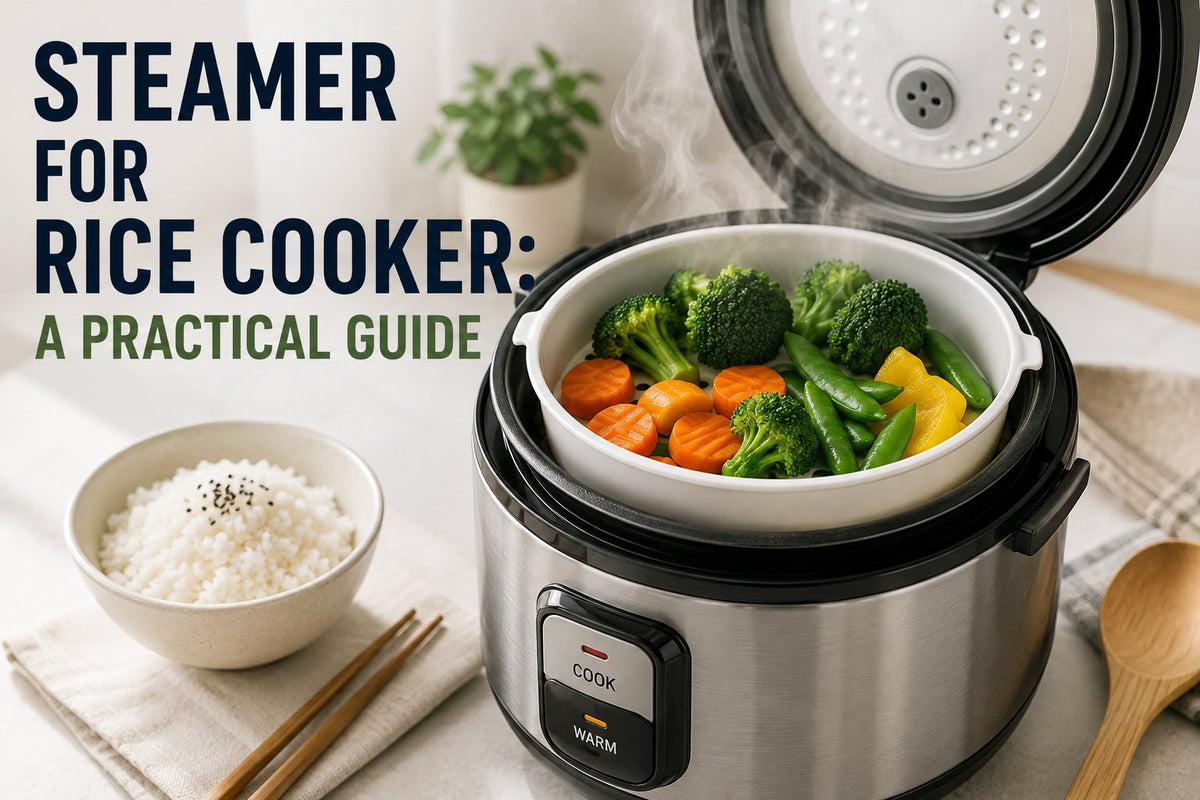
You've got rice cooking, vegetables waiting, and one crowded stovetop. A steamer basket that sits inside or above a rice cooker seems like the obvious answer. It can be useful, but it isn't a magical second appliance. Capacity, basket fit, condensation, food contact, and cleanup all decide whether the shortcut makes dinner easier.
A steamer for rice cooker setup works best when you treat it as a small, focused tool. It can steam vegetables, dumplings, fish, or shellfish while rice cooks below, but it may be less convenient for a mixed meal, especially when strong flavours or raw juices are involved. The guide below explains how the system works, which basket types make sense, how to check compatibility, and when the accessory is worth keeping in your kitchen.
Table of Contents
- When One Pot Could Replace Three on the Counter
- How a Rice Cooker Steamer Works
- Main Steamer Types and Where Each One Fits
- Checking Compatibility and Size Before You Buy
- Practical Usage Tips and a Simple Weeknight Recipe
- Pros, Cons, and Who Each Setup Suits Best
- Cleaning, Care, and Long-Term Habits
When One Pot Could Replace Three on the Counter
It's a familiar weeknight problem. Rice is simmering in one pot, dumplings are bobbing in another, and a cutting board is covered with broccoli, carrots, and greens waiting for their turn. You're watching three cooking times while trying to find enough space for a serving bowl.
A rice cooker with a steamer basket can consolidate part of that work. Rice cooks in the inner pot while food above it receives heat from the rising steam. For a small household, that may mean one active appliance instead of several pots, fewer burners occupied, and less attention during the cooking cycle.
The same idea fits naturally into a compact kitchen. If you're comparing ways to reduce countertop and stovetop clutter, this guide to the best kitchen appliances for small spaces offers useful context beyond rice cookers.
The useful shortcut
The strongest use case is simple: rice below, one compatible food above. Broccoli florets, sliced carrots, bok choy, dumplings, and a small fish fillet can all make sense, provided the basket has enough room and the food doesn't drip unwanted juices into the rice.
That last point is easy to overlook. A shallow insert isn't a second full-size steamer, and it won't comfortably handle a large family meal. A basket packed too tightly can block steam, cook unevenly, and leave delicate ingredients sitting in condensation.
Practical rule: Buy the basket for the portion you actually steam on an ordinary evening, not for the largest meal you might prepare once in a while.
California sits inside a substantial West Coast import and distribution network for this category. Trade records for Triple Accessories of Los Angeles show multiple 2025 rice-cooker-related shipments, including a Smart Chef rice cooker and an 88-cup rice warmer, with separate June entries weighing 3,092 kg and 4,058 kg in the company's import record. That activity points to broad product availability, but availability alone doesn't tell you whether a particular insert will fit your cooker or suit your routine.
How a Rice Cooker Steamer Works
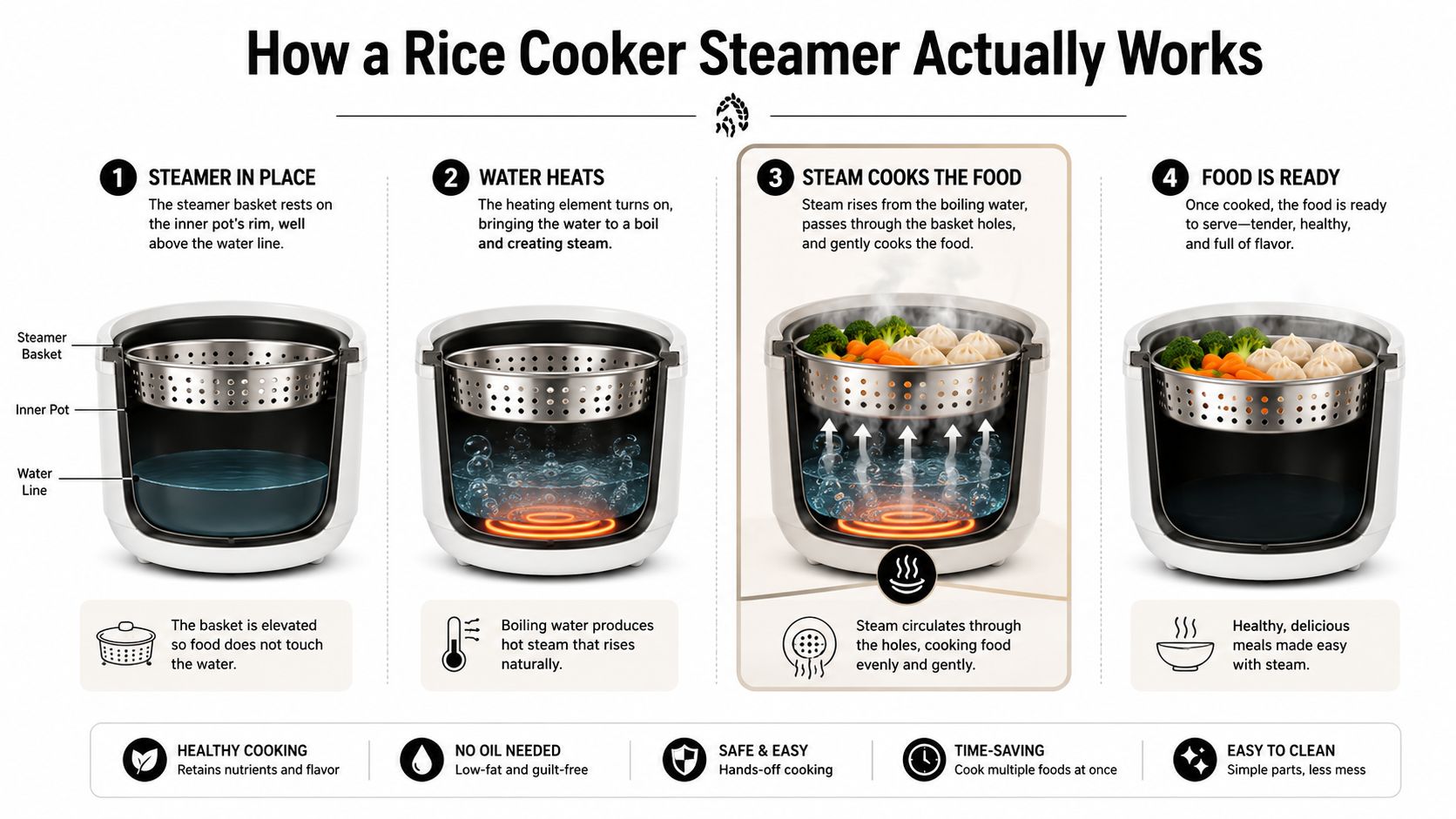
The cooking arrangement is simple. The inner pot holds the rice and water, while the steamer basket sits above the water line. Keep the basket away from the electrical heating base. Hamilton Beach warns that water or food placed directly in the base can create an electrical shock hazard, and steam from the vent can scald skin in its care instructions.
As the cooker heats, the water boils and produces vapour. That vapour passes through the basket openings, surrounds the food, and transfers heat to it. Some steam condenses on the cooler ingredients, so the lid and basket may be hotter and wetter than they look.
The arrangement works like a covered kettle. The cooker supplies heat, trapped vapour carries it upward, and the food cooks above the boiling water rather than in it. Rice cooks below at the same time. Steaming therefore suits ingredients that can become waterlogged during direct boiling.
Why separation matters
Steam needs room to circulate around the food. Pack the basket tightly and the outside pieces may soften before the centre cooks. The path from the water to the basket also matters. A warped inner pot or an insert positioned too low can restrict circulation and reduce even cooking.
Many rice cookers switch to WARM after the water evaporates. That setting helps hold cooked rice, but it does not make running the cooker dry safe for steaming. Follow the manufacturer's instructions for the pot, water level, and cycle.
Some dishes depend on a more deliberate steaming structure. Filled sticky-rice parcels, for example, require attention to wrapping, moisture, and circulation. A lo mai gai step-by-step guide can clarify how those parts work together, even if you use a different cooker.
Water levels vary by cooker and rice type. Check the manual before adding the basket, because it occupies space inside the pot. A model-specific rice cooker water ratio guide can help you adjust the water without guessing.
A small prep tool can support the same meal. The HAUTE CUISINE Stainless Steel Garlic Press - 80710-HC is described as having a stainless steel build, comfort-grip handles, and quick cleanup, which suits a ginger-soy or garlic-based steaming sauce.
Main Steamer Types and Where Each One Fits
Not every steamer that looks suitable belongs in a rice cooker. The basket has to match the pot's diameter, depth, lid clearance, and cooking method. Material also affects flavour, care, and how confidently you can lift a hot, full insert.
A single stainless insert is usually the straightforward choice for vegetables or dumplings on a weeknight. Bamboo offers a different experience, with a traditional presentation and a material that can feel less industrial, but it needs careful drying and may not fit neatly inside a modern cooker. Tiered systems increase usable space, yet they also add height, weight, and more surfaces to clean.
| Type | Material | Best For | Cleaning |
|---|---|---|---|
| Single insert basket | Stainless steel or heat-resistant metal | Small vegetable portions, fish, or dumplings | Usually simple to rinse and wash, subject to the manufacturer's instructions |
| Tiered stacker | Stainless steel, bamboo, or mixed materials | Cooking several foods in one cycle | More parts, joints, and surfaces to wash |
| Bamboo steamer | Bamboo | Dumplings, bao, and presentation-focused meals | Hand-wash gently and dry completely in open air |
| Stainless tray | Stainless steel | Flavour-neutral steaming and repeated use | Rinse promptly, wash with mild soap, and dry thoroughly |
Match the material to the food
Stainless steel is a sensible default when you want durability and a neutral surface. It doesn't absorb the aroma of fish, aromatics, or sauces as readily as porous materials can. A stainless tray also makes it easier to see whether residue remains after rinsing.
Bamboo works well when you value dumpling presentation or prefer a traditional steaming setup, but it can absorb moisture. It must be dried thoroughly after use, and it shouldn't be treated like a dishwasher-safe metal insert unless the product instructions explicitly allow it.
Tiered baskets help when several small foods need steam at once. They're less attractive when the cooker has limited vertical space or a fragile lid. Extra tiers can also make it harder to remove the lower food without disturbing the upper layer.
For readers comparing steam-based kitchen equipment more broadly, a practical compare 2026 steam cleaners resource can help separate a tool's headline feature from the maintenance it demands. The same principle applies here. Choose the basket you'll wash, dry, and store without resenting it.
Checking Compatibility and Size Before You Buy
A basket that doesn't fit is more than an annoying return. If the rim catches on the pot, the lid won't close properly. If the legs place the food in the water, you're no longer steaming. If the basket sits too high, steam escapes around the lid instead of surrounding the food.
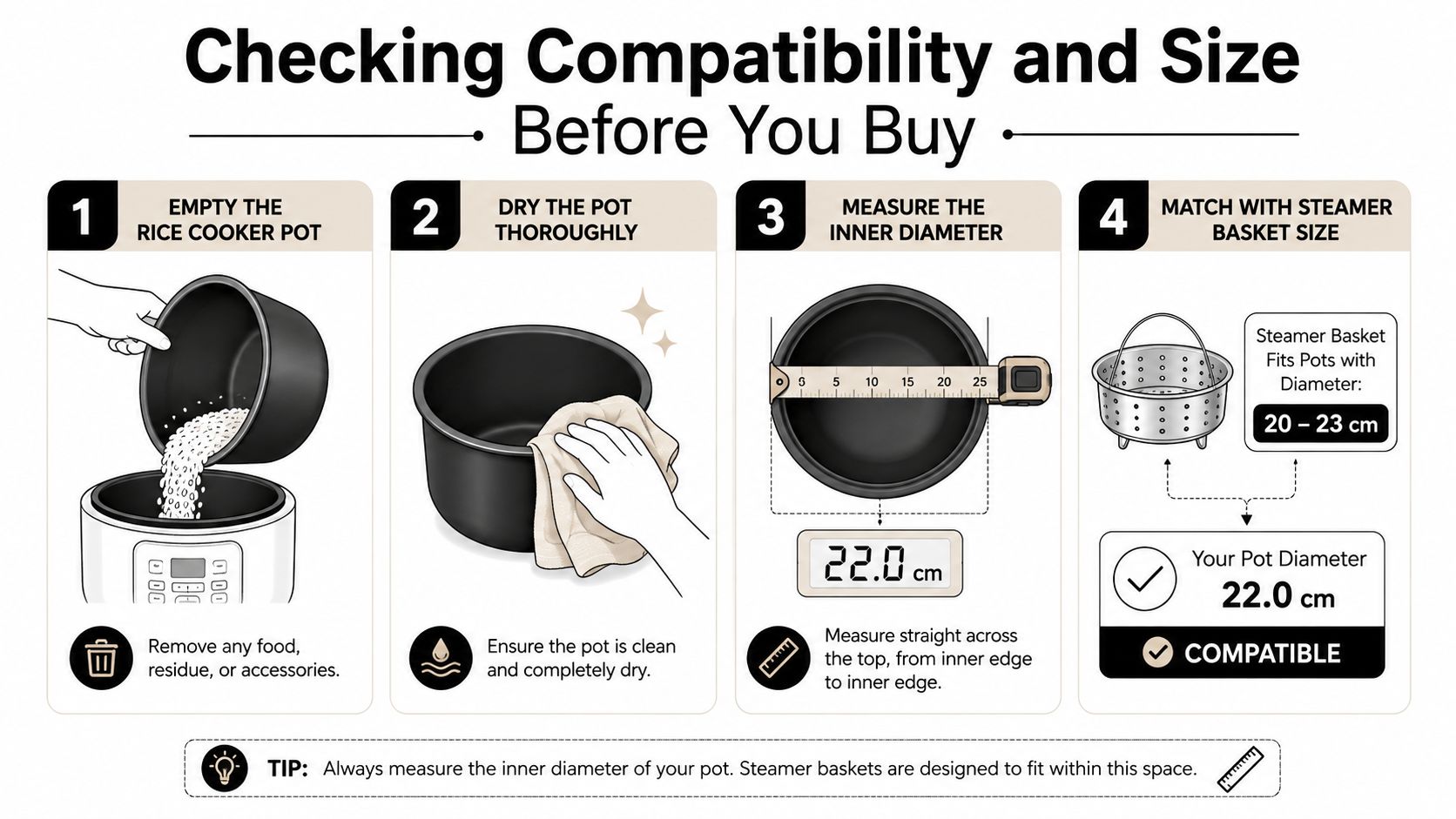
Start with the cooker unplugged, cool, empty, and dry. Remove the inner pot and measure the inside diameter near the top, not just the outside width of the cooker. Note the depth as well, because a basket can match the diameter and still sit too low or too high.
Use this fitting sequence
- Measure the pot opening. Record the internal diameter and the usable depth from the rim toward the water line.
- Read the basket specifications. Check the stated diameter, leg height, handle width, and whether the basket is intended for a rice cooker, multi-cooker, or pressure-style appliance.
- Check steam clearance. Leave roughly 1.5 to 2 cm between the basket rim and the pot wall so vapour can circulate. This is a fitting guideline, not a universal manufacturer specification, so follow the cooker manual if it gives different instructions.
- Test the lid before cooking. A domed lid or tall tier can prevent closure. The lid should sit in its normal position without force or an unsafe gap.
- Plan removal. Handles should remain accessible, and you should be able to lift the basket without tilting hot food into the pot.
- Consider the cooker's output. A small cooker produces a different amount of steam from a larger unit. Use the appliance's own timing and water guidance rather than assuming a generic basket recipe will transfer perfectly.
Induction and pressure multi-cookers may have different internal shapes and safety requirements from basic rice-only cookers. Confirm the exact model family before ordering. A careful smart kitchen appliances guide can also help you think through whether a multi-function cooker's controls match the cooking tasks you perform.
Don't force a near-fit. A basket that needs to be wedged into place can damage the pot coating, obstruct the lid, or make hot-food removal unsafe.
Practical Usage Tips and a Simple Weeknight Recipe
Start with the basket's limits: a rice cooker steamer works best with a modest load and ingredients cut to similar sizes. Steam needs an open path, so spread food in a loose layer instead of pressing it into a dense mound. This small-capacity accessory can handle a side dish or compact protein portion, but it does not replace a full-size steamer for larger meals.
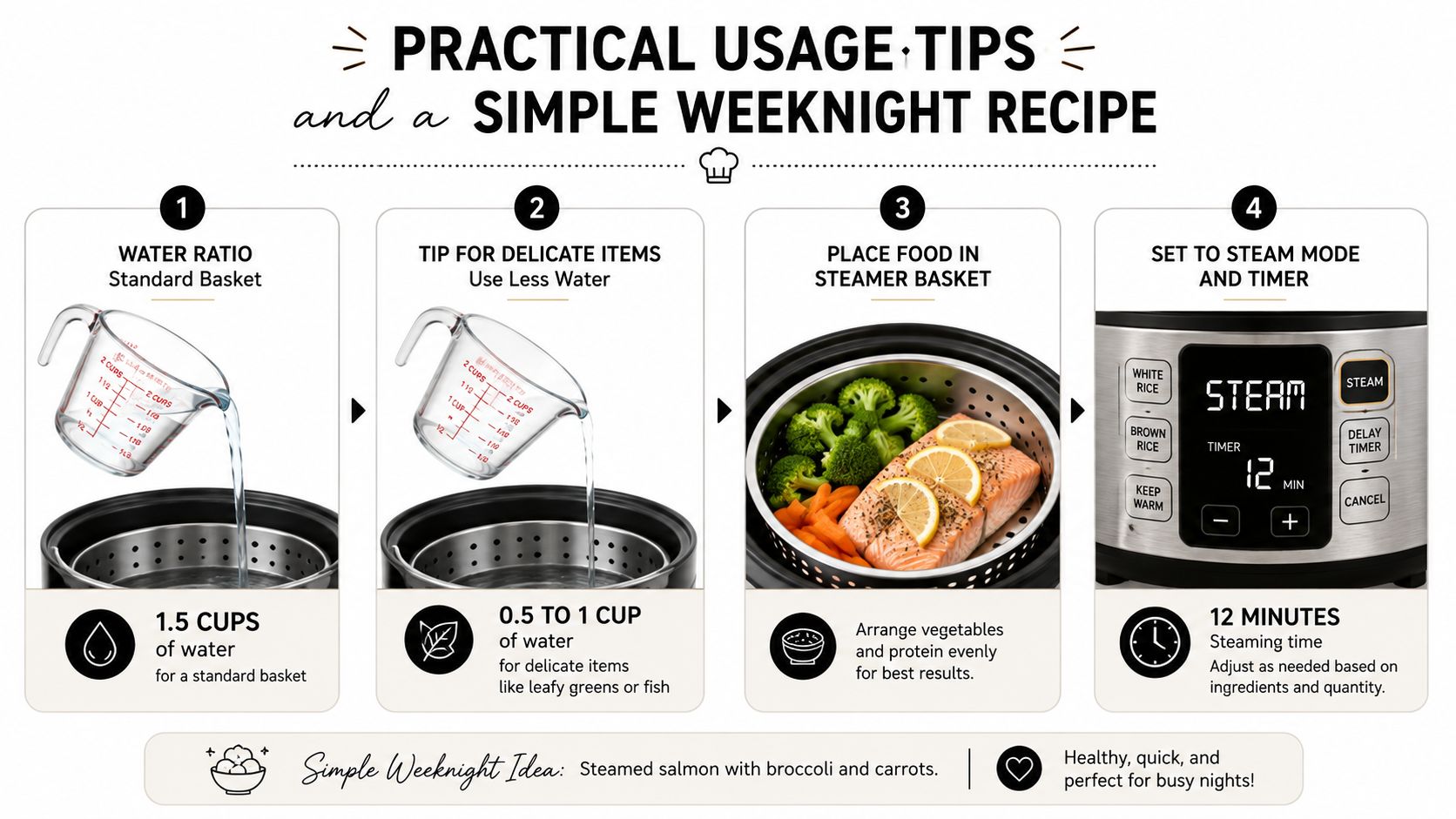
For a standard basket, begin with 1 to 2 cups of water, then follow the cooker and basket instructions. Delicate fish usually needs less water than dense root vegetables. The aim is enough water to maintain steam through the cycle without creating excess condensation. Food should stay above the water line. If an ingredient sits too low, raise it with a suitable trivet or heat-safe ramekin.
Layer for a shared finish
Place slower-cooking foods lower in the basket or on the lower tier. Carrot pieces and broccoli stems need more time than tender greens. Keep bok choy leaves, asparagus, and dumplings where they are easy to inspect and remove.
Use these times as kitchen starting points, then adjust for thickness and your cooker:
- Asparagus: about 8 to 10 minutes.
- Dumplings: about 12 to 15 minutes.
- Thin fish fillets: about 6 to 8 minutes.
These timings are guidelines, not guarantees. Open the lid carefully, check the thickest piece, and remember that releasing steam can lengthen cooking.
Ginger-soy salmon with bok choy
Rinse jasmine rice and add it to the inner pot using the cooker's recommended rice setting. Add steaming water according to the appliance and basket instructions, starting within the 1 to 2 cup range for a standard insert.
Place sliced bok choy and a thin salmon fillet in the basket. Add grated ginger, a small amount of soy sauce, and sliced garlic to the fish. Position the fillet so its juices do not run freely into the rice. If the basket is shallow, line the fish area with suitable greaseproof paper while leaving openings around it for steam.
Start the rice and steaming cycle. Check the salmon near the shorter end of its timing range, then inspect the bok choy and any dumplings or vegetables separately. Let the rice rest briefly after the cooker changes modes. Use tongs or mitts to lift the hot basket.
Raw meat and fish can drip into rice, causing flavour transfer and cross-contact concerns. Canadian appliance guidance notes that baskets may be shallow, advises against overloading, and suggests greaseproof paper to separate meat or fish in its rice-cooker FAQ.
For more combinations, browse this rice cooker recipes collection. Keep portions matched to the basket, contain raw juices, and handle the hot insert and condensation with mitts.
Pros, Cons, and Who Each Setup Suits Best
A steamer basket earns its space when it solves a repeated problem. It's less convincing when you already own a full-size steamer, routinely cook large portions, or dislike washing a small insert after every meal.
| User Type | Main Pros | Main Cons | Best Setup Choice |
|---|---|---|---|
| Household | Uses one appliance for rice and a modest steamed side | Basket space is limited and mixed foods can share odours or juices | Single stainless insert for vegetables or a carefully contained protein |
| Renter | Easy to store and avoids adding another large appliance | Small baskets may not replace a separate pot for guests | Removable stainless basket with simple handles |
| Small business | Can support repeatable small-batch prep and reduce active stovetop work | Throughput is lower than a dedicated commercial steamer | Durable stainless unit for limited batches, with separate equipment for volume |
Households need restraint
For everyday home cooking, the basket is most useful for a side dish or a compact protein portion. It can reduce the number of pots on the counter, but it doesn't turn a domestic rice cooker into a commercial steaming cabinet. A family meal may require multiple cycles or a second cooking method.
Flavour transfer is another trade-off. Fish, shellfish, garlic, and strong sauces can scent the rice through steam or drips. Use separation paper where appropriate, keep wet marinades contained, and avoid stacking foods because the basket has another level.
Renters value storage
A renter may appreciate a basket that nests inside the cooker or slides into a cupboard without adding bulky equipment. Bamboo can be attractive for dumplings and bao, but repeated damp use can lead to warping if the basket isn't dried correctly.
Small businesses need throughput
A food stall, café, or prep kitchen may value consistent small batches, especially for vegetables or dumplings. However, adding more tiers can slow circulation and make the cycle harder to manage. More than two tiers can be especially inconvenient when the lower layer needs checking or removal.
The simple decision rule is clear: choose stainless steel for durability, bamboo for flavour and presentation, and a tiered stainless setup when a complete small meal in one cycle matters more than the space it occupies. Canada-based product support pages show how rice cookers are also marketed as food steamers, egg cookers, cake makers, and multi-cookers, so judge the insert by the routine it supports, not by the number of functions printed on the box as documented by Sunbeam Canada.
Cleaning, Care, and Long-Term Habits
Cleaning starts before residue dries. Remove the basket once it's safe to handle, rinse away starch, sauce, and food particles, then wash it with the method recommended for its material. A quick rinse is especially helpful after fish, dumplings, or seasoned vegetables because oils and proteins become harder to remove when they cool.
Stainless steel is forgiving, but it still benefits from prompt care. Use mild dish soap and a non-abrasive sponge. For a deeper clean, a paste of baking soda and water can loosen marks. Vinegar can help with some mineral residue, but don't combine cleaning agents, and rinse the insert thoroughly afterward.
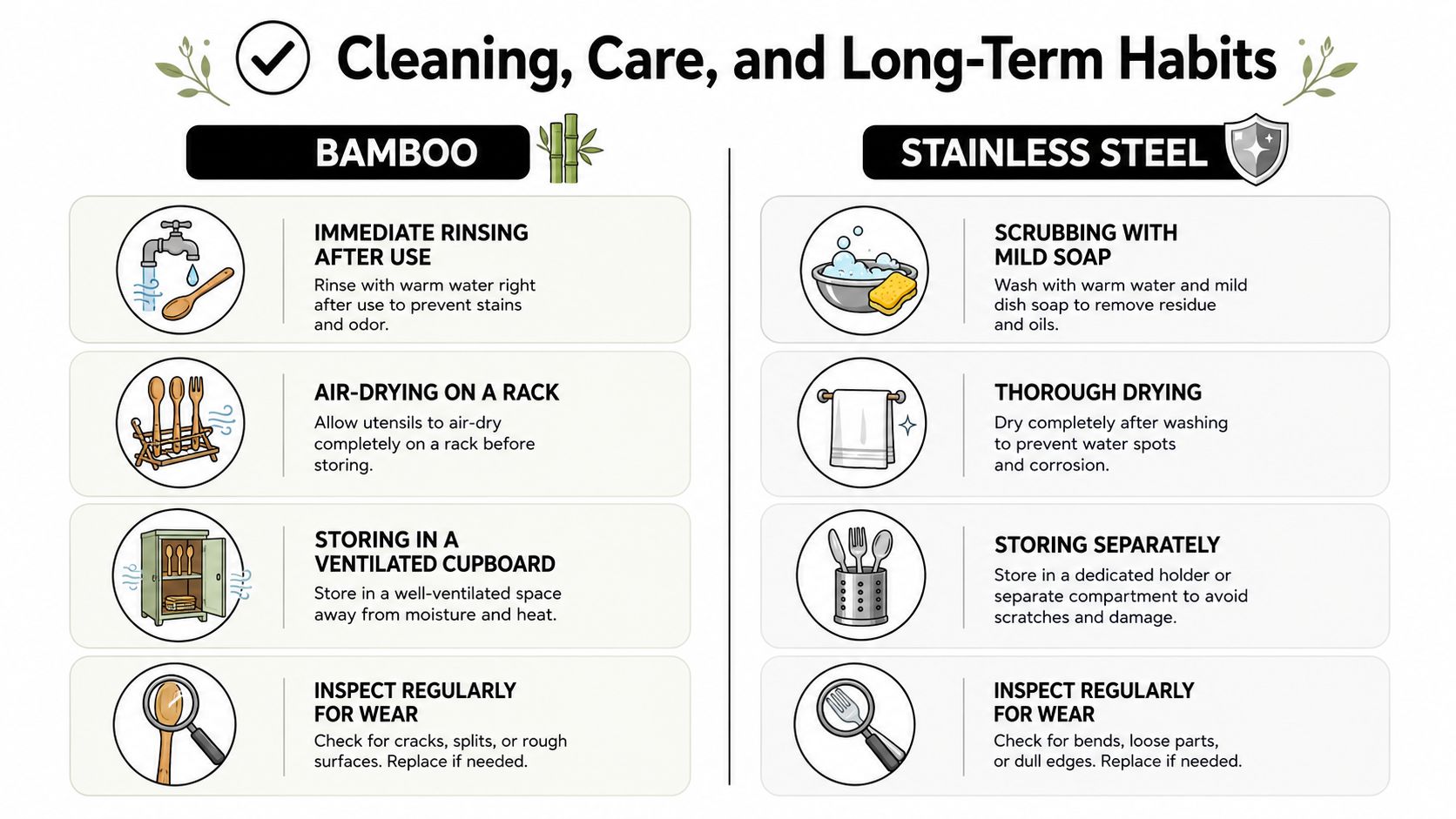
Bamboo needs air, not sealed storage
Wash bamboo gently by hand. Avoid soaking it for longer than necessary, because prolonged moisture can encourage swelling, cracking, or mildew. After rinsing, stand it in an open, ventilated place until every surface is dry.
Tannin or tea-coloured marks from dumplings can often be reduced with a baking-soda-and-water paste. Apply it gently, rinse well, and let the basket dry completely. Don't use aggressive scouring that roughens the bamboo and creates more places for moisture to collect.
Stainless and bamboo also differ in storage. Nest metal parts with a dry paper liner if they tend to trap moisture, but store bamboo with airflow around it. Keep lids separate where possible, and inspect any gasket or seal on a tiered set for trapped food or signs of wear.
A routine that scales
For a household steaming a few times each week:
- After every use: Rinse promptly, wash the basket, dry all surfaces, and wipe condensation from the lid.
- Regularly: Inspect holes, feet, handles, and the inner pot for bending or damage.
- Before storage: Ensure bamboo is fully air-dried, and avoid sealing damp parts in a cupboard.
For a small business running daily cycles, add a scheduled deep-clean, rotate baskets if possible, and check fittings before service. Retire a steamer when it has sharp corrosion, cracked bamboo, loose feet, a distorted rim, damaged handles, or a fit that no longer allows the lid to close safely.
Care for the surrounding cookware matters too. A clear cast iron cookware care guide reinforces the same broader habit, clean materials according to what they are made from, then dry and store them in a way that prevents avoidable damage.
GrifGlo organises practical kitchen essentials, appliance comparisons, and sizing guidance for households, renters, and small businesses. Visit GrifGlo to compare tools and home solutions with fit, everyday usability, and routine maintenance in mind.

Laisser un commentaire
Ce site est protégé par hCaptcha, et la Politique de confidentialité et les Conditions de service de hCaptcha s’appliquent.